
Intercom Fin is an AI customer service agent that charges $0.99 per resolved conversation. It handles 95 languages, connects to Shopify and Stripe via live data integrations, and reports a 67% resolution rate across 40 million conversations as of late 2025.
Intercom Fin is an AI customer service agent built by Intercom, Inc., the San Francisco-based customer communications company founded in 2011. Fin launched in March 2023 running on OpenAI's GPT-4, then relaunched as Fin 2 in October 2024 on Anthropic's Claude, and reached its third major iteration at Intercom's Pioneer 2025 event in October 2025. The core proposition is straightforward: Fin handles customer queries end-to-end without a human agent, and you pay $0.99 only when it successfully resolves the issue. If it cannot resolve, you owe nothing.
Fin works across live chat, email, voice (Fin Voice), and image input (Fin Vision), and supports 95 languages with automatic translation. Real-time data connectors via the Model Context Protocol (MCP) plug into Shopify, Stripe, Jira, Salesforce, and other platforms so Fin can fetch live order status, account data, and transaction history before responding. For teams not on Intercom's native helpdesk, Fin deploys as a standalone overlay on Zendesk, Salesforce Service Cloud, and Freshdesk. Copilot, a separate human-facing mode, surfaces AI suggestions to support reps mid-conversation for $29/agent/month. As of Fin 3, the product adds Procedures for complex multi-step resolutions, Simulations for pre-deployment testing, and expanded channel support including Slack and Discord.
What Intercom Fin actually is in May 2026
Fin has gone through three distinct product generations in under three years. Fin 1 (March 2023) was a retrieval-heavy FAQ responder. Fin 2 (October 10, 2024) was the inflection point: Intercom switched from OpenAI to Anthropic's Claude as the underlying model, introduced an Actions layer that lets Fin fetch real customer data and perform tasks rather than just answer questions, and added a Knowledge Hub for centralizing content from multiple sources. The reported resolution rate jumped to 51% out of the box, with accuracy at 99.9%.
Fin 3, announced at Pioneer 2025 (October 9, 2025), added Procedures, which combine natural language instructions with deterministic workflow controls so Fin can work through complex cases like damaged-order claims or multi-step account troubleshooting. The Simulations feature lets teams validate Fin's behavior in a sandbox before any change goes live. Intercom also extended Fin to Slack and Discord and significantly upgraded Fin Voice.
The most prominent external validation came at the Pioneer 2025 event itself. Anthropic, Intercom's LLM partner, uses Fin as their own customer support system. Isabel Larrow, Anthropic's Product Support Operations Lead, described the result at the event: "We're a lean but focused team of two specialists..enable almost 50 full-time employees' worth of coverage." That ratio, two humans achieving 50-FTE coverage, became the benchmark Intercom now leads with in sales material.
Intercom's cumulative figures as of December 2025: 40 million resolved conversations and a 67% rolling 30-day resolution rate. Third-party benchmarking showed 73% for Fin vs. 49% for Decagon in the same independent methodology. Both figures vary significantly by knowledge base quality and query complexity.
Where Fin sits versus Decagon and Salesforce Agentforce
The two most direct competitors are Decagon (specialized AI support agent, enterprise) and Salesforce Agentforce (broad agentic platform for the Salesforce ecosystem).
Fin vs. Decagon: Fin uses a layered, modular system separating behavioral guidance, workflow Procedures, and code-level integrations, with purpose-built retrieval models (fin-cx-retrieval and fin-cx-reranker) trained specifically for customer service. Decagon uses monolithic Agent Operating Procedures (AOPs) that bundle prompts, logic, actions, and rules into single files, making debugging and changes more complex and vendor-dependent. Decagon charges approximately $50,000 annual platform fee plus per-conversation costs, with median annual contracts around $400,000. Fin publishes $0.99/resolution with no platform fee. Decagon also requires migrating away from your existing helpdesk (its Agent Assist mode only works with Zendesk), while Fin overlays on Zendesk, Salesforce, or Freshdesk without migration. Decagon suits enterprises with deeply complex workflows and budget for a dedicated implementation team. Fin is better for most support operations that want to go live within days.
For teams evaluating Decagon, see the Decagon listing on Vantaige for a full breakdown of its enterprise pricing and architecture.
Fin vs. Salesforce Agentforce: Agentforce uses the Atlas Reasoning Engine, a proprietary model-agnostic reasoning layer that can call GPT, Claude, or Salesforce's own Einstein models depending on the task. It connects natively to Salesforce Data Cloud and Flows, and uses the Einstein Trust Layer, which masks PII before any LLM call and guarantees customer data does not train external models. Fin relies on Anthropic Claude exclusively and operates within Intercom's security infrastructure without an equivalent formal Trust Layer. The cost comparison is stark: Agentforce requires Salesforce Service Cloud at $175+/user/month as a prerequisite, and implementations typically run $50,000 to $150,000 with ongoing consulting at $10,000-$25,000/month. Fin requires no platform fee. Agentforce is the rational choice for organizations already committed to Salesforce CRM who need agents across sales, field service, and HR, not just support. Fin wins on cost, CX-specific performance, and setup speed for everyone else.
"With Claude we get intelligence, performance, and reliability that lets us deliver even more value to our customers with Fin." -- Des Traynor, Co-founder and Chief Strategy Officer, Intercom, October 2024
How the AI actually works inside Fin
Fin's backend separates knowledge retrieval from response generation. The Knowledge Hub ingests content from help centers, PDFs, URLs, and connected systems, and Fin's purpose-built retrieval models (fin-cx-retrieval, fin-cx-reranker) rank relevant content before Claude generates the final response. The Actions layer, added in Fin 2, lets Fin call external APIs and MCP connectors mid-conversation to pull live data. When a customer asks "where is my order?" on a Shopify store, Fin queries Shopify's API and returns the actual order status rather than a generic FAQ. Procedures in Fin 3 extend this to multi-step flows with conditional logic, guiding customers through complex cases like return claims from start to finish.
Copilot mode operates in reverse: instead of responding to customers directly, it surfaces draft responses and action suggestions to human agents, who review and send. Teams moving from Copilot to full Fin autonomy typically run both in parallel during a validation period using Simulations. Fin Voice routes phone calls through the same reasoning and knowledge infrastructure as text, with call transcripts, configurable guidance, and pre-deployment testing available since Voice launched in early 2025.
For teams looking at comparable AI agents in adjacent categories, Sierra and Ada take different approaches to enterprise support automation, and Cresta focuses specifically on agent-assist rather than full autonomy. EchoWin is an alternative worth considering for voice-first support automation.
The billing tension users keep raising
The $0.99/resolution pricing model is the product's most discussed friction point. The theoretical promise is clean: you pay when Fin succeeds, not when it fails. In practice, two problems emerge.
The first is "assumed resolved" counting. In January 2025, a user named bosbeest filed a detailed complaint in Intercom's Community forum describing a pattern where Fin gives an incorrect answer, the human agent intervenes to correct it before the customer has a chance to request human help, and Intercom still bills $0.99 for the interaction because a human took over. In bosbeest's words: "I now have to watch how a stressed out customer asks for technical help, get an incorrect answer, try all the incorrect steps, get more stressed and frustrated." Intercom's Paul Byrne acknowledged in May 2025 that "stepping in to provide the best experience for your customer should be seen as good judgment, not something to be penalized," but offered no policy change.
"I used Intercom's AI chatbot Fin for my company, the cost shot up, and I'm not able to see significant productivity improvement. I was already spending over $4k/month, with 40 agents. Now it's shot up to $9k." -- u/AnkitatTripock, Reddit, 2024
The second problem is that as Fin's resolution rate improves, the monthly bill goes up. For high-volume support operations, this is the inverse of the typical software pricing logic where efficiency gains reduce costs. Teams with 10,000 monthly conversations and a 70% resolution rate pay $6,930/month in resolution fees before any seat costs. The math works if Fin is replacing more expensive human agent time, but it requires a clear internal calculation before committing.
Knowledge restrictions add a third friction layer. Notion and Confluence are only available for Copilot mode, not for the autonomous customer-facing Fin agent. Teams that store their primary support documentation in Notion hit a hard wall at full autonomy rollout.
Who Fin is for
Fin delivers clear value for support teams handling high volumes of repeated, data-lookupable queries: order status, refund eligibility, account details, subscription changes, basic troubleshooting. E-commerce companies running on Shopify or Stripe get the most leverage because the MCP integrations let Fin pull live data rather than asking customers to check themselves. SaaS companies with large, well-maintained help centers see strong resolution rates. Multilingual operations benefit from 95-language coverage without needing localized agents.
Teams already on Intercom's platform get the most seamless experience since Fin, Copilot, and the helpdesk share the same inbox, reporting, and workflow layer. The standalone option is viable for Zendesk and Salesforce shops that want outcome-based AI without a platform migration.
Skip Fin if your knowledge base lives primarily in Notion or Confluence and you need full autonomous resolution. Skip it if monthly ticket volume is low enough that $0.99/resolution exceeds the human time saved. Skip it if your organization needs strict data sovereignty beyond Intercom's current security posture, or if you're already deep in Salesforce CRM and need agents across sales, field service, and HR: Agentforce is the better architecture for that scope.
For teams building broader customer experience automation beyond support, the adjacent tools worth evaluating include Ada for enterprise deflection and Decagon for high-complexity agentic resolution.
User Reviews
No reviews yet. Be the first to share your experience!
Sign in to write a review.
Related articles
Guides and articles related to Intercom Fin.
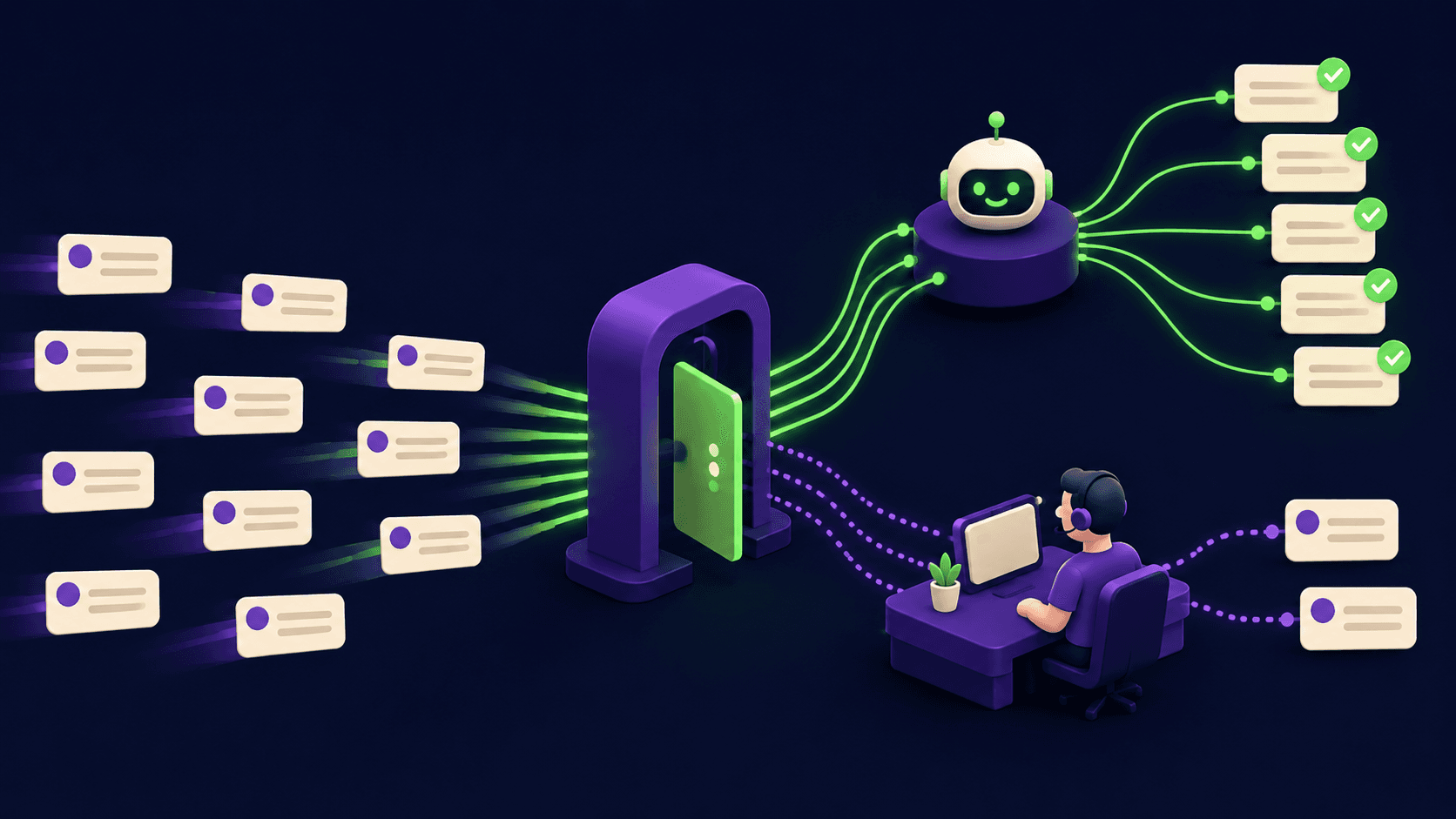
AI Customer Support Automation: Cut Ticket Volume 50% Without Hurting CX
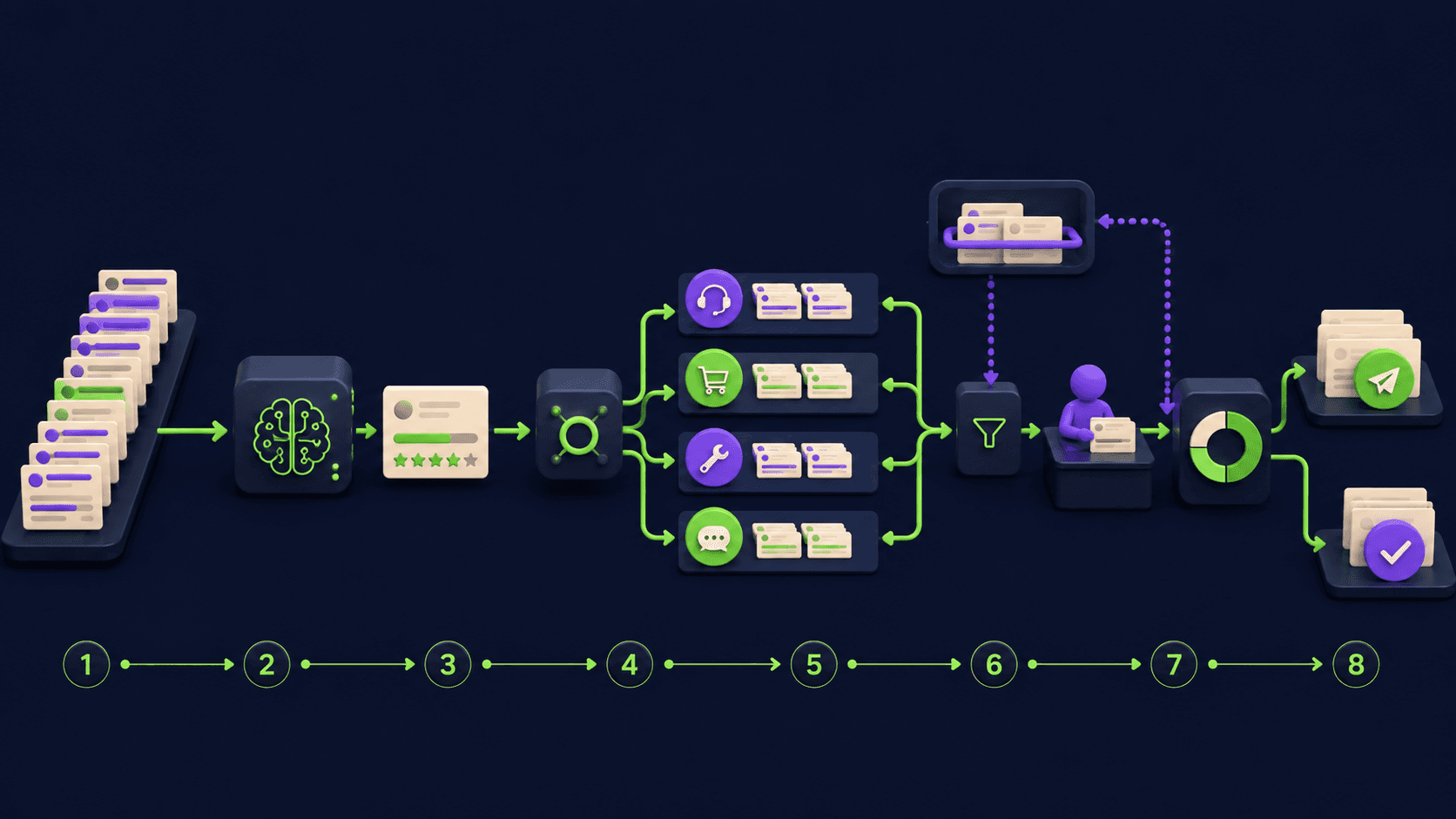
AI Customer Support Triage That Routes 70% of Tickets Without a Human (2026)
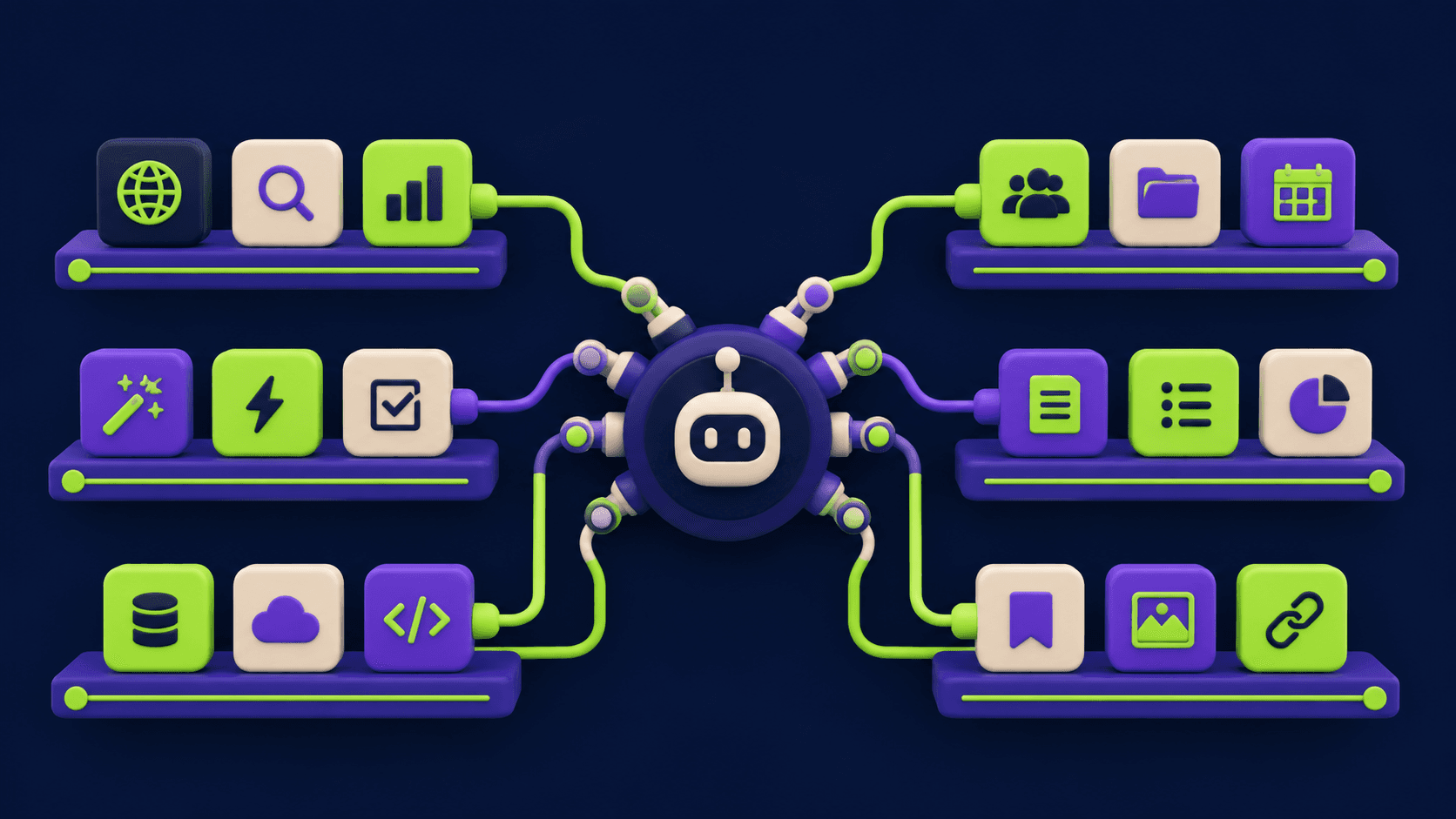
Turn Any AI Agent Into a Superagent: The 12-Integration Stack (2026)
Voice Agent for Missed Calls: Every Service Business Is Bleeding Leads After Hours (2026)
AI Agents for Business: What They Actually Are and 12 Things You Can Automate Today