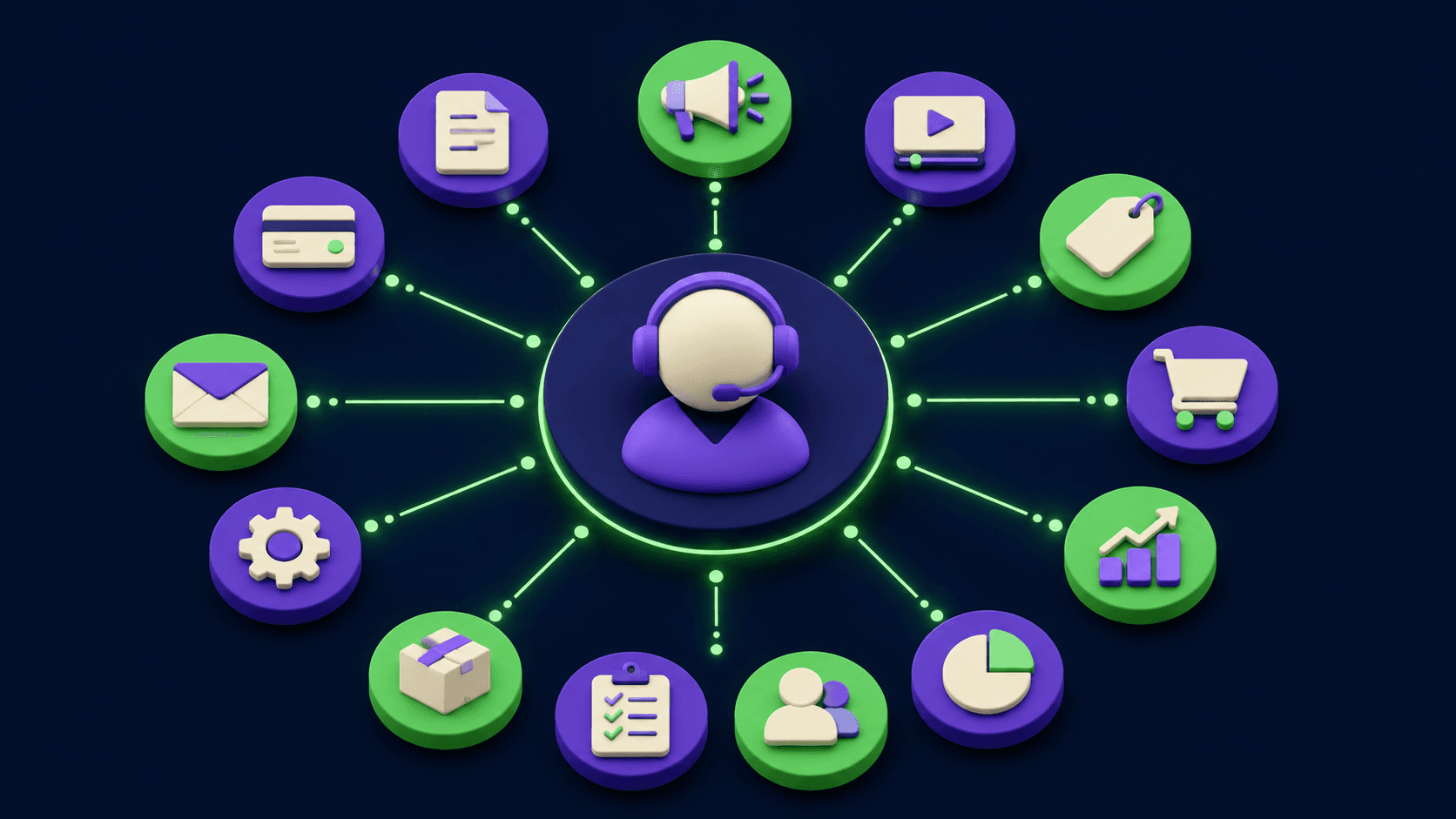

Cresta is a contact center AI platform that coaches live agents in real time, automates routine customer conversations, and analyzes 100% of interactions. Built for enterprises with 50+ agents in telecom, financial services, and travel.
Cresta is a contact center AI platform founded in 2017 at Stanford by Zayd Enam, Tim Shi, and Sebastian Thrun, the computer scientist who led Google's self-driving car program. The company set out to solve a specific problem: most contact centers can identify what top-performing agents do differently, but they have no mechanism to share that knowledge in real time with every agent on every call. Cresta built its platform to close that gap, delivering live coaching, autonomous AI agents, and conversation analytics from a single system. As of April 2026, the platform exceeded $100 million in annual recurring revenue, with customers including Verizon, United Airlines, Cox Communications, Brinks Home, Hilton, and Intuit.
Three core products sit under the Cresta umbrella. Agent Assist delivers real-time coaching overlays to human agents during live calls and chats, surfacing hints, retention scripts, compliance reminders, and behavioral nudges as conversations unfold. AI Agent automates routine inquiries across voice and digital channels, handling password resets, order status checks, and FAQs without human involvement. Conversation Intelligence analyzes every interaction, not a sampled 2-3%, to surface coaching priorities, identify which behaviors correlate with positive outcomes, and score agent performance automatically. In March 2026, Cresta added Knowledge Agent, a browser sidebar that listens to live audio and reads screen context simultaneously to proactively deliver precise answers to agents without requiring manual searches.
What Cresta actually is in May 2026
Cresta operates as a unified platform spanning AI agents, human agent augmentation, and conversation analytics, with a shared data layer, shared models, and shared governance across all three. This architecture matters in practice: the same behavioral taxonomy that scores a human agent's empathy phrase usage also evaluates the AI Agent's conversational patterns. That unified scoring means contact center managers can compare human and AI agent performance on the same rubric, something point solutions cannot do.
Under the hood, Cresta runs more than 20 task-specific sub-models coordinated through its Opera orchestration engine, launched in 2023. Agent Assist does not simply keyword-match to surface hints. It tracks conversational context, intent signals, and agent behavior simultaneously to decide when to surface guidance and what to show. The platform supports 30+ languages across both voice and digital channels, following expansions announced at Cresta Wave in November 2025.
The Knowledge Agent, launched March 17, 2026, represents the most visible recent product shift. Rather than requiring agents to pause, switch tabs, and search a knowledge base manually, Knowledge Agent runs in the browser sidebar and connects what the agent hears on the call with what is visible on screen: account status, order history, loyalty tier, case notes. CEO Ping Wu described it at launch: "Knowledge Agent is a second brain for contact center agents. It hears what they hear and sees what they see, handling all of the searching for them." The company calls the problem it solves "toggle-tax," the productivity loss from constant tool switching. This positions Knowledge Agent directly against legacy knowledge base tools and search-dependent workflows.
Where Cresta sits versus Gong and Sierra
Gong is the platform Cresta most frequently gets compared to in procurement conversations, but the two products solve different problems at different points in a conversation's lifecycle. Gong is a revenue AI platform built for B2B sales organizations, and its analytical engine runs post-call: Revenue Graph maps deal-level interactions across a revenue org, Smart Trackers identify behavioral patterns beyond keyword matching, and predictive deal scoring helps sales managers forecast pipeline. Gong does not offer real-time in-call coaching, does not handle contact center quality management, and has no mechanism to coach agents as calls happen. If your team manages complex B2B sales cycles and needs pipeline visibility, Gong (see Gong's listing) is the right tool. If your team runs an inbound contact center where agents handle hundreds of calls per day and performance improvement happens in the moment, Cresta is built for that environment.
Sierra takes the opposite architectural bet from Cresta. Sierra operates as an automation-first, managed-deployment platform: it focuses on getting AI agents live quickly without requiring internal AI expertise, with Sierra's team handling coding, integrations, and implementation. The recently added Live Assist capability bolts on a human handoff layer, but it was built onto an automation-first foundation rather than being native from day one. Cresta's approach treats automation and human performance as connected rather than competing priorities, with shared models across both. See Sierra's listing for the full comparison. For organizations that want speed-to-deployment and are comfortable letting a vendor manage implementation end-to-end, Sierra's model can be appealing. For organizations in regulated industries where control, compliance visibility, and seamless human-AI handoffs are non-negotiable, Cresta's architecture handles that more naturally.
Other platforms in the AI customer service space occupy narrower positions. Intercom's Fin focuses on self-service resolution for support tickets, particularly for SaaS companies. Decagon specializes in autonomous AI agents for technical support workflows. Echowin targets small business phone automation. None of these cover the human agent performance side of the equation that Agent Assist and Conversation Intelligence address.
How AI actually works inside Cresta
The Agent Assist flow begins the moment a call connects. Cresta's speech-to-text layer transcribes audio in real time, and the platform's intent and context models run in parallel on the transcript. When the system detects a conversational signal, such as a customer expressing cancellation intent or an agent missing an upsell opportunity, a hint card appears in the agent's interface. Hint cards are configurable: they can surface scripted language, policy references, empathy prompts, or compliance checkpoints depending on conversation type. Managers configure which hint types apply to which teams, and the system learns acceptance rates over time to refine which hints are actually useful.
Conversation Intelligence processes recordings after calls end and scores behaviors automatically. Instead of managers manually sampling 2-3% of interactions, Cresta analyzes everything and generates a prioritized coaching queue. Brinks Home reported cutting quality management costs by 50% after deployment, with first-call resolution rising to 75% and the net-promoter score improving by 30 points.
"Real-time coaching with representatives has improved productivity with the middle of the pack members." - Chad S., G2, September 2025
The AI Agent product handles full conversations autonomously, using the same underlying models trained on a company's specific call types, tone, and resolution paths. The Automation Discovery feature, released at Cresta Wave in November 2025, analyzes conversation volume, complexity, and resolution data to recommend which interaction types to automate first, with projected ROI calculations. This reduces the guesswork in phased AI deployment.
"Everything I need to coach, conversations, hints, and coaching plans are all stored in one centralized system." - Emily R., G2, September 2022
The friction and reliability concerns users keep raising
The most consistent complaint across review platforms is implementation complexity. Cresta does not hide this: deployment typically takes 4-6 weeks and requires what one G2 reviewer called "a dedicated person who is almost an AI linguist" to configure the hint models, train the intent classifiers on company-specific terminology, and maintain the system as products and policies change. Teams that understaff this function see diminishing returns from the platform over time. This is not a plug-and-play product.
Transcript accuracy surfaces as a second recurring issue. Several users report that Cresta does not transcribe correctly in noisy call environments or with certain accents, and that the system sometimes misidentifies caller intent when transcription quality drops. A verified mid-market reviewer on G2 in December 2025 noted: "The model used for Cresta's knowledge assist is not very accurate in understanding the overall caller's intent." Cresta has published blog content acknowledging transcription performance as a critical upstream dependency for everything downstream, which suggests the company is aware this is a weak point.
Back-end integration reliability is a third pattern. Users report intermittent CRM and telephony sync issues, particularly with custom integrations. The coaching overlay occasionally fails to appear during calls, which degrades the real-time assistance value proposition exactly when agents need it. One user noted the system "bleeps out numbers for privacy" in recordings, which frustrates agents reviewing calls where sharing a callback number was the relevant detail. These are reliability issues rather than architectural gaps, but at enterprise contract values in the $60K-$150K annual range, reliability expectations are correspondingly high.
Who Cresta is for
The platform fits contact centers with at least 50 agents in regulated, high-volume industries: telecommunications, financial services, healthcare, travel, and retail. These environments share characteristics that make Cresta's architecture valuable: complex customer interactions that require both automation for routine tasks and skilled human agents for escalations, compliance requirements that demand auditability across all conversations, and enough call volume that even a 5% improvement in first-call resolution or handle time translates to meaningful operating cost reduction.
Cresta is not the right choice for small contact centers under 50 agents, where the pricing model and implementation requirements are prohibitive relative to the benefit. It is also not suited to primarily outbound B2B sales teams (where Gong covers that ground), to organizations looking for a quick self-serve trial before committing, or to companies that want fully managed AI deployment without building internal capability (where Sierra's model works better). Teams already deeply embedded in Salesforce Service Cloud may find Salesforce Agentforce's native data integration more practical for their specific infrastructure.
For the right organization, the outcome data is credible. Cox Communications reported 20% higher revenue and 40% greater supervisory span of control post-deployment. Snap Finance achieved a 5x improvement in containment rates. United Airlines and Alaska Airlines use the platform across their customer support operations. The $125 million Series D closed in November 2024, backed by Andreessen Horowitz, Sequoia Capital, Greylock, J.P. Morgan, Tiger Global, and new investors including QIA and Accenture, reflects institutional confidence in both the technology and the commercial trajectory. Those who can navigate the implementation requirements and match the seat minimum tend to see measurable returns. Those who cannot should look elsewhere.
User Reviews
No reviews yet. Be the first to share your experience!
Sign in to write a review.
Related articles
Guides and articles related to Cresta.
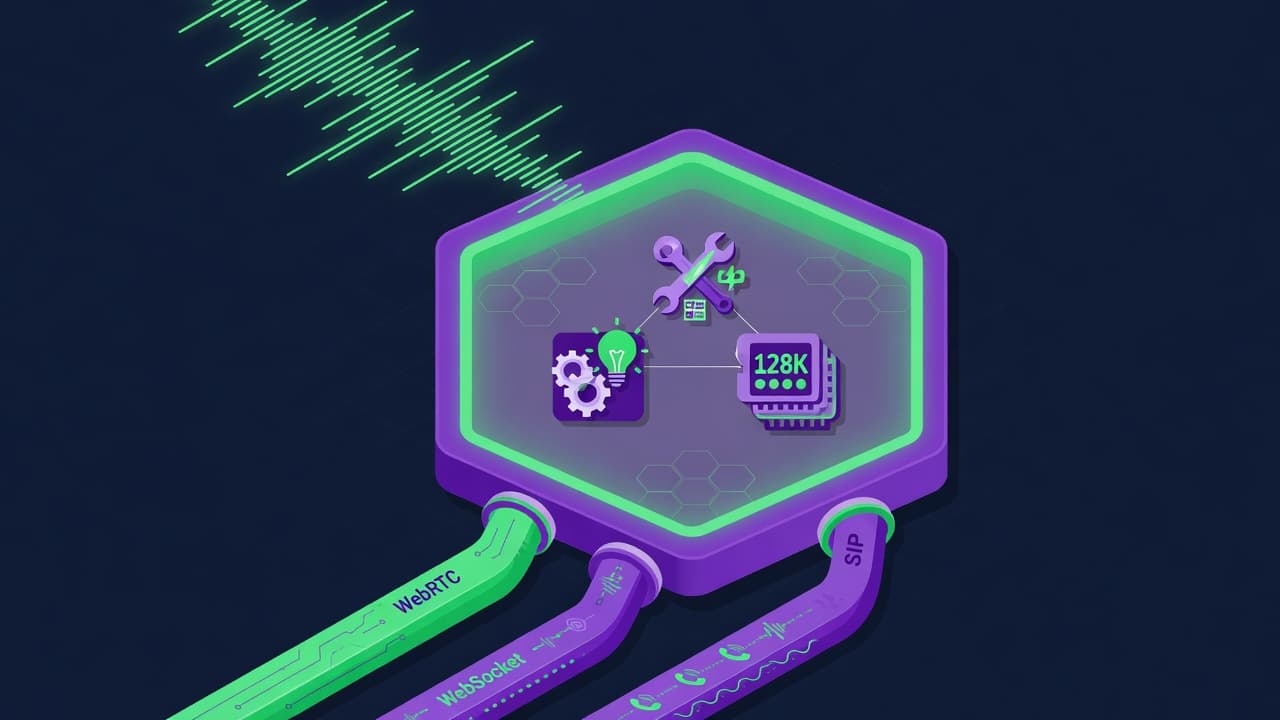
OpenAI GPT-Realtime-2 (May 2026): Pricing, Latency & 30-Min Voice Agent
Build a 70-Language Live Voice Agent With GPT-Realtime-Translate (2026)
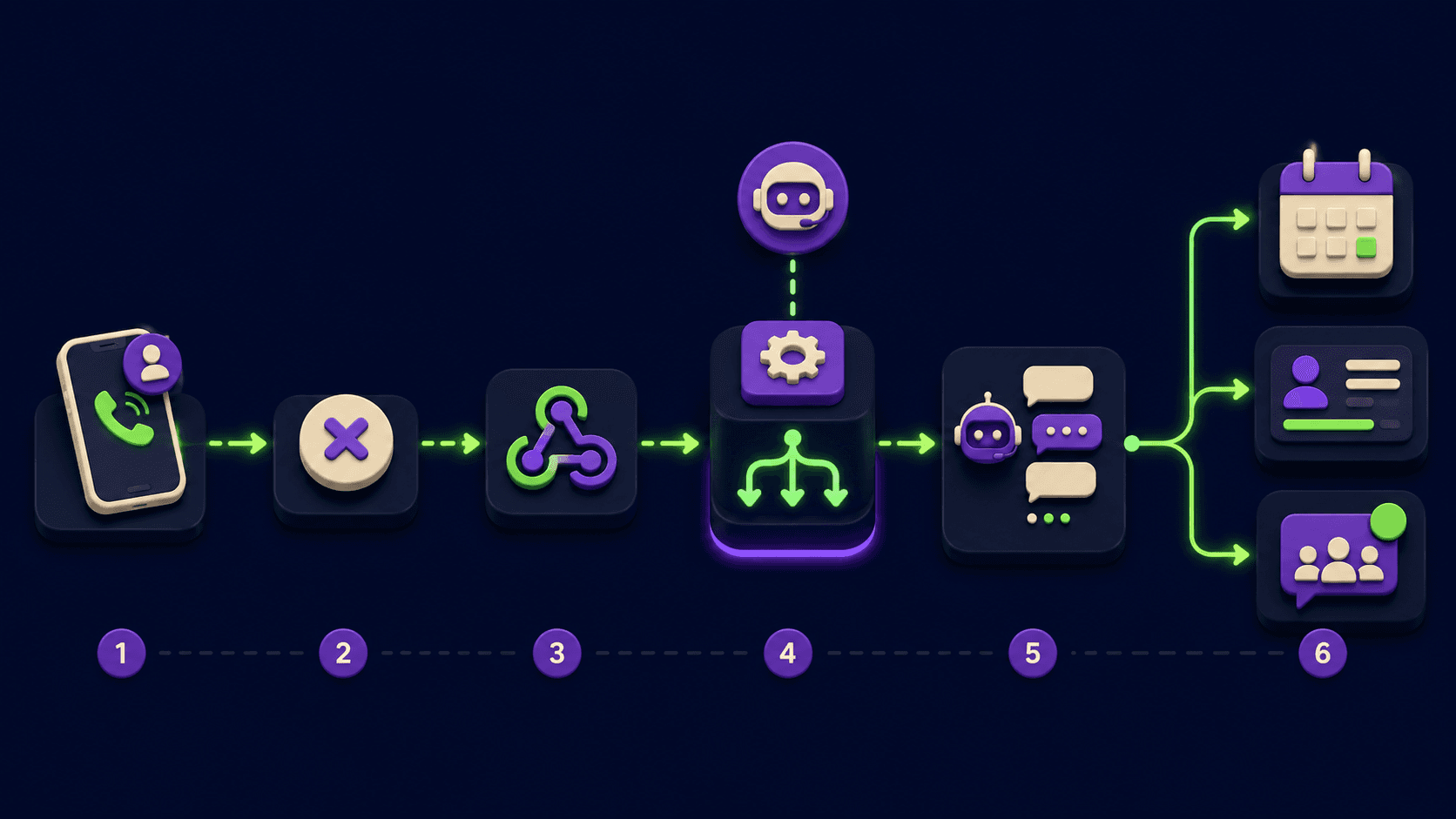
Voice Agent for Missed Calls: Every Service Business Is Bleeding Leads After Hours (2026)
HubSpot Breeze vs Salesforce Agentforce (2026): RevOps AI Cost Reality
Google vs OpenAI vs Anthropic Agents: The May 2026 Platform Showdown