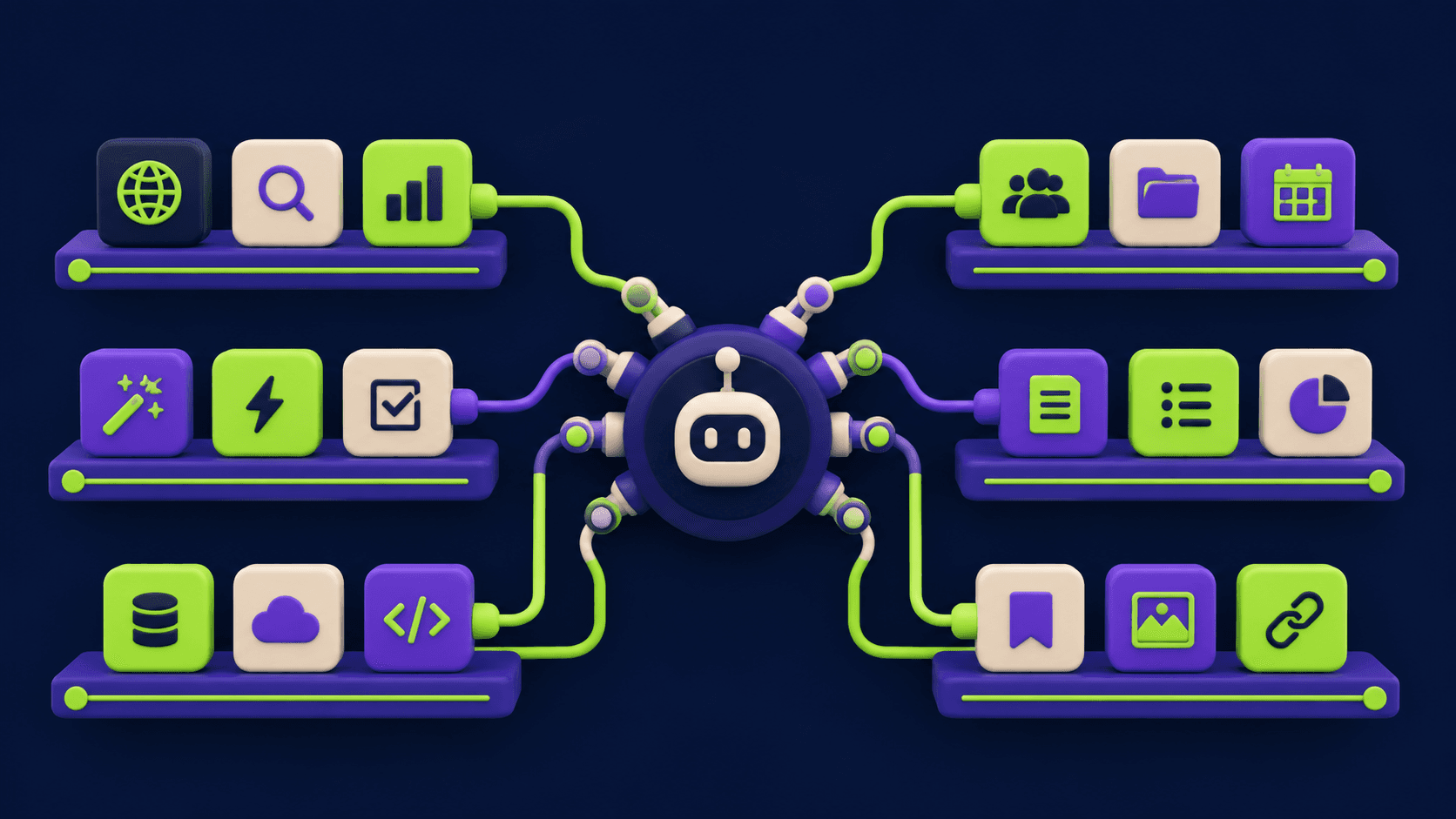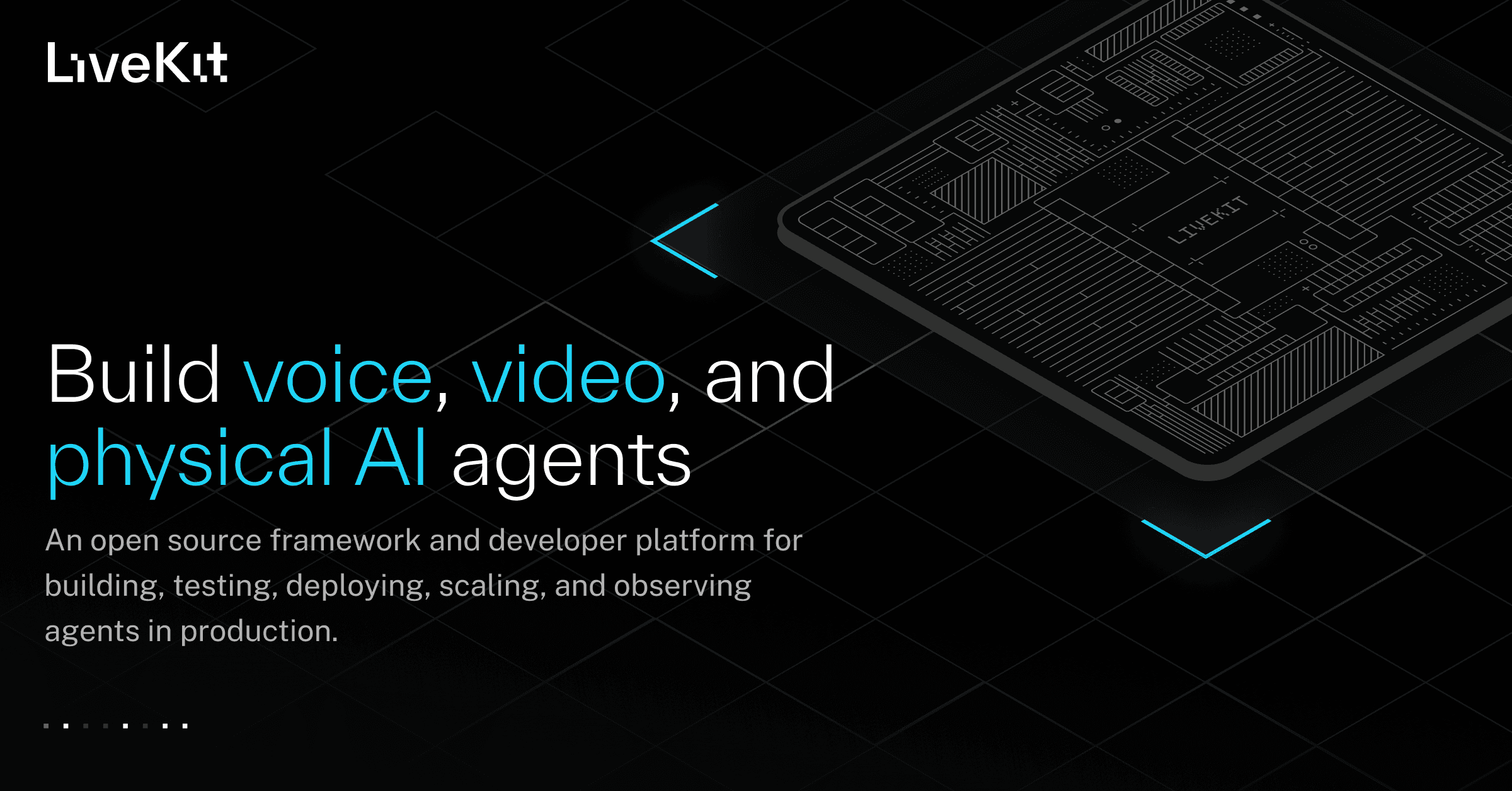

LiveKit is the open-source WebRTC infrastructure and AI agent framework that powers ChatGPT's Voice Mode. Founded in 2021, it gives developers full control over real-time voice and video pipelines, from self-hosted media servers to production-ready agent orchestration.
LiveKit is an open-source real-time communication infrastructure platform and AI agent framework built by Russ d'Sa and David Zhao, who founded the company in 2021. It powers the voice infrastructure behind OpenAI's ChatGPT Voice Mode, and is used in production by Tesla, Salesforce Agentforce, xAI, and emergency services operators. In January 2026, LiveKit raised $100 million at a $1 billion valuation, led by Index Ventures, cementing its position as the infrastructure layer of choice for enterprise voice AI deployments at scale.
The platform ships two connected products: a Go-based Selective Forwarding Unit (SFU) media server licensed under Apache 2.0 (18.5K GitHub stars), and LiveKit Agents, a Python and Node.js framework for building real-time voice AI agents (10.3K stars, 3.1K forks, version 1.5.7 as of April 2026). Agents supports the full STT-LLM-TTS pipeline with native integrations for OpenAI GPT-4o and the Realtime API, Deepgram speech-to-text, Cartesia TTS, Google Gemini Live with vision, and Silero voice activity detection. Semantic turn detection, Model Context Protocol (MCP) tool support, SIP telephony, and a built-in agent observability platform round out the production feature set.
What LiveKit actually does in May 2026
LiveKit's server handles real-time audio and video routing using an SFU architecture: publishers send one encoded media stream to the server, which forwards it to subscribers without re-encoding, keeping upstream bandwidth low and latency minimal. The server is horizontally scalable, uses Redis for peer-to-peer routing across nodes, and can run on a single VPS or across hundreds of nodes with identical configuration. The agents layer sits on top of this transport, connecting AI models to the WebRTC streams.
The LiveKit Agents framework defines a standard pipeline that handles voice activity detection, transcription, LLM reasoning, and text-to-speech playback. Semantic turn detection, introduced in 2025, uses a transformer classifier to decide when a user has finished speaking rather than relying on silence duration alone. This significantly reduces false interruptions in noisy environments or when users pause mid-sentence. The October 2024 OpenAI partnership announcement, written by d'Sa and published on October 3, 2024, unveiled the Multimodal Agent API with built-in OpenAI Realtime API support, delivering approximately 300ms bidirectional audio latency and automatic transcription synchronization during playback. Developers could, for the first time, build apps with exactly the same voice infrastructure that ChatGPT uses internally.
Beyond voice, the platform supports physical AI use cases. Tesla's deployment spans sales, roadside assistance, insurance, and support contexts where a vehicle or facility needs to stream audio bidirectionally to a cloud-hosted agent. The SFU handles the low-level media routing; the Agents framework handles the conversation logic.
"LiveKit's flexibility and performance have been critical to delivering reliable, low-latency voice experiences." - Thomas Cornelius, Product Hunt, May 2025
Where LiveKit sits versus Pipecat and Daily
Pipecat is the closest architectural competitor. Built by the Daily team and open-source in Python, Pipecat uses a frame-based pipeline model: audio frames flow through ordered stages, from transport to STT to LLM to TTS and back. This abstraction makes it intuitive for developers who think in pipelines and want to slot AI services in and out. Pipecat is transport-agnostic in principle and can technically connect to a LiveKit room or another WebRTC backend, but its native pairing is Daily's managed infrastructure. The tradeoff is verbosity: Pipecat requires more manual wiring, more credential configuration in code, and more decisions about pipeline ordering. LiveKit Agents provides a cleaner API with less boilerplate for teams going WebRTC-first, while Pipecat's frame model is better suited to developers who want fine-grained control over how audio flows between services.
Daily is the company behind Pipecat and operates its own managed, closed-source WebRTC infrastructure with 75-plus global points of presence and a median first-hop delay of 13ms. Daily's differentiator is prebuilt surface area: out-of-the-box UI components, breakout rooms, transcription, recording, and chat. Teams that want to ship a video product quickly without managing media infrastructure will often choose Daily. LiveKit's differentiator is ownership: the Apache 2.0 server can be self-hosted on any hardware, modified freely, and audited completely. Daily has no self-hosted equivalent. For teams where voice is the product and not a bolt-on feature, and especially for teams with compliance requirements like HIPAA or data residency mandates, LiveKit's self-hosting option is a decisive advantage Daily cannot match.
Where Vapi and Retell AI sit in this picture: both are fully managed voice agent platforms that abstract away the entire infrastructure layer. They are faster to get started with and require no server management, but they hand over control of the media routing, model routing, and data pipeline to a third-party SaaS. LiveKit is the choice when margin, compliance, latency SLAs, or deep integration matter more than time-to-first-call.
"WebRTC streaming is really hard and LiveKit provides a great developer-friendly managed solution." - Awais Shafique, Product Hunt, May 2025
What the agent development loop actually looks like
A standard LiveKit Agents project starts with a Python worker process that connects to a LiveKit server instance, either self-hosted or on LiveKit Cloud. The worker listens for incoming rooms or dispatches, spawning an agent instance per session. Agent logic is defined as a class with lifecycle hooks for on_enter, on_message, and on_exit. Model integrations are added via plugin packages: pip install "livekit-agents[openai,silero,deepgram,cartesia,turn-detector]~=1.4" covers the most common production stack.
For telephony use cases, LiveKit's SIP stack handles inbound and outbound PSTN calls through a configuration layer, connecting phone calls to the same agent pipeline without additional code. The agent observability platform introduced in late 2025 provides per-session timeline views, turn detection events, and model call logs, making production debugging tractable without building custom logging infrastructure.
Testing is a notable investment in the framework: the built-in testing tools include unit-level function mocking, scenario simulation, and a judge-based validation system that uses an LLM to evaluate whether agent responses met the intent of a test case. This is substantially more sophisticated than the basic CI hooks available in Pipecat or the manual testing most teams do with Vapi-hosted agents.
Who LiveKit is built for
LiveKit is infrastructure for backend engineers who want to own the stack. The right team for LiveKit has a Python or Node.js developer who is comfortable reading WebRTC documentation, a DevOps setup capable of running a Go binary or Docker container (for self-hosting), and a product with voice as a core feature rather than an optional add-on.
Specific fits include customer support automation where call volume justifies per-minute cost optimization over managed platform markups; healthcare and legal applications that require HIPAA compliance and data residency that cannot be delegated to a third-party SaaS; robotics and physical AI products needing bidirectional media streaming with minimal intermediary hops; and developer tools and coding assistants that need to pair voice with tool-use pipelines via MCP. Companies like ElevenLabs and Whisper users often appear together in LiveKit deployment stacks, feeding their TTS or STT output through the agent pipeline.
Spotify, Meta, Microsoft, Character AI, Speak, and Fanatics are named as customers in LiveKit's public materials, spanning use cases from music listening sessions to social networking features to fan engagement platforms.
The January 2026 Series C also revealed an emerging physical AI segment: Tesla uses LiveKit for voice interactions across sales, support, insurance, and roadside assistance. That deployment pattern, a vehicle or device streaming real-time audio to a cloud-hosted agent, is distinct from the typical browser-to-cloud call and represents a category most managed platforms do not address at all. LiveKit's SFU architecture, which routes media without re-encoding, keeps the round-trip latency low enough for vehicle-side deployments where a few hundred extra milliseconds would make the experience feel broken.
What LiveKit is not
LiveKit does not offer a no-code or low-code interface. There is no drag-and-drop agent builder, no phone number provisioning UI, no call analytics dashboard in the style of Vapi's or Retell's products. Every integration requires code.
It is not a solution for batch audio processing. The entire platform is built around real-time streaming; if the workflow does not involve two parties in a live session, there is no LiveKit-shaped hole in it.
It is not a drop-in replacement for Daily if your product relies on prebuilt video call UI components, screen sharing controls, or in-call chat. LiveKit provides the media infrastructure; the interface layer is the developer's responsibility. The distinction matters practically: a team building a Zoom-like product will find Daily ships faster because Daily bundles the UI primitives. A team building a voice-first customer support product on top of their own web app will find LiveKit fits better because they do not need Daily's bundled interface components and do not want to pay for them.
LiveKit is also not suited to teams whose primary concern is running cost at small call volumes. At low scale, the per-minute overhead of managed platforms like Vapi is negligible, and the engineering time saved by not managing WebRTC infrastructure far outweighs the cost delta. The self-hosting option makes LiveKit genuinely free to run, but "free" infrastructure still requires engineers to maintain it. The economics only clearly favor LiveKit once a team has enough call volume that per-minute SaaS markups become a line item worth optimizing, typically somewhere above 50,000 minutes per month, which maps roughly to LiveKit's own Scale tier threshold.
Skip LiveKit for quick prototypes. If the goal is to test a voice agent concept in a weekend, Vapi or Retell will produce a working phone number and call flow in under an hour. LiveKit's setup, even using the cloud hosted option, assumes familiarity with WebRTC concepts, Python async programming, and distributed systems debugging. Developers who push through that learning curve, however, frequently note that they gain enough low-level understanding to make LiveKit difficult to abandon: as one HackerNews commenter put it, once you know LiveKit well enough, you "know more than is healthy" about WebRTC internals, which makes you more likely to roll your own next time. That observation reads as a criticism but is also evidence that LiveKit succeeds at teaching the underlying infrastructure to engineers who engage with it seriously.
User Reviews
No reviews yet. Be the first to share your experience!
Sign in to write a review.
Featured in collections
Curated lists that include LiveKit.
Related articles
Guides and articles related to LiveKit.
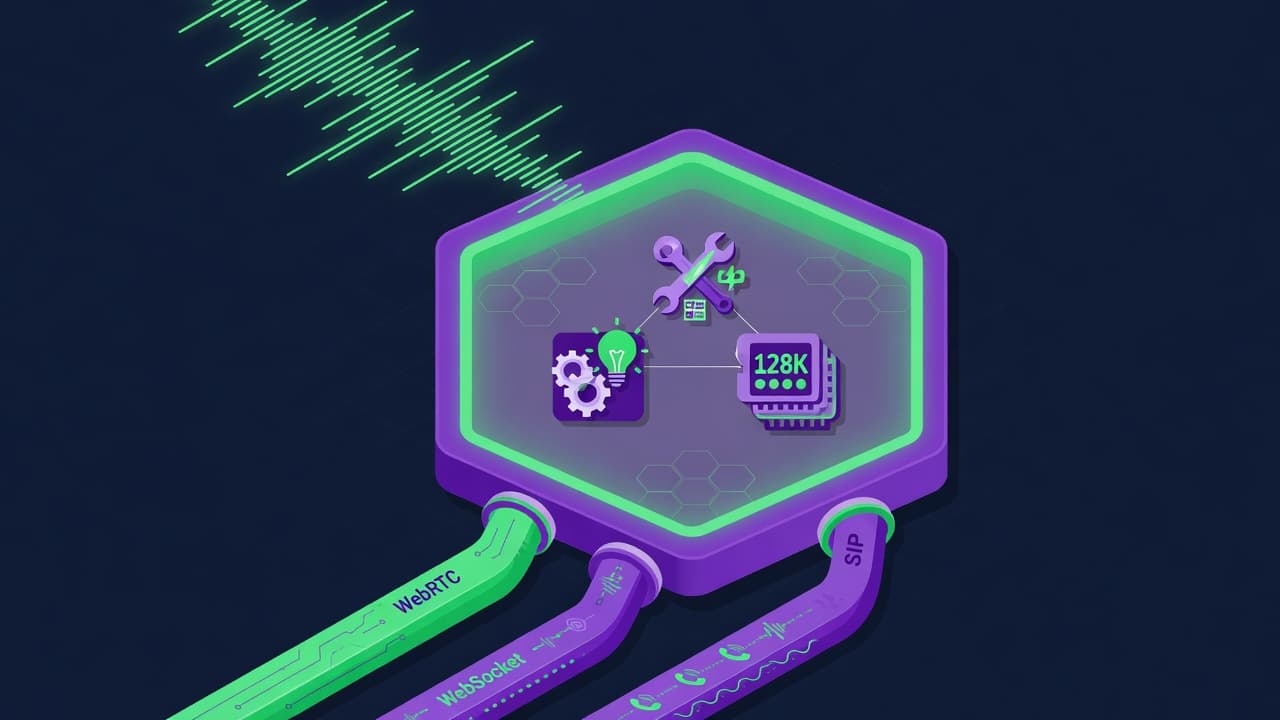
OpenAI GPT-Realtime-2 (May 2026): Pricing, Latency & 30-Min Voice Agent
Build a 70-Language Live Voice Agent With GPT-Realtime-Translate (2026)
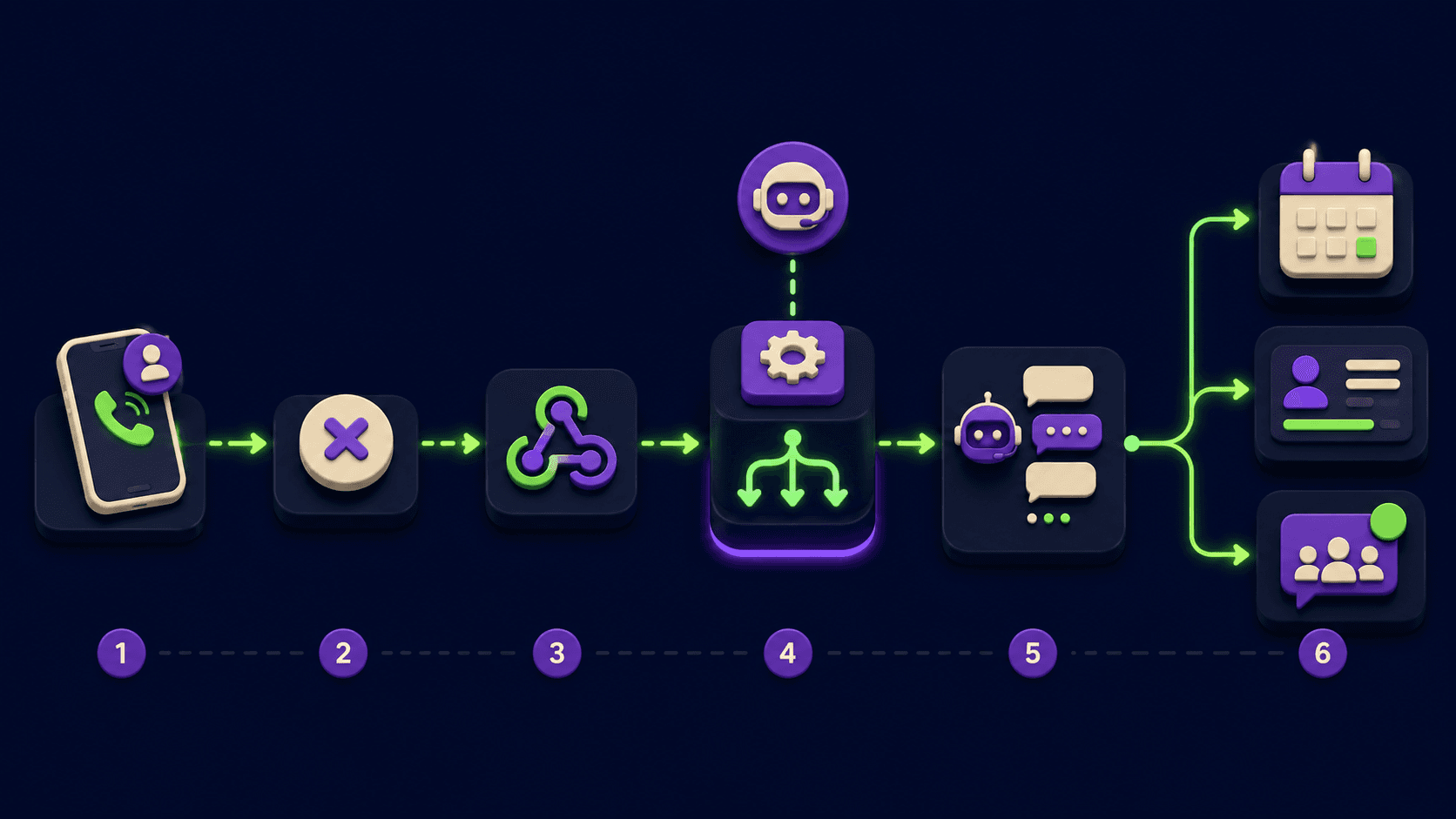
Voice Agent for Missed Calls: Every Service Business Is Bleeding Leads After Hours (2026)
Google vs OpenAI vs Anthropic Agents: The May 2026 Platform Showdown
Grok 4.3 API for Agents (May 2026): Pricing, Benchmarks, Migration