
Retell AI is a Y Combinator-backed (W24) voice agent infrastructure platform for building AI-powered phone agents. Developers connect their own LLM, configure call flows, and deploy agents that handle real calls with ~600ms latency. Used by healthcare, logistics, and e-commerce companies at scale.
Retell AI is a voice agent infrastructure platform built for developers and engineering teams who need to automate phone calls at scale. Launched in February 2024 as part of Y Combinator's W24 batch, the company grew from zero to $40M+ ARR within roughly two years, powering over 40 million real-time AI phone calls per month by early 2026. The platform targets contact center operations: inbound customer support, outbound sales outreach, appointment scheduling, debt collection, and lead qualification, connecting large language models to phone infrastructure and handling the hard engineering parts of voice AI including latency management, interruption handling, and turn-taking.
The platform works as middleware between telephony, speech-to-text, LLM reasoning, and text-to-speech. Developers bring their own LLM (GPT-4.1, Claude, Gemini, Llama, or others) or use platform defaults, configure call flows through a visual drag-and-drop builder or raw API, and deploy agents that pick up real phone calls. Key features include real-time function calling for booking or payment processing mid-conversation, streaming RAG with auto-sync for knowledge base access, batch outbound calling without concurrency limits, post-call analytics, and Retell Assure (launched January 2026), an automated QA system that monitors 100% of calls rather than the industry-standard 1-2% human spot-check rate. Compliance coverage includes HIPAA, SOC2 Type II, and GDPR, with enterprise on-premise deployment available.
What Retell AI actually does in May 2026
Retell sits at the intersection of four components: speech-to-text (transcribing the caller in real time), LLM reasoning (deciding what to say), text-to-speech (converting the response to voice), and telephony (the phone infrastructure). The platform orchestrates these layers, with response latency of approximately 600ms end-to-end, which is among the fastest in this product category. That number matters because anything above 1.5-2 seconds starts to feel unnatural to a caller expecting a human.
As of early 2026, the platform supports 50+ languages, multi-channel operation (voice, chat, SMS via the same agent configuration), and real-time function calling. That last feature means the agent can actually do things during a call: check appointment availability, process a payment, update a CRM record, or transfer to a human agent, all without putting the caller on hold. The platform integrates with HubSpot, Twilio, Vonage, Go High Level, n8n, Zapier, Salesforce, and enterprise contact center platforms like Avaya, Genesys, Five9, and Amazon Connect.
In December 2025, Retell launched Retell Assure, its automated quality assurance tool. The system analyzes every call against customizable criteria including latency, interruptions, hallucinations, and customer sentiment, then automatically adjusts model behavior. Traditional contact center QA involves humans reviewing 1-2% of calls, with feedback loops taking weeks. Retell Assure closes that loop in real time across 100% of volume. CEO Bing Wu described it as "the #1 request of our enterprise customers - our fastest-growing customer segment."
"I got chills when I thought about the fact I'm talking to a computer." - _fw, Hacker News, February 2024 (on the Launch HN demo)
Where Retell AI sits versus Vapi and Bland AI
Three platforms dominate this infrastructure layer: Retell AI, Vapi, and Bland AI. Each makes a different architectural bet.
Vapi is API-native to the point of granularity. It exposes every component of the voice pipeline individually: you can swap your STT provider, change your LLM inference engine, configure Voice Activity Detection thresholds to the millisecond, and tune interrupt handling per conversation state. That power comes with a cost. Vapi requires engineering teams who want to maintain that configuration, and the all-in pricing runs $0.13-$0.31/min, higher than Retell's comparable configurations. Vapi is the platform that hardcore engineering teams recommend to each other when they need maximum control. Retell abstracts those layers into sensible defaults with override options, which makes it faster to deploy but means you lose some of that millisecond-level tuning.
Bland AI took a different path: instead of orchestrating external LLM and TTS providers the way Retell and Vapi do, Bland built a proprietary in-house model stack. That means Bland controls end-to-end latency without depending on third-party API response times. The trade-off is less flexibility in model choice, but Bland's strength is at very high outbound call volumes, where millions of minutes per month make that consistent latency predictability valuable. Bland also has a cross-call memory layer that lets agents reference what happened on previous calls with the same contact, something Retell does not do natively. Retell outperforms Bland on average latency (~600ms vs. ~800ms) and wins on inbound/customer-support use cases where voice quality and natural conversation feel matter more than raw volume throughput.
For teams that want to pair their voice pipeline with open-source infrastructure and avoid per-minute vendor costs entirely, Pipecat is worth examining. It is a self-hosted Python framework for multimodal conversational agents with no per-minute fee, though it requires significantly more engineering to operate at the level Retell handles out of the box.
On TTS quality specifically, Retell supports ElevenLabs as a TTS option (at a premium: $0.040/min vs. $0.015/min for other providers), which gives access to the highest-quality voice cloning in the market for applications where voice realism is critical.
"Automated quality assurance was the #1 request of our enterprise customers - our fastest-growing customer segment." - Bing Wu, co-founder and CEO of Retell AI, December 2025
What the voice agent build-and-deploy reality looks like
Getting a basic agent live takes a few hours for a developer familiar with REST APIs. You create an agent in the dashboard, configure the system prompt and LLM settings, connect a phone number (Retell provides numbers, or you bring your own via Twilio or Vonage), and make a test call. The visual flow builder handles simple conditional paths; complex branching logic goes through the API. Real-time function calling requires writing webhook endpoints that the agent calls mid-conversation, which is where most of the engineering time gets spent for production deployments.
The pricing model adds up in ways that the $0.07/min headline understates. A realistic configuration using GPT-4.1 as the LLM and Retell's default TTS runs closer to $0.12-$0.15/min. Use ElevenLabs for voice and Claude Sonnet for reasoning and you are at $0.19-$0.22/min before add-ons. At 10,000 minutes per month, that is the difference between roughly $700 and $2,200. Businesses should build cost models against their actual LLM and TTS choices before committing, not the advertised base rate. One review aggregator noted that "real-world all-in costs of $0.25-$0.33/min are common" for production deployments.
Customer support for pay-as-you-go customers runs through Discord and email, which works fine for developers troubleshooting technical issues but creates friction for business teams expecting faster SLAs. Enterprise customers get dedicated support portals and 24/7 omnichannel coverage. Multiple Trustpilot reviews flagged difficulty canceling accounts after trials ended and unclear GDPR compliance responses, issues that do not match the developer-focused G2 rating of 4.8/5.
The LK LiveKit connection is worth noting: Retell's underlying real-time transport layer draws from the same WebRTC infrastructure concepts as LiveKit, and some teams use LiveKit directly when they want more granular control over the real-time communication layer beneath their voice agents.
Who Retell AI is built for
The clearest Retell fit: a software engineering team at a US-based company in healthcare, logistics, real estate, debt collection, or e-commerce that needs to automate significant inbound call volume and has developers to maintain the integration. Medical Data Systems deployed Retell to handle 100% of inbound calls with only a 30% human transfer rate, collecting roughly $280,000/month in automated debt conversations. Pine Park Health improved scheduling NPS by 38% and filled provider capacity that previously went unused. SWTCH, an EV charging company, cut support costs by over 50%. These are not edge cases; they represent what the platform optimizes for.
The compliance story is genuinely strong. HIPAA, SOC2 Type II, and GDPR certifications are in place. Personal information redaction, role-based access control, and SSO are available at enterprise tier. For regulated industries where a competitor's lack of a BAA would disqualify them, Retell is often the practical choice.
What Retell AI is not
Retell is not built for non-technical users. Business owners or operations teams without developers on staff will find the platform too complex for unsupported deployment. There is no full visual workflow builder with drag-and-drop fallback mapping for every edge case. There is no sandbox testing environment that fully mirrors production. Role-based access control and audit logs are enterprise-tier only, which creates friction for mid-market companies that need those controls but are not yet enterprise-scale.
It is also not the right pick for pure outbound sales at very high volume. If the primary use case is dialing millions of minutes per month in sequential outbound campaigns with per-contact memory of past calls, Bland AI's architecture is purpose-built for that workflow. Retell's strength is inbound customer service and mixed inbound/outbound operations where voice quality and reliability at moderate concurrency matter more than raw throughput.
European businesses with strict data sovereignty requirements, particularly in Germany (where 37+ G2 reviewers flagged voice quality and compliance gaps specifically) and the UK, should verify current regional availability and data residency terms before committing. GDPR coverage exists, but data residency guarantees at the pay-as-you-go tier are less clear than at enterprise tier.
Finally: the $0.07/min headline is marketing math. Budget for your actual LLM and TTS selections. For teams evaluating total cost of ownership, the modular pricing is transparent once you read the pricing page carefully, but the gap between the promotional rate and production reality has frustrated enough users that it warrants explicit expectation-setting before signing up.
User Reviews
No reviews yet. Be the first to share your experience!
Sign in to write a review.
Related articles
Guides and articles related to Retell AI.
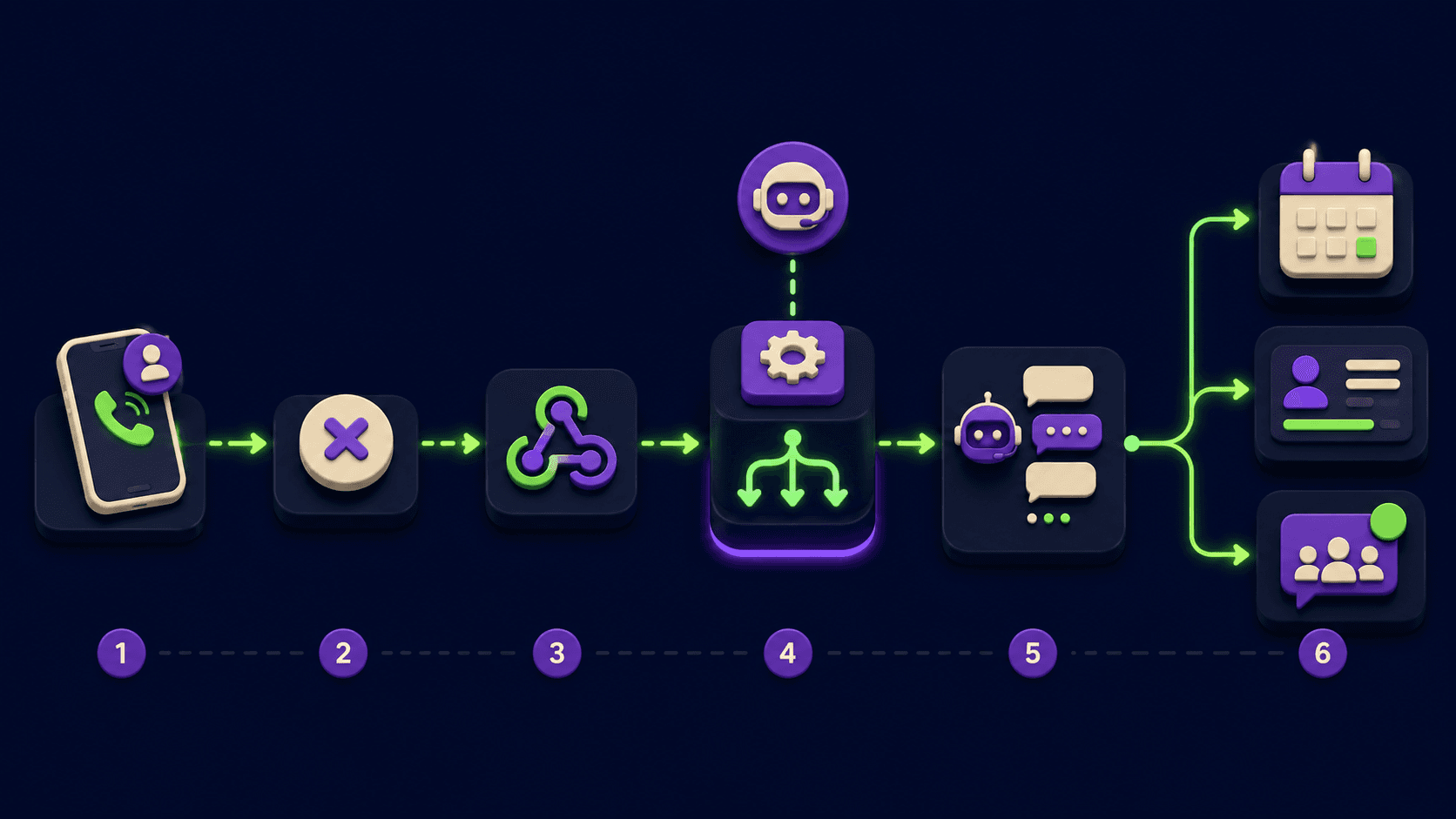
Voice Agent for Missed Calls: Every Service Business Is Bleeding Leads After Hours (2026)
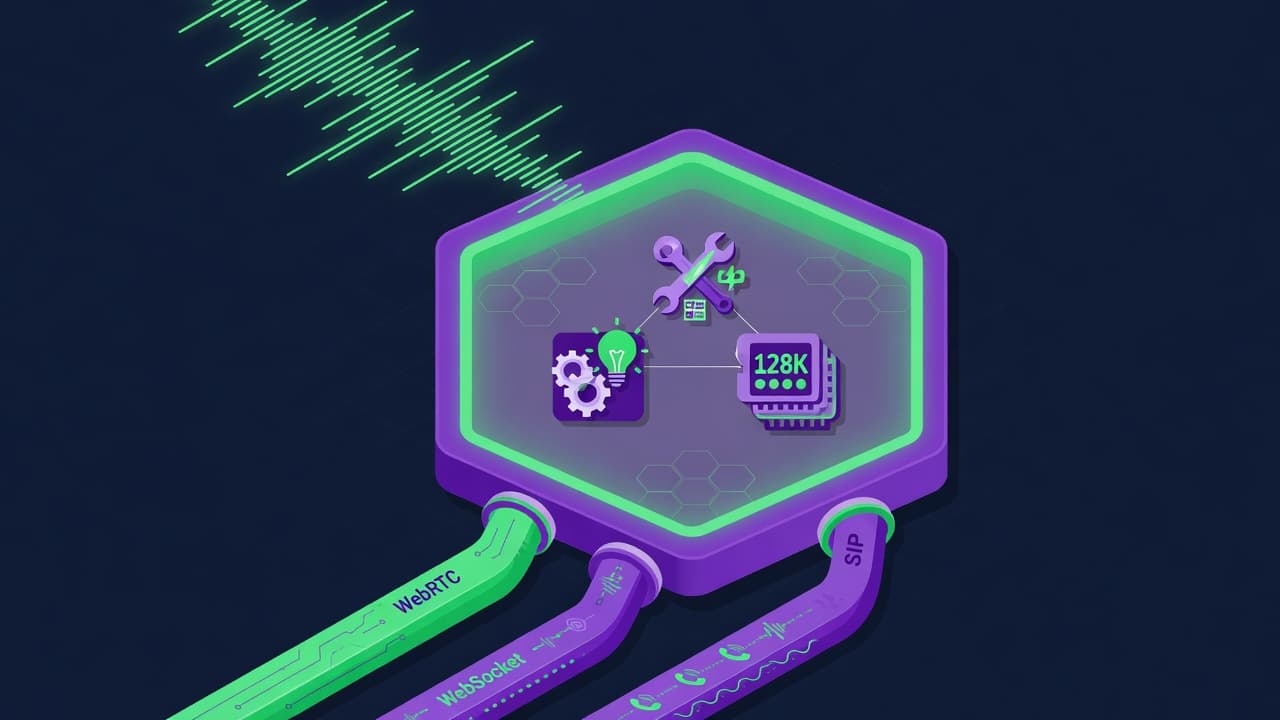
OpenAI GPT-Realtime-2 (May 2026): Pricing, Latency & 30-Min Voice Agent

AI Receptionist for Solo Professionals: Replace the Answering Service (2026)
Build a 70-Language Live Voice Agent With GPT-Realtime-Translate (2026)

How to Sell AI Chatbots to Local Businesses ($1K-$5K Retainers, 2026)