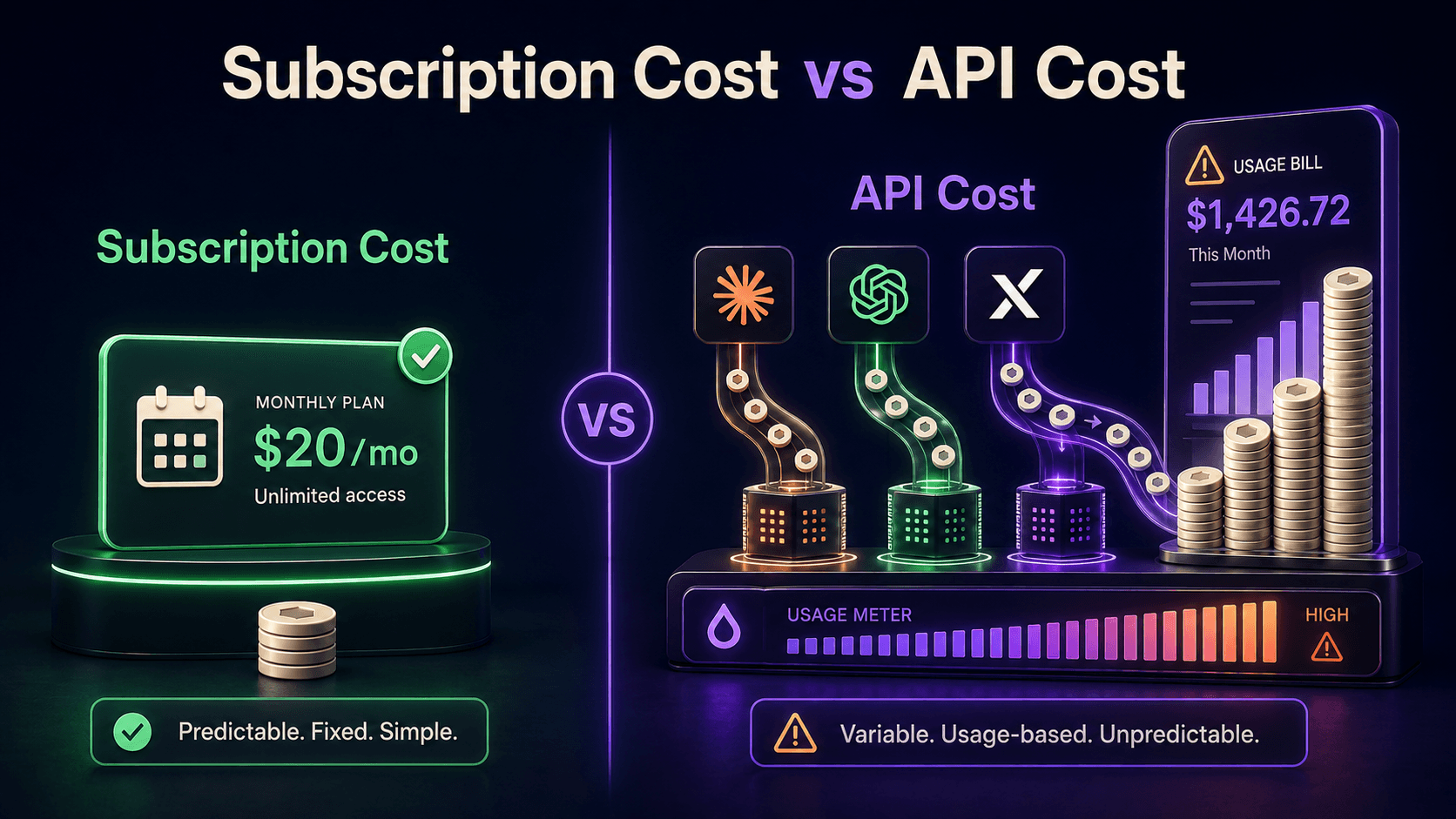

Magnific is a cloud-based AI image upscaler that uses latent diffusion to hallucinate convincing detail rather than just enlarge pixels. Built for AI-generated art workflows, it supports up to 16x upscaling, with Mystic image generation, Style Transfer, and Relight now part of the same subscription.
Magnific is an AI image upscaler and creative enhancement tool built by Spanish developers Javi Lopez and Emilio Nicolas, who launched it publicly in late 2023. In May 2024, Freepik acquired Magnific in its largest acquisition to date, and both co-founders joined Freepik's AI innovation team. On April 28, 2026, Freepik rebranded the entire corporate platform under the Magnific name, consolidating its image library, upscaling, and generation tools into one platform at over $200M in annual recurring revenue. The product lives at magnific.com and processes everything in the cloud.
The core upscaler supports 2x, 4x, 8x, and up to 16x magnification, outputting files as large as 10,752 x 7,168 pixels. Controls include a Creativity slider that governs how aggressively the AI invents new detail, an HDR slider for micro-contrast, a Resemblance dial for source fidelity, and a Fractality parameter that adjusts the scale of generated texture. A Precision mode (released summer 2025) handles real photography with a faithful 2x upscale that skips hallucination. Beyond upscaling, the suite now includes Mystic (text-to-image and image-to-image generation at up to 4K, launched September 2024), Style Transfer (launched March 2024), Relight for post-capture lighting changes (launched June 2024), and a Skin Enhancer. API access is available through the Freepik developer platform.
What Magnific generates in April 2026
The main upscaling engine works by running your source image through a latent diffusion process: instead of asking "what pixels belong here," it asks "what plausible detail could exist here." That distinction produces results that look sharper and more textured than traditional super-resolution, especially on AI-generated art where the source already lacks real photographic ground truth. On a standard Midjourney or Stable Diffusion output, Magnific can add convincing skin pores, individual fabric fibers, leaf veins in foliage, and sharp brick mortar lines that were absent from the source.
Mystic, the native generation mode, expanded the product from a post-processor into an image generator. Mystic v2 launched September 2024 and was built on advanced Flux-model architecture with improved text rendering. Javi Lopez announced it with the Arthur C. Clarke line: "Any sufficiently advanced technology is indistinguishable from magic." Mystic v2.5 followed with a Style Reference feature (SREF) for applying one image's aesthetic to another at 1K, 2K, and 4K output resolutions.
Relight, released June 24, 2024, lets users relight a scene after the fact using text prompts ("change the lighting to sci-fi neon green"), a reference image, or a custom light map. The feature reconstructs shadows and adjusts mood throughout the image, making it practical for product photography retouching and illustration lighting corrections without re-rendering the source scene.
"Texture detailing is next level." - Kele Dobrinski, Product Hunt, August 2025
Where Magnific sits versus Topaz Photo AI and Krea Upscaler
The upscaling market splits into two mechanical camps: faithful reconstruction (recovering what was likely in the source) and generative hallucination (inventing plausible new detail). Magnific leads the second camp. Topaz Photo AI anchors the first.
Topaz Photo AI is a desktop application for Windows and macOS that runs locally on your GPU. Its upscaling is built on super-resolution convolutional networks trained to reconstruct lost detail rather than invent it. Nine specialized models handle different image types (portraits, landscapes, low-light) and auto-select based on content. Face Recovery specifically preserves identity, correcting sharpness without risking alterations to ethnicity or bone structure. For a real photograph of a person, Topaz is the safer choice. Pricing is a one-time purchase around $199, plus an optional $99/year update plan, meaning over two years it often costs less than Magnific's $39/mo subscription. Topaz runs entirely offline, has no upload dependency, and processes images at GPU-bound speed rather than waiting in a cloud queue.
Krea Upscaler is a web-based diffusion upscaler that shares Magnific's generative philosophy but targets a different price point. Krea offers a free tier with 100 daily compute units and free 2K upscaling without a credit card. Paid plans start at $9/month (Basic, 5,000 credits) and $35/month (Pro, 20,000 credits), with a Max tier at $70/month that unlocks 22K upscaling and 60,000 credits. Krea's interface is simpler: a single AI strength slider replaces Magnific's four-parameter control system. Outputs are described by testers as "softer and smoother" than Magnific's sharper, more texture-forward results. Krea also integrates upscaling into a broader real-time canvas workspace alongside text-to-image, video generation, and third-party enhancers including Topaz. For users who want generative upscaling without paying $39/mo for a dedicated tool, Krea is the closest functional substitute.
"Definitely the best creative upscaler in the market, boosted with AI to enhance to realism your generative images." - Eric Dufourd, Product Hunt, 2024
Real cost of running Magnific
Magnific uses a token system where each upscale consumes tokens based on the output resolution and upscale factor. A standard 2x upscale of a typical Midjourney output (roughly 1450 x 850 px) costs approximately 5 tokens, coming to about $0.08 per image on the Pro plan. Quadrupling that same image to 6,000 x 3,500 pixels burns around 20 tokens, or $0.32 per image. On the Pro plan's 2,500 tokens per month, you get roughly 200 normal upscales or 125 large ones.
There is no rollover. Unused tokens expire at the end of the billing cycle. Magnific's official account confirmed this directly on X: "I'm afraid unused monthly tokens don't roll over. Magnific can only be used with an active subscription and the tokens are reset at the end of the subscription." Users who generate inconsistently, or take a month off, lose any remaining credits permanently.
Annual billing discounts are available: the Pro plan drops to $32.50/mo (billed $390/yr), Premium to $82.50/mo ($990/yr), Enterprise to $249/mo ($2,990/yr). Enterprise adds 2 hours/month of video call support and a higher batch limit. The no-refund policy applies to all tiers because GPU processing is consumed immediately on each job. There is no guaranteed free trial, though new accounts sometimes receive 50 bonus coins (approximately 10 standard upscales).
For developers, the Freepik API provides pay-per-use Magnific access covering the Creative Upscaler, Precision Upscaler, Mystic generator, and Skin Enhancer endpoints. Published community estimates put the cost at approximately $0.08 per 2K upscale and $0.16 per 4K upscale via API, making it accessible for low-to-mid volume pipeline integration without a subscription.
Where Magnific reliably fails
The same hallucination engine that makes Magnific impressive for AI art makes it dangerous for real photography. With Creativity set above 3, the model starts inventing details that never existed: stones added to brick walls, skin pores that weren't in the source, subtle shifts to facial bone structure or skin tone. For portraits of real people, results at high creativity settings can alter identity in ways that are cosmetically plausible but factually wrong. The Precision mode released in summer 2025 exists precisely because the original Creative mode is unsuitable for faithful photo enlargement.
Overprocessing is the most common complaint in user reviews. With Creativity and HDR both elevated, outputs develop what reviewers describe as "plastic skin," "oversharpened surfaces," and "fake texture density." The tool adds a heightened, slightly fantastical quality that works for stylized digital art but looks artificial on product photos or documentary images. Getting the sliders right requires experimentation, and each failed test costs tokens.
Reliability has been a periodic issue. In February 2024, a server-side failure caused batch upscales to get stuck in "Uploading" indefinitely. The team acknowledged the problem on X: "We think all the upscales currently stuck in 'Uploading' will fail. Well, working on it! Sorry. Shit happens!" Tokens were not deducted, but the incident highlighted the exposure of cloud dependency. Structural flaws in source images are not corrected: if the base image has distorted anatomy or malformed faces, Magnific sharpens the distortion rather than fixing it.
There is no offline mode, no desktop app, and no way to process large batches locally. For studios with data privacy requirements or limited-bandwidth environments, cloud-only processing is a genuine constraint.
Who Magnific is for, and who should pick something else
Use Magnific when: you work primarily with AI-generated images (Midjourney, Stable Diffusion, FLUX, Ideogram) and need to produce print-ready or high-resolution delivery files. Magnific's hallucination engine adds the kind of fine-grain detail that makes AI art look finished rather than enlarged. If you run a design studio delivering polished AI visuals and can maintain consistent monthly upscale volume to justify the subscription, the quality ceiling is among the highest available.
Skip Magnific when: you are a photographer who needs faithful enlargement of real-world images. Topaz Photo AI is built for that use case, runs offline, and is cheaper over a 12-18 month horizon. Skip Magnific if your upscaling needs are occasional rather than regular: the no-rollover policy punishes light users. If price is the primary constraint, Krea Upscaler handles generative upscaling at a significantly lower entry point with a free tier. Skip Magnific entirely if you need local processing for privacy or bandwidth reasons.
The Freepik acquisition and April 2026 rebrand do change the product's medium-term trajectory. Magnific is no longer just an upscaler: it is now positioned as an integrated creative platform targeting enterprise creative teams alongside individual AI artists. The Business plan, launched January 2026, gained 2,000+ subscriptions in six weeks and continues growing at 150 teams weekly, suggesting the enterprise pivot is working. For individual creators, the pricing remains premium, but the toolset has expanded enough that the value equation is stronger than it was at launch.
User Reviews
No reviews yet. Be the first to share your experience!
Sign in to write a review.
Related articles
Guides and articles related to Magnific.
Freepik AI Is Now Magnific: What Changed, What It Costs, and Whether to Stay (2026)
AI Fashion Prompts That Stay Consistent: The Working Formula (2026)
Google Vision AI Explained (2026): Pricing Per 1,000 Units, Free Tier, and Alternatives

AI Video Generator Prompting: The Filmmaker's Real Workflow
Grok 4.3 API for Agents (May 2026): Pricing, Benchmarks, Migration