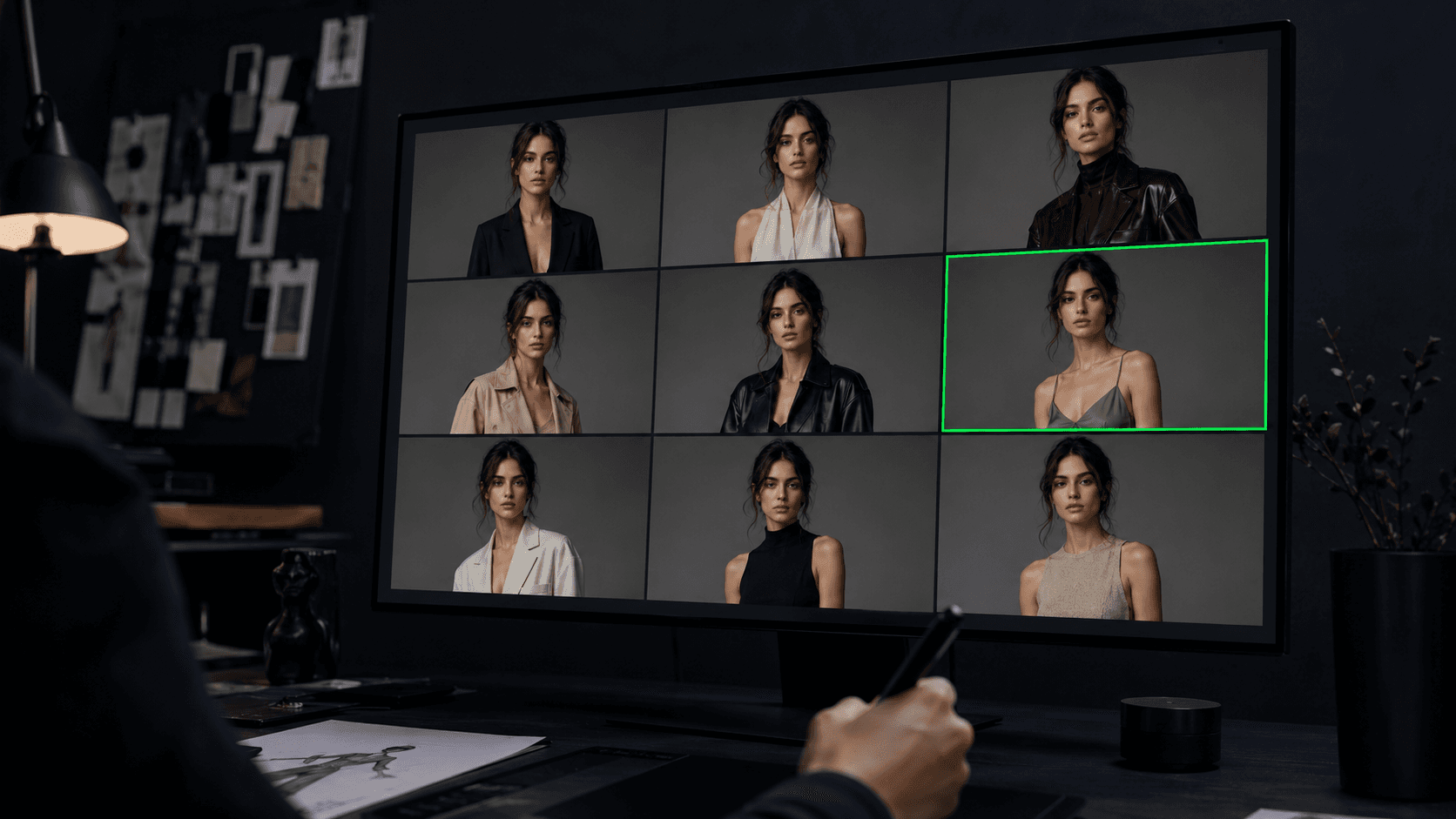

Fal.ai is a serverless inference platform giving developers API access to 1,000+ image, video, and audio AI models. Built by ex-Coinbase engineers, it runs FLUX models up to 4x faster than standard implementations via custom CUDA kernels, starting at $0.003 per image.
Fal.ai (styled as "fal") is a serverless AI inference platform built by ex-Coinbase and Amazon engineers, co-founded by Burkay Gur. It gives software developers a single REST and WebSocket API to run over 1,000 generative AI models - image, video, audio, and 3D generation - without managing any GPU hardware. The platform's defining trait is raw inference speed: fal builds custom CUDA kernels and a proprietary inference engine tuned specifically for diffusion models, running FLUX variants up to 4x faster than standard PyTorch implementations. The company raised a $140M Series D in December 2025, led by Sequoia with participation from Kleiner Perkins and NVIDIA's venture arm NVentures, valuing the company at $4.5 billion.
The platform is strictly infrastructure, not a consumer product. Developers get a unified API where the same code structure queries a text-to-image model, a video generation model, or an audio model - switching backends requires changing a model ID, not rewriting integration logic. Key capabilities include FLUX.1 and FLUX.2 model variants (schnell for speed, dev for quality, pro and Kontext pro for highest fidelity), LoRA fine-tuning on FLUX.1 [dev], asynchronous processing for long video jobs, real-time WebSocket streaming for interactive applications, and per-hour dedicated GPU compute for teams that need consistent throughput. Over 2 million developers use the platform as of early 2026, with notable customers including Perplexity, Photoroom, Freepik, and PlayHT.
What fal actually does in April 2026
Fal's model catalog sits at 1,000+ production-ready endpoints. The image side is anchored by the full FLUX family: FLUX.1 [schnell] (Apache 2.0 licensed, fastest, $0.003/image), FLUX.1 [dev] ($0.025/image, higher quality), FLUX.1 [pro] and FLUX Kontext [pro] ($0.04/image, photorealistic output and inpainting), FLUX.2 [pro] ($0.03/megapixel), and FLUX 2 LoRA Realism ($0.021/image). The video side includes Wan 2.5 ($0.05/second), Kling 2.5 Turbo Pro ($0.07/second), and Veo 3 ($0.40/second). Audio endpoints cover low-latency speech generation via Inworld TTS-1.5 Max.
The infrastructure layer offers two billing modes: serverless (pay per output, no idle cost) and dedicated GPU compute billed hourly (A100 at $0.99/hr, H100 at $1.89/hr, H200 at $2.10/hr). The WebSocket API enables real-time streaming for interactive applications, not just batch processing. An fal MCP Server, launched in 2026, connects the full model catalog to AI assistants for agentic workflows. The platform automatically handles global routing, load balancing, and scaling - there is no devops work for developers once an endpoint is integrated.
"fal.ai is awesome, we have integrated into various tools that generate images. We have been able to create amazing results with fal.ai - adding Kling video generation and Flux for image generation." - Larry Stefan Jr, ProductHunt, April 2025
"Their speed is incredible and helped us level up our UX. Access to top-tier models and tools made the difference." - James Wang, Magic Hour, ProductHunt, June 2025
Where fal sits versus Replicate and Together AI
The closest competitor is Replicate. Both host open-source generative AI models and charge pay-as-you-go, but the infrastructure philosophy diverges sharply. Replicate hosts 50,000+ community-uploaded models - anyone can push a model - making it the widest catalog for niche and experimental work. Fal curates its catalog to roughly 1,000 production-ready endpoints, which means faster cold starts (under 10 seconds vs. Replicate's 30-60 seconds for unpopular models) but less coverage for obscure community models. Billing also differs mechanically: Replicate charges per second of GPU runtime (e.g., $0.000225/sec on T4 hardware), which requires developers to understand hardware tiers and predict runtimes. Fal charges per output - per image or per second of video - which maps more cleanly to application economics. Fal's inference engine uses custom CUDA kernels tuned for diffusion models; Replicate uses standard PyTorch deployment without the same per-architecture optimization.
Together AI occupies a different position. Its primary focus is LLM inference - Llama, Mistral, Qwen, Gemma variants - with fine-tuning, RAG pipelines, and dedicated endpoints for text workloads. Image and video generation are secondary offerings at Together, not core competencies, and the FLUX variant depth fal provides does not exist there. Together offers fixed-price subscription options for LLM access; fal is pay-as-you-go only, with no subscription ceiling. For a team building around LLMs with occasional image generation, Together works. For a team where image or video generation is the product, fal's optimized inference and model depth are the better fit.
What the API reality looks like
The day-one experience is fast. New accounts get $1 in free credits, no credit card required, sufficient for roughly 40-330 images at FLUX schnell pricing. The API is REST-based, and fal publishes SDKs for Python and JavaScript. A basic integration - call an endpoint, receive an image URL - takes under an hour. The WebSocket endpoint for real-time streaming requires slightly more work to implement correctly but enables interactive UI patterns impossible with request-response APIs.
The friction emerges at scale. New accounts are capped at 2 concurrent requests across all endpoints. This ceiling is low enough to block any meaningful load testing or production traffic simulation. To unlock 40 concurrent requests, an account must carry a minimum of $1,000 in credits. Enterprise concurrency beyond that requires direct negotiation with fal's sales team. For indie developers or small teams testing viability, this means hitting a paywall before they can validate production-level throughput.
The API key security situation is a genuine concern that fal has not fully resolved. At least one detailed incident report on ProductHunt describes a compromised key leading to approximately $400 in unauthorized charges from an unknown model (Seedream), with fal support citing sole user responsibility and declining a refund. The platform does not offer IP allowlisting, key scoping by endpoint, or spending limits on base accounts. Developers handling customer data or running automated pipelines should treat key management as a first-priority operational concern, not an afterthought.
Who fal is built for
Fal is designed for software developers and technical founders who need to ship AI-powered features without building GPU infrastructure from scratch. The canonical use case is a SaaS product with an AI generation feature: a listing tool that renders property images, a social app that applies real-time filters, a creative platform that generates campaign assets from brand guidelines. The unified API means teams can prototype with schnell, validate quality with dev, and graduate to pro tier without changing integration code. Studios handling high-volume image or video production get dedicated GPU compute with predictable hourly rates. Enterprises at scale (Perplexity, Photoroom, Freepik are confirmed customers) get the throughput and SLA support that comes with fal's enterprise tier.
The fal-plus-FLUX combination is particularly well-suited to teams that care about staying current with open-source model releases. Fal's partnership with Black Forest Labs (whose co-founder Robin Rombach personally invested in fal's $23M round) means new FLUX variants arrive on fal on day one. When FLUX.1 launched on August 1, 2024, fal was among the first platforms live with all three variants. Teams that want the latest diffusion models without the overhead of containerizing new weights themselves get that through fal's catalog.
What fal is not
Fal is not a consumer product. There is no web interface for typing prompts and downloading images. Non-technical users who want AI image generation should look at Midjourney, Adobe Firefly, or DALL-E 3 in ChatGPT instead. Fal requires comfort with API authentication, JSON request/response parsing, and basic error handling.
Fal is not a free tool. The $1 credit is a sandbox token, not a working tier. Any production use requires a credit card and active billing management. For high-volume video workflows, costs can become substantial quickly - a session generating 100 five-second Veo 3 clips would cost $200 with no subscription ceiling to protect against overrun.
Fal is not a community model hub. Developers who want access to the full breadth of community-fine-tuned models, niche architectures, or models not yet on fal's approved list will find Replicate's 50,000-model catalog more accommodating. Fal's curation is a quality tradeoff, not a feature for everyone.
User Reviews
No reviews yet. Be the first to share your experience!
Sign in to write a review.
Related articles
Guides and articles related to Fal.ai.
Grok 4.3 API for Agents (May 2026): Pricing, Benchmarks, Migration
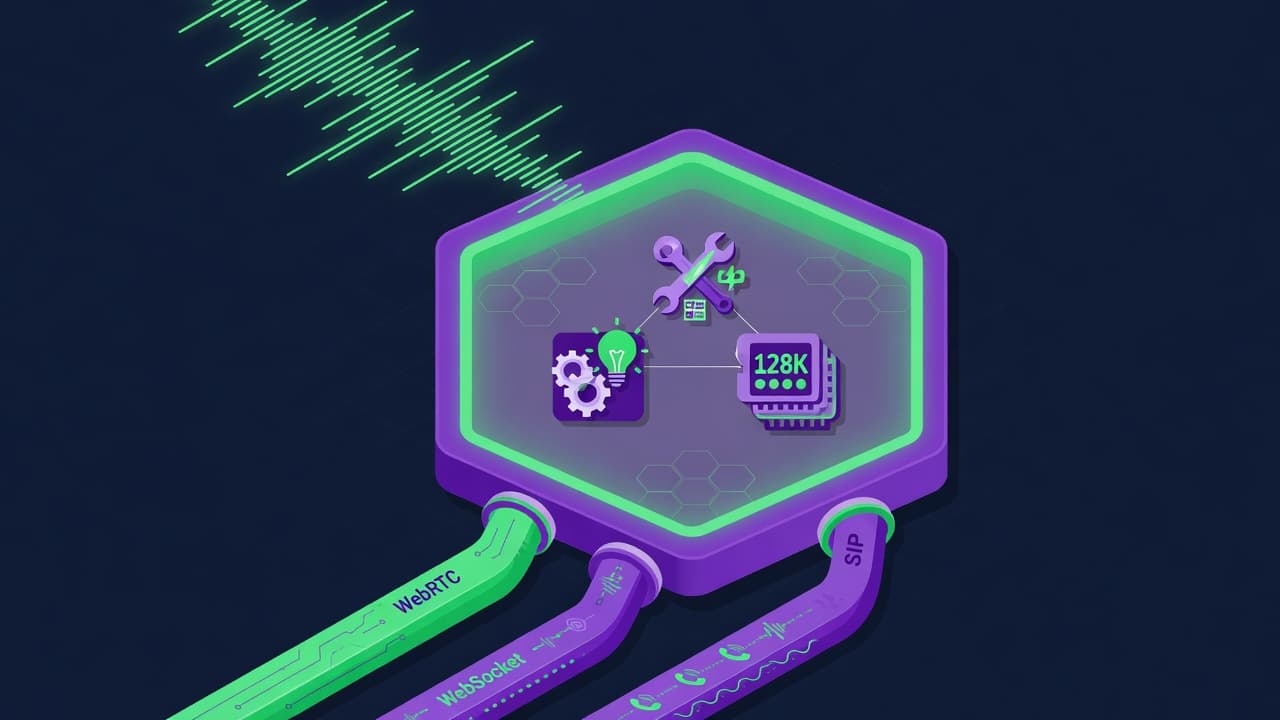
OpenAI GPT-Realtime-2 (May 2026): Pricing, Latency & 30-Min Voice Agent
Does API Cost More Than a Subscription for Claude Opus 4.8, GPT-5.5, and Grok?
Google Vision AI Explained (2026): Pricing Per 1,000 Units, Free Tier, and Alternatives
AI Video Generator Prompting: The Filmmaker's Real Workflow