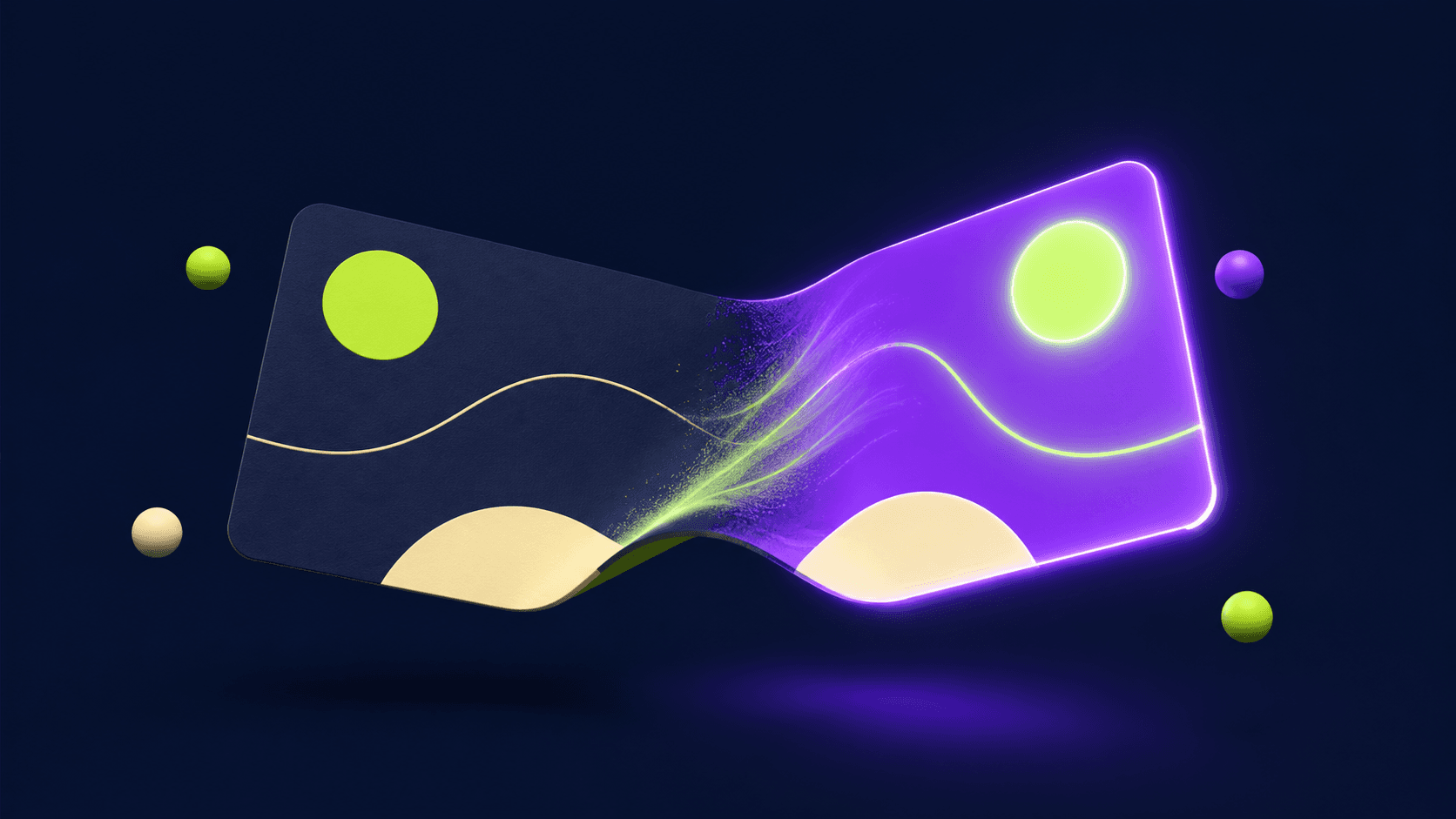

Topaz Video AI is a desktop application from Topaz Labs that upscales, denoises, and interpolates video footage using 19 dedicated AI models. It is the go-to tool for documentary archivists and filmmakers restoring older footage, starting at $299 per year.
Topaz Video AI is a desktop application made by Topaz Labs Inc (founded 2005, Dallas, Texas) that focuses on a narrow set of tasks done to a very high standard: upscaling low-resolution video to 4K, 8K, or higher, removing noise and grain, recovering motion blur, interpolating new frames for slow-motion or high-fps output, and stabilizing shaky footage. It is not a general video editor. It sits alongside editors like DaVinci Resolve or Premiere Pro as a dedicated pre- or post-processing step, taking damaged or low-resolution footage and preparing it for the cutting room. As of 2026, the software is at version 7.x (rebranded as Topaz Video in the Studio bundle), with plugins available for After Effects, DaVinci Resolve, and a Premiere Pro panel in tech preview.
The application includes 19 AI enhancement models split across two core functions. For upscaling and enhancement: Iris (specialized for facial detail recovery), Proteus (handles compression artifacts in low-bitrate footage), Starlight (available in Precise, Mini, Sharp, HQ, and Fast variants for different speed-quality tradeoffs), Artemis, Theia, Nyx, Nyx XL, Rhea, Rhea XL, Gaia, and dedicated Grain and Motion Deblur tools. For frame interpolation: Apollo, Apollo Fast, Chronos, Chronos Fast, and Aion (for high-resolution extreme slow motion). An API is available at developer.topazlabs.com for teams needing video enhancement at scale, with enterprise customers including production houses and media companies using it for batch archive processing. Pricing starts at $299 per year for a Personal subscription.
What Topaz Video AI outputs in 2026
The software processes existing video footage through AI models that do deep temporal analysis, comparing multiple frames simultaneously to reconstruct motion-coherent detail. The core output modes are: resolution upscaling (from SD/360p up to 4K, 8K, or 16K), frame rate conversion (24fps to 60fps, 120fps, or higher for slow motion), noise and grain removal (tuned for film grain, digital noise, and compression artifacts), motion deblur (recovery of focus from camera shake), deinterlacing (converting interlaced DV, Betacam, or broadcast footage to progressive), and camera stabilization.
The Iris model reconstructs facial details specifically, making it the go-to choice for archival footage of people. The Proteus model targets compression-damaged footage, handling blocking, mosquito noise, and low-bitrate internet video in a single pass. The Starlight Precise variant, updated in 2025, was trained extensively on people for natural skin-tone preservation. SDR-to-HDR conversion is also included, relevant for upscaling catalog content to modern HDR delivery formats.
Exports are handled through a queue system with cloud processing as an optional supplement to local rendering. The v6.0 release in December 2024 added HDR and 8K video player support, a tab-based preview comparison interface, and a redesigned preset system. Version 7.x focused on new model releases. Resolution outputs up to 16K are technically supported, though practical rendering times become prohibitive without high-end GPU hardware.
Where Topaz Video AI sits versus DaVinci Resolve Studio and Premiere Pro
DaVinci Resolve Studio (Blackmagic Design, $295 one-time perpetual) includes Superscale upscaling and temporal noise reduction built into a full non-linear editor. The mechanical difference is how each tool analyzes frames: Resolve's AI upscaling uses per-frame spatial analysis; Topaz uses multi-frame temporal modeling, analyzing several frames at once to maintain motion coherence. In SSIM benchmark testing on matched source footage, Topaz averaged 0.92 versus Resolve's 0.84. More importantly, Resolve's upscaling degrades on highly compressed or damaged source material (it performs best with original high-bitrate camera files), while Topaz's Proteus model is specifically designed to remove compression artifacts as part of the upscaling pass. Resolve also requires separate plugin processes for denoising, sharpening, and upscaling; Topaz handles all three adaptively in one export. The tradeoff: Resolve produces superior temporal stability on clean source footage (less flicker, smoother motion), and the workflow never leaves the editing timeline. Topaz requires a separate round-trip export.
For a direct comparison of these tools in context, see also the DaVinci Resolve listing on Vantaige.
Adobe Premiere Pro (subscription, $55.99/month) includes AI tools under the Sensei umbrella: Auto Reframe, Enhance Video, Speech to Text, and Color Match. Premiere's Enhance Video feature uses spatial per-frame AI upscaling without Topaz's multi-frame temporal reconstruction. The SSIM gap is similar (Topaz 0.92, Premiere 0.84 on matched tests). The key practical difference is workflow integration: Premiere's tools run inside the timeline without a round-trip export, which matters significantly for editors working under deadline. Topaz's quality advantage is real but requires additional export steps. A Topaz Labs panel for Premiere Pro was released as a tech preview in late 2025, beginning to close that round-trip friction. For purely generative AI video work, see Runway or Pika, which create video from scratch rather than enhancing existing footage.
"Out of all the upscaling programs I tried, Topaz gave the best results with the clearest enhanced video. After trying seven AI upscaling programs with the same test footage, Topaz gave the most detailed final video by far!" -- Neil Chase, filmmaker, neilchasefilm.com, 2024
The real cost of processing video with Topaz Video AI
Pricing moved to a subscription model in October 2025, when Topaz Labs discontinued perpetual licenses with the launch of Topaz Studio. Prior to that, Video AI sold for $299 as a one-time purchase. Current pricing for the standalone Topaz Video app starts at $299 per year ($25/month equivalent) on the Personal plan, or $699 per year on Pro (which includes full commercial rights and 100 monthly cloud credits). The Topaz Studio bundle, which adds Photo AI and Gigapixel, runs $279/year on Personal or $559/year on Pro, and may represent better value for teams doing both video and image work.
Cloud credits supplement local rendering: Personal subscribers get 25 video credits per month, Pro gets 100. Local rendering is unlimited. The API, for developers integrating video enhancement into their own pipelines, uses a separate credit system starting at $50 for 100 credits. Enterprise pricing is custom (contact sales).
The hidden cost of Topaz Video AI is hardware. The software is GPU-intensive. On an RTX 3070Ti, users report 6-7 FPS when upscaling to 4K 60fps, meaning a one-minute clip can take 15 minutes or more to process. Budget workstation users report processing times measured in hours for modest clips. Topaz recommends modern NVIDIA or AMD dedicated GPUs; an Apple M-series chip also performs well. If your hardware is mid-range, account for render time as a real recurring cost before committing to an annual subscription. Puget Systems hardware benchmarks confirm that CPU selection affects performance almost as much as GPU choice for this application.
Where Topaz Video AI consistently breaks
The most documented failure mode is hallucinated artifacts on high-motion footage. Fast camera pans, action sequences, and footage with complex motion (blowing hair, water, crowd movement) can produce ghost limbs, shimmering halos around moving subjects, and texture inconsistency between frames, particularly with the Artemis and Proteus models. This is not a bug -- it is the nature of generative pixel reconstruction, acknowledged by CEO Eric Yang himself: "You can't actually go back to the source and fill in what was there. So you're always generating pixels."
Render times are a persistent pain point, documented in forum threads dating to 2022 and still appearing regularly in 2025. The community bug tracker has multiple open threads about estimated render times that escalate unexpectedly, frame rates dropping to 0.0 FPS mid-export, and processing times that spike from seconds to hours for equivalent clips. These issues are hardware-dependent but not fully resolved by hardware upgrades.
The v6.0 launch in December 2024 generated immediate complaints. Community member ForSerious wrote: "We weren't given a new beta to see if any of the issues we pointed out were addressed." Post-launch bug reports included VFR (variable frame rate) errors with Artemis and Proteus, DaVinci Resolve plugin compatibility breaks, and a preview rendering loop that made comparison workflows confusing. User bas.evers noted the software would "keep rendering previews" continuously rather than pausing to show unprocessed comparisons as earlier versions had done.
"Topaz Video AI 7 will be about new models or updated versions of existing ones with less artifacts." -- nikolaos.tsimouris, Topaz Community forum, December 18, 2024
The subscription transition in October 2025 is a non-technical frustration worth naming. Topaz Labs ended perpetual license sales on October 3, 2025, moving entirely to subscriptions with the Topaz Studio launch. The community reaction was negative: users who had paid $299 once and expected to own the software indefinitely now face $299/year recurring costs to stay on current models. Forum threads, YouTube commentary, and "best alternatives" articles spiked in the months following the announcement. Existing perpetual license holders retain their licenses but receive no new models beyond what was included in their last update year.
Best use cases versus skip-this scenarios
Best for: Documentary filmmakers and archivists restoring degraded, interlaced, or low-resolution footage. This is where Topaz Video AI has no serious peer. Jeremy Workman upscaled 25 hours of 320x240 consumer camera footage to 4K for his 2024 documentary "Secret Mall Apartment." Michael Tucker upscaled interlaced DV footage for the 2023 New York Times Op-Doc "The Army We Had." Filmmakers Robert Stone and Ondi Timoner have used it to restore older films for theatrical re-release. The Iris model's facial detail recovery is specifically valuable for footage of people where faces are the subject.
Also strong for: content creators needing to upscale licensed stock footage or old personal footage to match 4K primary cameras; sports and nature videographers converting 24fps or 30fps footage to 60fps or higher for smooth slow-motion; production teams with archive SD or DV libraries needing batch upscaling through the API; VFX facilities doing restoration work before grading and finishing in Resolve. Users who want to pair high-quality upscaling with AI-generated content can combine Topaz with Luma AI for generation and Topaz for quality finishing.
Skip it when: You need an all-in-one editor (use DaVinci Resolve or Premiere Pro). You have a mid-range GPU and fast turnaround deadlines -- render times will become a workflow bottleneck. You are generating video from scratch rather than enhancing existing footage (see Runway or Pika for text-to-video). You were counting on a one-time perpetual license model, which is no longer available for new purchases. You need forensic or medical video analysis -- Topaz Labs CEO Eric Yang explicitly advises against these uses, noting the technology generates plausible pixels rather than recovering ground truth.
For teams doing AI-assisted video production across generation and enhancement, Topaz Video AI occupies the enhancement end of a pipeline that might begin with tools like Runway or Luma AI for creative generation and end with Topaz for delivery-grade quality.
User Reviews
No reviews yet. Be the first to share your experience!
Sign in to write a review.
Related articles
Guides and articles related to Topaz Video AI.
AI Video Generator Prompting: The Filmmaker's Real Workflow
Google Vision AI Explained (2026): Pricing Per 1,000 Units, Free Tier, and Alternatives
Grok 4.3 API for Agents (May 2026): Pricing, Benchmarks, Migration
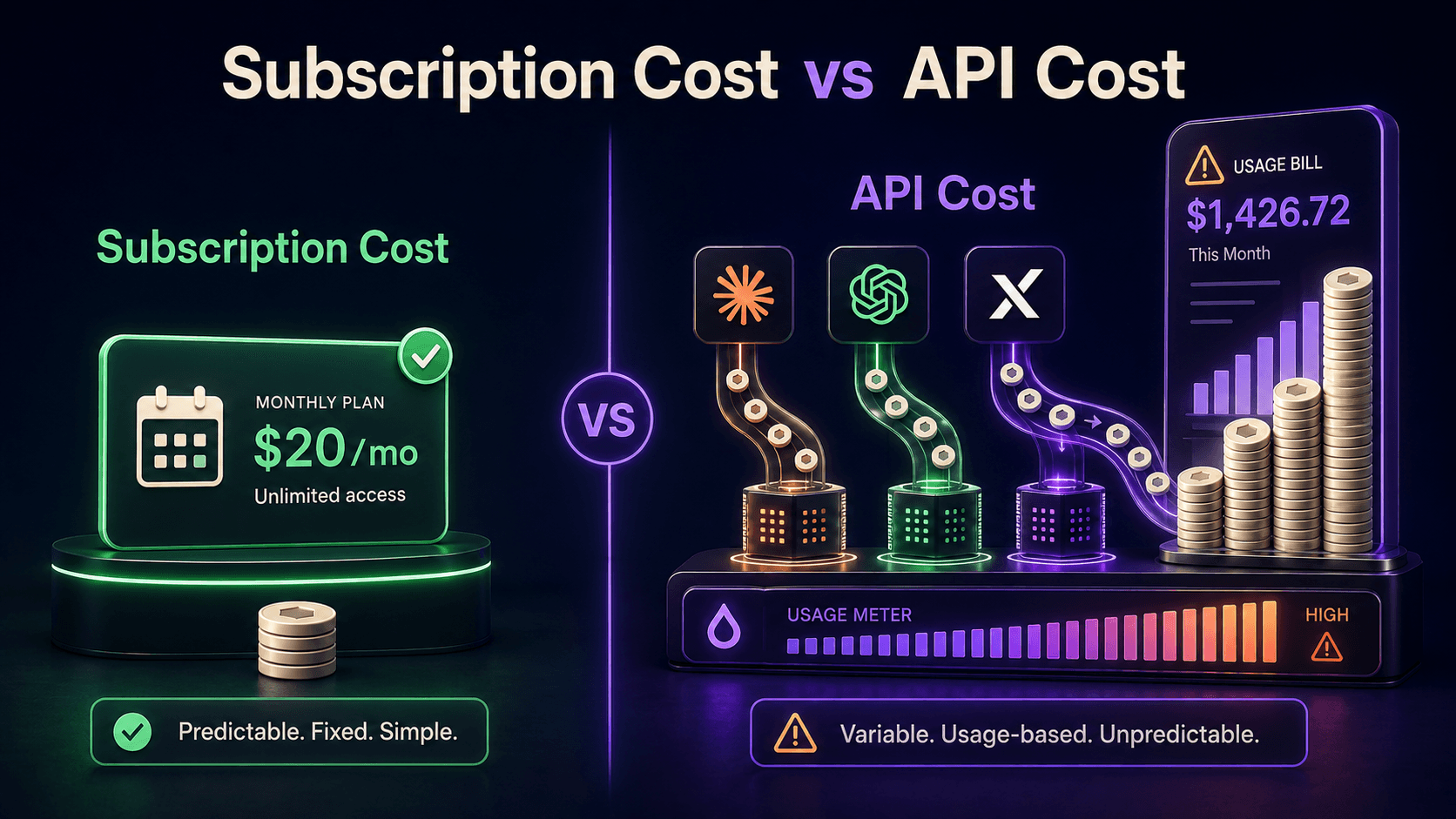
Does API Cost More Than a Subscription for Claude Opus 4.8, GPT-5.5, and Grok?
AI Fashion Prompts That Stay Consistent: The Working Formula (2026)