AI Outbound System Design and Build: What a Done-For-You Engagement Looks Like

AI Outbound System Design and Build: What a Done-For-You Engagement Looks Like
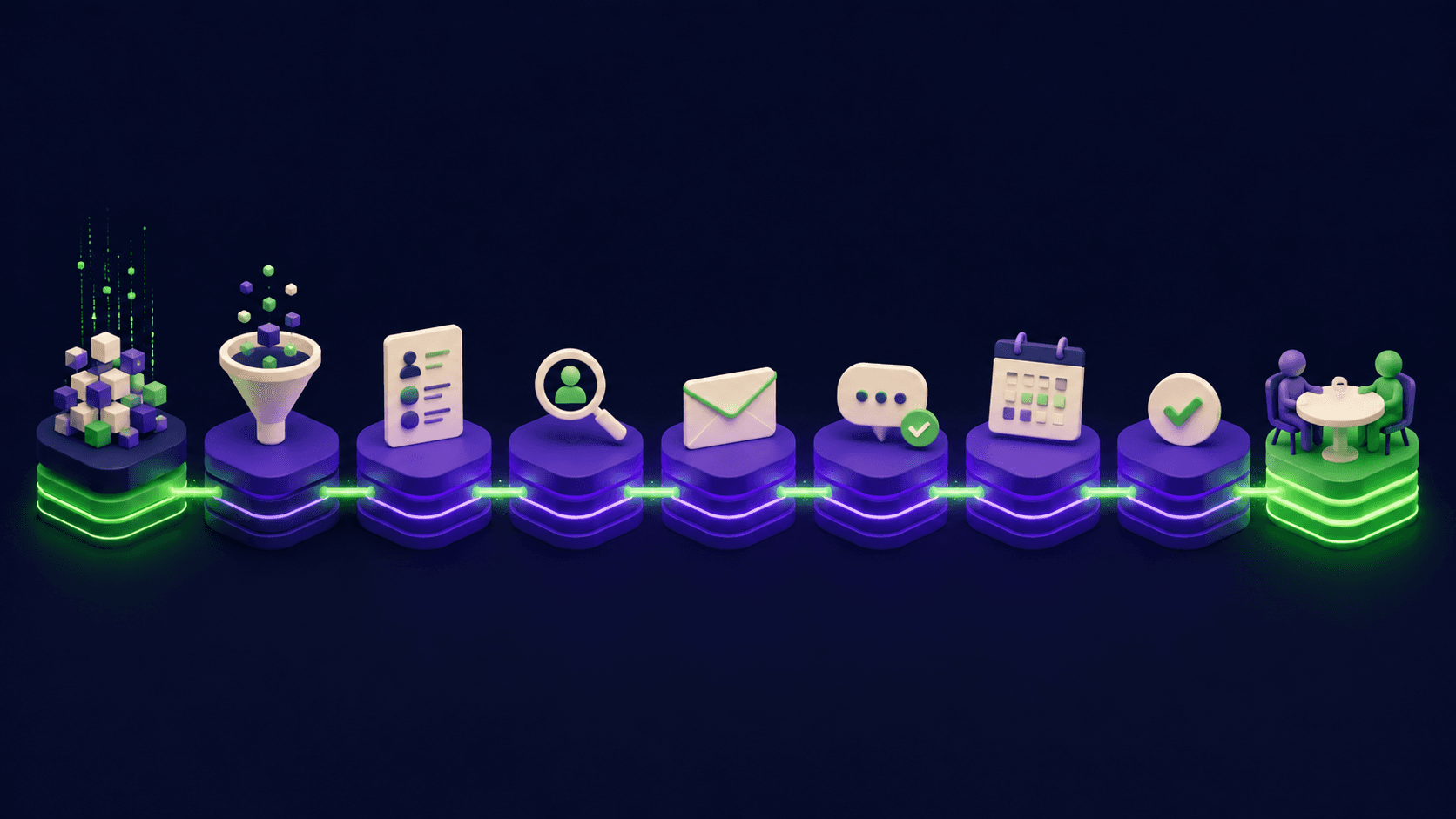
If you have read the playbooks and decided you would rather operate a working outbound system than build one, this page explains exactly what we deliver: the phases, the timeline, what you own at the end, and how we price it. No jargon, no mystery. It is the same nine-layer architecture we publish openly, assembled, tested, and handed to your team so you book meetings instead of debugging DNS records.
TL;DR
We design, build, and hand over a complete AI outbound system
Four phases: audit, build, launch, handover, over a few weeks
You own the domains, data, sequences, and documentation
Pricing is project-based, scoped to your volume and stack
It starts with a free outbound audit, no commitment
What is a done-for-you outbound engagement?
A done-for-you outbound engagement is a fixed-scope project where we build your entire AI cold outreach system and hand it over working, instead of you assembling nine tools and learning deliverability the hard way. You get the architecture from our outbound stack playbook, built and configured for your business, with your team trained to run it.
The difference between reading the playbook and hiring the build is the order of operations. The layers are knowable; sequencing them so deliverability holds, data quality stays high, and personalization actually lands is where most self-builds stall for months. We compress that into weeks because we have done it repeatedly. Explore the component tools on the sales and outreach directory if you want to see the pieces first.
What are the phases and timeline?
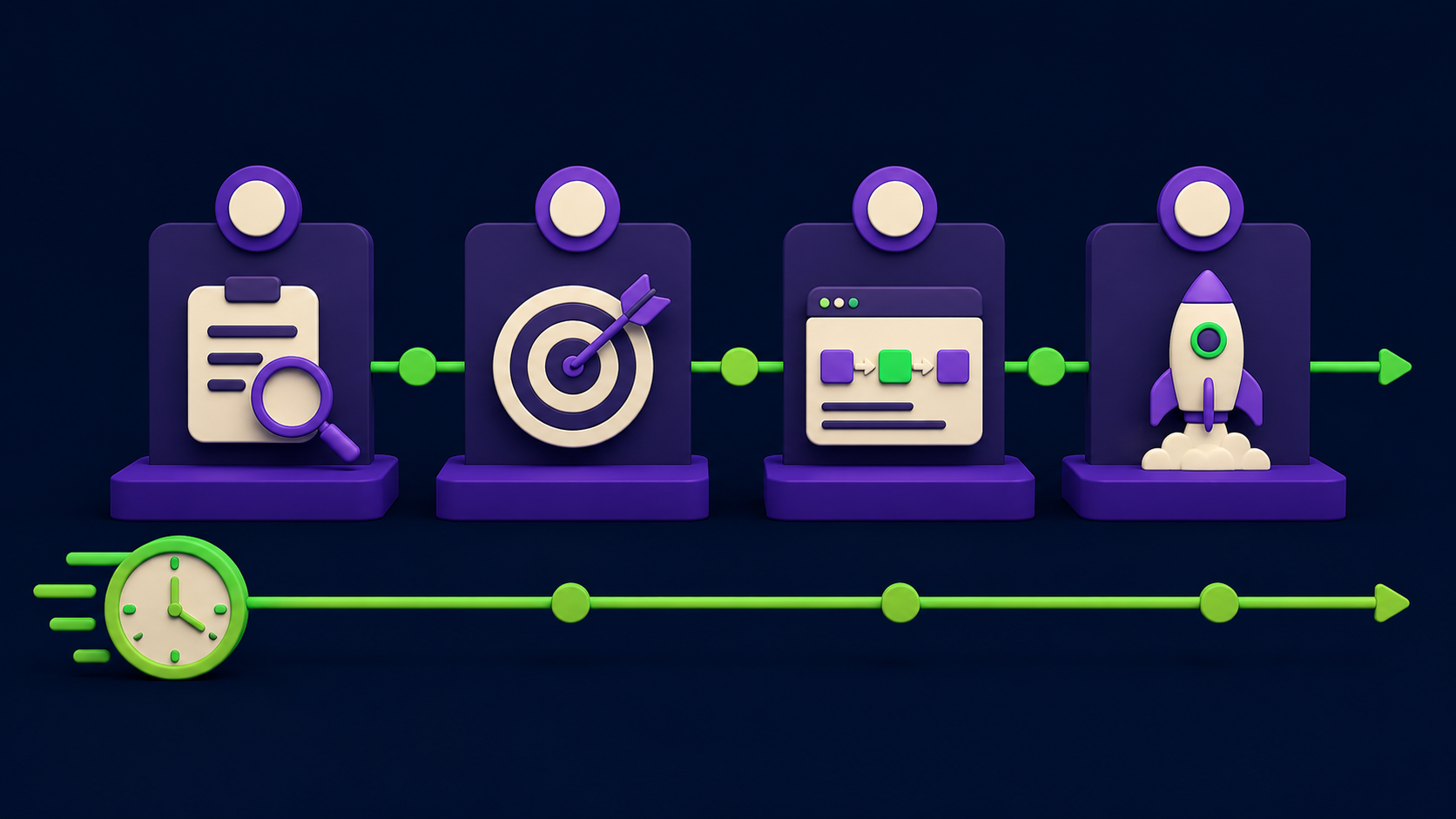
The engagement runs in four phases over a few weeks, structured so domains warm in the background while we build the rest. Nothing real sends until the infrastructure is ready, which is the discipline that protects your sender reputation from day one.
Phase | What happens | Typical timing |
|---|---|---|
1. Audit and design | ICP, offer review, stack selection, domain plan, warmup started | Week 1 |
2. Build | Data and enrichment, verification, personalization, sequences, CRM sync | Weeks 1 to 3 |
3. Launch | Controlled first sends, deliverability monitoring, copy iteration | Weeks 3 to 4 |
4. Handover | Team training, documentation, ongoing-run playbook | Week 4 |
The warmup constraint is why no credible build promises day-one sends: domains need two to three weeks to warm before real volume, a point we explain in our deliverability guide. We start that clock in week one so it never becomes the bottleneck.
What exactly do you get at the end?
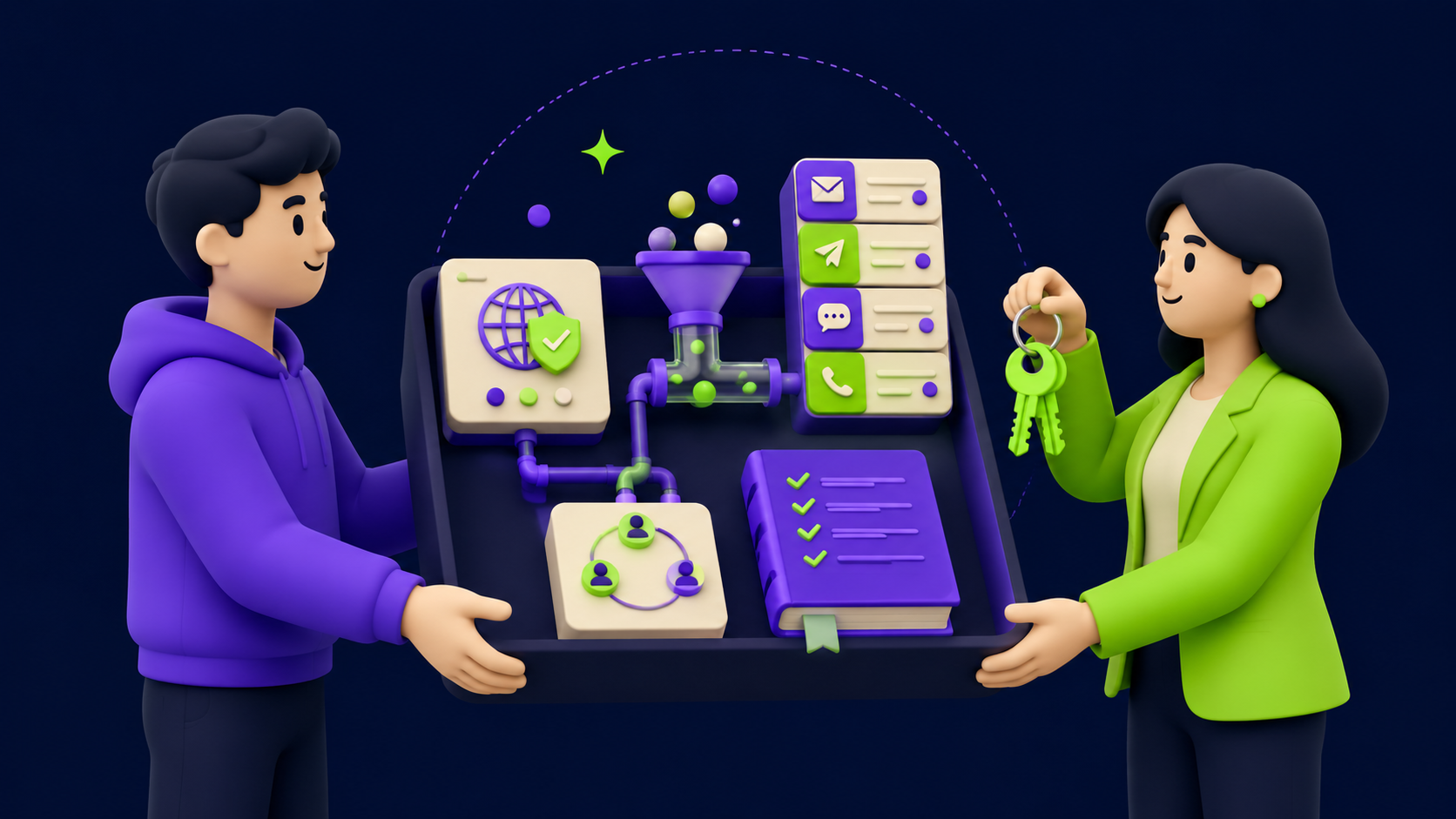
You get a working system that you own outright, not a dependency on us. Concretely: configured sending domains and inboxes (warmed and authenticated), an enriched data pipeline, AI personalization that turns enrichment into relevant first lines, multichannel sequences, CRM sync, and a documented playbook your team uses to run it.
Ownership matters because the alternative (an agency that keeps the keys) leaves you renting your own pipeline. We hand over credentials, documentation, and training so your team operates the system independently. If you later want us to keep running or scaling it, that is a separate choice, not a lock-in. The enrichment engine at the core is usually Clay, which we explain in how Clay actually works.
How much does it cost?
Pricing is project-based and scoped to your sending volume, data needs, and how many channels you run, so the honest answer is that the audit sets the number. What we can say openly: it is a fraction of the loaded cost of the SDR headcount it supports, and the tooling that runs afterward sits in predictable monthly market ranges you can model from our 2026 automation rate card.
The comparison most clients make is build-versus-hire. Our AI SDR versus human SDR analysis runs that math: a system that supports the output of multiple reps, for less than the loaded cost of one. We scope precisely in the audit so you see the full number before committing to anything.
Who is this for, and who is it not for?
This fits B2B companies with a real offer and a defined ICP who want pipeline without building or managing a cold-outreach operation in-house. It fits founders doing outbound manually who have hit their time ceiling, and sales teams whose reps waste hours on research and list-building instead of selling.
It is not for businesses without product-market fit (outbound amplifies a working offer, it cannot create demand for one that is not landing), or for anyone wanting a magic button with no involvement. You provide the offer, the ICP knowledge, and a point of contact; we provide the system. When both are present, it works. When the offer is not ready, we will tell you, because sending into a weak offer just burns domains.
Want your outbound system built for you?
Vantaige designs and builds done-for-you AI outbound: data, enrichment, personalization, sequencing, and CRM sync, wired into one system your reps actually use. Book a free outbound audit and we will find the revenue leaking from your pipeline.
FAQ
How long until the system books meetings?
Plan for three to four weeks before the first real sends, because domains must warm first. Meetings typically follow within the first weeks of live sending when the offer and data are strong. We monitor deliverability closely during launch so volume scales safely rather than fast and fragile.
Do you keep running it or hand it over?
Handover is the default: you own the domains, data, sequences, and documentation, and your team is trained to run it. If you prefer us to keep operating or scaling it, that is an optional ongoing arrangement, not a requirement baked into the build.
What do you need from us?
A defined offer, your ICP knowledge, access to set up domains and CRM, and one responsive point of contact. The more context you give on what makes a good customer, the better the targeting and personalization. We handle the technical assembly end to end.
Is cold outreach compliant where I operate?
It can be, and we build to the rules that apply to your regions (CAN-SPAM, GDPR, CASL): honoring opt-outs, identifying the sender, and using a lawful basis for contact. Compliance is part of the design phase, not an afterthought, and we flag anything region-specific up front.
What if I already have some tools?
We work with what you have where it makes sense and replace only what is holding you back. The audit reviews your current stack and keeps the parts that earn their place. You are not forced into a rip-and-replace if your existing pieces are sound.
What happens in the free audit?
We review your offer, ICP, current outreach, and goals, then map the system you would need and where your pipeline is leaking today. You leave with a clear picture of the build and the number, with no obligation to proceed. It is genuinely free and genuinely useful either way.
Related from Vantaige
References
U.S. FTC, CAN-SPAM Act compliance guide. ftc.gov
Google, email sender guidelines. support.google.com
Clay, enrichment and outbound documentation. clay.com
Get the best new AI tools and guides, weekly
One short email a week. The tools worth trying, the guides worth reading, nothing else.
No spam. Unsubscribe anytime.
Aymen B
Contributing writer at Vantaige, covering the AI tools ecosystem.
Similar articles
AI Content Automation Services: What a Done-For-You Setup Includes (and Costs)
How to Build an AI Outbound Stack From Scratch: The Complete 2026 Playbook