AI SDR vs Human SDR: The Real Cost, Performance, and What Nobody Tells You
AI SDR vs Human SDR: The Real Cost, Performance, and What Nobody Tells You (2026)
Every B2B sales leader right now is fielding pitches from AI SDR vendors promising to replace their outbound team for a few hundred dollars a month. Some of those pitches are worth hearing. Most skip the parts that will actually determine whether the project succeeds or quietly dies after quarter one. This article runs the real cost math, names the honest caveats competitors gloss over, and gives you a decision framework built on what operators who have deployed both models have actually observed in 2026.
TL;DR
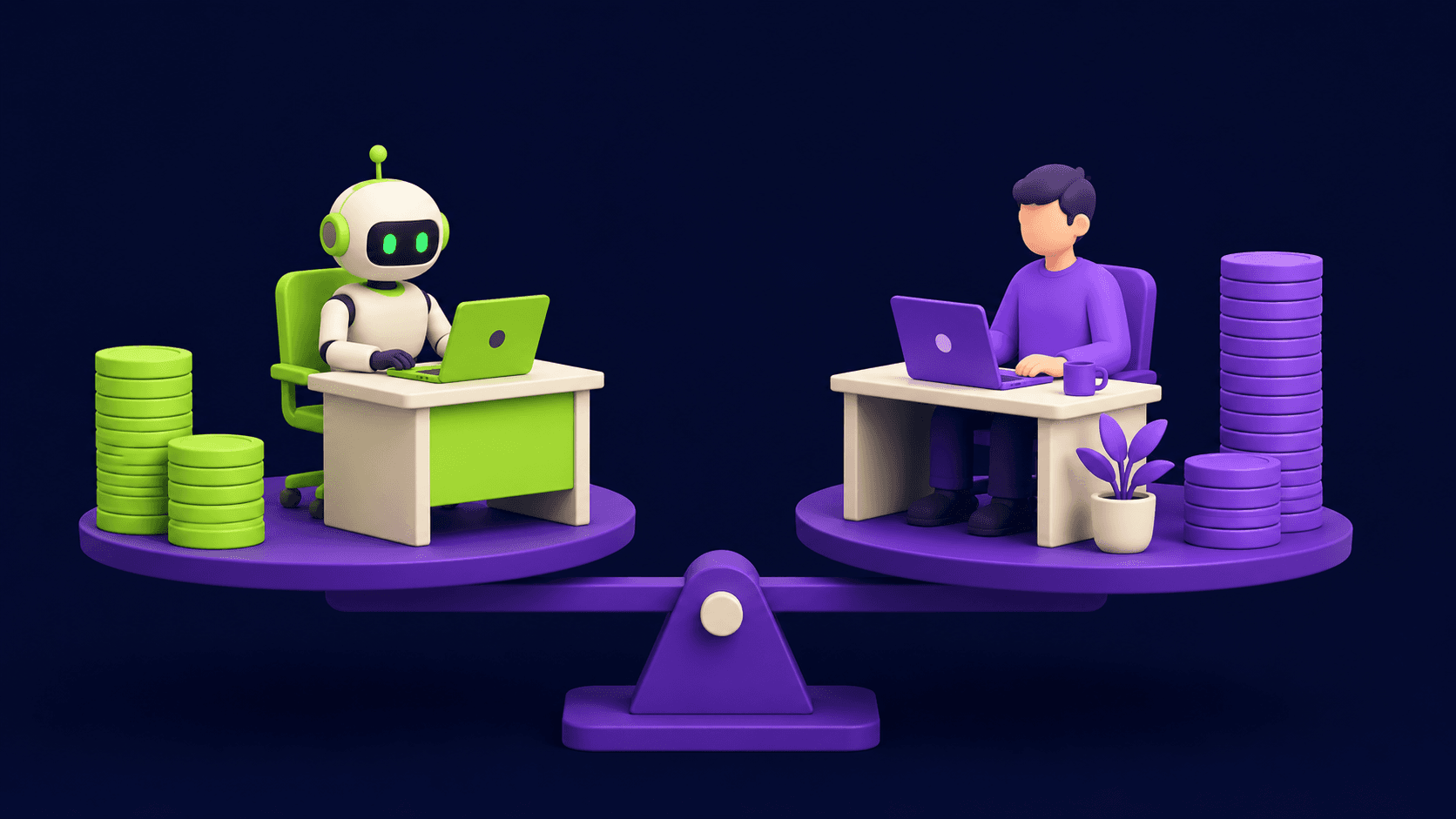
A fully loaded human SDR costs $100,000 to $150,000 per year; AI SDR tooling runs $12,000 to $60,000 per year.
AI SDRs produce 10 to 50x the outreach volume but book meetings that show and convert at roughly half the rate.
Volume does not fix a broken ICP or a cold domain, and AI outreach can burn your sending infrastructure fast.
The model most teams actually run in 2026 is hybrid: AI handles top-of-funnel sourcing and sequencing, humans handle objections and closes.
Only 2% of full AI SDR deployments survive long-term without human augmentation, per operator-reported data from Naoma AI (2026).
What Does a Human SDR Actually Cost When You Count Everything?
The fully loaded annual cost of one human SDR sits between $100,000 and $150,000, and that range climbs toward $160,000 to $200,000 for senior BDRs targeting enterprise accounts. Most hiring managers budget for base salary and forget the other half of the tab.
Here is where the money actually goes, based on operator-reported ranges compiled by Salesmotion (2026) and Prospect AI (2026):
Cost line | Low estimate | High estimate | Notes |
|---|---|---|---|
Base salary | $55,000 | $75,000 | US market, mid-sized city |
Commission and bonuses | $15,000 | $30,000 | Tied to meetings booked or pipeline created |
Benefits and payroll taxes | $15,000 | $25,000 | Health, 401k, employer FICA |
Sales tools and data | $5,000 | $12,000 | CRM seat, enrichment, sequencer, dialer |
Management overhead | $10,000 | $15,000 | Fractional SDR manager time, QA, 1:1s |
Recruiting costs | $5,000 | $15,000 | Agency fee or internal recruiter time; SDR churn averages 14-18 months |
Ramp time (lost productivity) | $5,000 | $8,000 | 3-4 months to full quota; partial output only |
Total annual (fully loaded) | $110,000 | $180,000 | Per rep, per year |
The ramp cost is the line most spreadsheets omit. A new SDR in months one through three is at 30 to 50% productivity while you are paying 100% of the cost. When churn hits, that cycle repeats. High SDR turnover is not a people problem; it is a structural cost that belongs in the denominator of your cost-per-meeting calculation.
What Does AI SDR Tooling Actually Cost in 2026?
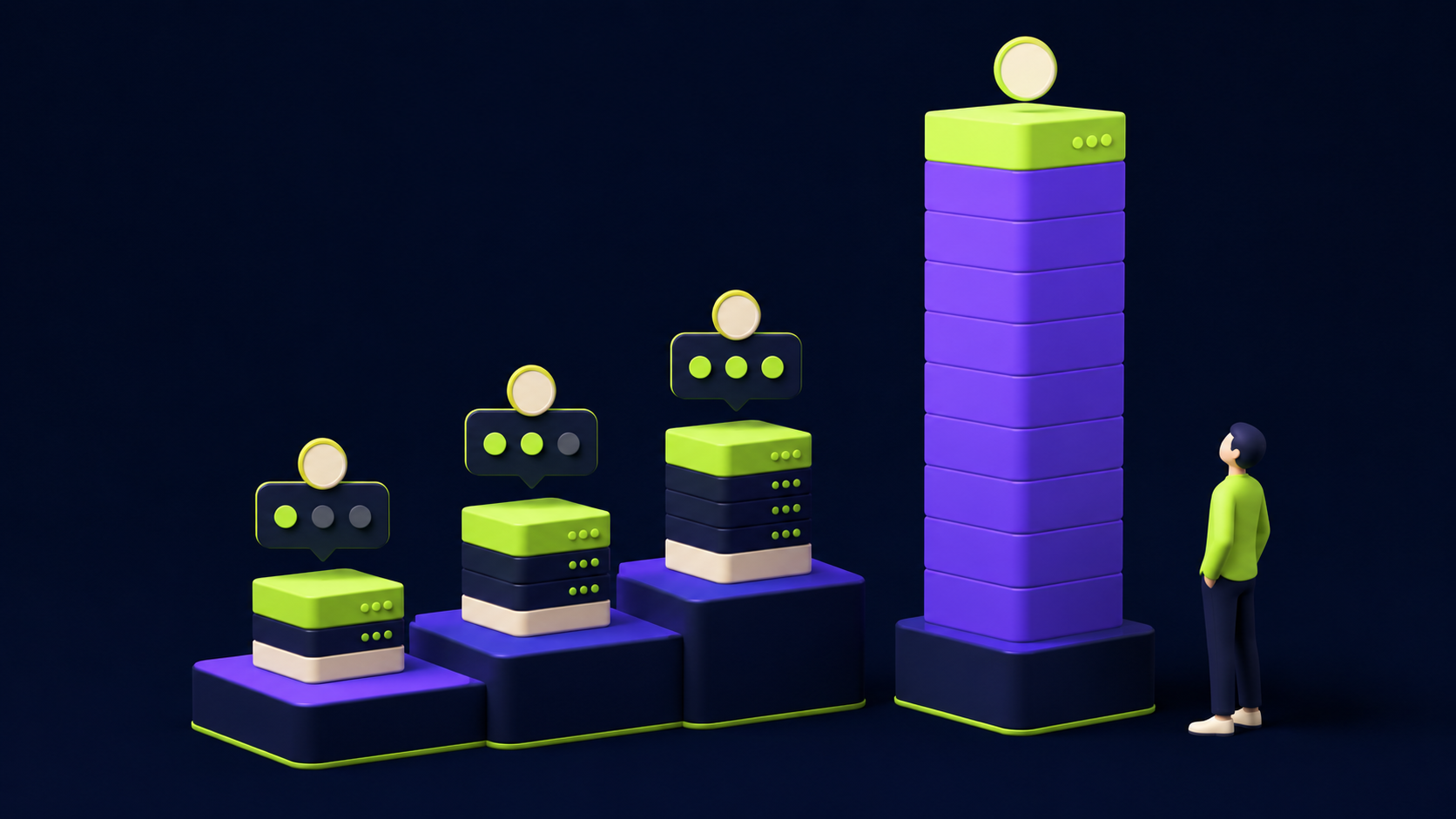
The honest answer is: it depends heavily on which tier of platform you choose and how much volume you need. Entry-level tools start around $400 to $900 per month. Mid-tier platforms designed for serious outbound run $1,000 to $5,000 per month. Enterprise-grade AI SDR products from vendors such as 11x can reach $50,000 per year or more.
Platform tier | Monthly cost (operator-reported) | Annual equivalent | Named examples (plain text, not on-site) |
|---|---|---|---|
Entry-level AI SDR | $400 to $900/mo | $4,800 to $10,800/yr | AiSDR (published at ~$900/mo) |
Mid-tier AI SDR | $1,000 to $3,200/mo | $12,000 to $38,400/yr | Artisan (~$267/mo per user at scale), Amplemarket Duo |
Enterprise AI SDR | $4,000 to $8,000+/mo | $50,000 to $100,000+/yr | 11x (reported at $50K/yr+) |
Infrastructure layer (on top) | $200 to $800/mo | $2,400 to $9,600/yr | Sending domains, Instantly AI, Smartlead warmup |
A meaningful cost comparison is AI SDR platform plus infrastructure versus the fully loaded human cost. At mid-tier, you are looking at $15,000 to $50,000 per year versus $110,000 to $180,000. That gap is real. What the gap does not tell you is anything about quality, risk, or what happens when volume scales and deliverability degrades.
Tools like Apollo.io and Clay sit one layer below the AI SDR platforms: they handle data sourcing and enrichment that feeds the sequence engine. Budget for these separately. See the sales and outreach tool directory for the full landscape of sequencing and enrichment options with pricing context.
Does an AI SDR Actually Book as Many Qualified Meetings?
On raw volume, AI SDRs win by a wide margin. On quality-adjusted output, the picture is much closer than vendors advertise, and in some deployments humans still generate more pipeline per dollar spent.
Here is the activity output and meeting quality data from Salesmotion's 2026 operator survey:
Metric | Human SDR | AI SDR |
|---|---|---|
Emails sent per day | 50 to 100 | 500 to 5,000 |
LinkedIn touches per day | 20 to 40 | 100 to 500 |
Accounts researched per day | 5 to 10 (thorough) | 50 to 200 (surface-level) |
Meeting show rate | 70 to 85% | 40 to 60% |
Meeting to opportunity conversion | 25 to 40% | 10 to 20% |
Revenue generated (reported) | $147,000 average | $56,000 average |
The math Salesmotion ran illustrates the quality gap concretely: an AI SDR booking 40 meetings per month at a 50% show rate and 15% meeting-to-opportunity conversion yields roughly 3 opportunities. A human SDR booking 15 meetings per month at an 80% show rate and 30% conversion yields roughly 3.6 opportunities. Volume is real. But quality-adjusted, the gap closes fast.
What Are the Honest Caveats Nobody Mentions in the Vendor Demos?
This is the section most AI SDR comparison articles skip because half of them are written by vendors selling AI SDR software. Here are the four risks you need to model before signing a contract.
1. Meeting show rates are lower because context is missing
A human SDR who spends 20 minutes researching a prospect before calling creates a conversation that feels personal and creates social commitment to attend the meeting. An AI sequence, however well-personalized the opening line looks, does not create that same relationship signal. The prospect booked a calendar slot; they did not make a promise to a person. Show rates of 40 to 60% versus 70 to 85% for humans translate directly to wasted AE time and misleading pipeline forecasts.
2. Deliverability risk scales with volume
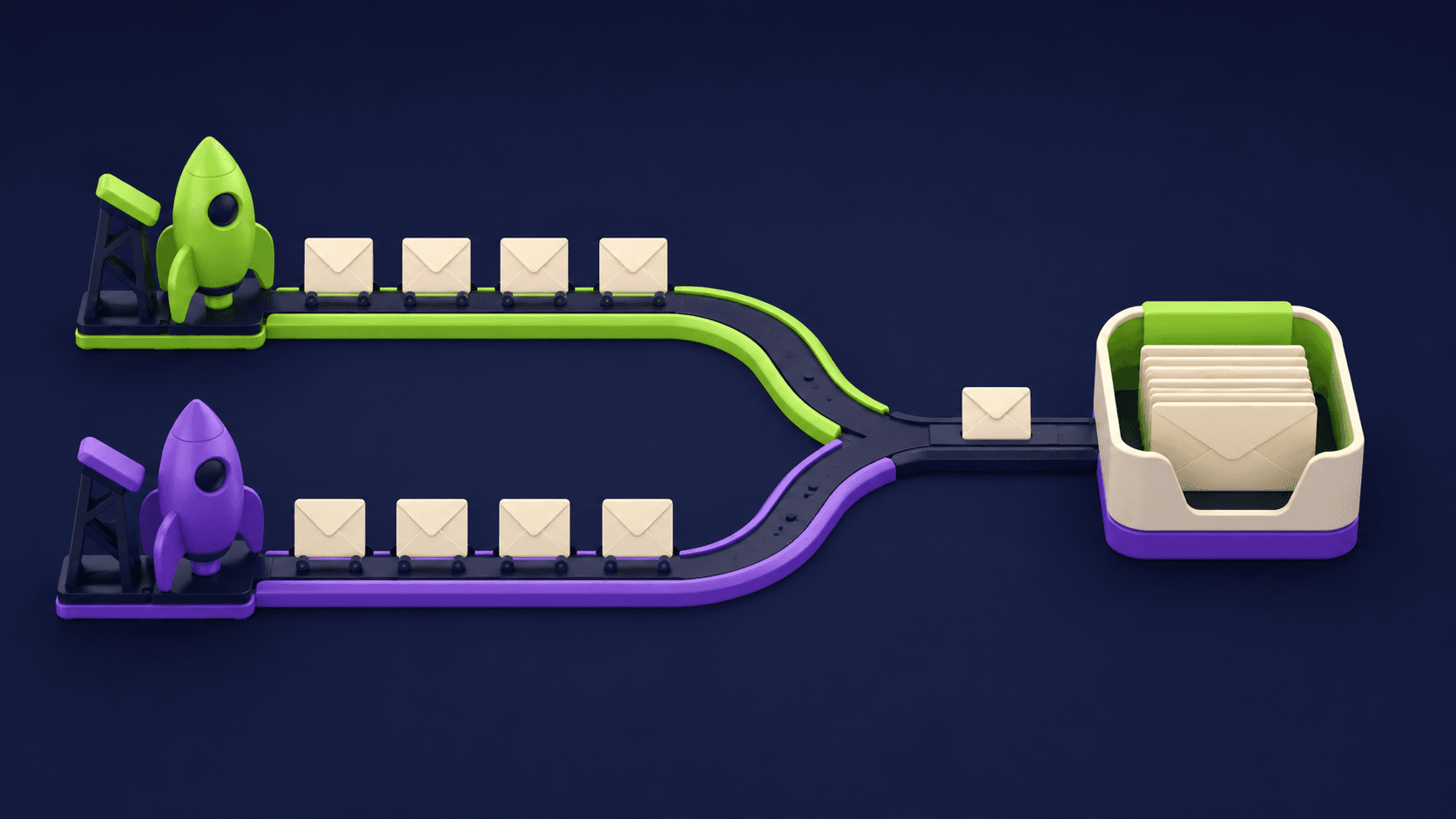
Gmail and Yahoo now enforce spam complaint thresholds. According to Amplemarket's 2026 deliverability guide, a spam complaint rate above 0.3% sustained for any period starts degrading your sender reputation with Google recipients. A single campaign that misfires can put your domain in "spam jail" for 48 to 72 hours. New sending domains need at least four weeks of warmup before handling high volume. Teams that skip warmup and ramp too fast regularly burn domains that took months to build. Tools like Instantly AI and Smartlead handle warmup infrastructure, but the risk of moving too fast remains regardless of platform.
3. AI SDRs still need a human closer, and often a human qualifier
No AI SDR product on the market in 2026 handles multi-turn objections, technical questions about product fit, or pricing negotiations without human handoff. What vendors call "autonomous qualification" typically means the AI can handle a narrow band of warm, high-intent replies. Anything requiring judgment, lateral thinking, or relationship recovery gets dropped back to a human, often with lost context. Per operator data from Naoma AI (2026), only 2% of fully autonomous AI SDR deployments are maintained long-term without adding human oversight back into the loop.
4. Bad automated outreach is a brand problem, not just a performance problem
When a human SDR sends a clumsy cold email, one prospect is mildly annoyed. When an AI SDR sends 5,000 clumsy emails in a day, the negative signal is amplified across your target market. Personalization fields that pull wrong data ("Hi [FirstName]"), irrelevant triggers, or tone-deaf timing after a company layoff announcement all happen at scale. Prospects share bad outreach on LinkedIn. Your ICP sees it. The reputational cost of a poorly configured AI SDR campaign is not captured in any cost-per-meeting spreadsheet.
For a broader view of how outbound tooling fits into your revenue stack, the operator playbook for building and selling AI automations in 2026 covers how practitioners structure these systems as billable deliverables rather than internal experiments.
When Does AI SDR Win Clearly, When Does Human Win, and What Does the Hybrid Model Look Like?
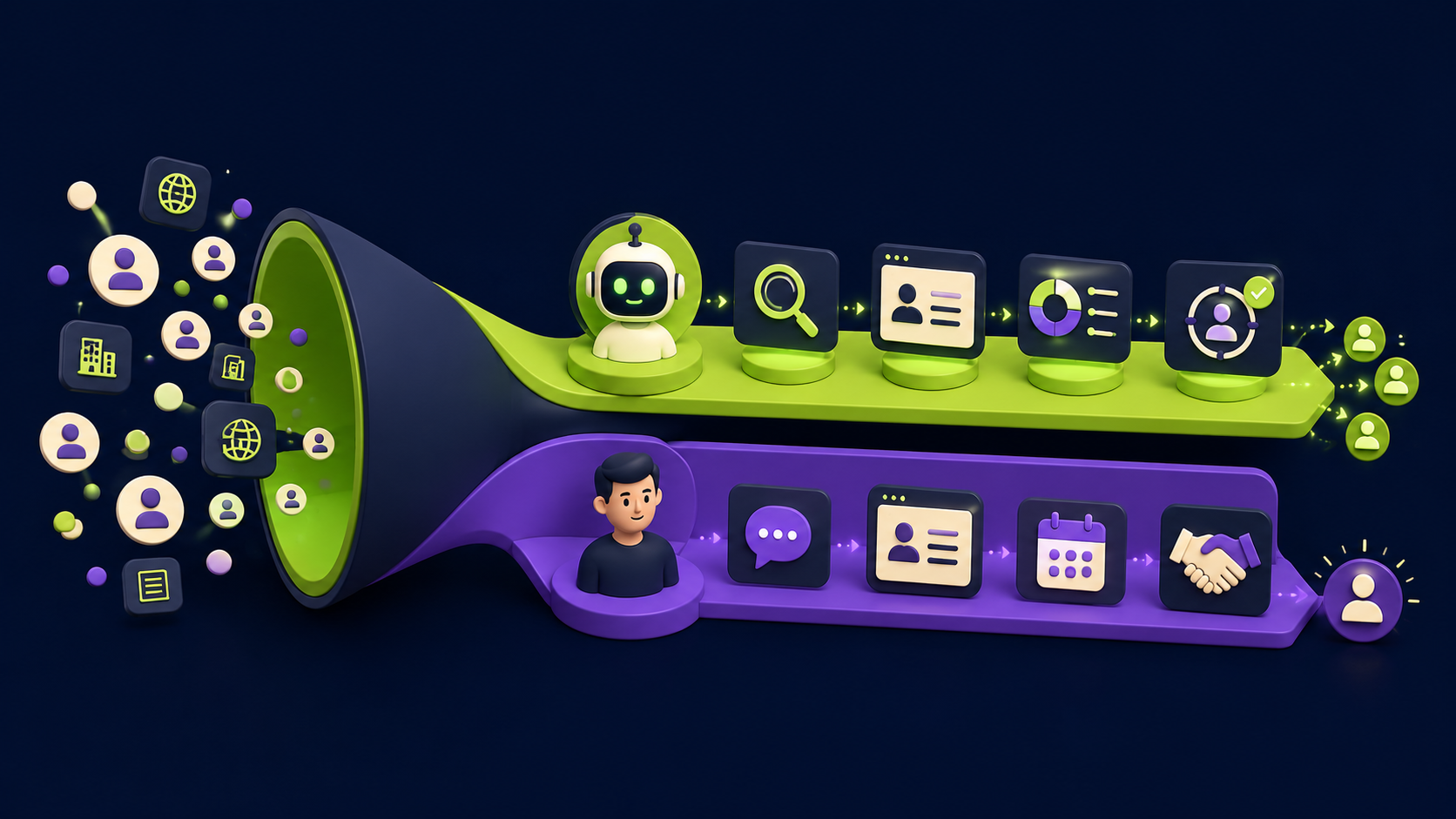
The honest decision is not binary. The question is: which tasks map best to AI, which require human judgment, and how do you wire them together so handoff friction does not kill the efficiency gains?
When AI SDR wins clearly
Your ICP is large, well-defined, and stable (you have 50,000+ accounts that match a tight profile)
Your average contract value is high enough that booking one extra meeting per week justifies the tooling cost
Your message is straightforward and does not require deep technical context to resonate
You are testing a new segment or geography and need signal fast without headcount
Your infrastructure is already set up: sending domains warmed, CRM integrated, enrichment working
When human SDR wins clearly
Your ICP is narrow (fewer than 500 named accounts total) and every conversation is high-stakes
Your sales cycle requires multi-stakeholder relationship building over weeks or months
Your product requires significant discovery before a prospect can understand what they are evaluating
Your industry is relationship-driven and recipients of automated outreach will flag you internally
Your AE team is small and cannot absorb lower-quality meetings without missing quota
The hybrid model most teams actually run
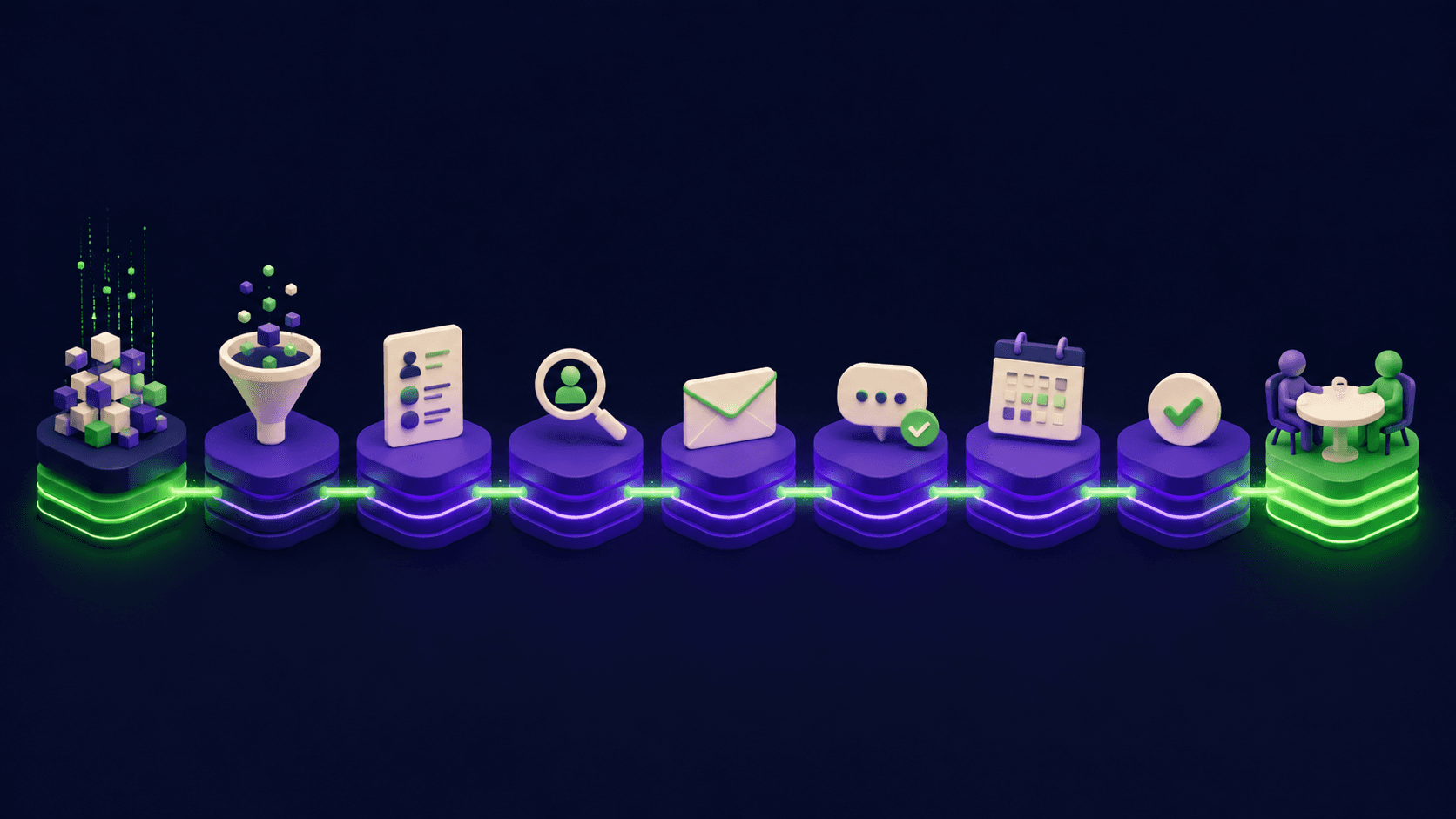
The model 45% of sales teams used in 2026 (per Salesmotion operator survey) is: AI handles data sourcing, list building, enrichment, and initial sequence launch. A human SDR reviews AI-flagged replies, handles all objections and warm responses, and owns the booking-to-show process. AEs close. This structure lets one human SDR manage the output equivalent of three to five fully automated SDRs while maintaining the quality gates that keep show rates and conversion rates at human-level performance.
Salesloft and Gong sit at the human side of this model: Salesloft manages the sequence cadence and rep workflow, Gong captures call intelligence that feeds coaching and messaging iteration. Lemlist and Clay handle the AI side: dynamic personalization at scale and enrichment-driven list construction. The platforms work together; the question is where the human sits in the middle of the loop.
For the cost modeling principles behind this kind of hybrid system, see the migration math between automation platforms and what operators charge for AI automation builds in 2026.
What Infrastructure Does an AI SDR Actually Need to Work?
The platform license is not the only cost. A production-ready AI SDR setup requires infrastructure that most vendor demos never mention. Getting this wrong is the most common reason AI SDR deployments fail in the first 60 days.
Sending domains: you need multiple domains that are aged or warmed before use. Minimum four weeks of warmup at low volume. Budget for 3 to 5 domains per 1,000 emails per day of planned volume.
Email warmup tools: platforms like Instantly AI and Smartlead include warmup networks. Budget $50 to $100 per domain per month if using a standalone warmup service.
Data and enrichment: AI SDRs are only as good as the list they work from. Apollo.io or Clay for sourcing and enrichment typically runs $100 to $500 per month depending on credits.
CRM integration: if AI-booked meetings do not auto-log to your CRM with contact, account, and sequence data attached, your AEs will not trust the pipeline and the handoff breaks.
Compliance: CAN-SPAM, GDPR for EU targets, and the newer Google/Yahoo authentication requirements (SPF, DKIM, DMARC) must be configured correctly or deliverability collapses on day one.
See the B2B AI niches that actually generate revenue in 2026 for how outbound infrastructure setup is being packaged as a standalone service by operators who install these systems for clients.
Want your outbound system built for you?
Vantaige designs and builds done-for-you AI outbound: data, enrichment, personalization, sequencing, and CRM sync, wired into one system your reps actually use. Book a free outbound audit and we will find the revenue leaking from your pipeline.
FAQ: AI SDR vs Human SDR
Can an AI SDR replace a human SDR entirely?
In practice, almost never sustainably. Operator data from Naoma AI (2026) shows only 2% of fully autonomous AI SDR deployments are maintained long-term without adding human oversight. AI SDRs handle top-of-funnel outreach volume well. They fail at multi-turn objection handling, technical qualification, and relationship recovery. Most teams that tried full replacement in 2024 to 2025 added humans back within two quarters. The category has largely repositioned from "replacement" to "augmentation."
What is the real cost difference between an AI SDR and a human SDR?
A fully loaded human SDR costs $110,000 to $180,000 per year in the US market, including salary, commission, benefits, tools, management overhead, and ramp time. AI SDR platform plus infrastructure typically runs $15,000 to $60,000 per year at mid-tier. The cost difference is real, ranging from 3x to 8x depending on the platform tier. The gap narrows when you factor in the quality-adjusted pipeline each model produces: human-booked meetings convert to opportunities at 25 to 40% versus 10 to 20% for AI-booked meetings.
Will an AI SDR hurt my email deliverability?
It can, if volume ramps too fast, domains are not properly warmed, or personalization misfires at scale. Gmail and Yahoo now flag spam complaint rates above 0.3% as a sustained threshold that triggers deliverability penalties (per Amplemarket's 2026 deliverability guide). New sending domains need at least four weeks of warmup. Teams that skip infrastructure setup and launch at high volume regularly burn domains that took months to build. Proper configuration with authenticated sending infrastructure and gradual volume ramp mitigates this risk substantially.
How do I measure whether my AI SDR is actually working?
The three metrics that matter most, in order: meeting show rate (target above 60%, below 50% is a quality signal problem), meeting-to-opportunity conversion rate (below 15% means your AI is booking meetings that should not be booked), and reply rate on sequences (industry baseline for cold email is 1 to 3%, sustained below 0.5% and your deliverability or targeting is broken). Do not measure raw email volume or meetings booked without these quality denominators or you will optimize for a metric that does not correlate to revenue.
What tools do most hybrid AI outbound teams actually use in 2026?
The most common stack combines a data sourcing and enrichment layer (Apollo.io or Clay) with a sequencing and deliverability layer (Instantly AI or Smartlead) plus a human workflow and call intelligence layer (Salesloft for sequence management, Gong for conversation intelligence). AI SDR platforms such as AiSDR, Artisan, Amplemarket Duo, or 11x typically sit on top of this infrastructure and add autonomous outreach and reply handling for top-of-funnel volume. The right stack depends on whether you are in the AI-heavy or human-heavy part of the hybrid spectrum.
Is there a minimum ICP size where AI SDR makes sense?
The practical minimum is roughly 5,000 to 10,000 addressable accounts in your ICP. Below that, the volume advantage of AI outreach is small enough that a single skilled human SDR with good tooling can cover the market at higher quality and lower infrastructure risk. Above 10,000 accounts, the case for AI-assisted volume becomes clear: no human team can touch 50,000 companies in a quarter, but a properly configured AI SDR system can, while keeping humans on the high-value reply and qualification work.
Related from Vantaige
The operator playbook for building and selling AI automations in 2026
What operators charge for AI automation builds: the 2026 rate card
References
Salesmotion. "AI SDRs vs Human SDRs: The Real ROI Comparison for 2026." https://salesmotion.io/blog/ai-sdrs-vs-human-sdrs
Naoma AI. "What Is an AI SDR in 2026? Reality Check After the Collapse." https://www.naoma.ai/articles/what-is-an-ai-sdr
Amplemarket. "How to Fix Email Deliverability Issues in 2026: A Complete Guide." https://www.amplemarket.com/blog/email-deliverability-guide-2026
Prospect AI. "AI SDR vs Hiring SDR: 2026 Cost and ROI Breakdown." https://prospectai.co/resources/blog/ai-sdr-vs-hiring-sdr-cost-comparison
MarketBetter. "14 Best AI SDR Tools and Software in 2026: Real Pricing Compared." https://www.marketbetter.ai/blog/best-ai-sdr-tools/
11x.ai. "Artisan vs Amplemarket vs 11x: Best AI SDR Platform for GTM Execution (2026)." https://www.11x.ai/guides/artisan-vs-amplemarket-vs-11x
Get the best new AI tools and guides, weekly
One short email a week. The tools worth trying, the guides worth reading, nothing else.
No spam. Unsubscribe anytime.
Aymen B
Contributing writer at Vantaige, covering the AI tools ecosystem.