Salesloft is an enterprise revenue orchestration platform that unifies AI-driven outreach cadences, the Rhythm signal prioritization engine, conversation intelligence, deal management, and Drift's AI chat agents for B2B sales teams.
Salesloft is an enterprise-grade revenue orchestration platform built for B2B sales teams that need to coordinate outreach, coaching, deal management, and forecasting in a single system. Founded in 2011 by Kyle Porter in Atlanta and acquired by Vista Equity Partners in 2022, the company completed two significant moves in quick succession: the acquisition of Drift (the conversational marketing platform) on February 13, 2024, and a full merger with Clari, completed December 3, 2025. As of May 2026, Salesloft operates as part of the combined Clari-Salesloft entity, positioned as a "Predictive Revenue System" for enterprise revenue teams. More than 4,000 organizations trust the platform, including IBM, Stripe, Siemens, SAP Concur, and Adobe.
The platform's core modules cover the full selling motion: Cadence handles multi-step outreach sequences across email, phone, LinkedIn, and custom steps; Rhythm is the AI signal-to-action engine that surfaces prioritized next actions for every seller; Conversations provides call recording, transcription, and AI-powered coaching; Deals delivers pipeline visibility and deal health scoring; Forecast aggregates deal signals with AI for revenue prediction; and Drift, now integrated natively, deploys AI chat agents (Bionic Chatbots and Site Concierge) on customer websites to capture and qualify inbound buyers before handing them to sales cadences. The platform connects to over 160 apps including Salesforce, 6sense, ZoomInfo, Highspot, and DocuSign.
What Salesloft actually is in May 2026
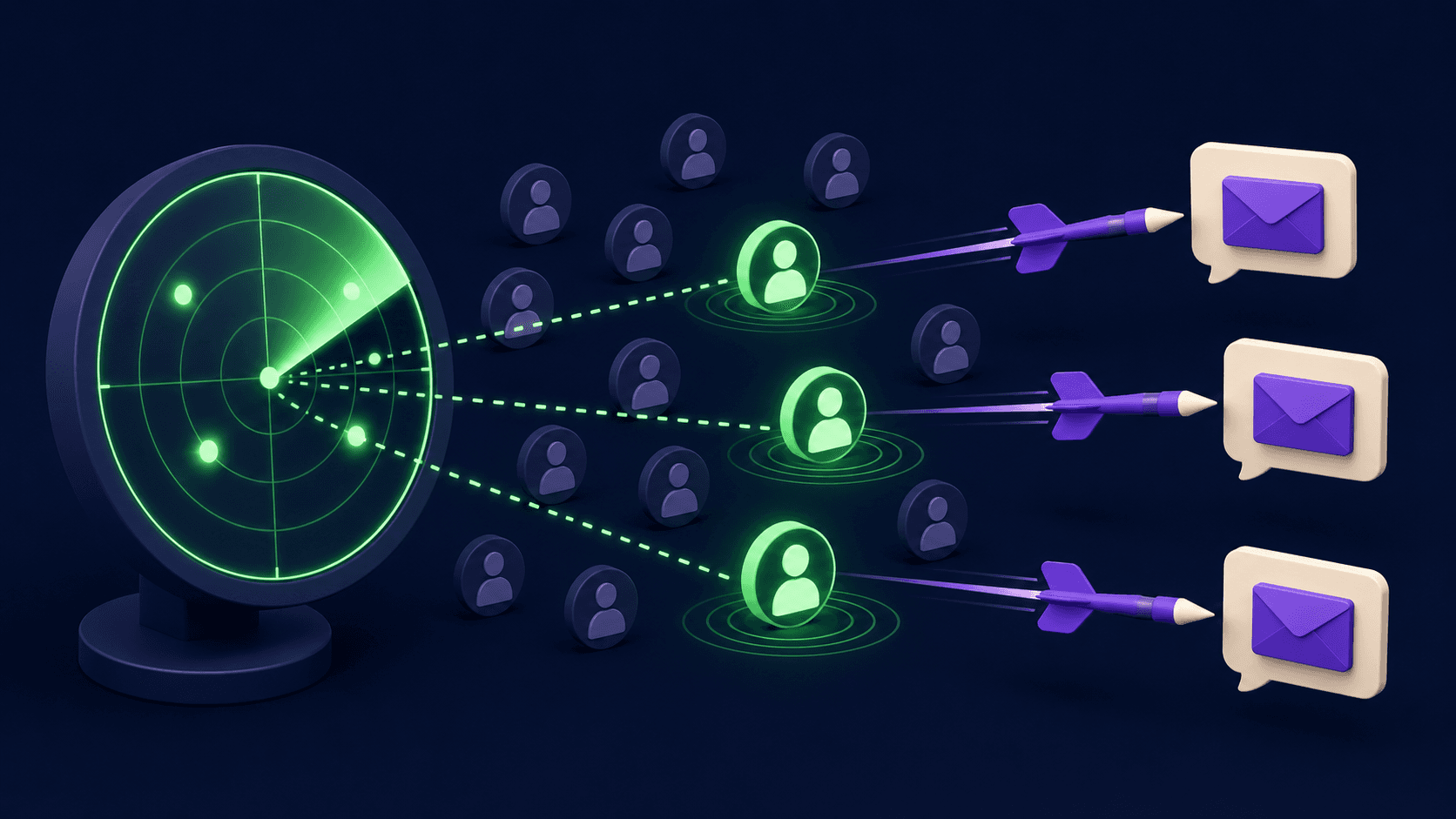
The simplest description of Salesloft: a system that tells sellers what to do next and gives them the tools to do it. Before Salesloft, a typical enterprise SDR started each day by manually reviewing their CRM queue, checking email opens, scrolling LinkedIn notifications, and triaging which calls to make first. Salesloft's Rhythm engine collapses all of that into a single prioritized workflow, ranked by Conductor AI, the company's proprietary signal-processing layer.
Rhythm, launched in June 2023, ingests buyer signals from across the platform and from partner integrations. When a prospect opens an email three times, visits the pricing page, and has a job change flagged by ZoomInfo, Conductor AI scores and surfaces that contact near the top of the seller's queue with a generated explanation: "High intent signal - three email opens + pricing page visit this week." That context-with-action design is the mechanical difference between Rhythm and a conventional cadence queue.
The Drift acquisition (February 13, 2024) added a new entry point to the platform's coverage. Drift's Bionic Chatbots engage website visitors in real-time, qualify them, and route high-intent conversations directly into Salesloft cadences, creating continuity between inbound marketing conversations and outbound sales sequences. The combined pipeline creates what Salesloft calls an "omnichannel buyer journey" that starts from the first anonymous website visit. David Obrand, then-CEO of Salesloft, said at the time: "This acquisition will fundamentally change how B2B buyers and sellers engage, but also how sales and marketing teams come together to drive pipeline efficiency."
The December 2025 Clari merger adds revenue forecasting and deal intelligence at a scale that was previously a gap for Salesloft. Clari ingests over 10 billion revenue interactions and 1 trillion data signals; combined with Salesloft's workflow layer, the joint roadmap is focused on AI that predicts deal outcomes, not just prioritizes tasks.
Where Salesloft sits versus Outreach.io and 6sense
The sales engagement market divides broadly into three plays: outreach automation tools, intent data platforms, and hybrid orchestration systems. Salesloft occupies the orchestration category, but understanding where it sits relative to Outreach.io and 6sense clarifies when each makes sense.
Salesloft versus Outreach.io. These two platforms are direct competitors with overlapping feature sets. Outreach has Kaia, its own in-call AI assistant that listens to live calls and surfaces relevant talk tracks and objection-handling prompts in real time. Salesloft's Conversations module does call recording, transcription, and post-call coaching, but the real-time in-call AI layer is less developed. Outreach offers 80+ native integrations; Salesloft offers 160+, with notably deeper Salesforce-specific workflows. G2 and Gartner Peer Insights consistently rate Salesloft higher for ease of use and user satisfaction. Outreach tends to win in complex multi-CRM enterprise environments; Salesloft leads in Salesforce-centric organizations. One r/sales commenter captured the trade-off clearly in January 2024: "We switched from Outreach to Salesloft - Outreach was buggy as hell too, but SalesLoft's cadences are much cleaner."
Salesloft versus 6sense. The framing here is less competitive and more complementary. 6sense is an Account-Based Marketing platform built around intent data. It identifies anonymous buyers researching your category via its "Dark Funnel" model, predicts purchase timing using its proprietary AI, and tells marketing and sales which accounts to target before those accounts have filled out a form. Salesloft cannot generate that kind of upstream intent data independently. Where they interact: Rhythm can ingest 6sense signals as triggers, meaning that when 6sense identifies a high-intent account, Salesloft's Conductor AI can immediately surface an outreach action for the relevant seller. Many enterprise teams run both, with 6sense feeding the top of the funnel and Salesloft executing mid-funnel sequences. Teams that have to choose one should consider where their biggest gap is: if it is account identification, 6sense; if it is outreach execution and pipeline management, Salesloft.
Two other tools frequently appear in the same conversations: Apollo.io covers both prospecting and sequences at SMB price points ($49-$149/user/month published), making it a realistic alternative for smaller teams; Clay handles advanced data enrichment and personalized outreach automation that some RevOps teams use as a Salesloft complement or replacement for list-building workflows. If your team is evaluating CRM-enrichment and contact data alongside outreach, ZoomInfo Copilot integrates natively with Salesloft Rhythm as a signal source, pushing account-level intent data directly into the Conductor AI prioritization layer.
How AI actually works inside Salesloft
Salesloft's AI layer has three distinct components, and it is worth being specific about what each does versus what the marketing describes.
Conductor AI (inside Rhythm). Conductor AI is Salesloft's proprietary signal-ranking engine. It ingests buyer behavior data from across the platform and connected integrations, assigns a priority score to each prospective action in a seller's queue, and re-ranks that queue in real time as new signals arrive. The key mechanic: every ranked action comes with a human-readable explanation ("high email open rate," "job change detected," "deal activity stalled"). This is what makes Rhythm feel different from a standard task queue. The explainability layer is designed to build seller intuition, not just push tasks. Salesloft reported in 2024 that AEs using Rhythm complete 39% more tasks per day and that SDRs see a 57% productivity lift.
"Salesloft Rhythm takes my energy and hyper-focuses it in a single workflow.. It's a game changer for me." - Shane McEnany, Sr. Account Manager, Moody's Analytics (Salesloft case study, 2024)
"When I was an account executive, I spent at least 30 minutes of admin time per day figuring out my priorities.. Now that our AEs have Salesloft Rhythm, this activity is automated for them." - Vedant Namboodiri, Global Sales Operations Manager, Cin7 (Salesloft case study, 2024)
AI-generated email drafts in Cadence. When Rhythm surfaces an action requiring an email, Conductor AI pre-populates a draft based on the available signal context. The seller edits rather than writes from scratch. This is a straightforward generative AI layer, not a distinguishing capability versus competitors, but it reduces per-action time meaningfully in high-volume SDR environments.
Conversations intelligence. The Conversations module transcribes calls, tags key moments (competitor mentions, pricing objections, next steps committed), and surfaces coaching recommendations. Revenue leaders can query across all calls to find patterns (how often is pricing raised, which objection-handling language correlates with closed-won). This is similar to the functionality in Gong, though Gong is more focused; Salesloft's advantage here is that it is native to the same workflow rather than a separate tool.
The friction and reliability concerns users keep raising
Salesloft's review history on G2, TrustRadius, and Reddit carries several patterns that repeat often enough to take seriously before buying.
Extension reliability. The most persistent complaint from SDRs and BDRs is that the Chrome extension goes stale mid-session. For high-cadence dialing workflows, these interruptions compound quickly.
"50% of the time it doesn't work. First tool I've used in my tech stack where the extension goes stale - you have to refresh all CRM and Salesloft related tabs." - Sales Development Representative, G2 review, 2024
A Reddit thread from April 2025 echoed the same frustration: "SalesLoft is buggy and they don't care about fixing bugs." (r/sales, April 2025)
Pricing opacity and contract practices. Salesloft does not publish pricing. Quotes are custom, seat-minimum contracts negotiated through a sales rep. Based on aggregated data from Vendr and Amplemarket, most enterprise deals land between $100 and $165/user/month annually, with significant add-on costs for the dialer ($300-$400/user/year) and Conversations module (adds 20-40% to base cost). The opacity creates a power asymmetry in renewal conversations, and several users report auto-renewal clauses and poor responsiveness from customer success on billing disputes.
Implementation complexity. Salesloft is not a tool you hand to a sales rep and expect them to configure. Setting up cadences, integrating with Salesforce, configuring Rhythm triggers, and connecting Drift correctly requires dedicated RevOps time. Teams that go in without an ops resource describe months of friction. The customer success organization itself has drawn criticism for high turnover: multiple G2 reviewers describe cycling through five different account managers in under 12 months.
Post-merger uncertainty. The Clari merger closed in December 2025, and as of May 2026, the platforms are still running largely independently with no unified product roadmap published. Enterprise customers on multi-year contracts report uncertainty about future pricing structures, feature overlap between the two products, and whether their current configuration will remain supported.
Who Salesloft is for
Use Salesloft if: You are running a B2B enterprise sales team of 25 or more reps, heavily invested in Salesforce, and need a single system that covers outreach sequences, call coaching, deal management, and AI-powered prioritization. The platform is strongest where RevOps has the bandwidth to configure and maintain it. Rhythm genuinely reduces the cognitive load on sellers in high-volume outbound environments. The Drift integration creates a real inbound-to-outbound pipeline continuity that standalone chatbot tools do not deliver natively.
Skip Salesloft if: You are a team of fewer than 15-20 reps, you do not have a dedicated RevOps person, you need a prospecting database alongside sequences (look at Apollo), or you want transparent published pricing before a vendor conversation. The tool is also not the right choice if your primary concern is email deliverability optimization: the automation patterns can trigger spam filters, and Salesloft's controls here are less granular than purpose-built cold email tools. If you are evaluating Salesloft primarily for the forecasting layer, be aware that the Clari integration is still in progress and the forecasting capabilities are not yet fully unified post-merger.
User Reviews
No reviews yet. Be the first to share your experience!
Sign in to write a review.
Related articles
Guides and articles related to Salesloft.

AI SDR vs Human SDR: The Real Cost, Performance, and What Nobody Tells You
Discovery Call Prep With ChatGPT: The 4-Prompt Sequence That Wins (2026)
NotebookLM Sales Call Prep: 5 Sources, 6 Questions, 60 Seconds (2026)

How to Build an AI Outbound Stack From Scratch: The Complete 2026 Playbook
How to Sell AI Chatbots to Local Businesses ($1K-$5K Retainers, 2026)