Anthropic Project Glasswing and Claude Mythos: What Builders Need to Know (2026)

Anthropic Project Glasswing and Claude Mythos: What Builders Need to Know (2026)
Everyone is talking about which model tops the next benchmark. Almost no one is asking what it means that the strongest unreleased model is being pointed at finding security holes in the software you ship. Anthropic launched Project Glasswing in 2026, a controlled program giving a short list of large organizations access to Claude Mythos Preview, an unreleased frontier model, to find and fix critical software vulnerabilities. This is an analysis of what is publicly reported and what it changes for anyone building on Claude. The signal for builders is not the model. It is the shift in how frontier capability gets gated, evaluated, and aimed.
TL;DR
Project Glasswing is a controlled vulnerability-finding program from Anthropic.
Select orgs got Claude Mythos Preview, an unreleased frontier model.
Mythos drew government attention for finding software weaknesses.
US CAISI signed pre-deployment evaluation deals with three other labs.
For builders: gated access and security framing are the trend, not raw benchmarks.
<your real name>, Founder at Vantaige · Published 2026-05-19 · 12 min read · Last reviewed 2026-05-19
What is Anthropic Project Glasswing?
Project Glasswing is a controlled Anthropic initiative that gives a select group of large organizations access to Claude Mythos Preview, an unreleased frontier model, to find and fix critical software vulnerabilities. As reported by Bloomberg and CNBC in 2026, the named participants include AWS, Apple, Cisco, Google, JPMorgan Chase, and Microsoft. The framing is security-first, not a general product launch.
The structure is the story. Glasswing is not an open API tier and not a public beta. It is a closed program where a frontier-class model is handed to a defined set of organizations for a defined purpose: surface and patch serious software weaknesses before they ship or before they are exploited. Access is the gate, and the use case is defensive.
For a builder, the practical reading is that Anthropic is treating its strongest unreleased capability as something to deploy carefully against a high-stakes problem, with named partners and a narrow scope, rather than release broadly first and study consequences later. That sequencing is the part worth tracking, separate from any model specification, which has not been publicly detailed.
What is Claude Mythos Preview?
Claude Mythos Preview is the unreleased frontier model Anthropic made available inside Project Glasswing, described in 2026 reporting as strong at identifying software weaknesses. Anthropic has not publicly released full specifications, benchmarks, pricing, or a general-availability date for it. Treat everything beyond "unreleased frontier model used in Glasswing for vulnerability finding" as not yet public.
What is reported is the capability direction, not the numbers. Mythos drew government attention specifically because it is good at finding software vulnerabilities, which is a dual-use capability: the same skill that hardens your codebase can map an attack surface. That dual-use nature is exactly why the access model around it matters as much as the model itself.
The honest position for builders is restraint. There is no published context window, no token price, no eval table, and no migration path to plan against today. The actionable layer is not "switch to Mythos." It is "notice that the strongest preview is being introduced through a security program with named partners, and design your roadmap for that pattern continuing."
Why did Claude Mythos draw government attention?
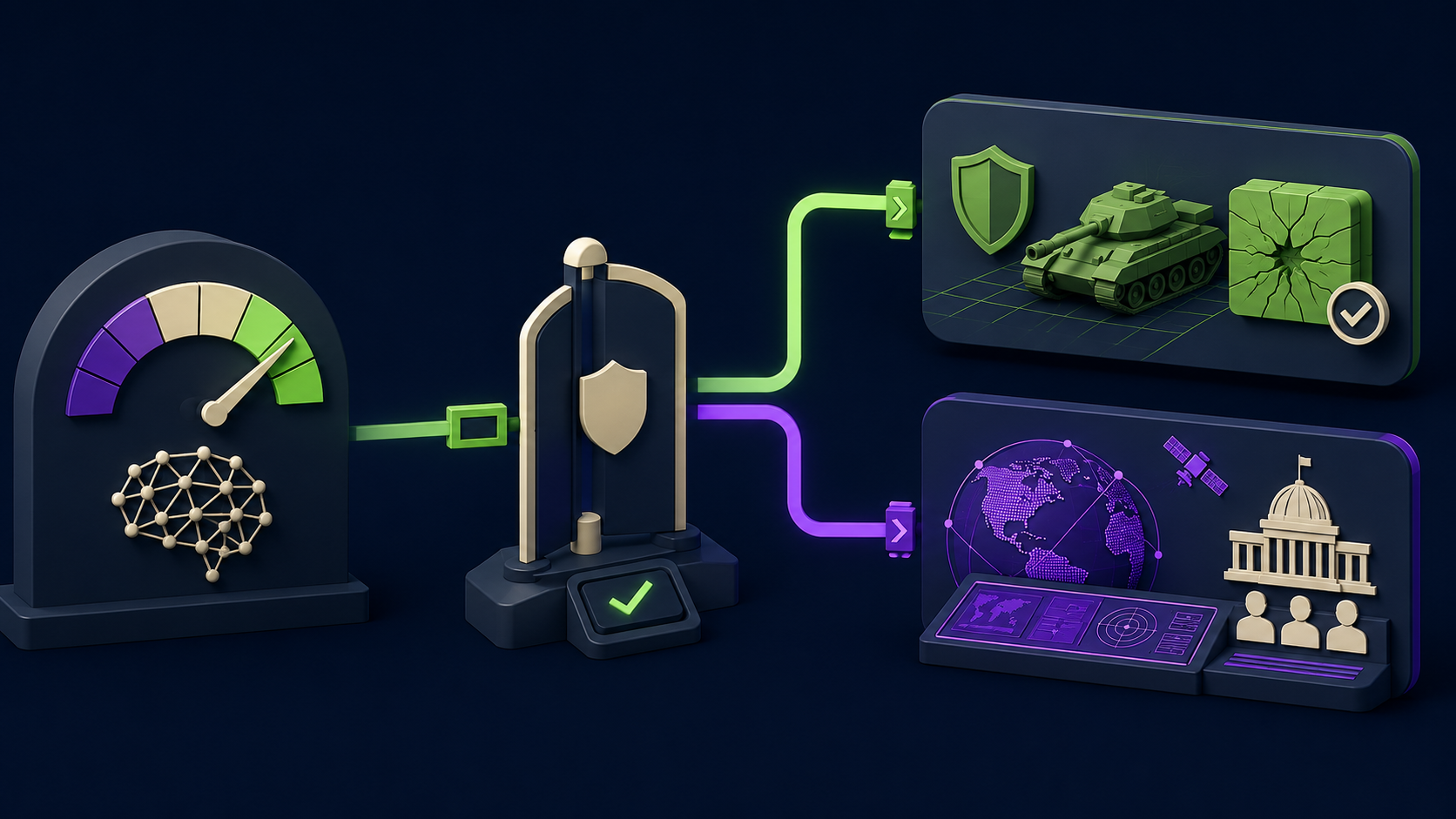
Claude Mythos drew government attention because being strong at identifying software weaknesses is a national-security-relevant capability, not only a developer convenience. A model that reliably finds exploitable flaws in real codebases is useful for defense and, in the wrong hands, for offense. That dual-use profile is what moves a model from product news into policy conversations.
This sits inside a broader 2026 pattern of pre-deployment scrutiny for frontier models. Separately from Glasswing, the US Center for AI Standards and Innovation (CAISI) signed agreements with Google DeepMind, Microsoft, and xAI for pre-deployment model evaluations, as reported in 2026 coverage. The throughline is that frontier capability is increasingly evaluated before broad release, not only after.
For people building on Claude, the takeaway is not alarm. It is that the release cadence of top-tier models is now shaped by security review and government-adjacent evaluation, which tends to mean staged access, named partners, and slower public general availability for the most capable tiers. Plan for that, do not bet a launch on instant access to the newest frontier model.
How does Project Glasswing fit the wider 2026 AI security trend?
Project Glasswing fits a 2026 pattern where frontier models are gated, evaluated, and aimed at security before broad release. Glasswing pairs a closed model with named enterprise partners for vulnerability finding. In parallel, CAISI's pre-deployment evaluation agreements with Google DeepMind, Microsoft, and xAI formalize external review of frontier systems. Same direction, different instruments.
The table below maps the public developments and what each one means for someone building on Claude or adjacent stacks. Nothing here is speculation about unreleased capabilities; it is the reported structure and its practical implication.
Development | Who | What it means for builders |
|---|---|---|
Project Glasswing launched | Anthropic, with AWS, Apple, Cisco, Google, JPMorgan Chase, Microsoft | The strongest preview reaches builders through a closed security program first, not an open tier. Expect staged access for top models. |
Claude Mythos Preview shared in Glasswing | Anthropic and named Glasswing participants | No public specs, price, or GA date. Do not design a roadmap that assumes access to it; design for the access pattern. |
Mythos noted as strong at finding software weaknesses | Reported by Bloomberg and CNBC | AI-assisted vulnerability discovery is maturing. Assume both defenders and attackers gain this capability and harden accordingly. |
CAISI pre-deployment evaluation agreements | US CAISI with Google DeepMind, Microsoft, xAI | External pre-release evaluation is becoming standard. Expect more review steps and slower public GA for frontier tiers. |
Read across the rows and the pattern is consistent. The most capable models increasingly arrive through controlled channels with named partners and external evaluation, and one of the first jobs they get pointed at is security. The competitive question for builders shifts from "which model is highest on the leaderboard" to "what is gated, and what does the gating imply for my roadmap." This is the same supply-and-access lens we used in the Agent 365 vs Claude managed agents cost comparison.
What does Project Glasswing mean for people building on Claude?
For people building on Claude, Project Glasswing means three concrete things: top-tier model access is increasingly staged, AI-assisted vulnerability finding is now a real capability on both sides, and security posture is becoming a first-class part of an AI roadmap, not an afterthought. None of this requires access to Mythos to act on.
First, do not architect a product launch around immediate access to the newest frontier model. The reported pattern is closed programs, named partners, and external evaluation before broad release. Build on the generally available Claude tier you can actually depend on, and treat any newer preview as upside, not a dependency. This is the same discipline behind pinning a known-good version in the Claude Opus 4.7 regression and 4.6 pin guide.
Second, assume AI-assisted vulnerability discovery cuts both ways. If a frontier model is strong enough at finding software weaknesses to draw government attention, the defensive version of that capability is something you should be using on your own code, and the offensive version is something your dependencies are now exposed to. Concrete dependency-level risk is exactly the kind of thing covered in the Cursor CVE-2026-26268 git-hook RCE patch check.
Third, treat memory, context, and stored state as part of the attack surface. As agents accumulate persistent state across sessions, that state becomes something a vulnerability-finding capability can target. The hygiene around persistent agent memory in the Claude Code memory consolidation setup is now a security concern, not only a context-efficiency one. And as you wire Claude into automation, the connective tissue itself matters, which is why the hardening steps in the n8n MCP Claude Code setup guide deserve a second pass.
How is Project Glasswing different from a normal model release?
Project Glasswing differs from a normal model release in three ways: access is closed to named partners instead of an open tier, the primary purpose is security work rather than general capability, and the model in it remains unreleased with no public specs. A normal release ships broadly with documentation, pricing, and a GA date. Glasswing ships none of that publicly.
A standard frontier release follows a familiar shape: announcement, model card, pricing, API access, and a migration window. Builders read the benchmarks, estimate cost, and plan a switch. Glasswing inverts that. The participants are named, the capability framing is defensive, and the public has the structure of the program without the specification of the model.
That inversion is the point for planning. When the structure of access is the news and the model details are withheld, the right response is not to wait for benchmarks. It is to read the access pattern as a signal about how the next tier of capability will be distributed: carefully, to vetted partners, against high-stakes problems, with evaluation attached. The CAISI agreements with Google DeepMind, Microsoft, and xAI reinforce that the evaluation layer is becoming standard, not exceptional.
What should builders actually do about it now?
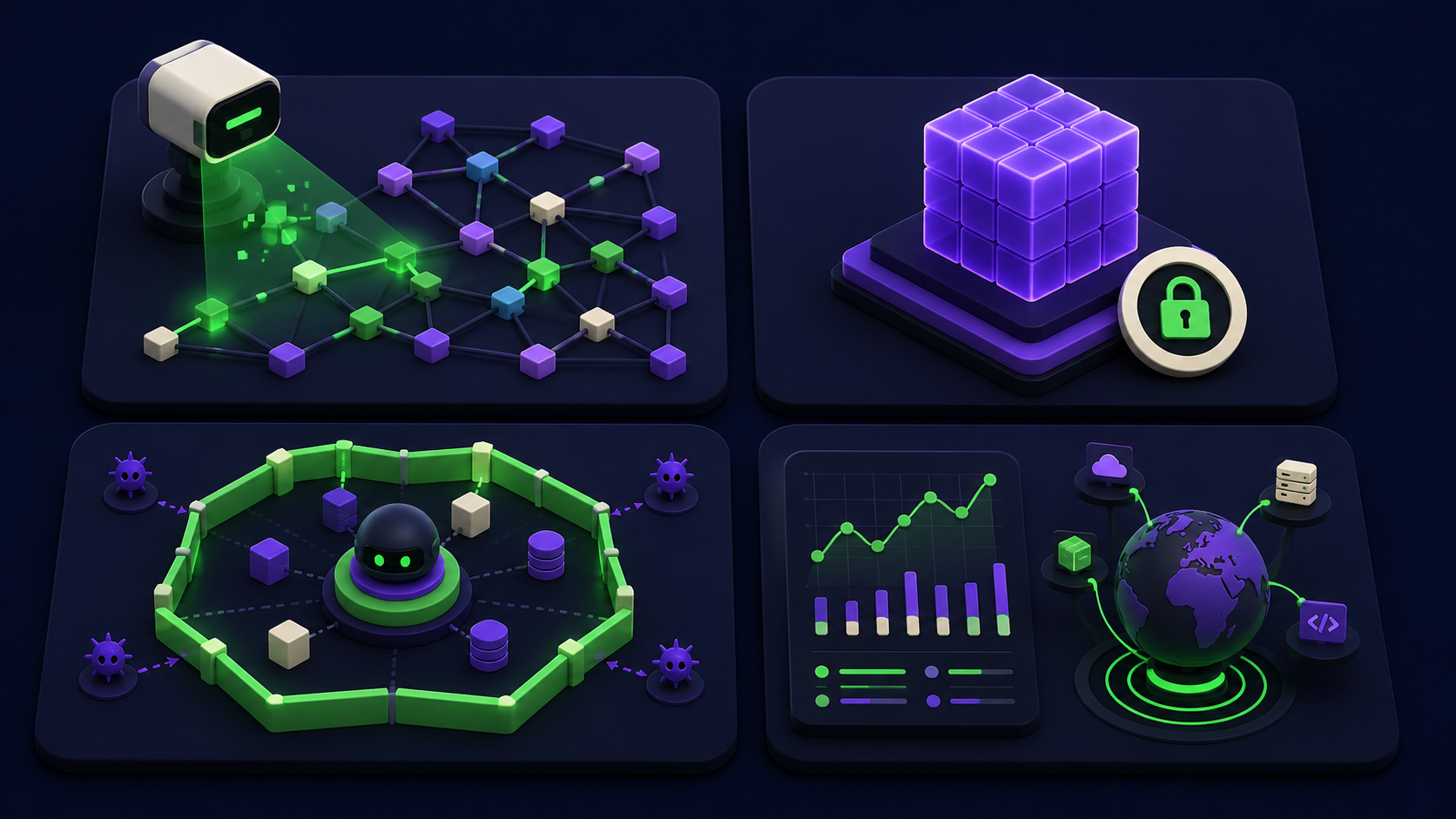
Builders should do four things now, none of which depend on Glasswing access: run AI-assisted security review on their own code, pin to stable model tiers for production, treat persistent agent state as attack surface, and watch the access pattern instead of the leaderboard. These are durable moves regardless of when or whether Mythos becomes generally available.
The four moves, concretely:
Use the defensive side of this capability today. The same class of capability Glasswing aims at vulnerabilities is available to you on generally released models. Run AI-assisted review over your own dependencies and code paths now, because the offensive side does not wait for your roadmap.
Pin production to a stable tier. Do not gate a launch on the newest preview. Build on a generally available Claude version you can depend on and treat newer previews as optional upside, the same discipline as version-pinning after a regression.
Harden persistent state. Audit what your agents store across sessions: memory files, cached context, automation credentials. A capability strong at finding weaknesses will probe stored state, so apply least-privilege and rotation there, not only at the API boundary.
Track structure, not scores. Watch how access is gated and which programs get named partners and external evaluation. That pattern, not the next benchmark number, tells you how the most capable models will actually reach production.
The unifying principle is that the news here is operational, not aspirational. You do not need Mythos to act on Glasswing. You need to treat AI-assisted security as a present-tense capability on both sides, keep production on dependable tiers, and read the access model as the real signal about where frontier capability is heading.
What is still unknown about Claude Mythos and Project Glasswing?
Most of the specifics are still unknown. Anthropic has not publicly released Claude Mythos specifications, benchmark results, pricing, context window, or a general-availability timeline. The full scope, duration, and selection criteria of Project Glasswing beyond the named participants are not publicly detailed. Anything stated as a precise model capability or spec beyond "unreleased frontier model strong at finding software weaknesses" is not yet established.
This matters for how you read the rest of the coverage. The reliable, reported facts are the program's existence, its security framing, the named enterprise participants, the government attention to the vulnerability-finding capability, and the separate CAISI pre-deployment evaluation agreements with Google DeepMind, Microsoft, and xAI. Those are the load-bearing claims. Everything past them is, for now, not public.
The right posture is to plan on the structure, not the specs. The structure, closed access, named partners, security framing, external evaluation, is enough to make durable decisions about roadmap risk and security posture. The specs, when they arrive, will change the cost and capability math but not the access pattern, which is already the actionable part.
Frequently asked questions
Is Claude Mythos available to the public or via API?
No. As publicly reported in 2026, Claude Mythos Preview is an unreleased frontier model made available only inside Project Glasswing to named participants including AWS, Apple, Cisco, Google, JPMorgan Chase, and Microsoft. There is no public API, no published pricing, no model card, and no announced general-availability date. Build on a generally available Claude tier for production and treat Mythos as not yet a dependency you can plan around.
Which companies are in Project Glasswing?
The named Project Glasswing participants reported by Bloomberg and CNBC in 2026 are AWS, Apple, Cisco, Google, JPMorgan Chase, and Microsoft. The program gives these organizations access to Claude Mythos Preview to find and fix critical software vulnerabilities. The full selection criteria, total participant count, and program duration beyond these named organizations are not publicly detailed, so treat this list as the confirmed set, not necessarily the complete one.
Why did the US government take interest in Claude Mythos?
Claude Mythos drew government attention because being strong at identifying software weaknesses is a dual-use, security-relevant capability: it can harden defenses or map attack surfaces. This sits alongside a broader 2026 pattern of pre-deployment scrutiny, including the US CAISI signing pre-deployment evaluation agreements with Google DeepMind, Microsoft, and xAI. The interest is about evaluating frontier capability before broad release, which is becoming standard rather than exceptional.
What is CAISI and how does it relate to Project Glasswing?
CAISI is the US Center for AI Standards and Innovation. It is related to Project Glasswing only thematically, not organizationally: both reflect a 2026 trend of evaluating frontier models before broad release. As reported, CAISI signed pre-deployment model evaluation agreements with Google DeepMind, Microsoft, and xAI. Glasswing is Anthropic's own closed security program. They are separate instruments pointing in the same direction: staged, evaluated frontier access.
Does Project Glasswing change which Claude model I should use today?
No. Glasswing involves an unreleased model with no public access, so it does not change your available options today. The practical change is in posture, not model choice: keep production pinned to a generally available Claude tier you can depend on, run AI-assisted security review on your own code now, and treat persistent agent state as attack surface. Read the access pattern as the signal, not as a prompt to switch models.
What does Project Glasswing signal about future Claude releases?
It signals that the most capable models are likely to reach builders through controlled channels first: named partners, security-focused framing, and external evaluation before broad general availability. The parallel CAISI evaluation agreements reinforce that pre-deployment review is becoming standard. For roadmap planning, the durable inference is to expect staged access and slower public GA for top tiers, and to architect on dependable releases rather than betting on instant frontier access.
Should I be worried about AI finding vulnerabilities in my code?
Treat it as a reason to act, not to worry. If a frontier model is strong enough at finding software weaknesses to draw government attention, the defensive version of that capability is available to you on released models, and the offensive version now applies to your dependencies. The proportionate response is to run AI-assisted review over your own code and dependencies, apply least-privilege to stored state and credentials, and patch known dependency CVEs promptly.
Are any Claude Mythos benchmarks or specs public?
No. As of this writing, Anthropic has not publicly released Claude Mythos benchmarks, context window, parameter details, pricing, or a general-availability date. The only publicly reported characterization is that it is an unreleased frontier model strong at identifying software weaknesses, used inside Project Glasswing. Treat any precise spec or benchmark figure as unconfirmed until Anthropic publishes one, and plan on the access structure rather than unverified numbers.
Related from Vantaige
References
Bloomberg, technology coverage (2026 reporting on Anthropic Project Glasswing, Claude Mythos Preview as an unreleased frontier model, named participants, and government attention to its software-weakness capability).
CNBC, technology coverage (2026 reporting on Project Glasswing scope, the named enterprise participants, and the security framing of the program).
Anthropic, news (Anthropic's public communications on safety, frontier model handling, and controlled access programs as the primary-source context for Glasswing).
US Center for AI Standards and Innovation (CAISI) (the standards-and-evaluation body behind the reported pre-deployment evaluation agreements with Google DeepMind, Microsoft, and xAI).
Get the best new AI tools and guides, weekly
One short email a week. The tools worth trying, the guides worth reading, nothing else.
No spam. Unsubscribe anytime.
Aymen B
Contributing writer at Vantaige, covering the AI tools ecosystem.
Similar articles
The US Will Test Frontier AI Models Before Launch: What It Means for Builders (2026)

What People Are Building With Claude Fable 5 (And Which Viral Demos Are Fake)