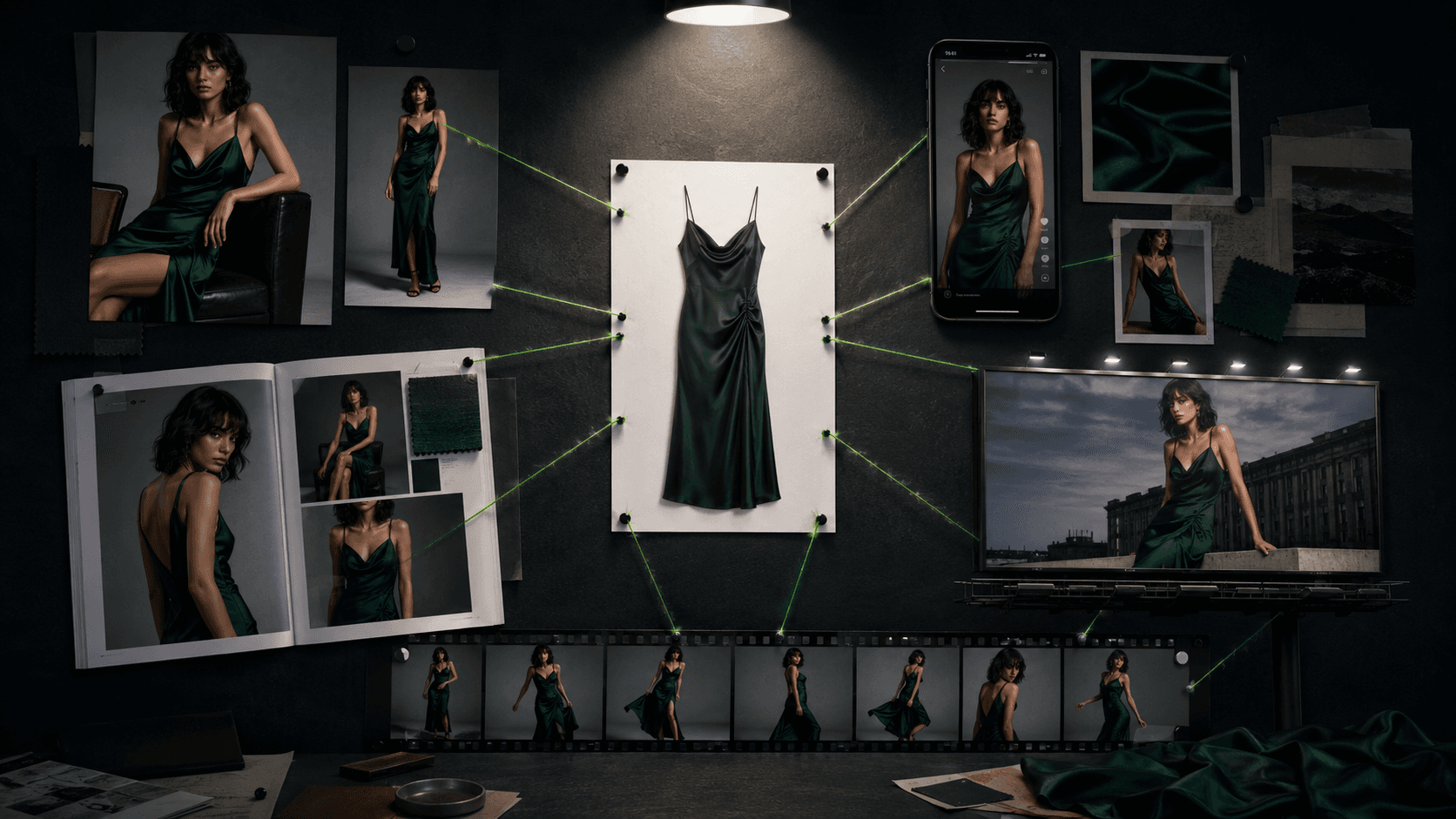

Arcads converts written ad scripts into UGC-style videos using a library of 1,000+ AI actors, serving D2C brands and mobile app studios who need to test multiple creative angles on Meta, TikTok, and Facebook without hiring real creators.
Arcads is an AI video ad generator built for performance marketers who run paid social campaigns and need a constant stream of creative variations. Founded in 2024 by Dylan Fournier and Romain Torres in France under the company Freshr, the platform converts written scripts into short-form UGC-style video ads featuring synthetic AI actors. By May 2026, the platform served 6,000+ clients, generated 100,000 assets per month, and had achieved profitability with a team of just seven people, validated by a $16 million seed round announced December 17, 2025. The product is not a general-purpose avatar tool and not a social media scheduler: it is a creative volume engine for paid social ad testing.
The core workflow is script-to-video in 3-7 minutes. Users write a script or use the built-in hook generator, select from a library of 300-1,500 AI actors depending on the plan, optionally upload product images for unboxing or app demo modes, preview the audio narration before spending credits, then trigger rendering. The platform supports emotion control via text descriptions, localization across 35+ languages, and a Workflow Creation feature for team-based creative scaling. The Pro tier unlocks an AI Video API and Lip Sync API for programmatic production at volume. Arcads is most comparable to Creatify for ad-focused UGC generation, and sits in a different category from general avatar platforms like HeyGen or long-form video tools like Vizard.
What Arcads outputs in May 2026
Arcads generates short-form video clips with AI actors delivering scripted lines in a style designed to blend in with organic TikTok and Instagram content. Output resolution is social-optimized (9:16 vertical for TikTok and Reels, with square and landscape options). Clip length is typically 15-90 seconds; scripts beyond 60-72 seconds introduce a known lip-sync drift issue (discussed below). The Starter plan produces 10 videos per month from 300 actors, the Creator plan bumps this to 20 videos from 1,000 actors with priority rendering, and the Pro tier offers unlimited generation from 1,500 actors plus actor cloning.
Beyond the base text-to-video mode, Arcads offers three specialized output types. Unboxing POV mode takes uploaded product images and generates a video of an AI actor appearing to open and reveal a package. "Show Your App" mode has actors hold a phone displaying a landing page or app screen, which mobile UA studios use to drive installs. The platform's Seedance 2.0 model, launched in mid-2026, improved motion naturalness and expression depth across most actors. Audio preview allows users to hear the TTS narration before committing credits to a full render, which is a practical cost-saving feature when testing hook variations.
"Cost: We pay about $200/real UGC. On Arcads we pay $3-7. Time: time to get footage for a real UGC ad is about 3 weeks on average. An AI ad on Arcads about 3 minutes. Arcads creators let us test new angles 10x faster and are taking up a healthy percentage of ad spend." -- Ronak Shah, LinkedIn, August 2024
Where Arcads sits versus Creatify and HeyGen
Arcads and Creatify are the two closest competitors in the AI UGC ad generator space, but they take mechanically different approaches. Creatify's signature feature is URL-to-video automation: paste a product URL, and the platform scrapes product data, writes the script, picks an avatar, and assembles a complete ad without user input on any individual step. Arcads requires the user to bring a script. Creatify also includes a native AdMax analytics dashboard that tracks which creative variations are outperforming others on Meta; Arcads has no built-in analytics and assumes users have existing measurement infrastructure. Creatify also offers a free tier with watermarked output, letting brands test before paying. Arcads has no trial whatsoever. Where Arcads wins is in raw UGC realism: reviewers consistently describe Arcads actor lip-sync and micro-expression quality as more convincing on shorter scripts, particularly in direct head-to-head tests.
HeyGen is a fundamentally different product despite both using AI avatars. HeyGen targets corporate video, SaaS explainers, B2B training content, and multilingual brand video, not paid social ads. Its distinguishing technical features are deep voice cloning from a short audio sample (enabling brand-consistent narration across all outputs) and Video Translation, which does not simply dub audio but regenerates lip movements in the target language from the original video. This is an architectural difference: Arcads generates lip movements from scratch in the render, while HeyGen's translation pipeline reconstructs them from source footage. HeyGen also starts at a lower price point (~$29/month) and serves a broader range of video formats. For pure paid-social UGC volume, Arcads is purpose-built; for multilingual brand video or executive avatar content, HeyGen is the stronger choice.
For mobile-first creators who work with real footage, Captions.ai sits in its own category: it enhances actual user-recorded video with AI features (eye contact correction, auto-captions, voice cloning for the real speaker) rather than generating synthetic actors from scratch. Topview and Synthesia each occupy adjacent positions for product video and corporate explainers respectively, but neither is optimized for the high-volume hook-testing workflow that defines Arcads' primary use case.
The real cost of generating video with Arcads
The $110 Starter plan works out to $11 per video at 10 clips per month. That is roughly a 93% reduction in cost versus commissioning real UGC creators, who typically charge $150-500 per deliverable on platforms like Fiverr or directly. The math improves at Creator tier: $220 for 20 videos is also $11 per video but with access to a 3x larger actor library and priority rendering during peak hours. Pro pricing is custom but reviewers estimate approximately $385/month for unlimited generation, API access, and actor cloning capabilities.
Where the economics break is volume versus need. If a brand tests two creative angles per month on a modest ad budget, paying $110 for 10 AI videos before any creative testing has informed the script direction is a weak ROI. The platform's own positioning -- and the clearest evidence from user case studies -- points to brands already spending $500+ per month on paid ads, running 3+ creative angles per week, where the ability to generate eight hook variants from one script in 45 minutes transforms the testing cycle. Credits do not roll over between billing periods. There is no free trial, and refunds are not offered. The platform is effectively a committed subscription.
Where Arcads consistently breaks
The most documented recurring failure is lip-sync drift on scripts longer than 45-60 seconds. Multiple independent reviewers in 2025-2026 confirmed that actors' mouths fall 1-2 syllables behind the audio track by the final 10 seconds of 72-second renders. On 15-30 second scripts, this problem is largely absent; on longer formats it is predictable and degrades the believability of the output. The practical workaround is keeping scripts under 45 seconds or cutting a longer script into sequential segments and splicing them externally.
Emotional range is the second documented limit. The AI actors produce competent delivery on informational or direct-response scripts, but emotion-heavy scripts asking for genuine laughter, distress, or surprise result in flat performances. One reviewer described this as "emotionally convincing at the level of a bored intern, not at the level of a creator who genuinely uses the product." This is particularly relevant for testimonial-style ads that depend on emotional authenticity as the trust signal.
Actor customization is zero. Users cannot modify clothing, hair, background, or physical attributes of any actor. The library is pre-fixed, which creates a saturation problem over time: heavy Arcads users across multiple brands start generating ads with the same faces, and audiences running on overlapping Meta audiences will encounter the same AI actors across competing ads. The Pro tier adds actor cloning (training a new AI actor from real video footage of a real person) but this requires custom pricing and additional production work.
"Every video I tried has lipsync issues. Could never put this content out, it's freaky!" -- Trustpilot reviewer, January 15, 2026
Other documented failure modes: render queue congestion during U.S. evening hours extends render times from the typical 3-7 minutes to 8-12 minutes; non-American and non-British English accents sound noticeably more robotic than native accents; and the platform has no built-in video editor, requiring users to assemble multi-clip compositions (intro, body, app demo, unboxing) in external tools like CapCut or Premiere.
Best use cases versus skip-this scenarios
Arcads is a strong fit for mobile app studios running user acquisition campaigns on Meta, TikTok, and Google UAC. The "Show Your App" mode combined with the ability to generate dozens of hook variants against the same offer makes it purpose-designed for this workflow. Teknasyon, a mobile app company, used Arcads to achieve a 76% reduction in cost per purchase and a 40% ROAS uplift across their app portfolio by scaling creative testing across dozens of actor variants. Digital product brands -- SaaS tools, online courses, coaching programs, newsletters, and templates -- are the second strongest fit because their product benefit can be delivered entirely through voiceover and scripted performance; no physical product interaction is required.
Skip Arcads when the product requires physical demonstration. E-commerce brands selling apparel, supplements, skincare, kitchen equipment, or any product that benefits from a real person touching, wearing, or using it will find that Arcads' Unboxing POV mode is unconvincing compared to real creator content. The AI actors cannot hold products naturally, and the uncanny valley effect increases with any content that depends on physical product proximity. Also skip Arcads if the ad budget is below $500/month: the cost-per-video economics only pay off when the brand is consistently funding ad sets and needs a rapid creative refresh cycle. Brands in early validation stages are better served by a single well-produced real creator ad before investing in AI volume production.
For teams that need video analytics alongside creative generation, Creatify's built-in AdMax dashboard is a meaningful advantage. For brands where brand voice consistency across dozens of videos matters more than raw actor volume, HeyGen's voice cloning provides a more durable solution. Arcads sits at the intersection of speed, cost reduction, and UGC visual realism for paid social, and within that intersection it is one of the best-resourced and fastest-growing options available in 2026.
User Reviews
No reviews yet. Be the first to share your experience!
Sign in to write a review.
Related articles
Guides and articles related to Arcads.

How to Make Money Selling AI UGC Content for Brands (2026)
Sell AI-Generated Short Films on TikTok Shop, Instagram & YouTube (2026)
AI Instagram Reels Factory: 30 Reels/Day on Autopilot (2026)
AI Fashion Prompts That Stay Consistent: The Working Formula (2026)

Best AI Fashion Model Generators for Clothing Brands (2026)