
AssemblyAI is a speech-to-text and audio intelligence API for developers. It transcribes audio using Universal-2 and Universal-3 Pro models, adds speaker diarization, sentiment analysis, and LLM-powered summaries via LeMUR, starting at $0.15 per audio hour.
AssemblyAI is a cloud-hosted speech-to-text API built by AssemblyAI, Inc., founded in San Francisco in 2017. It targets software developers who need to add voice processing to their applications without managing GPU infrastructure, model updates, or scaling pipelines. The platform processes over 40 terabytes of audio per day and handles 840 million API calls per month, making it one of the most widely used managed transcription services available. Unlike consumer transcription tools, AssemblyAI has no point-and-click interface: you send audio, the API returns structured text and metadata.
The current model lineup runs from Universal-2 ($0.15/hr) for cost-sensitive batch workloads up to Universal-3 Pro ($0.21/hr) for highest-accuracy pre-recorded transcription, and Universal-3 Pro Streaming ($0.45/hr) for real-time voice agent applications. On top of core transcription, the platform offers speaker diarization, sentiment analysis, entity detection, PII redaction, content moderation, and Auto-Chapters. The LeMUR framework, launched July 2023, applies Claude or GPT-4 to transcripts in a single API call, handling up to 10 hours of audio (~150K tokens) for summarization, Q&A, and AI coaching without developers building their own LLM pipelines.
What AssemblyAI actually does in April 2026
AssemblyAI's model stack now spans five distinct options depending on whether the workload is pre-recorded or real-time. Universal-3 Pro is the flagship batch model, with a 5.93% word error rate and support for 99 languages including automatic code-switching. Universal-2, the October 2024 release that replaced Universal-1, delivers 93.32% word accuracy with notable gains in proper nouns (24% better than Universal-1), alphanumerics (21% better), and text formatting (15% better). These are the numbers that matter for real production use: call center software fails when phone numbers and insurance codes are wrong, not when the WER is 0.5% off a benchmark dataset.
For real-time workloads, Universal-Streaming and Universal-3 Pro Streaming use WebSocket connections with sub-200ms end-to-end latency. A key engineering decision: AssemblyAI's streaming delivers immutable transcripts, meaning once a word is returned it is not revised. Competing streaming APIs often send "partials" that get corrected as context accumulates, creating state management problems for voice agent applications. The immutable approach lets agents process and act on transcribed speech while the user continues talking.
The intelligence stack sits on top of transcription. LeMUR wraps a pipeline combining intelligent segmentation, a vector database, and chain-of-thought prompting, enabling a single API call to run Q&A or generate summaries across hours of audio. Speaker diarization separates multiple speakers in a file. The Medical Mode add-on is HIPAA-compliant and optimized for clinical vocabulary. PII redaction covers 15 sensitive data types across 50+ languages.
"LeMUR works incredibly well out-of-the-box. It allowed us to focus on product instead of infrastructure." -- Alexander Kvamme, Co-founder & CEO at Pathlight, July 2023
Where AssemblyAI sits versus Deepgram and Whisper
The two meaningful competitors are Deepgram (similar managed API) and OpenAI Whisper (open-source, self-hosted). They differ on cost model, feature depth, and operational complexity in ways that matter for the buying decision.
AssemblyAI vs. Deepgram Nova-3: Both are managed APIs targeting developers. The accuracy numbers are close but contested. AssemblyAI's own benchmarks put Universal-3 Pro at 5.93% WER versus Deepgram Nova-3 at 7.9%; Deepgram's own benchmarks claim the reverse. What is cleaner is latency: in the June 2025 Universal-Streaming launch benchmarks, AssemblyAI reported 307ms median latency vs. Deepgram Nova-3's 516ms, and 73% fewer false noise outputs. Pricing model is a real differentiator: Deepgram typically requires contract commitments and spending minimums for production accounts, while AssemblyAI is fully pay-as-you-go with no minimums. For audio intelligence, the gap is wider: AssemblyAI's LeMUR provides built-in LLM pipeline over transcripts; Deepgram requires developers to wire their own. Promptable transcription (natural language context instructions that improve accuracy for domain-specific audio) is available in AssemblyAI; Deepgram does not offer this feature as of 2026.
AssemblyAI vs. OpenAI Whisper: Whisper is an open-source encoder-decoder transformer released by OpenAI under MIT license. The core value proposition is cost: self-hosting Whisper on your own GPU has zero per-audio-hour cost after infrastructure. OpenAI's hosted Whisper API charges $0.36/hr. AssemblyAI charges $0.15/hr for Universal-2 or $0.21/hr for Universal-3 Pro, cheaper than hosted Whisper but not cheaper than self-hosted. The architectural gap matters for features: Whisper alone has no speaker diarization, no streaming, no PII redaction, no audio intelligence features, and hallucination rates roughly 30% higher than Universal models on production audio (per AssemblyAI's benchmarks). Real-time use cases are poorly served by Whisper, which processes audio in chunks rather than true streaming. The practical question is engineering cost: self-hosting Whisper requires GPU management, queuing systems, and ongoing model updates. Teams that want to ship a voice feature in a sprint rather than a quarter typically pay AssemblyAI's per-hour rate. Teams processing millions of hours monthly often find self-hosted Whisper cheaper once infrastructure is amortized.
"Their transcription and diarization are on another level. I barely ever need to edit the transcripts, which is rare with these kinds of tools." -- G2 reviewer, 2025
What the API workflow reality looks like
For async (pre-recorded) transcription, the workflow is three steps: upload audio to AssemblyAI or pass a URL, poll for the transcript ID, and retrieve the structured JSON response containing the transcript, word-level timestamps, speaker labels, and any intelligence outputs. SDKs exist for Python, Node.js, Go, Java, and Ruby. The documentation is comprehensive with interactive playgrounds, which is why AssemblyAI earned a G2 "Leader" badge in the Fall 2025 Voice Recognition Grid Report.
For real-time streaming, developers open a WebSocket connection and stream audio chunks. The API returns finalized transcript tokens as they come in. The October 2025 product update added "Intelligent Model Fallback," letting developers specify multiple models in priority order: the API uses the highest-accuracy model that supports the detected language, falling back automatically. This matters for multilingual products where one audio file might switch languages mid-conversation.
A specific incident worth noting: when AssemblyAI launched Universal-2 in late October 2024, it simultaneously cut the base transcription price by 43%, from $0.37/hr to $0.15/hr for the new model. The October 31, 2024 blog post "Beyond Word Error Rate: Universal-2 Delivers Accuracy Where It Matters" framed the release around production-critical accuracy categories rather than aggregate WER, which was a notable positioning shift: the message was that getting proper nouns and phone numbers right matters more to a call center than a half-percentage-point improvement in headline WER. That framing resonated with enterprise customers at Calabrio and Siro, which both reported significant business outcomes after deploying Universal-2.
Who AssemblyAI is built for
The clearest fit is developer teams building voice features into SaaS products: call center conversation intelligence, podcast platforms, medical documentation, meeting summarization, and increasingly voice agent applications using frameworks like LiveKit and Pipecat. The LeMUR layer is particularly valuable for teams that want to skip building their own transcript-to-LLM pipelines. SOC2 Type II and HIPAA compliance covers healthcare and financial services use cases where data handling requirements would otherwise require significant custom infrastructure.
Startups get $50 in free credits to prototype without a credit card. The pay-as-you-go model scales without minimum commitments, which is meaningful for early-stage teams uncertain about volume. Enterprise customers get custom pricing, higher concurrency limits, and dedicated SLAs once usage justifies the conversation with sales.
The October 2025 update also introduced an LLM Gateway that consolidates speech-to-text, speech understanding, and LLM inference into one platform with unified billing, targeting teams who want to reduce API vendor count and simplify data pipelines.
What AssemblyAI is not
AssemblyAI is not a consumer product. There is no web interface where a non-technical user can upload an audio file and download a transcript. That use case belongs to tools like Otter.ai, Rev, or Descript. Anyone who describes themselves as "not a developer" should look elsewhere.
It is not the cheapest option at massive scale. At 100,000+ hours of audio per month, self-hosting Whisper on dedicated GPU hardware typically becomes cheaper than paying per hour. Teams at that volume should run the numbers: the engineering cost of infrastructure maintenance can easily exceed the API cost savings, but it can also go the other way once a platform team is in place.
It is not a full-featured multilingual intelligence platform yet. The 99-language transcription is real, but LeMUR, Auto-Chapters, sentiment analysis, entity detection, and most intelligence features are English-dominant. Building a call center AI in Spanish or Portuguese runs into these gaps quickly.
It is not a fine-tuning platform. Teams with highly domain-specific vocabulary (rare medical terms, proprietary product names, industry jargon) can use Keyterms Prompting to improve recognition, but there is no custom model training. Deepgram offers domain-tuned engines for certain verticals; AssemblyAI relies on its Universal model's out-of-the-box capability.
User Reviews
No reviews yet. Be the first to share your experience!
Sign in to write a review.
Related articles
Guides and articles related to AssemblyAI.
Build a 70-Language Live Voice Agent With GPT-Realtime-Translate (2026)
OpenAI GPT-Realtime-2 (May 2026): Pricing, Latency & 30-Min Voice Agent
Google Vision AI Explained (2026): Pricing Per 1,000 Units, Free Tier, and Alternatives
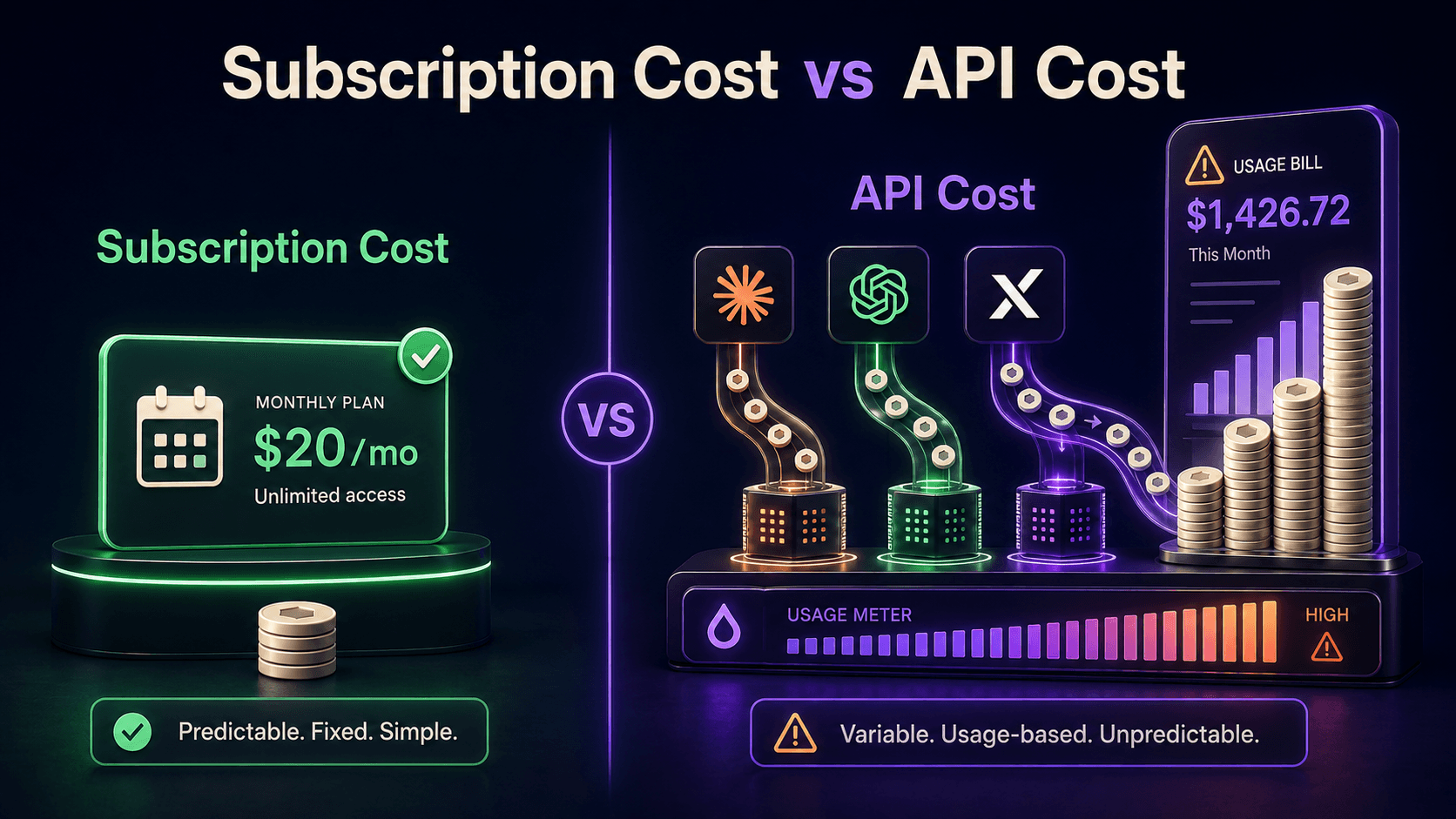
Does API Cost More Than a Subscription for Claude Opus 4.8, GPT-5.5, and Grok?
Amazon Translate Review (2026): Pricing, Accuracy, and When to Pick an Alternative