Azure OpenAI Service is Microsoft's enterprise hosting layer for OpenAI's full model portfolio, GPT-5, o-series, DALL-E, Whisper, and Sora, running inside Azure infrastructure with built-in compliance, VNet isolation, and Entra ID authentication for production deployments.
Azure OpenAI Service is Microsoft's enterprise-grade API for OpenAI's foundation models, running inside Azure's global cloud infrastructure rather than on OpenAI's own servers. It is not a separate AI lab or a model catalog like AWS Bedrock. It is one vendor's models, OpenAI's, deployed under Microsoft's security, compliance, and identity framework. That distinction drives both its biggest advantage and its most common frustration: you get GPT-5 with HIPAA and SOC 2 compliance baked in, but you are locked to the OpenAI roadmap, the Azure quota system, and Microsoft's regional rollout schedule.
As of April 2026, the service operates under the Microsoft Foundry brand (rebranded from Azure AI Foundry at Ignite 2025), with a model lineup spanning the GPT-5 family (gpt-5, gpt-5-mini, gpt-5-nano, gpt-5.2, gpt-5.5), GPT-4o variants, the o3 and o4-mini reasoning models, DALL-E 3, GPT-image-1 for image editing and generation, Whisper and GPT-audio-1.5 for speech, GPT-realtime-1.5 for low-latency voice interactions, and Sora 2 for video generation in preview. Pricing follows a pay-as-you-go per-token structure plus Provisioned Throughput Units (PTUs) for teams that need guaranteed capacity and predictable costs at scale.
What Azure OpenAI Service actually does in April 2026
The service wraps OpenAI's API in Azure's infrastructure, adding several layers that OpenAI's own API does not provide out of the box. Entra ID (formerly Azure Active Directory) handles authentication, allowing enterprises to use Managed Identity so no API keys appear in code or configuration. Virtual network integration and private endpoints let teams keep all inference traffic inside their own Azure subnet, never crossing the public internet. Content filtering and moderation can be configured per deployment, with separate severity thresholds for hate speech, violence, self-harm, and sexual content.
For throughput control, Azure OpenAI introduced Provisioned Throughput Units: reserved blocks of model compute that give predictable token-per-minute rates and deterministic latency, priced at $2/PTU/hour on a self-service hourly basis, or up to 85% cheaper under annual commitments. This matters for contact center and real-time voice applications where the variability of pay-as-you-go queues is unacceptable. GPT-realtime-1.5 enables sub-500ms voice interaction loops that power customer service agents, while the Azure AI Foundry Agent Service provides an orchestration layer for multi-step agentic workflows with built-in memory, tool calling, and deep research capabilities.
The November 2024 Ignite announcement consolidated Azure AI Studio, Azure OpenAI Studio, and Azure Machine Learning Studio into Microsoft Foundry. This reduced the number of portals to manage but required existing integrations to update API endpoints and SDK references. GPT-5 reached general availability in Azure AI Foundry in January 2026, following an initial rollout to East US 2 and Sweden Central in August 2025. GPT-5.5 launched in Azure in April 2026.
"Having access to powerful language models like GPT-4o within a secure and compliant environment gives us confidence in deploying AI solutions at scale." - AI Engineering Manager at a tech vendor, PeerSpot, 2025
Where Azure OpenAI sits versus AWS Bedrock and Google Vertex AI
The three dominant enterprise AI platforms each reflect a different design philosophy, and the differences are mechanical, not just cosmetic.
AWS Bedrock is a multi-vendor model garden: Anthropic Claude, Amazon Nova, Meta Llama, Mistral, Stability AI, and Cohere all available through one standardized serverless API. You can switch models with a parameter change. Fine-tuning is delegated to external SageMaker Pipelines rather than native to Bedrock itself. There are no PTUs, no provisioned capacity tiers, and no equivalent to Azure's OpenAI model exclusivity. Bedrock works for teams whose priority is flexibility across model vendors and who do not need OpenAI's GPT-5.x specifically. It is the better fit when you want Claude for reasoning, Nova for cost-efficiency, and Llama for on-premises needs, all under one billing account.
Google Vertex AI gives exclusive access to the Gemini family (Gemini 3.1 Pro, Gemini 3.1 Flash, Gemma 4) plus 200+ models in its Model Garden including open-source options like Llama and Mistral. Its fine-tuning capability is the broadest of the three platforms: prompt tuning, adapter tuning via LoRA and prefix-tuning, and full retraining are all native. Vertex Pipelines, Feature Store, and automated retraining workflows represent a more mature MLOps story than Azure ML Studio. For teams whose primary models are Gemini-family and who need serious fine-tuning depth, Vertex is the stronger choice. Azure OpenAI wins on Microsoft ecosystem integration (Entra ID, Teams, Power Platform, SharePoint) and on exclusive OpenAI model access.
The practical split: if your stack is Microsoft, your compliance needs are strict, and you need GPT-5.x, Azure OpenAI is effectively your only option. If you need model diversity, pick Bedrock. If you need fine-tuning at scale or Gemini, pick Vertex.
What the developer and production reality looks like
Getting started with Azure OpenAI is meaningfully harder than calling the OpenAI API directly. You need an Azure subscription, a resource group, a Cognitive Services resource, a deployment (named separately from the underlying model), regional selection, and Entra ID configuration before a single API call goes out. Compared to the OpenAI.com setup flow (one API key, one base URL), the Azure path adds 20-30 minutes of infrastructure setup and a learning curve around deployment naming conventions and regional endpoints.
Once running, teams encounter the quota system. Every Azure subscription gets a default TPM (tokens per minute) cap per region per model tier. The caps are not pooled across regions: deploying GPT-4o in East US and West Europe gives you 450K TPM in each region independently, not 900K combined. Scaling past the default requires filing a quota increase request through the Azure portal. The official guidance says "several business days." The community experience is less reliable.
"Regions are not kept in sync with model data" and "no new models have turned up in something like six months." - jiggawatts, HackerNews, July 2024
Model deprecation adds another operational layer. Azure serves specific model versions, and those versions have separate deprecation schedules from OpenAI.com. The August 2024 GPT-4o release was deprecated on Azure by August 2025, with the November 2024 release showing "degraded performance compared to the Aug 2024 release" according to some production users. Teams monitor not just model capability improvements but also version-specific behavior regressions between Azure-served builds.
On the positive side, the Azure AI Foundry Agent Service handles multi-step reasoning chains, persistent memory, and tool-calling orchestration in ways that reduce the amount of custom scaffolding teams have to build. The Azure AI Search integration enables retrieval-augmented generation pipelines where the embedding, index, and generation layers all authenticate through the same Managed Identity.
Who Azure OpenAI Service is built for
The service makes most sense for enterprises already inside the Microsoft ecosystem. If your identity runs on Entra ID, your data lives in Azure Storage or SharePoint, and your internal applications connect through Power Platform, Azure OpenAI's integrations reduce security review cycles significantly. The compliance portfolio, including HIPAA, SOC 2, ISO 27001, and EU data boundary compliance, means regulated industries (healthcare, financial services, government) can deploy GPT-5 without building their own compliance stack around OpenAI's direct API.
Teams building Microsoft 365 Copilot extensions use Azure OpenAI as the default backend, with Managed Identity for zero-credential authentication and built-in Microsoft Graph connectors. Contact centers running GPT-realtime-1.5 for low-latency voice get PII redaction and content safety filters that would require significant custom engineering against the direct OpenAI API.
What Azure OpenAI Service is not
It is not the right choice for startups and independent developers who want to ship fast. The setup overhead, subscription requirements, and quota friction create real delays. If you just need GPT-4o or GPT-5, the OpenAI API is faster to start and faster to scale without procurement cycles.
It is not a multi-model platform. If your workflow needs Anthropic Claude for legal reasoning, Llama for local inference, and GPT-5 for generation, Azure OpenAI only covers the last part. AWS Bedrock consolidates the others under one API. Azure AI Foundry's model catalog has expanded, but OpenAI models remain the primary focus.
It is not the fastest path to the newest OpenAI models. OpenAI.com typically makes new model versions available before Azure regions do, and regional rollouts are staggered, meaning some teams deploy to distant regions just to access a specific model version. The July 2024 multi-region outage, which took down Azure OpenAI across 14 of 28 regions after a cleanup operation accidentally deleted critical resources, illustrates the reliability exposure that comes with a single-vendor infrastructure dependency.
"Azure is really sub par yet more people are using it than ever due to OpenAI." - redwood, HackerNews, July 2024
For teams whose priority is the Microsoft security perimeter and OpenAI model exclusivity, those tradeoffs are worth accepting. For everyone else, the alternatives deserve a serious look.
User Reviews
No reviews yet. Be the first to share your experience!
Sign in to write a review.
Related articles
Guides and articles related to Azure OpenAI Service.
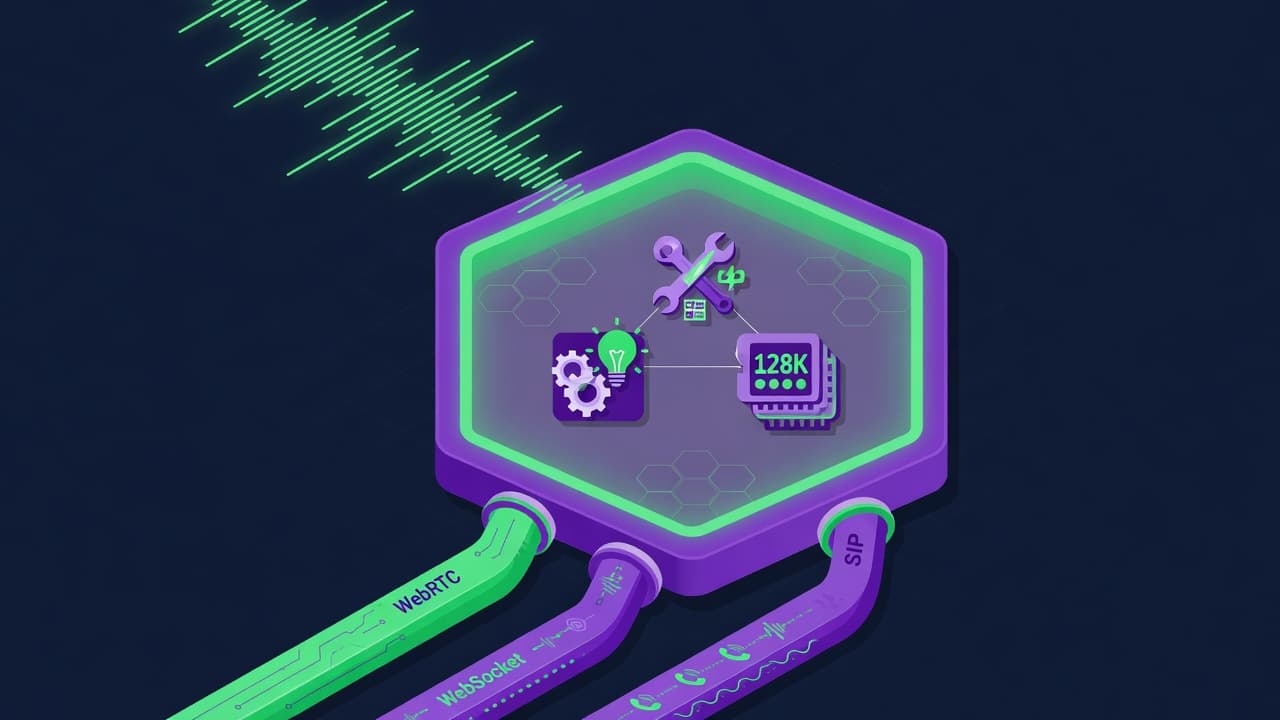
OpenAI GPT-Realtime-2 (May 2026): Pricing, Latency & 30-Min Voice Agent
Grok 4.3 API for Agents (May 2026): Pricing, Benchmarks, Migration
Google vs OpenAI vs Anthropic Agents: The May 2026 Platform Showdown
Build a 70-Language Live Voice Agent With GPT-Realtime-Translate (2026)
Does API Cost More Than a Subscription for Claude Opus 4.8, GPT-5.5, and Grok?