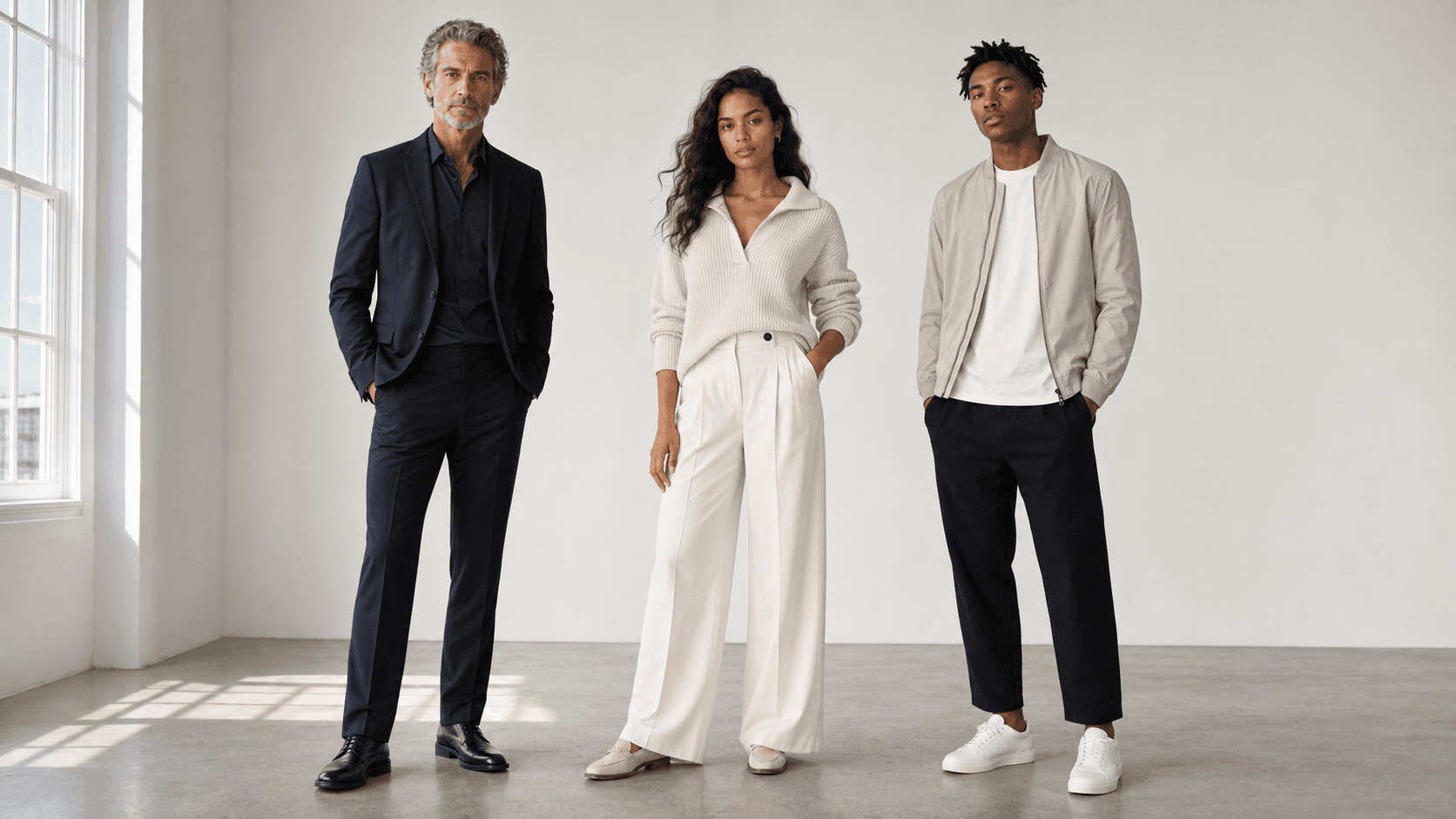
Bing Image Creator is Microsoft's free text-to-image tool powered by DALL-E 3, GPT-4o, and its own MAI-Image-1 model. It gives casual users no-cost access to premium image generation, though heavy censorship filters and limited boost credits frustrate power users.
Bing Image Creator is Microsoft's free text-to-image generator, accessible at bing.com/create and through the Copilot and Bing mobile apps. Microsoft built it on top of OpenAI's DALL-E 3, launching in March 2023 as one of the first mainstream tools to put high-quality AI image generation within reach of anyone with a Microsoft account, at no cost. It solves a simple problem: most capable image generation tools cost money or require technical setup, and Bing Image Creator removes both barriers.
The tool has expanded its model lineup considerably since launch. As of April 2026, users can generate images using DALL-E 3 (which produces four image variants per prompt), GPT-4o image generation (added August 2025, returning one higher-fidelity image per prompt with better text rendering and photorealism), and MAI-Image-1 (Microsoft's in-house model, debuted November 2025, built for photorealistic lighting and landscapes). Free accounts receive 15 fast "boosts" per day; generation continues at slower speeds after boosts are exhausted. Copilot Pro subscribers at $20 per month get 100 boosts daily plus priority access to new models.
What Bing Image Creator generates in April 2026
The default generation experience on DALL-E 3 produces four 1024x1024 pixel images per prompt, displayed as a grid from which you select the best option. There is no aspect ratio selector on the free tier; output is square by default. GPT-4o mode, introduced in August 2025, generates a single image per prompt but handles nuanced descriptions significantly better: complex scene composition, accurate text embedded in images, and fine detail preservation all improved noticeably compared to base DALL-E 3.
Microsoft's proprietary MAI-Image-1 model, which entered the LMSYS Arena benchmark top-10 shortly after its October 2025 launch, is now available as a third option inside Bing Image Creator. Early user testing describes it as particularly strong for outdoor scenes, architectural subjects, and photorealistic portraits, though creative and stylized content still tends to favor DALL-E 3. Model selection is a single-click toggle on bing.com/create, giving users flexibility across the three options within the same free interface.
The tool is available on the web, in the Bing mobile app for iOS and Android, and through Copilot on the same platforms. Microsoft Edge users can access image generation directly from the browser sidebar without leaving the page they are reading. There is no API for image generation in the free consumer product; the underlying DALL-E 3 and GPT-4o models are accessible via the OpenAI API separately.
"better than the rest that I CAN pay for!" -- anonymous reviewer, Slashdot, November 2023
That early enthusiasm was warranted. At launch, the combination of DALL-E quality at zero cost was genuinely unusual. The challenge since then has been consistency: Microsoft's model update cadence has introduced quality regressions, and content filtering has tightened in ways that affect everyday use.
Where Bing Image Creator sits versus DALL-E 3 via ChatGPT and Adobe Firefly
The two most meaningful comparisons are DALL-E 3 via ChatGPT (same underlying model, paid versus free) and Adobe Firefly (different training data, commercial-safe versus no-indemnification).
DALL-E 3 via ChatGPT runs the same foundational model as Bing's DALL-E 3 option, but the experiences diverge mechanically in three ways. First, ChatGPT Plus allows aspect ratio selection: users can request 16:9, 9:16, 4:3, or square outputs, which matters for creating platform-specific assets. Bing locks to 1024x1024. Second, ChatGPT maintains image context across a conversation: if you generate a character and want to adjust the background or add an accessory, you continue the conversation and the model remembers what it built. Bing Image Creator generates each prompt fresh with no persistent memory. Third, Bing's content filters are tuned significantly more conservatively than ChatGPT's. Prompts that ChatGPT Plus accepts without comment -- historical violence, stylized adult fashion, certain fictional characters -- routinely trigger Bing's safety system. The trade-off is access: Bing is free for 15 boosts daily; ChatGPT Plus costs $20 per month.
Adobe Firefly takes a fundamentally different approach to training data. Firefly is trained exclusively on Adobe Stock licensed images, public domain content, and openly licensed material, which means Adobe can make architecture-level claims about IP cleanliness. For commercial work, this difference is load-bearing: Adobe indemnifies paid Creative Cloud subscribers against copyright claims arising from Firefly outputs. Bing Image Creator's Terms of Service allow commercial use but explicitly place all IP liability on the user. If a Bing-generated image is found to infringe on a third party's copyright or trademark, Microsoft's terms provide no shield. The terms also warn that identical or near-identical images may be generated for different users using similar prompts, which conflicts with any exclusivity claim. Firefly also offers structured controls that Bing lacks: content type selectors, color palette and tone settings, lighting style options, and reference image uploads for style matching. The trade-off is cost: Firefly's standalone plan starts at $4.99 per month, and commercial indemnification requires a full Creative Cloud subscription.
Real cost of running Bing Image Creator
The free tier is genuinely free. There is no credit card required, no trial period, and no generation cap at slow speed. The 15 daily "boosts" determine whether you wait 3-5 seconds (boosted) or 30-90 seconds (standard) for results. For light use -- a few images per day -- the free tier is sufficient and the speed difference is tolerable.
Once you need volume or speed, the math changes. The only paid option that increases image generation boosts is Copilot Pro at $20 per month, which raises the daily limit to 100 boosts. There is no image-generation-only subscription; you are paying for the full Copilot Pro bundle (AI in Word, Excel, Outlook, etc.) primarily to unlock more image boosts. If you only want more images, the value proposition is weak compared to dedicated tools.
Free: $0/mo, 15 fast boosts per day, unlimited slow-speed generation, DALL-E 3 and GPT-4o model access, standard resolution (1024x1024)
Copilot Pro: $20/mo, 100 fast boosts per day, priority access to new models, landscape formatting options, AI features in Microsoft 365 apps (Word, Excel, PowerPoint, Outlook, OneNote)
Microsoft 365 Copilot (Enterprise): $30/mo per user, full enterprise AI across M365 suite, commercial data protection, enterprise security controls
Microsoft Rewards points offer a workaround: 10 points per additional boost. Redeeming points from Bing searches, Microsoft Shopping, and other activities can extend daily limits, but the accumulation rate makes it practical only for light supplemental use rather than a substitute for a paid plan.
Where Bing Image Creator reliably fails
The most persistent and well-documented issue is censorship creep. Since mid-2023, Microsoft has progressively tightened content filters to the point where users report blocks on prompts that most observers would consider benign: anime characters described with "short black hair," historical battle scenes, fictional villains with weapons, and stylized mature fashion. The tool's response to flagged keywords is often to silently substitute the prompt with "kindness" and "wholesome" alternatives, generating completely unrelated imagery rather than declining outright. Users describe this as more insulting than a flat refusal.
"It feels like the AI assumes you're unsafe and punishes you with bland results." -- user complaint reported in Windows Latest, December 2024
The January 2025 model rollback illustrated a second recurring failure: silent quality regressions. Microsoft upgraded the DALL-E 3 model to a new version (PR16) without announcement, promising speed and quality improvements. Within days, complaints flooded Reddit and X describing generated faces as "lifeless," "taxidermized mannequins," and outputs as "weirdly cartoonish." Jordi Ribas, Microsoft's head of search, acknowledged the issue on X and confirmed a rollback to the previous version, noting the process would take two to three weeks to complete at scale. Microsoft's internal benchmarking had rated PR16 as "a bit better on average" -- underscoring the gap between lab metrics and user perception. The slow rollback and lack of proactive communication reflect a product team that moves faster than its communication infrastructure.
Beyond censorship and consistency, several mechanical limits frustrate workflow-oriented users:
No aspect ratio control on DALL-E 3 mode; all outputs are 1024x1024 square
No iterative editing or image memory across prompts; each generation is standalone
No inpainting, outpainting, or image-to-image capabilities in the web interface
Prompt drift on complex scenes: detailed multi-element prompts often lose elements in later image slots
No style locking or reference image input on the free web tool
Who Bing Image Creator is for, and who should pick something else
Bing Image Creator works well for a clearly defined set of users. Casual creators who need occasional images for blog posts, social media, or personal projects get genuine DALL-E quality at zero cost. Students and educators benefit from the low barrier to entry and the fact that the conservative content filters tend to keep outputs appropriate for classroom contexts without extra prompt engineering. Microsoft 365 power users already embedded in the ecosystem get image generation without adding another tool or account. And anyone in early-stage ideation -- designers prototyping concepts before pitching, writers visualizing characters, marketers brainstorming campaign directions -- can extract real value from 15 free daily generations before handing off to a production tool.
The tool is a poor fit for several audiences. Commercial designers who need IP protection should use Adobe Firefly instead; Bing places all copyright liability on the user with no indemnification. Character artists, fan artists, and anyone whose work involves stylized or mature content will hit the censorship wall repeatedly and without warning. Anyone who needs custom resolution, aspect ratios beyond square, or high-resolution outputs (above 1024px) will find Bing Image Creator structurally inadequate. And production workflows requiring volume generation, iterative refinement, or API access need a dedicated tool. Midjourney, DALL-E 3 via the OpenAI API, or FLUX.1 via Replicate are better-suited for those use cases.
The honest summary: Bing Image Creator is the best free entry point to DALL-E-class image generation, and the 2025 additions of GPT-4o and MAI-Image-1 made the ceiling meaningfully higher. Microsoft's neglect of the product, its heavy censorship calibration, and the lack of pro controls keep it squarely in the "good enough for casual use" category rather than a serious creative tool.
User Reviews
No reviews yet. Be the first to share your experience!
Sign in to write a review.
Related articles
Guides and articles related to Bing Image Creator.
Wix Logo Maker Review (2026): Real Costs, the Edit Catch, and AI Alternatives
Freepik AI Is Now Magnific: What Changed, What It Costs, and Whether to Stay (2026)
AI Video Generator Prompting: The Filmmaker's Real Workflow
Google Vision AI Explained (2026): Pricing Per 1,000 Units, Free Tier, and Alternatives
AI Fashion Prompts That Stay Consistent: The Working Formula (2026)