
Harvey is the dominant enterprise legal AI platform, used by more than 60 AmLaw 100 firms and over 500 in-house legal teams. Built specifically for legal work, it combines domain-trained models with firm-specific knowledge retrieval for contract review, due diligence, and agentic legal workflows.
Harvey is an AI platform purpose-built for legal and professional services, developed by Counsel AI Corporation and co-founded in 2022 by Winston Weinberg (a former O'Melveny & Myers securities litigator) and Gabriel Pereyra (ex-Google DeepMind and Meta researcher). The idea came from a late-night demo of GPT-3 in a Los Angeles apartment: when Weinberg tested the model on 100 California tenant law questions and 86 answers passed attorney review unmodified, the two recognized that legal language processing had crossed a threshold. OpenAI made Harvey its very first Startup Fund investment on July 4, 2022. By March 2026, Harvey had raised over $1 billion in total funding and reached an $11 billion valuation in a round co-led by GIC and Sequoia Capital.
The platform is not a general-purpose chatbot adapted for legal use. Harvey trains domain-specific models on proprietary legal datasets and combines them with a retrieval-augmented generation (RAG) architecture that indexes each firm's own documents, precedents, and playbooks. Core modules include the Harvey Assistant for conversational legal Q&A and drafting, Harvey Vault for bulk document storage and analysis, Harvey Knowledge for complex legal and tax research, and Harvey Workflow Agents for end-to-end task execution across practice areas including antitrust, cybersecurity, fund formation, and loan review. The platform launched on Microsoft Azure in May 2024 and now serves more than 100,000 legal professionals across 60+ countries, including the majority of AmLaw 100 firms, 500+ in-house legal teams, and 50 asset management firms. It integrates with LexisNexis through a formal partnership and is complemented by ContractMatrix, a co-developed tool built with Microsoft and A&O Shearman that lets lawyers review and redline contracts inside a Harvey-powered interface.
What Harvey actually is in May 2026
Harvey operates as a unified legal intelligence layer, sitting between a firm's document repositories and its lawyers. Unlike a document management system that organizes files, or a generic AI assistant that answers questions, Harvey treats a firm's accumulated knowledge as a trainable asset. When a partner at an AmLaw 100 firm searches for precedents on a merger agreement covenant, Harvey doesn't just retrieve documents; it synthesizes clauses across hundreds of past deals, flags deviations from the firm's standard positions, and drafts redlines in the firm's own voice.
The Vault module, used for large deal rooms and litigation document sets, supports up to 10,000 documents per Vault and performs bulk summarization, cross-document comparison, and anomaly surfacing. Harvey Knowledge handles multi-jurisdictional legal research, pulling from regulatory databases and firm-specific knowledge bases simultaneously. Workflow Agents represent the platform's most ambitious product: pre-built, end-to-end agents that execute discrete legal tasks with minimal attorney input. A&O Shearman's antitrust filing analysis agent, co-developed with Harvey's senior lawyers and David Wakeling's 30-person AI Advisory Practice, is now sold externally to other firms and clients -- a signal that the platform has moved beyond internal productivity into a legal services product in its own right.
Harvey Academy provides on-demand training and expert workflow libraries, which matter because adoption friction is one of the platform's main challenges. The company's 2025 "Impact of Legal AI" study, conducted with 40 global firms, found that 67% of customers realized measurable benefits within 90 days and that law firm power users save an average of 36.9 hours per month.
"I have never seen anything like Harvey. It is a game-changer." -- David Wakeling, Global Head of Markets Innovation Group, A&O Shearman, Harvey customer page, 2024
"We're not just improving efficiency, we're reimagining how legal services are delivered and how value is created." -- Hilary Goodier, Partner and Global Head of Ashurst Advance, Ashurst, Harvey blog, 2025
Where Harvey sits versus Spellbook and EvenUp
Harvey occupies the enterprise end of the legal AI spectrum. Understanding how it differs mechanically from its two most-discussed competitors matters before signing a contract.
Harvey vs. Spellbook: Spellbook is a Microsoft Word add-in. It lives inside the document where drafting actually happens, deploying in minutes without IT involvement and charging around $179/user/month on its mid-tier plan. Harvey requires a multi-month enterprise rollout, a custom contract negotiation (industry estimates put per-seat cost at $1,000 to $1,500 per month), and integration into existing document management infrastructure. Spellbook's October 2025 Series B ($50M, Khosla Ventures, $350M valuation) funded "Market Comparison" and "Preference Learning" features, which benchmark contract clauses against real-time deal data and learn a firm's clause preferences over time. Harvey has no native Word add-in; attorneys must copy text between Harvey's interface and their drafting environment. For transactional lawyers who live in Word, this friction is material. Harvey wins on depth, breadth, and enterprise-grade security; Spellbook wins on accessibility, pricing transparency, and workflow integration. You can compare Spellbook directly at Spellbook's Vantaige listing.
Harvey vs. EvenUp: EvenUp is a vertical specialist for personal injury law. Its AI model was trained on more than 200,000 injury cases and medical records, making it capable of a specific workflow Harvey cannot replicate: reading a stack of medical records and generating a structured demand package -- demand letter, medical chronology, case valuation -- adapted to the firm's tone and strategy. EvenUp's Mirror Mode feature replicates a firm's best historical work across all new document workflows. Harvey is a horizontal platform; EvenUp is a vertical one. A PI firm choosing Harvey would be paying enterprise platform prices for general legal AI when EvenUp (which raised $150M at a $2B valuation in October 2025) has already solved their precise problem at the task level. See the EvenUp listing for full details.
Robin AI, the UK-origin contract specialist that combined clause-level AI with a managed human review service, was Harvey's other frequent comparison point until December 2025, when Robin was acquired by Scissero after failing to close a planned $50M funding round. Robin's total ARR at acquisition was approximately $10M; Harvey's was approximately $100M. Robin's narrower architecture (clause extraction plus fallback-position matching, with a human review team validating outputs) worked well for commercial contract negotiation but couldn't match Harvey's breadth across practice areas. See the Robin AI listing for that story in full.
How AI actually works inside Harvey
Harvey is not a thin interface over a public model. The company's technical approach involves fine-tuning foundation models on curated legal datasets, then adding a firm-specific RAG layer that retrieves from the firm's own document corpus. When an attorney asks Harvey to review a credit agreement's material adverse change clause, Harvey is simultaneously checking against its legal training data and against the firm's past credit agreements indexed in Vault. The result is a model that speaks in legal language, cites jurisdictionally appropriate precedents, and surfaces the firm's own prior positions.
The Workflow Agents go further: rather than returning text for an attorney to review and act on, they execute multi-step tasks end-to-end. The fund formation agent, for instance, drafts the full suite of fund documents based on a term sheet input, flagging items requiring partner review rather than dumping an undifferentiated draft. A&O Shearman's antitrust filing analysis agent uses Harvey's underlying models trained on the firm's antitrust practice group's accumulated work, making its outputs substantially more reliable than a generic model on the same task.
The platform maintains SOC2 Type II, ISO 27001, GDPR, and CCPA compliance. Enterprise controls include SAML SSO, audit logs, IP allow-listing, and data isolation per firm. The LexisNexis partnership (announced in 2024) connects Harvey's research capabilities to LexisNexis's legal database, reducing hallucination risk on statutory and case law queries.
The friction and credibility concerns users keep raising
Harvey's September 2025 Reddit controversy became the most public airing of the tensions inside BigLaw AI adoption. An anonymous user claiming to be a former Harvey employee posted that real adoption was concentrated among junior associates, that churn was artificially suppressed by long-term non-cancellable contracts, and that actual seat utilization hovered around 35% rather than the figures Harvey reported. Business Insider could not verify the user's employment at Harvey; the account was later deleted. Harvey CEO Winston Weinberg responded on LinkedIn with internal metrics: 98% gross revenue retention and 77% seat utilization. A subsequent co-founder Reddit AMA drew criticism for "sanitised" answers and "all softball questions" -- a comment that received 22 upvotes.
The underlying frustrations are real regardless of who wins the credibility debate. Forum threads and reviews consistently surface the same patterns:
Pricing opacity and contract rigidity: No public pricing, mandatory seat minimums, non-cancellable 12-month contracts. One r/legaltech thread described negotiating for three weeks just to agree on the number of seats for a pilot.
Vault document cap: The 10,000-document ceiling per Vault is inadequate for large litigation matters where document sets run into the millions.
No native Word integration: Attorneys who draft in Word must manually copy text into Harvey's interface and back, breaking the flow that tools like Spellbook avoid entirely.
Junior-skewed adoption: Partners tend to have the heaviest workloads and the least patience for learning new interfaces. Adoption concentrates among associates, which inflates usage numbers but raises ROI questions when firms are paying for firm-wide seat licenses.
"Expensive wrapper" perception: Some practitioners argue Harvey's premium is unjustified when foundation models like Claude are available directly at a fraction of the per-seat cost. The lack of public benchmarking against raw foundation models feeds this narrative. For users exploring document AI without an enterprise commitment, document processing tools and general-purpose alternatives are worth benchmarking first.
Who Harvey is built for
Harvey's economics only work for a specific segment of the legal market. At $1,000-$1,500 per lawyer per month, the platform requires volume -- enough contract review, due diligence, or litigation support work that the time savings justify the cost at the firm level. The sweet spot is AmLaw 100 and 200 firms with multi-practice operations, large in-house legal teams at Fortune 500 companies, and professional services networks like PwC's 4,000+ legal professionals. A&O Shearman's 4,000-person deployment across 43 jurisdictions represents the product working as intended: deep integration, institutional knowledge encoding, and workflow automation that saves 2 to 3 hours per lawyer per week on routine tasks.
Use Harvey when: Your firm does high-volume transactional work, due diligence, or complex multi-jurisdictional matters. You have the budget for enterprise pricing and an IT team to manage integration. You want to encode your firm's accumulated legal knowledge into a retrieval system that improves over time. You need SOC2/ISO 27001 security with full audit trails.
Skip Harvey when: You run a solo practice or small firm. Your primary practice is personal injury (use EvenUp instead). You need to draft inside Microsoft Word without interface-switching (use Spellbook). You want transparent self-serve pricing with a free trial. You're evaluating legal AI and haven't yet committed to an enterprise rollout. For firms in that evaluation stage, tools like Eve Legal offer a lower-commitment entry point to legal AI capabilities.
User Reviews
No reviews yet. Be the first to share your experience!
Sign in to write a review.
Related articles
Guides and articles related to Harvey AI.
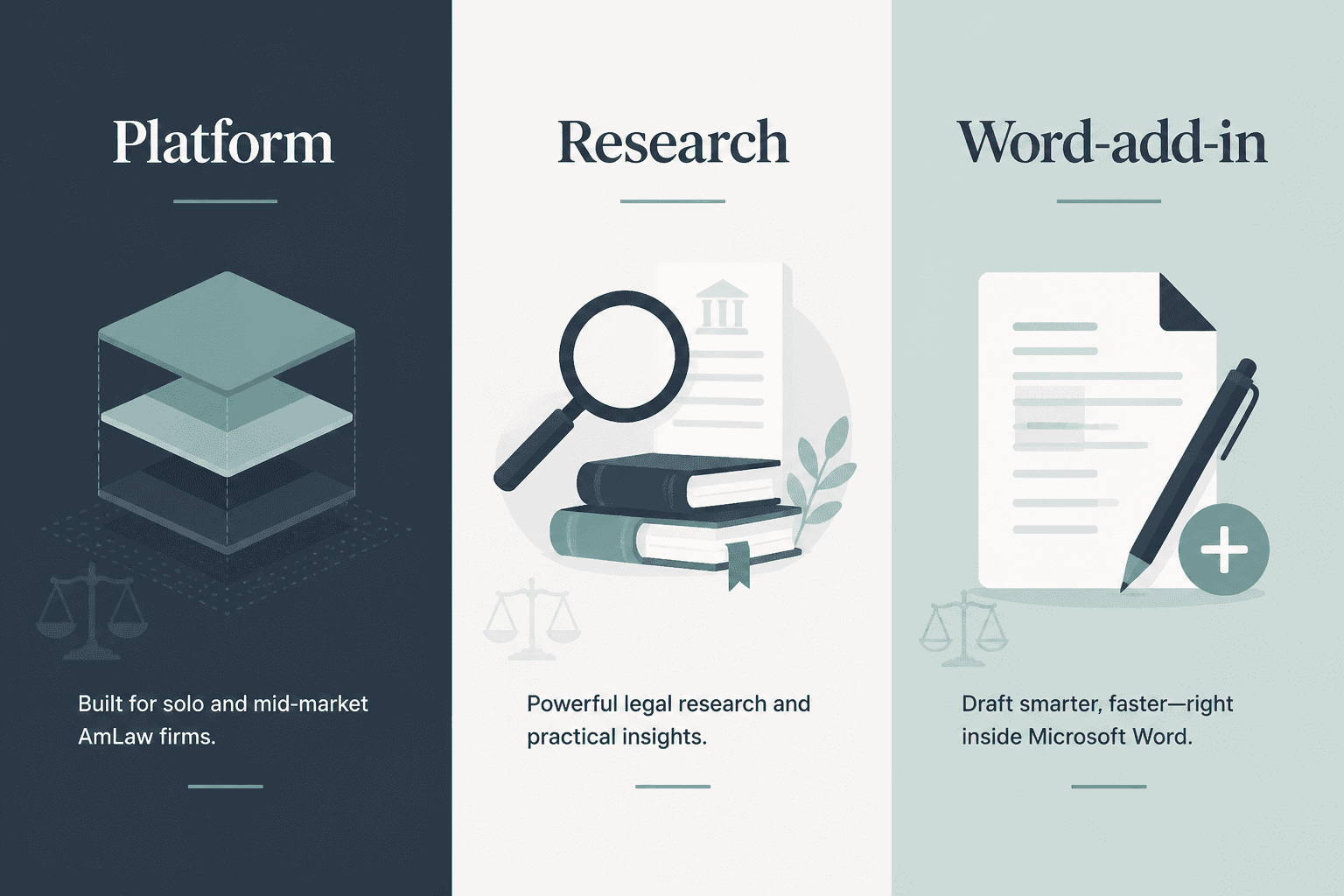
Harvey vs CoCounsel vs Spellbook (2026): Which Legal AI Fits Your Firm Size
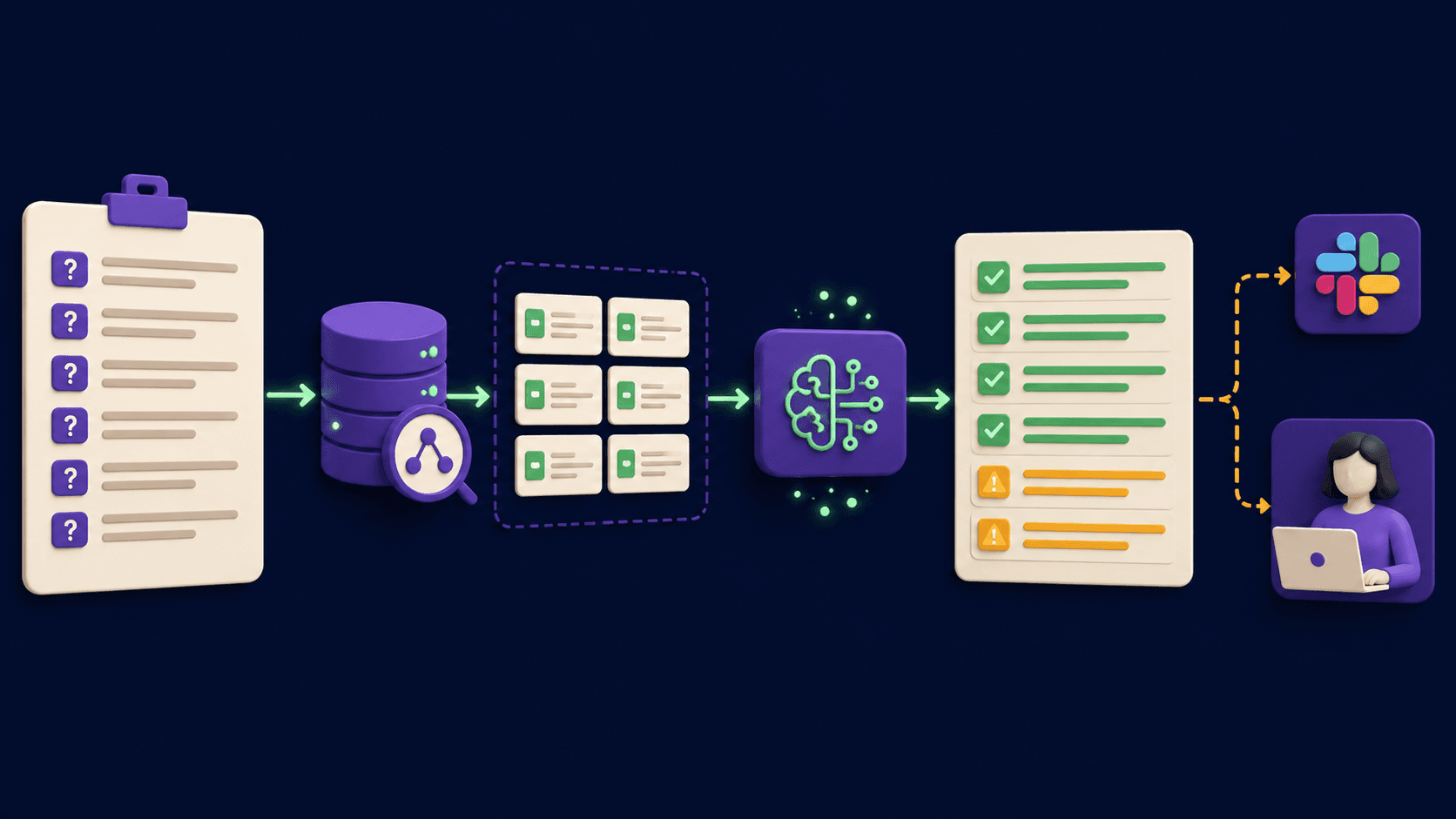
RFP and Proposal Auto-Fill: The Agent That Handles 80% of the Repeating Questions (2026)
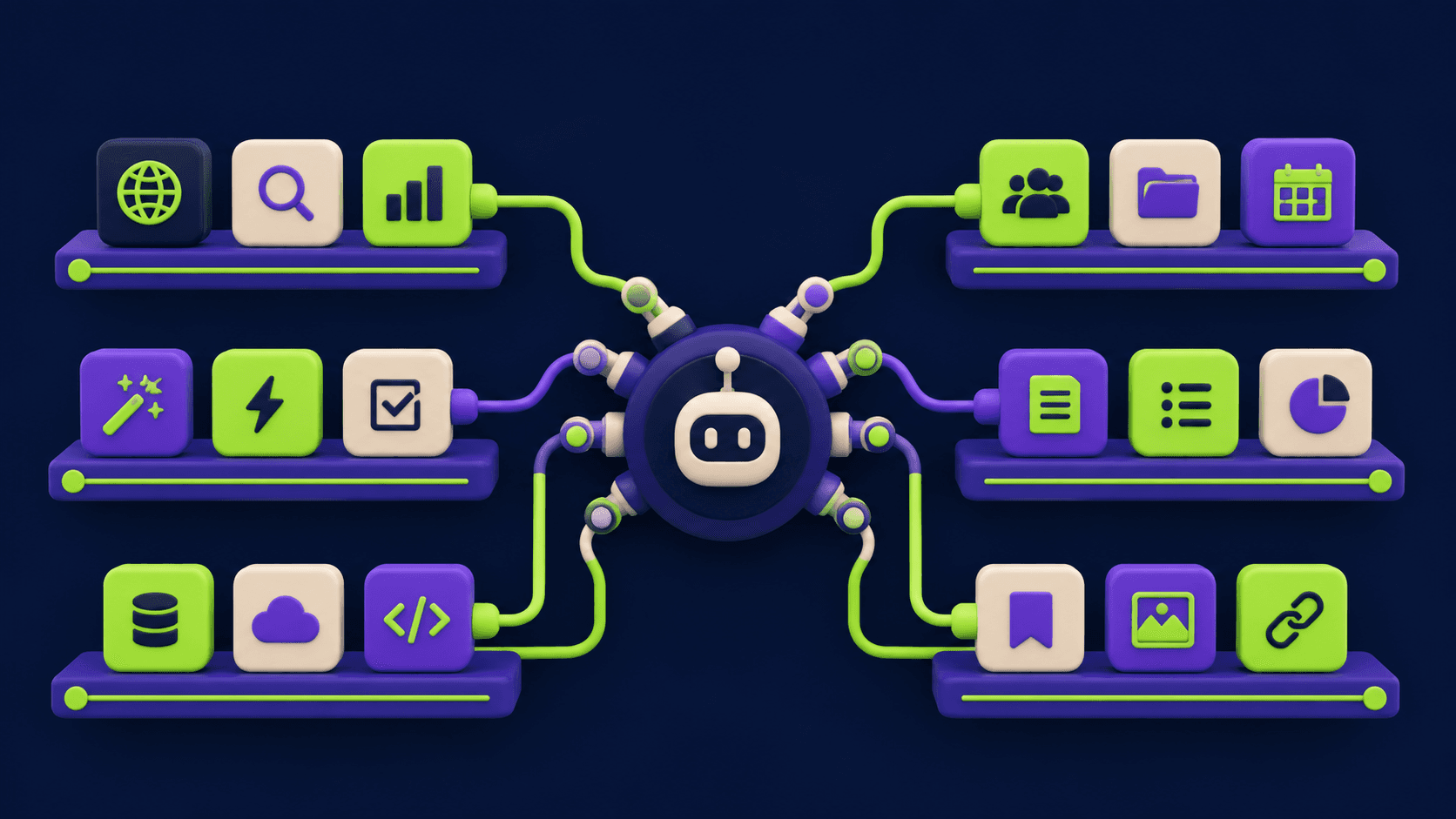
Turn Any AI Agent Into a Superagent: The 12-Integration Stack (2026)
Coding Ate Enterprise AI (2026): The $4B Use Case, Anthropic’s Share, and Seat vs API Math

Build and Sell AI Automations as a Service: The Operator Playbook (2026)