
Apify is a Prague-based web scraping and automation cloud founded in 2015. Its Apify Store hosts 26,000+ ready-made Actors for scraping any website, with a Crawlee SDK, MCP server for AI agents, and managed proxy infrastructure starting at $29/month.
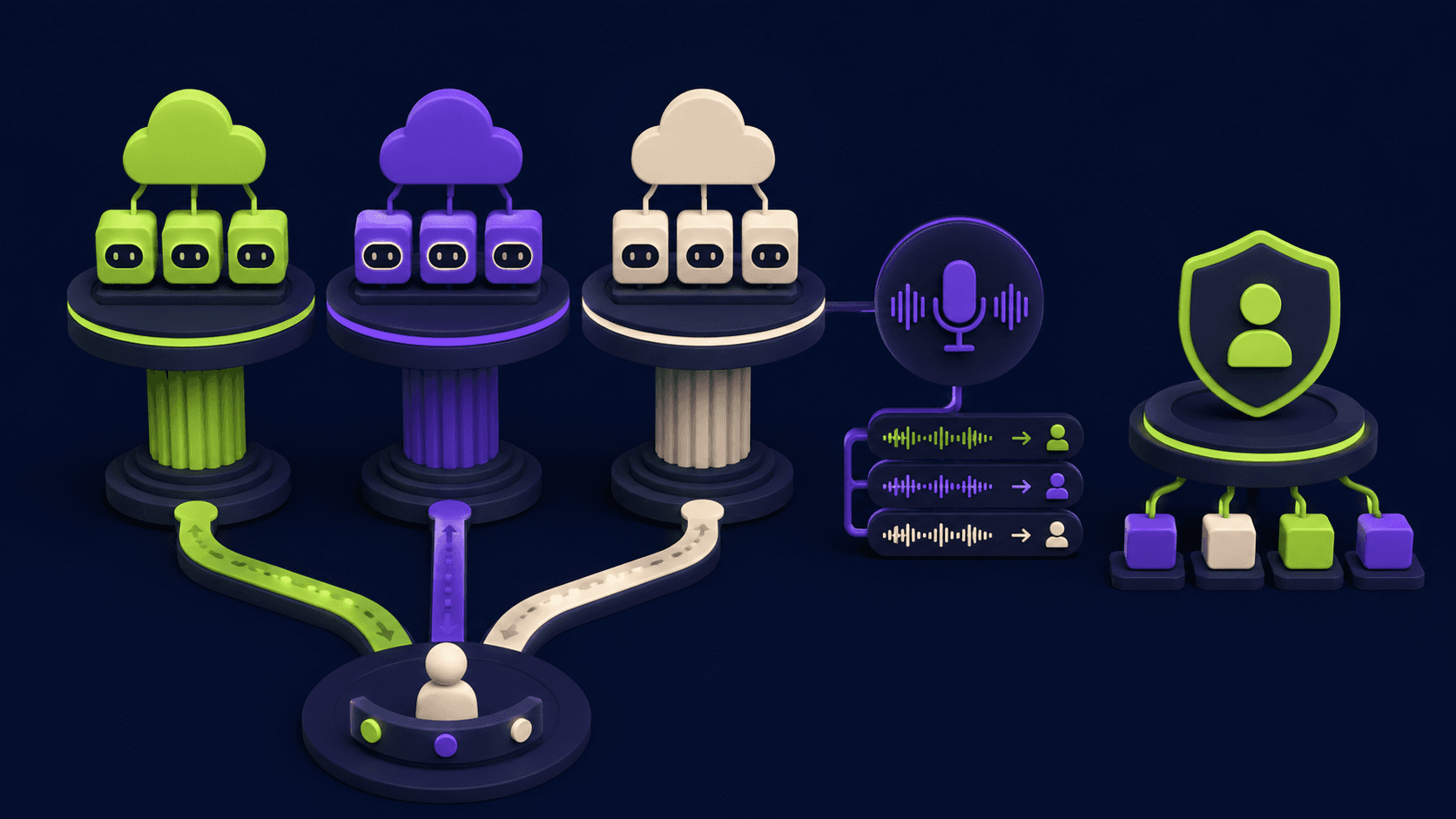
Apify is a full-stack web scraping and data extraction platform built by Prague-based Apify Technologies, founded in 2015 by Jan Curn and Jakub Balada after launching through the Y Combinator Fellowship. The core product is the Apify Store, a marketplace of over 26,000 containerized automation units called Actors, each targeting a specific website or workflow: Amazon product scrapers, LinkedIn profile extractors, Google Maps scrapers, TikTok and X/Twitter scrapers, and thousands more. Actors run entirely on Apify's managed cloud infrastructure, which handles proxy rotation, CAPTCHA bypassing, JavaScript rendering, headless browsers, scheduling, storage, and scaling automatically. The platform serves 25,000+ customers including T-Mobile, Microsoft, Samsung, and Accenture, processing over 1 petabyte of data every month.
Beyond the Actor marketplace, Apify ships two open-source SDKs for building custom scrapers: Crawlee for Node.js (launched 2022) and Crawlee for Python (launched July 2024), which collectively have more than 6,000 GitHub stars and an 8,000-member Discord community. In June 2025, Apify launched an official MCP (Model Context Protocol) server that exposes 5,000-6,000+ Actors as callable tools for AI agents including Claude Desktop, ChatGPT, and VS Code Copilot. Native integrations with LangChain, LangGraph, CrewAI, Mastra.ai, Zapier, and Make round out the connectivity options for teams building AI data pipelines. Pricing starts at a free tier with $5 in monthly credits and scales through Starter ($29/month), Scale ($199/month), and Business ($999/month) subscription tiers.
What Apify actually does in May 2026
Apify's primary product is cloud infrastructure for web scraping at scale. The Apify Store hosts 26,929 Actors as of April 2026, each a self-contained scraping or automation function. Some are built and maintained by Apify; the majority are community-contributed. Popular Actors cover the most-scraped targets: the Tweet Scraper V2, LinkedIn Jobs Scraper, Amazon Product Scraper, Google Search Results Scraper, and hundreds of e-commerce and social media extractors. Behind the scenes, each Actor gets its own container with configurable RAM (up to 128 GB on the Business tier), proxy session management, automatic retries, and error handling.
The platform's storage layer is built in. Actor runs output structured JSON datasets that persist in Apify's key-value store and can be queried or downloaded via API. Scheduling uses a native cron system with timezone support, trigger-based runs, and monitoring dashboards, a critical advantage over stateless scraping APIs that require users to manage their own orchestration.
The MCP server, launched June 16, 2025, is the platform's clearest bet on the AI agent economy. It exposes Apify Actors as callable tools via the Model Context Protocol, meaning an AI agent can trigger a scraper mid-task, retrieve structured data, and feed the results directly into an LLM context. The server switched from Server-Sent Events to Streamable HTTP on April 1, 2026, aligning with the official MCP specification. Version 0.9.20 was released April 27, 2026, with 1,200 GitHub stars and 159 forks reflecting steady developer adoption.
Crawlee for Python deserves specific mention. Launched July 23, 2024, it hit the Hacker News front page via a "Show HN" post and gained more than 6,000 GitHub stars in its first months. It provides a unified interface for HTTP and headless browser crawling, with automatic proxy rotation, session management, and Playwright integration. When it reached v1.0 stable release, it effectively ended the argument that Apify was a JavaScript-only ecosystem.
"Without Apify, this project would either not exist or be a full-time job." - Jakub P., Backend Developer, Capterra, April 21, 2026
"The API is dead simple. You send a request, you get structured JSON back." - Saif R., Founder, Capterra, February 28, 2026
Where Apify sits versus Firecrawl and Bright Data
Firecrawl and Apify solve adjacent but architecturally different problems. Firecrawl is a stateless, LLM-native unified API: you send a URL, it returns clean Markdown optimized for RAG pipelines and LLM context windows. There is no Actor marketplace, no built-in scheduler, no persistent storage, no proxy configuration. It removes the most friction for teams that need web content as clean text for AI applications and are not running recurring jobs. Apify's strength is the inverse: structured JSON output from domain-specific Actors (prices, profiles, SERP entries), native scheduling, storage, and the flexibility to choose exactly which proxy type and IP pool handles a given request. For anti-bot targets like Cloudflare, PerimeterX, or Akamai-protected sites, Apify lets you control proxy routing at a granular level. Firecrawl's anti-bot behavior is not user-configurable. Pricing reflects the difference: Firecrawl's Hobby plan starts at $16/month; Apify's Starter starts at $29/month but buys access to a full platform rather than just an extraction API. For teams pairing the two, a common pattern is using Firecrawl for ad-hoc LLM content pulls and Apify for recurring structured data pipelines.
Bright Data occupies the enterprise proxy infrastructure tier that Apify does not try to compete with directly. Bright Data's network spans 72 million residential IPs, plus datacenter, mobile, and ISP proxies, with white-glove compliance documentation, legal review, and GDPR-ready data products. It serves 20,000+ enterprises and offers pre-scraped datasets (LinkedIn, Amazon, Glassdoor) that buyers can purchase as one-time exports. Apify runs scraping on demand against its $29/month self-serve pricing. For teams that need the proxy scale of a dedicated IP network with compliance certification, Bright Data is the reference point. For teams that need a developer-friendly scraping platform with a Store full of ready-made Actors, managed infrastructure, and an AI agent layer, Apify has no direct equivalent.
Teams looking for workflow orchestration alongside scraping often pair Apify with n8n or Zapier Agents to build end-to-end automation pipelines. For knowledge retrieval workflows, pairing Apify's dataset output with LlamaIndex or Browserbase for browser-level automation covers additional use cases beyond what either tool handles alone.
What the daily workflow reality looks like
A typical Apify session starts in the Apify Store. You search for an Actor targeting the site you need, read its documentation, and run a test with a small input. If it works, you configure a scheduled run. If the first Actor fails (broken by a recent site update, insufficient proxy coverage, or simply the wrong tool), you evaluate alternatives in the Store. This is where the platform's scale becomes a double-edged property: 26,000+ Actors means there is almost always an option for any target site, but Actor quality is inconsistent. Community-maintained Actors can break when target sites update their anti-scraping infrastructure, and discovery is imperfect enough that finding the right Actor for a specific task can take longer than it should.
Once you have a working Actor, the developer experience is clean. Input parameters are defined in a JSON schema, runs are triggered via REST API or the console, and output lands in a structured dataset. The API is well-documented, and Apify's support team is consistently rated as responsive and technically capable across Capterra reviews.
The MCP integration adds a new interaction mode. Instead of triggering Actors manually, an AI agent running in Claude Desktop, VS Code, or a LangGraph workflow can call Apify Actors as tools mid-task. A market research agent, for example, can scrape LinkedIn company data, pull related news articles, and query Google search results all within a single agentic loop, with Apify handling the actual scraping infrastructure. Developers building for LlamaIndex or CrewAI can connect Apify's MCP server to their agent frameworks using the published JSON configuration.
For teams doing lead generation at scale, the combination of Apify's Actors with Zapier or Make integrations provides a no-code automation path: scrape LinkedIn companies on a schedule, push new rows to a Google Sheet or Salesforce CRM automatically. Divij S., a marketing agency founder, described Apify as "a core part of my lead generation stack" in an April 2026 Capterra review, though he also noted that disruptions to Actor-specific automations (in his case, Apollo-related changes) can break production workflows without advance notice.
Who Apify is built for
Apify is most clearly built for backend engineers and data engineers who need reliable, scalable scraping infrastructure without the operational overhead of running their own proxy pools, browser farms, and scheduling systems. The platform abstracts away the hardest parts of production scraping: IP rotation, CAPTCHA handling, rendering JavaScript-heavy pages, managing concurrency, and storing results. If you're building data pipelines and want to move faster than implementing all of that from scratch, Apify's value proposition is straightforward.
Marketing and sales teams at mid-market companies use Apify for lead generation, competitor monitoring, and market intelligence. The combination of no-code Actor configuration, Zapier integrations, and cloud scheduling means a technically literate marketer can run recurring scraping jobs without writing code, as long as an appropriate Actor exists for their target platform.
AI and ML engineers building RAG applications, LLM-powered agents, or vector database pipelines are an increasingly large user segment. The MCP server integration and native compatibility with LangChain, LangGraph, CrewAI, and Mastra.ai make Apify a natural data ingestion layer for agentic systems. Pairing Apify with Bardeen AI or similar workflow automation tools can extend this further for non-engineering teams.
What Apify is not
Apify is not a no-code scraping tool for non-technical users. The JSON input schemas, Actor parameter configuration, and debugging workflow assume developer familiarity. Multiple Capterra reviews from non-technical users describe the platform as intimidating: Dominik L. (November 2025) described the "steep learning curve for non-developers and credit-based pricing model" as the primary drawback. If the target user cannot read API documentation or understand compute unit pricing, simpler tools are a better starting point.
Apify does not clean or normalize data. It scrapes and stores it. Teams expecting structured, deduplicated, analysis-ready datasets need to build post-processing pipelines themselves or use a downstream data transformation tool. Maryam A., a research assistant who reviewed Apify in July 2025, specifically flagged the absence of built-in data cleaning as a limitation for academic research workflows.
Apify is also not the right choice for one-off page extractions feeding an LLM. For that use case, Firecrawl's stateless API requires less setup and returns cleaner Markdown output by default. Apify's overhead, including Actor selection, configuration, and scheduling, only pays off when you are running scraping jobs repeatedly or at scale. For enterprise buyers with compliance requirements and multi-million-row proxy infrastructure needs, Bright Data provides the IP scale and white-glove support that Apify does not offer at its price points.
User Reviews
No reviews yet. Be the first to share your experience!
Sign in to write a review.
Related articles
Guides and articles related to Apify.
Ship Your First MCP Server in 20 Minutes (2026)
Grok 4.3 API for Agents (May 2026): Pricing, Benchmarks, Migration

Build and Sell AI Automations as a Service: The Operator Playbook (2026)
Turn Any AI Agent Into a Superagent: The 12-Integration Stack (2026)
Orchestrator-Workers: The Multi-Agent Pattern That Actually Scales (2026)