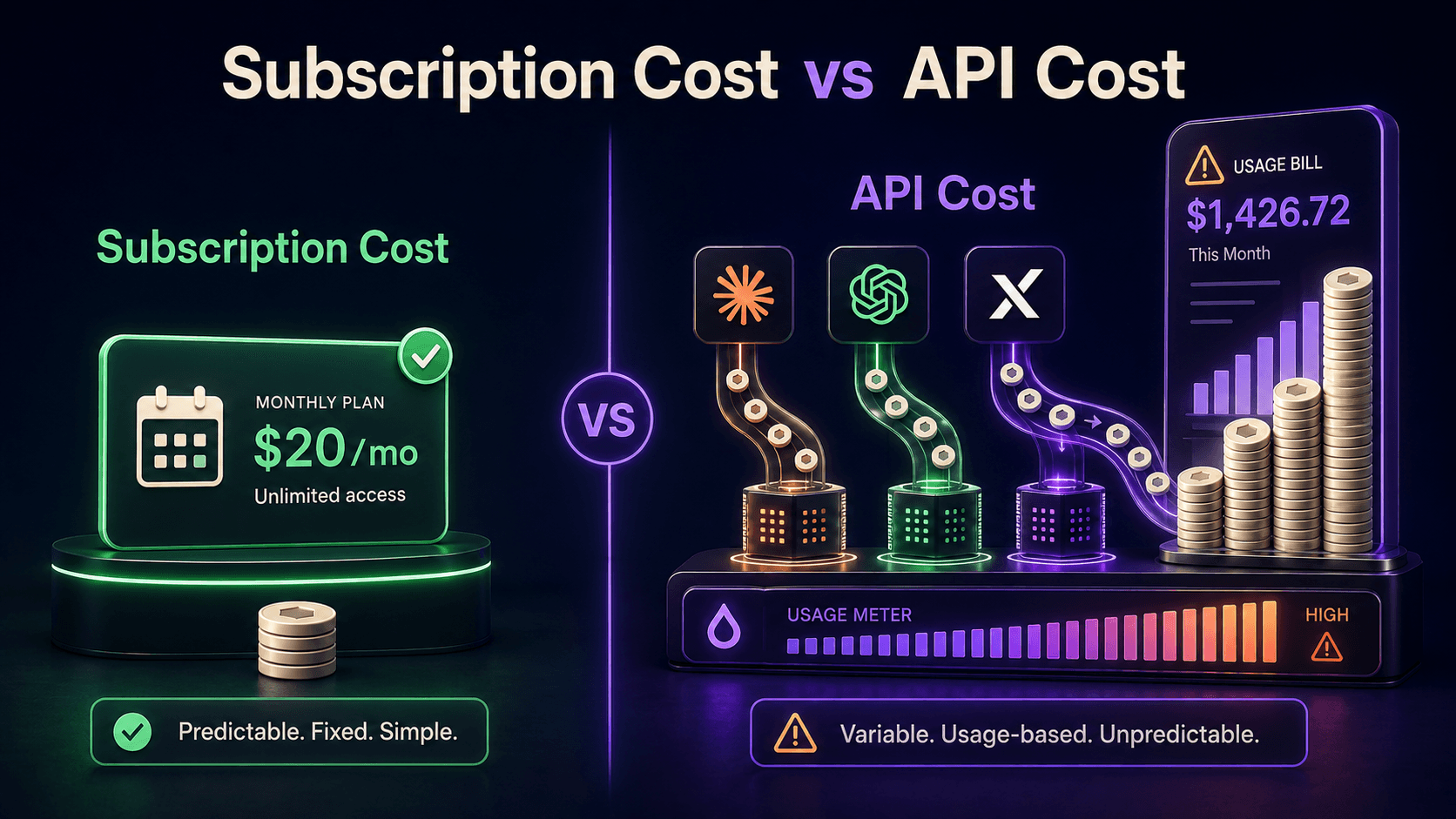

Vast.ai is a peer-to-peer GPU rental marketplace where independent hosts list compute at market rates. H100s from ~$0.90/hr, RTX 4090s from $0.34/hr. Far cheaper than managed clouds, with tradeoffs on reliability and setup complexity.
Vast.ai is a decentralized GPU rental marketplace founded in 2018 by Jake Cannell. Rather than owning its GPU fleet, the platform connects independent hosts (individuals, data centers, managed service providers) with renters who need compute for AI training, inference, and rendering. Pricing is set by supply and demand, which is why Vast.ai consistently undercuts managed clouds by 60-80% on comparable hardware. As of early 2026, the platform lists 20,000+ GPUs across 68 GPU types from 1,400+ providers, spanning consumer RTX cards up to H100, H200, and B200 enterprise hardware.
The core product is on-demand GPU instances provisioned via a web console, CLI, or REST API with per-second billing. Renters search, filter by GPU type and reliability score, then deploy a Docker container in seconds. In December 2025, Vast.ai launched its Serverless product, which adds fully automated GPU scaling for inference workloads, including predictive load optimization and multi-workergroup endpoints. The platform holds SOC 2 Type I and II certification, with an optional Secure Cloud mode (ISO 27001, HIPAA) for teams handling sensitive data.
What Vast.ai actually does in May 2026
Vast.ai runs three distinct compute products. The original GPU Cloud is an on-demand marketplace where renters pick a machine, set a max bid, and spin up a Docker container on that host's hardware. Billing is per second, with separate line items for active GPU time, storage (charged even when the instance is paused), and outbound bandwidth.
The second product is Clusters, which provides dedicated multi-node setups with InfiniBand networking for distributed training jobs too large for a single node. This is less commodity and requires direct coordination with the platform.
The third product is Vast.ai Serverless, launched December 10, 2025. This layer handles cold starts, autoscaling, and job routing automatically across the distributed host network. A Python SDK decorator lets developers call inference functions as if they were local code while the infrastructure runs remotely. The April 2026 product update added OpenAI-compatible endpoints and a Python-native deployment path with no dashboard dependency.
Hardware types available as of April 2026 include the full consumer RTX line (3060 through 5090), datacenter A100 and H100 variants, L40S, H200, B200, and AMD Radeon/Instinct hardware added in May 2024 when Vast became the first major GPU rental marketplace to add AMD support. That AMD announcement coincided with the company reporting 265% year-over-year growth since 2019 and a 310% growth rate specifically in 2024. CEO Jake Cannell framed the AMD expansion as a deliberate supply-side play: "Adding AMD support helps Vast continue the trend and continue to lead in the space." The practical effect was that managed service providers with idle AMD hardware could now list it on the marketplace, expanding the supply side without requiring Vast.ai to purchase any hardware itself.
The platform's 700,000+ monthly transactions and 123,000+ paying customers reflect a user base that skews toward technical practitioners. The typical Vast.ai user is not someone who clicked a sign-up link and needs a guided tutorial. They already know what GPU they need, what VRAM their model requires, and how to write a Dockerfile. The platform rewards that knowledge with access to price points that managed clouds cannot match. That same knowledge requirement is also the single biggest reason Vast.ai is not appropriate for every team.
Where Vast.ai sits versus RunPod and Lambda Labs
The GPU cloud space splits roughly into three tiers. Managed enterprise clouds (Lambda Labs, CoreWeave) own their hardware, provide reliability SLAs, and charge accordingly. Hybrid managed platforms (RunPod) operate their own data centers while also brokering third-party hosts. Marketplaces (Vast.ai) own nothing and let supply and demand set prices. This structural difference is what explains both Vast.ai's pricing advantage and its reliability ceiling.
Against RunPod, Vast.ai typically wins on raw hourly price, sometimes by a large margin. A100 SXM 80GB: RunPod $0.79/hr vs Vast.ai $0.67/hr. L40: RunPod $0.69/hr vs Vast.ai $0.31/hr. H100 80GB: RunPod $1.50-1.99/hr vs Vast.ai $0.90-1.87/hr depending on host verification tier. RunPod runs its own "Secure Cloud" data centers with approximately 99.5% uptime and offers click-to-deploy templates for common ML frameworks. Vast.ai has no equivalent managed tier unless you opt into Secure Cloud, which closes much of the price gap. The honest summary from a 2026 pricing analysis: "Vast.ai usually wins on raw hourly GPU price (sometimes by a lot), while RunPod often wins on 'I need this to just work' convenience."
Lambda Labs is the other common comparison, aimed at research teams and enterprise customers who want a managed cloud with ML-focused support staff. Lambda's A100 costs ~$1.29/hr versus Vast.ai's $0.52-0.80/hr for equivalent hardware, a 60-150% premium. Lambda's GPU catalog is narrower (A100, H100, A10G, RTX 6000 Ada), H100s can sell out during peak demand, and pricing is fixed rather than market-driven. What Lambda offers in return: dedicated support engineers, clean onboarding, and an infrastructure that does not depend on the behavior of independent third-party hosts. For teams with strict data handling requirements or no appetite for infrastructure variability, Lambda's predictability justifies the cost. For budget-constrained researchers who know their way around Docker, Vast.ai typically wins on economics alone.
Versus CoreWeave, Crusoe, Modal, and Replicate, Vast.ai occupies a different position. CoreWeave is a hyperscaler-grade managed provider; its H100s run at $3.90+/hr on-demand. Crusoe focuses on sustainable compute for enterprise contracts. Modal and Together AI abstract away infrastructure entirely, offering serverless inference APIs where users never provision instances. Vast.ai's Serverless product now overlaps partially with Modal and Together AI for inference, but the core marketplace product remains infrastructure-first: users still provision Docker containers and manage their own dependencies.
"Vast has saved me tens of thousands of dollars running ML experiments." - tehsauce, Hacker News, March 2023
"We scaled to 46 H100 servers, completing a 100,000-document LLM enrichment task in 38 minutes at one-quarter typical cloud costs." - Anna Bosch, VP Data Intelligence, Launchmetrics, December 2025
What the daily rental reality looks like
The workflow: add credit (minimum $5), search available offers filtered by GPU type, VRAM, reliability score, verified status, and price, then deploy a Docker image. Per-second billing starts immediately; storage billing continues even when the instance is stopped. The CLI and Python SDK support programmatic search and provisioning, which matters for batch workflows where you want to automatically find the cheapest available instance matching criteria.
Interruptible instances allow hosts to reclaim their GPU with short notice, typically a few minutes. These run 30-50% cheaper than on-demand from the same host and make sense for training jobs with checkpoint saving enabled. Without checkpointing, an interrupt at hour 8 of a 10-hour run means restarting from scratch.
Verified datacenter hosts cost more ($1.50-1.87/hr for H100s) but narrow the reliability gap to 3-13% overhead above listed rate. Unverified hosts run cheaper but carry 20-55% effective cost premium after accounting for downtime and restart overhead. The reliability score filter in the search interface surfaces this risk, but it does not eliminate it. Practical guidance from the community: filter for verified hosts when running jobs longer than 2-3 hours, and always build in checkpoint intervals regardless.
Bandwidth is a known gap. Multiple users have reported actual throughput consistently 10x lower than advertised, which affects large dataset download times and slows down workflows dependent on frequent data transfer. This is a host-side infrastructure issue the platform cannot fully control through marketplace mechanics.
Who Vast.ai is built for
Vast.ai is well-suited for ML researchers and students with cost-constrained experiments, indie developers running fine-tuning or batch inference jobs who are comfortable with Docker, and teams doing large-scale batch processing where per-run costs matter more than per-run reliability. Checkpointing handles restarts, and the savings are real: at $0.34/hr for an RTX 4090 versus $0.79-1.00/hr on managed alternatives, a 40-hour fine-tuning run can cost $14 on Vast.ai versus $32-40 elsewhere. That difference compounds across a research lab running dozens of experiments per week.
The platform is also a strong fit for organizations building programmatic AI pipelines. The REST API and Python SDK allow automated instance search, provisioning, and teardown, which matters for batch inference jobs or model evaluation pipelines that need to spin up compute on demand without a human in the loop. The Serverless product launched December 2025 extended this further, targeting teams who want an inference endpoint without instance management, now placing Vast.ai in partial competition with Modal and Together AI on that specific use case.
Budget-constrained startup teams often use Vast.ai for development and experimentation, then graduate to a managed cloud for production. The economics strongly favor this split: prototype on Vast at marketplace rates, deploy production inference on RunPod Secure Cloud or Lambda once the model is locked and reliability requirements are firm. This workflow avoids overpaying for managed compute during the exploratory phase while maintaining production-grade reliability where it matters.
What Vast.ai is not
Vast.ai is not a managed cloud. There is no uptime SLA on standard instances. There is no dedicated support team analogous to Lambda Labs' ML engineering staff. Vast.ai describes its support as human chat, but multiple community reports describe response depth as basic rather than infrastructure-expert-level.
Security is the most cited concern from technically experienced users. Because hosts have full access to the Docker host environment, they can theoretically inspect running workloads: "Vast is a grey-market with very few security measures in place. A host can snoop on your workloads very easily because they have full access to the docker host." - deserialized, Hacker News, May 2023. The Secure Cloud option with ISO 27001 mitigates this for enterprise use, but standard marketplace instances are not appropriate for workloads involving proprietary model weights, private training data, or regulated personal information.
Single-container constraint limits integration with multi-service architectures. You cannot cleanly plug Vast into an existing Dagster or Airflow cluster; the platform provisions individual containers, not orchestration layers. For teams whose AI workloads are tightly integrated with existing infrastructure tooling, RunPod or a managed cloud is a better operational fit.
Skip Vast.ai when: your job cannot tolerate mid-run interruptions without checkpointing, you're handling sensitive/PII data outside of Secure Cloud, you need a production inference endpoint with SLA guarantees, or your team lacks Docker experience and needs template-based deployment to move quickly.
User Reviews
No reviews yet. Be the first to share your experience!
Sign in to write a review.
Related articles
Guides and articles related to Vast.ai.
Mistral Medium 3.5 Self Host: 77.6% SWE-Bench on 4 GPUs (2026)

Google Vision AI Explained (2026): Pricing Per 1,000 Units, Free Tier, and Alternatives
Grok 4.3 API for Agents (May 2026): Pricing, Benchmarks, Migration
Vantaige Launches the LLM VRAM Calculator: A Free GPU Compatibility Finder for Open-source and Open-Weight AI
Run Open Source AI Models Locally: Battle-Tested Guide