
Eve Legal is a full-cycle AI platform for plaintiff law firms, automating intake, medical record summarization, demand letter drafting, and overnight case auditing. Backed by Andreessen Horowitz and Spark Capital with $150M raised across two rounds.
Eve is an AI platform built by Butler Labs, Inc. for plaintiff law firms - personal injury, labor and employment, and mass tort practices. Founded in 2020 by David Zeng, Jay Madheswaran, and Matt Noe, the company raised a $47 million Series A led by Andreessen Horowitz in January 2025, then crossed the unicorn threshold with a $103 million Series B led by Spark Capital in September 2025. Over 1,000 plaintiff firms now use the platform. Eve is not a general legal AI: the company explicitly does not serve defense-side firms or BigLaw transactional practices, building every feature around the specific workflow of attorneys who represent plaintiffs.
The platform covers the full case lifecycle from first phone call to settlement. Core capabilities include Jenny, an AI intake agent that screens inbound calls 24/7; automated medical record processing that produces structured chronologies in minutes rather than hours; demand letter drafting calibrated to a firm's existing voice and style; discovery automation for propounding and responding to requests; Eve Auditor, which runs a nightly sweep of every active case looking for missed injuries, undiagnosed TBIs, overlooked MRIs, and mass tort eligibility; and Eve Analyst, which surfaces firm-level intelligence on which case types and referral sources generate the strongest returns. In January 2026, Eve relaunched as an "AI Workforce" - three coordinated agent roles (Agents, Auditor, Analyst) that advance cases proactively rather than waiting for attorney prompts. The platform is SOC II Type 2 certified and HIPAA compliant, with attorney-client privilege protections built in.
What Eve actually is in May 2026
Eve operates as a case management intelligence layer, not a standalone document generator. The distinction matters for how firms use it. Where a point tool like a demand letter generator requires the attorney to supply the document and retrieve the output, Eve maintains a living context of each case: medical records, intake notes, prior drafts, deadline status, and case analytics. That context is what allows Eve Auditor to flag a missed TBI diagnosis at 2am without any human prompting, and what allows Eve Agents to draft a discovery response with the full case history already loaded.
The January 2026 AI Workforce launch formalized this architecture into three defined roles. AI Agents handle document production and scheduling autonomously, working through task queues while attorneys sleep. AI Auditor reviews every document in the caseload each night, flagging gaps while corrections are still possible. AI Analyst connects patterns across the firm's full case portfolio to surface operational bottlenecks and revenue intelligence. All agent-generated work requires attorney review before it leaves the firm - the platform compresses drafting time, not attorney judgment.
In April 2025, Eve introduced AI Reasoning Mode, a toggleable setting that switches Eve from standard generation to methodical multi-document analysis closer to senior attorney reasoning. Damage calculation time dropped 60% in beta testing; settlement values in beta cohorts averaged 15-20% higher than baseline. The mode is available to all customers at no additional cost and can be embedded in custom Playbooks for automated workflows.
"We use Eve to streamline everything from medical summaries to settlement analysis memos, which frees up our attorneys to focus on strategy instead of paperwork." - Ryan Bliss, Partner and Head of Legal Technology, James Scott Farrin, Above the Law, March 2026
"Beyond an exponential increase in efficiency, Eve's AI has fundamentally changed how we operate." - Manny Starr, Managing Partner, Frontier Law Center, Above the Law, March 2026
Frontier Law Center reported intake conversion rates rising from 10% to 35% after deploying Eve, intake process time dropping by 50 minutes per call, and average case value increasing 90%. James Scott Farrin attorneys complete medical chronologies in minutes that previously took weeks.
Where Eve sits versus EvenUp and Harvey AI
Eve competes most directly with EvenUp in the plaintiff AI market, though the two platforms differ architecturally in ways that matter to how firms deploy them.
EvenUp is a document-first demand package generator. Firms upload case documents and EvenUp produces finished demand letters, medical chronologies, and settlement packages as discrete outputs. It is purpose-built for PI demand letters and does that job well - 2,000+ firms use it, including 20% of the top 100 US personal injury firms, and EvenUp has helped resolve more than 200,000 cases. It raised $150 million at a $2 billion-plus valuation in October 2025. The key mechanical difference is that EvenUp operates per-document, generating a deliverable when prompted; Eve monitors the live caseload continuously, advancing cases through autonomous agents without per-document triggers. Eve Auditor surfaces missed value overnight across every active case - EvenUp has no equivalent passive monitoring function.
The competitive tension between these two platforms turned legal in September 2025, when EvenUp filed a trade secret lawsuit against Eve in the Northern District of California (Case 4:25-cv-08199). EvenUp alleges that Eve systematically recruited EvenUp employees, and that a former EvenUp employee downloaded more than 900 proprietary documents before joining Eve. The case is ongoing under the Defend Trade Secrets Act.
Harvey AI operates in a different market segment entirely. Harvey is built for AmLaw 100 and 200 firms, Big Four legal, and Fortune 500 in-house teams doing transactional work: contract review, M&A due diligence, regulatory research, and document drafting across arbitrary practice areas. Harvey's Workflow Builder lets firms configure custom automation across any legal workflow. Minimum deployment is 20 seats at $1,000 or more per lawyer per month. Harvey reached $190 million in annual recurring revenue by the end of 2025 and is pursuing an $11 billion valuation in 2026. Harvey does not serve plaintiff firms - its CEO has stated no plans to enter that market. The mechanical difference is specialization: Harvey applies horizontal legal reasoning across configurable workflows for firms that write and negotiate contracts; Eve applies pre-configured plaintiff-specific intelligence to firms that litigate injury and employment claims. Comparing them is like comparing a scalpel to a Swiss Army knife depending on the surgery.
For transactional law firms comparing general tools, Spellbook (a Microsoft Word plugin for contract drafting) and Robin AI (contract review and redlining) represent the contract-focused alternatives. Neither touches plaintiff litigation work.
How AI actually works inside Eve
Eve does not use publicly available web data during case analysis. The platform operates exclusively on the internal documents and data a firm loads into it - medical records, intake call transcripts, prior pleadings, and case notes. This closed-data architecture is what allows Eve to comply with HIPAA and maintain attorney-client privilege: no client information touches a general-purpose external model during inference.
The Playbooks system lets firms encode their standard workflows as automated sequences. A PI firm that always orders a medical chronology, then a damages summary, then a demand letter from the same template can encode that sequence as a Playbook. Eve then executes it automatically whenever a new case meets the trigger conditions. AI Reasoning Mode can be embedded in Playbooks so that complex damage calculations run methodically rather than instantly.
Jenny, the intake agent, handles inbound calls 24/7 with AI caller screening that evaluates case viability in real time and routes high-value leads to human attorneys immediately. Frontier Law Center's intake conversion rate tripling (10% to 35%) is attributed largely to Jenny's 24/7 coverage catching calls that previously went to voicemail outside business hours.
For a broader view of the finance and legal AI category, Eve sits at the specialist end: maximum depth for plaintiff practices, no breadth for anything else.
The friction points users keep raising
Eve's pricing is opaque. The company publishes no pricing page, and the best third-party estimates put attorney-level access at around $500 per user per month. That pricing structure works for mid-to-large PI firms with enough active caseload to generate ROI quickly, but it functionally prices out solo attorneys and very small firms. Reddit sentiment in legal tech communities consistently flags this: Eve is described as strong but "too costly for many firms."
Inference speed is a recurring complaint in G2 reviews. The platform processes large volumes of medical records and case documents, and under high demand the system can slow noticeably. Reviewers attribute this to high concurrent usage across the platform and note it is not unique to Eve, but it is still a friction point during deadline crunches.
Real-time capabilities are an open gap. At least one G2 reviewer specifically wanted the ability for Eve to "listen in on live events and react in real time" - monitoring a deposition or a client call as it happens, not just processing transcripts after the fact. This is not a current feature.
Case evaluation accuracy gets mixed feedback. The viability scoring that helps triage incoming cases is useful, but at least one reviewer noted the model sometimes misses nuance in complex liability situations. Attorneys treating case evaluation output as a draft recommendation rather than a final judgment get better results than those expecting definitive screening.
Finally, Eve is a commitment. Deploying it as a full caseload management system requires firms to migrate intake processes, document pipelines, and drafting workflows into Eve's structure. Firms that want a lightweight chat assistant or a standalone demand letter tool will find Eve overbuilt for their needs.
Who Eve is for
Eve is built for plaintiff law firms that are running out of hours. The platform's economics make most sense for personal injury and mass tort firms with at least five attorneys and 100 or more active cases at any time - the overhead of onboarding and workflow migration pays back fastest in high-volume environments. Employment law firms handling volume intake (discrimination, wage theft, class actions) are similarly well-matched.
The firms getting the strongest reported results are using Eve not as a document generator but as a firm operating system: letting Eve Auditor surface case opportunities every morning, running Jenny on overnight inbound calls, and encoding their specific drafting preferences into Playbooks so that every new demand letter starts from a firm-trained baseline rather than a blank page.
Skip Eve if you are a solo attorney or a very small firm where the per-user cost exceeds the time saved. Skip it if you need defense-side support, transactional contract tools, or any practice area outside plaintiff civil litigation. Skip it if your firm's case volume does not justify a platform-level commitment - a point tool like EvenUp or even a general writing assistant like CustomWritings will deliver faster ROI at lower cost. And skip it if your firm is not ready to treat AI as a core operational layer rather than a productivity add-on - Eve is designed for firms that want to run AI-natively, not firms experimenting on the margins.
User Reviews
No reviews yet. Be the first to share your experience!
Sign in to write a review.
Related articles
Guides and articles related to Eve Legal.

AI Receptionist for Solo Professionals: Replace the Answering Service (2026)
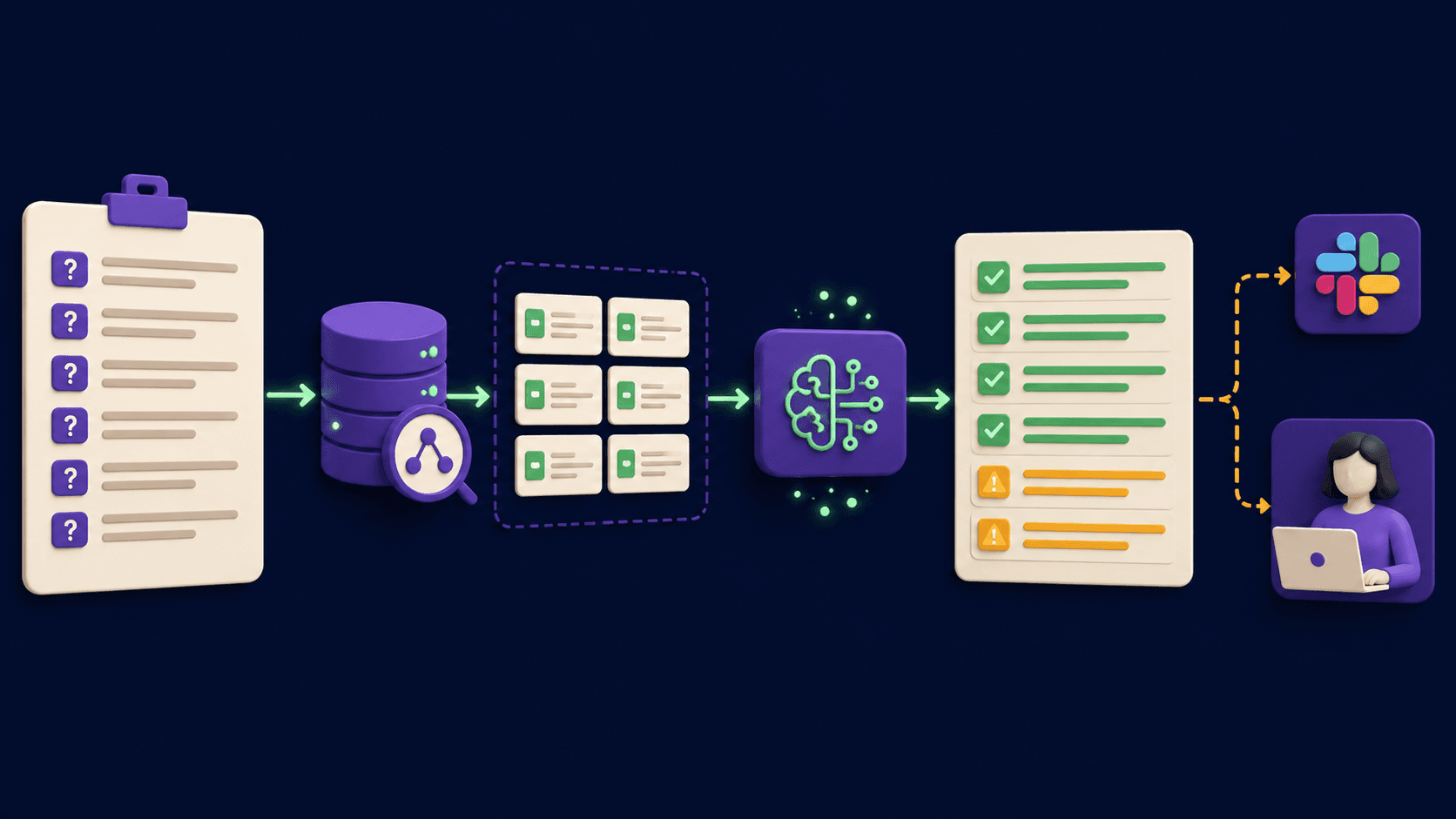
RFP and Proposal Auto-Fill: The Agent That Handles 80% of the Repeating Questions (2026)
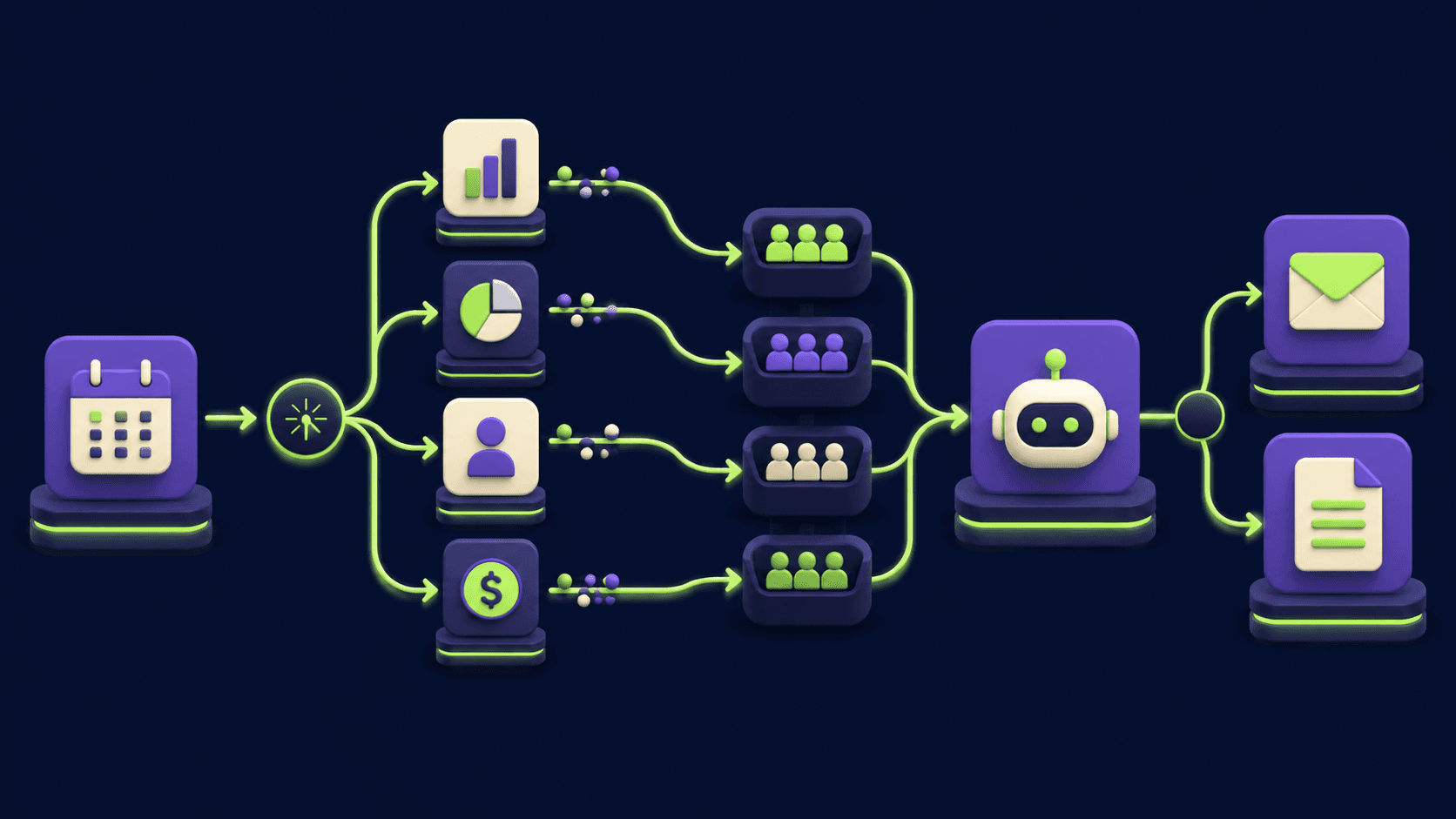
Auto-Build Weekly Client Status Reports From Slack, Asana, GitHub & Stripe (2026)
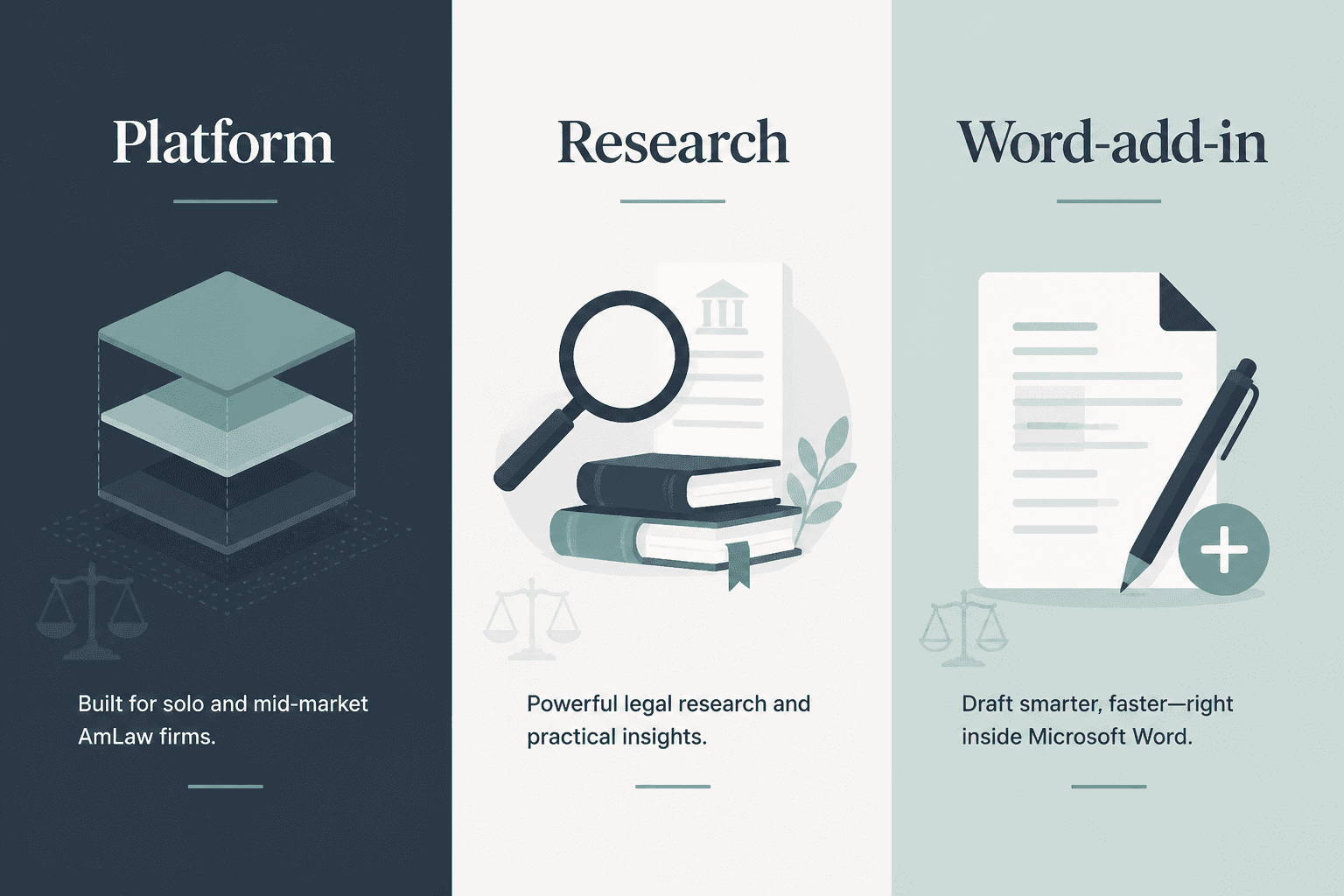
Harvey vs CoCounsel vs Spellbook (2026): Which Legal AI Fits Your Firm Size

AI Agent Use Cases: 5 Industries Transformed in 2026