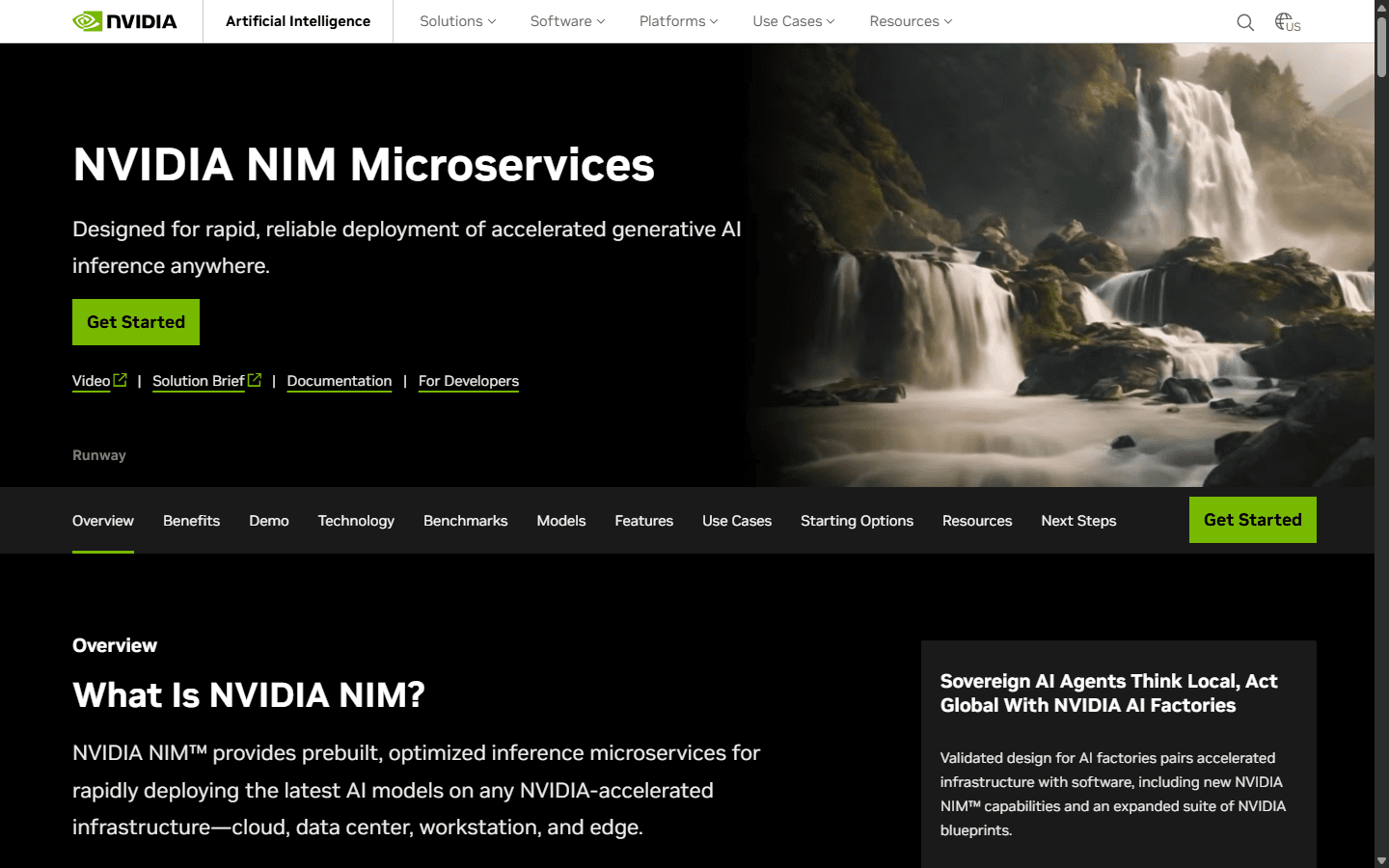
NVIDIA NIM packages foundation models as GPU-optimized inference microservices for enterprise deployment. Prototyping is free via the Developer Program; production needs NVIDIA AI Enterprise from $4,500 per GPU per year or about $1 per GPU-hour in the cloud (official FAQ, Sep 2026).
NVIDIA NIM (NVIDIA Inference Microservices) is a set of prebuilt, GPU-optimized containers and API endpoints for deploying foundation models for inference. Each NIM packages a model plus an optimized runtime (Triton, TensorRT, TensorRT-LLM, PyTorch, and related engines) behind industry-style APIs. NIM is part of NVIDIA AI Enterprise. Developers prototype on the hosted catalog at build.nvidia.com; production self-hosting requires an NVIDIA AI Enterprise license.
As of September 2026, NVIDIA’s official NIM FAQ states production licenses start at $4,500 per GPU per year or about $1 per GPU per hour in the cloud, priced by GPU count (not by number of NIM containers), same rate regardless of GPU size. Members of the NVIDIA Developer Program get free hosted API prototyping and downloadable NIMs for research/dev/test on up to 16 GPUs. A free 90-day NVIDIA AI Enterprise evaluation license covers production-grade trial use. There is no universal per-token NIM price from NVIDIA for the catalog.
What NVIDIA NIM delivers as of September 2026
Workflow: explore models in the API catalog → call hosted endpoints for POCs → pull Docker NIMs from NGC / the catalog for self-host on NVIDIA-Certified CUDA systems (on-prem or cloud) → move to AI Enterprise for production support, stable API branches, and SLAs. NIMs cover open-source community models, NVIDIA AI Foundation models, and custom models. Partner serverless options (e.g., Hugging Face) can include the AI Enterprise license in pay-as-you-go hosting: check each model page.
Where NIM sits versus Bedrock and fal
Amazon Bedrock sells managed model APIs with public token tables and no GPU license math. NIM sells optimized inference microservices you run on GPUs you control (or partner hosts), which wins for data residency, air-gapped, and TCO-at-scale GPU fleets. Serverless GPU marketplaces such as fal price per-second/per-call for creators; NIM targets enterprise inference stacks and AI Enterprise support, not a creative playground sticker.
"To use NIM In production, your organization must have an NVIDIA AI Enterprise license. These licenses start at $4500 per GPU per year or ~ $1 per GPU per hour in the cloud. Pricing is based on the number of GPUs, not the number of NIMs." - NVIDIA NIM General FAQ, docs.api.nvidia.com/nim/docs/product, retrieved September 2026
Cost, quotas, and real usage friction
True cost = AI Enterprise license + GPU instance (CSP or on-prem) + engineering. Hosted catalog prototyping is free but rate-limited (community reports ~40 RPM: not a published SLA). Developer Program caps downloadable NIMs at 16 GPUs for non-production use. Cloud marketplace AI Enterprise (~$1/GPU/hour) avoids annual CapEx but stacks on instance rates. Support covers the optimized engine/runtime, not model outputs.
Where NIM still breaks
Teams expecting ChatGPT-like per-token billing will bounce: NIM is infrastructure. Non–NVIDIA-Certified hardware is out of scope for supported self-host. “Production” is defined broadly (any real end-user or business transaction), so shipping a side project on Developer Program NIMs without AI Enterprise is a license risk. Model quality remains the model owner’s problem; NIM optimizes serving.
"Production use involves any use of NIM for purposes other than development, testing, research or evaluation such as conducting business transactions and any non-testing activity including activity serving real end-users." - NVIDIA NIM FAQ, retrieved September 2026
Who should use NVIDIA NIM: and who should skip it
Use NIM if you deploy generative AI on NVIDIA GPUs and need portable, optimized microservices with enterprise support. Use the free Developer Program / 90-day trial to POC. Skip NIM if you want a managed chat product (ChatGPT, Amazon Q) or simple per-token APIs without GPU ops (Bedrock, OpenRouter). Skip if you lack CUDA-capable infrastructure and will not use Brev/LaunchPad/cloud GPUs.
User Reviews
No reviews yet. Be the first to share your experience!
Sign in to write a review.
Related articles
Guides and articles related to NVIDIA NIM.
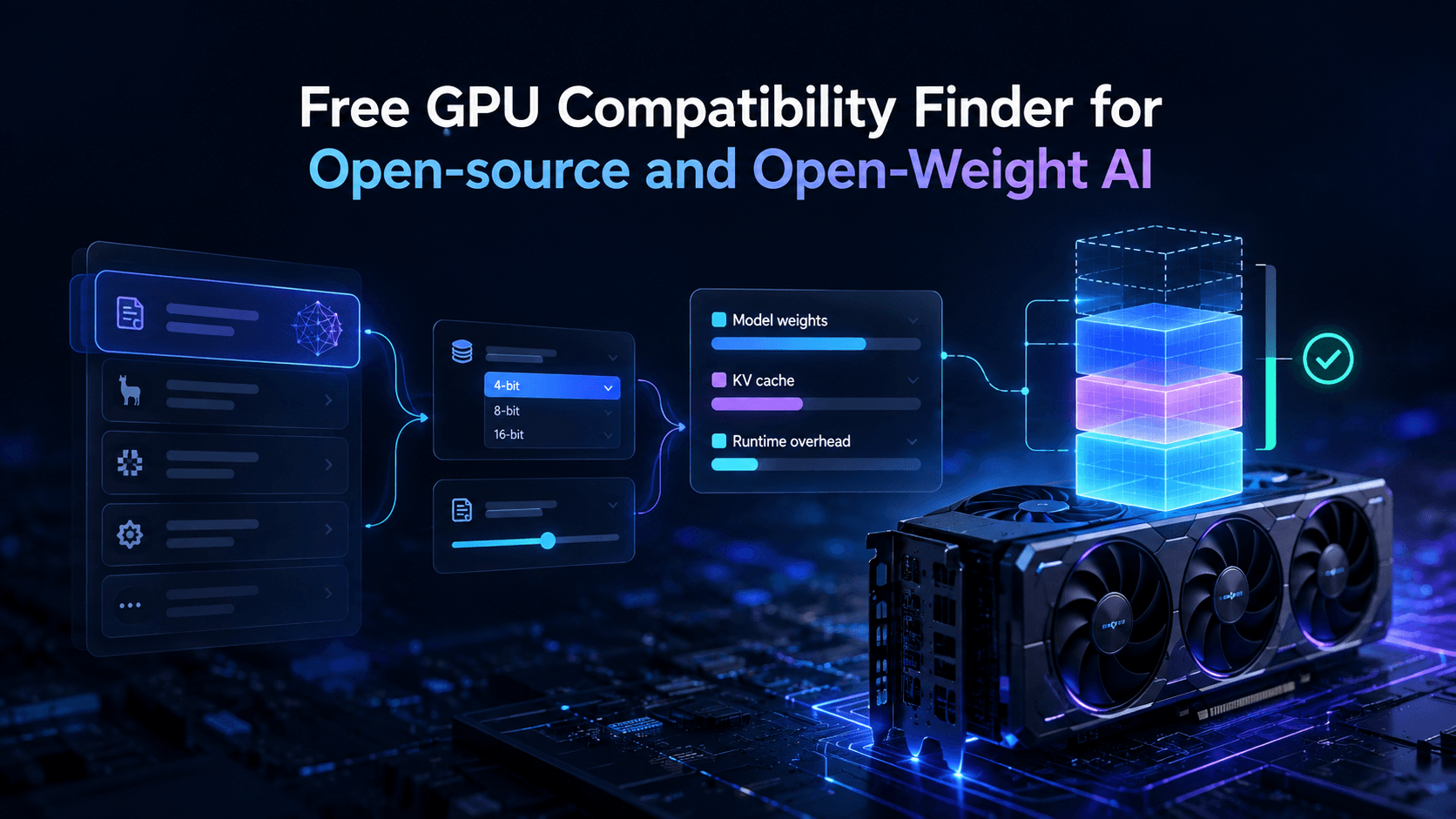
Vantaige Launches the LLM VRAM Calculator: A Free GPU Compatibility Finder for Open-source and Open-Weight AI
Xiaomi MiMo-V2.6 Deep Dive: The 1-Trillion-Parameter Open-Source Titan Disrupting the Frontier