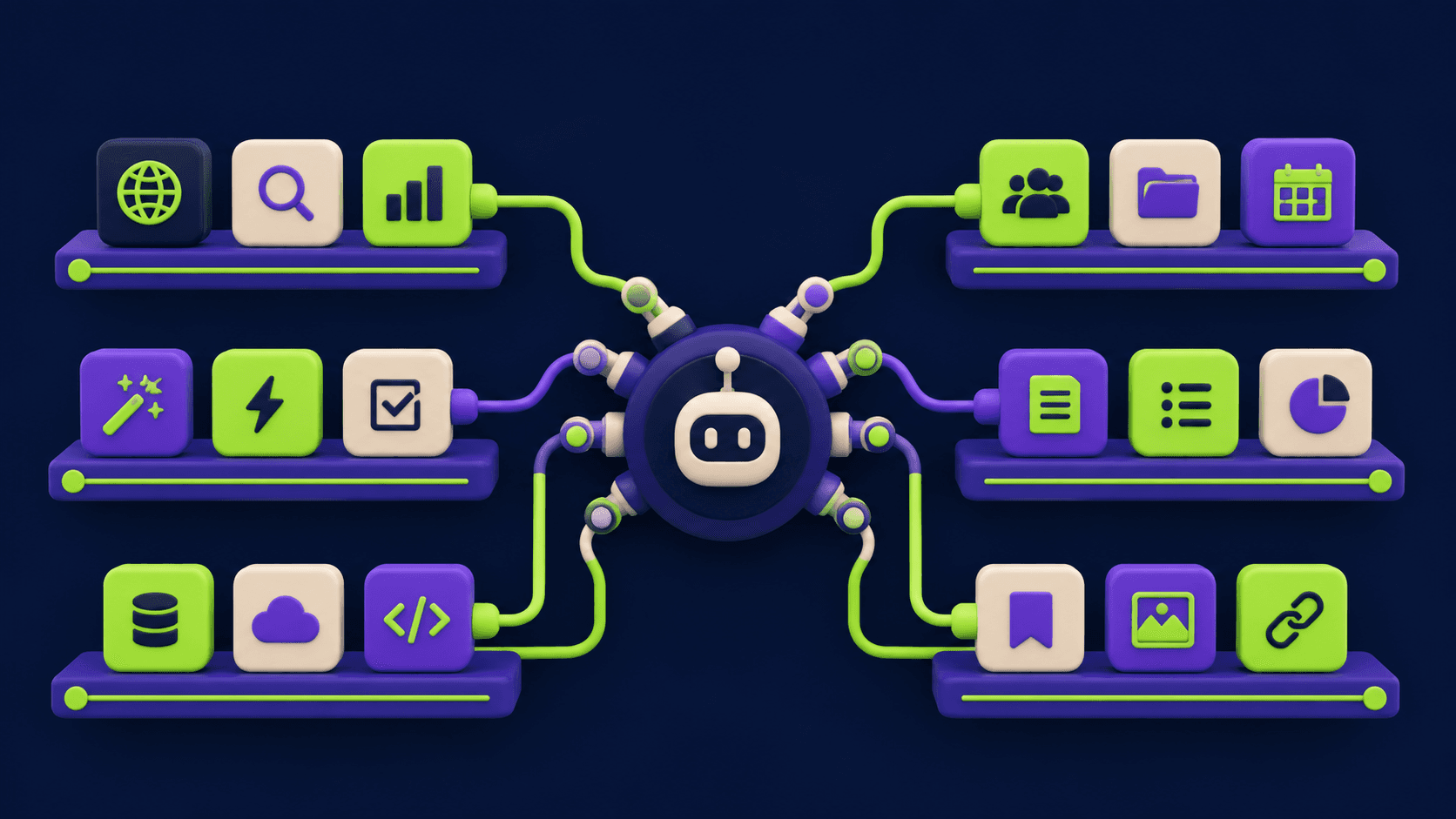
OpenAI's official open-source framework for multi-agent workflows. Launched March 2025 as the production successor to Swarm. Provides handoffs, guardrails, tracing, and voice agent support in Python and TypeScript.
The OpenAI Agents SDK is the official Python and TypeScript framework from OpenAI for building production-grade multi-agent applications. Released on March 15, 2025, it replaced Swarm, OpenAI's earlier experimental orchestration prototype, and ships as a free, MIT-licensed library on PyPI and npm. The SDK works alongside OpenAI's Responses API and gives developers a structured way to define agents, connect them to tools, hand off work between them, and validate their inputs and outputs before anything reaches the user.
The core primitives are intentionally minimal: agents (LLMs given instructions and tools), handoffs (routing from one agent to another based on intent), guardrails (input and output validation that can halt or redirect execution), and tracing (built-in workflow visualization for debugging and monitoring). Beyond these, the SDK supports Model Context Protocol (MCP) server integration, persistent session management, human-in-the-loop approval gates, voice agents via the Realtime API with gpt-realtime-1.5, and, as of the April 2026 update, Sandbox agents that can execute code, inspect files, and run commands inside isolated container environments.
What the OpenAI Agents SDK actually does in May 2026
The Python SDK is at v0.15.1 (released May 2, 2026) with 92 total releases and 25,800+ GitHub stars since launch. The TypeScript version, added in June 2025, reached v0.8.5 in April 2026. Both are MIT-licensed and work with OpenAI's Responses API as well as any Chat Completions-compatible endpoint, meaning developers can route to non-OpenAI models through LiteLLM or similar adapters.
A minimal agent in Python takes four lines of code. Agents are defined with a name, a set of instructions, and an optional list of tools. The Runner.run_sync() call handles the full agent loop: invoking the model, processing tool calls, managing handoffs, and returning the final output. The tracing system records every step automatically and surfaces it in a visual dashboard tied to the OpenAI platform.
The April 2026 Sandbox Agents update introduced container-based execution: agents can now inspect files, run shell commands, apply code patches, install packages, and carry workspace state across a longer task. This feature is currently available in the Python SDK only, with TypeScript support listed as planned but without a specific timeline. The same update previewed "subagents" (parallel task decomposition under a primary agent) and "code mode," both still on the roadmap at the time of writing.
MCP server support means any tool exposed through the Model Context Protocol connects to the SDK the same way a function tool does, giving the Agents SDK access to the growing MCP ecosystem without custom integration work. Hosted tools from OpenAI, including web search, file search, and code interpreter, are available natively but tie agent data to OpenAI's platform storage.
Where the Agents SDK sits versus LangGraph and the Anthropic Claude Agent SDK
LangGraph is the closest architectural alternative for teams building complex workflows. It uses a directed graph model: agents are nodes, conditional edges control state transitions, and the framework supports cyclical workflows, true time-travel debugging through built-in checkpointing, and the LangSmith observability layer. LangGraph is fully model-agnostic; swapping from GPT-4o to Claude 3.5 or Gemini 1.5 Pro requires no structural changes to the graph. The OpenAI Agents SDK's handoff model is simpler and faster to implement, but LangGraph's graph primitives give more precise control over branching logic and error recovery in workflows with many conditional paths. The trade-off is real: LangGraph's learning curve is significantly steeper, and teams consistently report that documentation is not beginner-friendly.
Anthropic's Claude Agent SDK sits at the other end of the competitive spectrum. Like the OpenAI Agents SDK, it is an official vendor-maintained framework, built around tool-use chains and sub-agents, with state management handled through MCP servers. Its safety-first design embeds extended thinking directly into the agent loop and is specifically optimized for Claude models. That means the lock-in dynamic is symmetric: the OpenAI SDK binds you to OpenAI's hosted tools and Responses API; the Claude Agent SDK binds you to Anthropic's model family. For teams already invested in one ecosystem, the respective SDK is the natural choice. For teams that need to stay provider-agnostic at the orchestration level, neither is a clean answer, and LangGraph or Agno become more attractive.
Compared to CrewAI, the OpenAI Agents SDK trades CrewAI's role-based DSL (which can get a multi-agent crew running in roughly 20 lines with minimal framework knowledge) for a lower-level, more explicit API. CrewAI has built-in memory modules; the Agents SDK does not. CrewAI's human-in-the-loop, however, only triggers at the end of a task, while the Agents SDK supports mid-workflow approval gates. For teams comparing AutoGen, the key difference is that AutoGen centers on conversational agent topologies with flexible agent networks, while the Agents SDK is opinionated about the handoff model and expects you to work within its primitives rather than composing your own.
"If your team is already on OpenAI and needs clean agent-to-agent handoffs, the OpenAI Agents SDK is the most opinionated framework, which is an advantage: fewer decisions, faster implementation, and the tracing/guardrails primitives save weeks of custom development." - mem0.ai blog review, December 2025
What the agent loop reality looks like
The standard workflow: define agents, assign tools, wire handoffs, add guardrails, run. Tracing is automatic. A code review agent using the Sandbox primitive receives a pull request diff, spins up a container, runs tests, applies patches, and returns structured output. Developers building customer support pipelines describe a routing agent classifying user intent and handing off to billing, technical, or returns specialists, each with its own instructions and tools, all visible in a single trace in the OpenAI dashboard. These are not aspirational use cases but production patterns documented by the SDK team.
The hidden cost pattern is one thing developers repeatedly flag after their first real deployment. Each agent turn resends the full conversation context to the model. A 5-step workflow does not consume 5x the tokens of a single call; depending on context length, it may consume 3-4x more. Teams running high volumes of agentic workflows need to model this cost upfront. A code review pipeline estimated at $0.075-$0.14 per review starts to matter at several thousand reviews per day.
Voice agent workflows using the RealtimeAgent primitive run on gpt-realtime-1.5 with automatic interruption detection, context management, and guardrails. The June 2025 launch of the TypeScript SDK included the RealtimeAgent feature, and developers can deploy voice agents either client-side or server-side. The June 2025 update saw immediate reports of audio quality degradation, static in background audio streams, and function calling latency increases from developers on the community forums, though these were separate from the core handoff and guardrail functionality.
"The most exciting updates so far! Real-time conversation and human-in-the-loop capabilities change the picture entirely." - developer, OpenAI Community forum, June 3, 2025
The memory gap is consistent across reviews. The SDK handles short-term context cleanly through its session management, but durable memory, retrieval layers, and personalization require external infrastructure. Teams building agents that need to remember users across sessions must wire in their own vector store or use a tool like Letta for memory management alongside the SDK. This is not a flaw in design so much as a deliberate scope choice: the SDK owns orchestration, not the data layer. However, it does mean the "quick path to production" framing has an asterisk for stateful applications.
Who the OpenAI Agents SDK is built for
The SDK is the right starting point for a specific profile: teams already using OpenAI's API, comfortable in Python, building workflows where clean agent-to-agent delegation is the core challenge. Customer support automation, multi-step research pipelines, code review agents, and content generation workflows all map well to the SDK's primitive set. The built-in tracing and guardrails deliver genuine value here: teams that would otherwise build these from scratch save real engineering time.
Developers who want to experiment with voice agents or Realtime API workflows in production have a framework-level home in the Agents SDK that no other major framework currently matches at the same level of official support. The RealtimeAgent primitive, combined with MCP tool integration, creates a credible foundation for voice-first agentic applications.
Teams getting started with agent frameworks and already paying for OpenAI API access have a low-friction entry point. The quickstart is genuinely minimal. The documentation quality is consistently rated as clear and well-organized across reviews. The framework's opinionation, often cited as a risk, works as an advantage for teams that do not want to make 15 architectural decisions before shipping their first agent.
For those building on top of DSPy for prompt optimization or LangChain for broader chain-of-thought tooling, the Agents SDK can complement rather than replace those tools. It is not a full-stack AI platform; it is an orchestration layer that assumes you will make your own choices about the data, memory, and model evaluation layers.
What the OpenAI Agents SDK is not
It is not model-agnostic at the hosted-tools layer. The inference layer can point at any Chat Completions-compatible endpoint, but the moment you use File Search, Vector Stores, Code Interpreter, or Threads, your data lives in OpenAI's platform with no standard export path. Ashpreet Bedi, founder of AgnoAGI, noted that "the Responses API is intentionally designed to prevent developers from switching providers by changing the base_url." This is a real architectural constraint, not a hypothetical risk.
It is not a graph-based workflow engine. Teams building workflows with complex conditional loops, parallel branches, approval gates at arbitrary points, and checkpoint-based replay need LangGraph. The Agents SDK's handoff model is sequential and explicit. You can build parallel execution with asyncio, but there is no framework-level abstraction for it, and the planned subagents feature has no confirmed ship date.
It is not a complete solution for TypeScript-primary teams right now. The Python and TypeScript SDKs are maintained in parallel, but the Python version consistently receives major features first. Sandbox agents, the new harness architecture, code mode, and subagents are all Python-only as of May 2026, with TypeScript parity listed as "planned for a future release" without a specific timeline. Building a TypeScript-first production agent pipeline on the Agents SDK today means accepting feature lag.
It is not a memory or retrieval framework. Teams that need agents to remember users, retrieve from knowledge bases, or personalize responses over time will need to build or integrate an external layer. The SDK does not opine on how you solve this problem.
User Reviews
No reviews yet. Be the first to share your experience!
Sign in to write a review.
Featured in collections
Curated lists that include OpenAI Agents SDK.
Related articles
Guides and articles related to OpenAI Agents SDK.
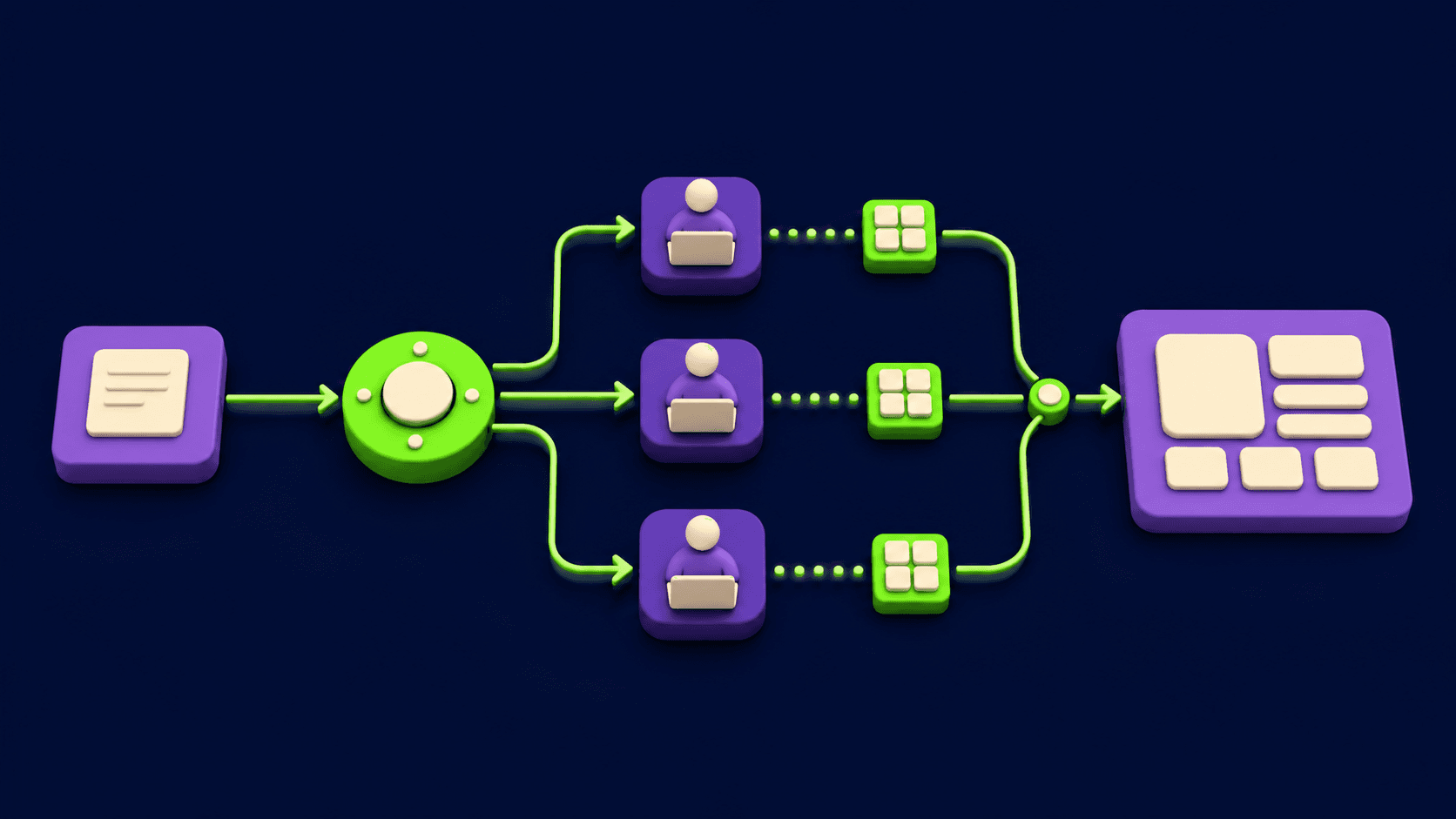
Orchestrator-Workers: The Multi-Agent Pattern That Actually Scales (2026)
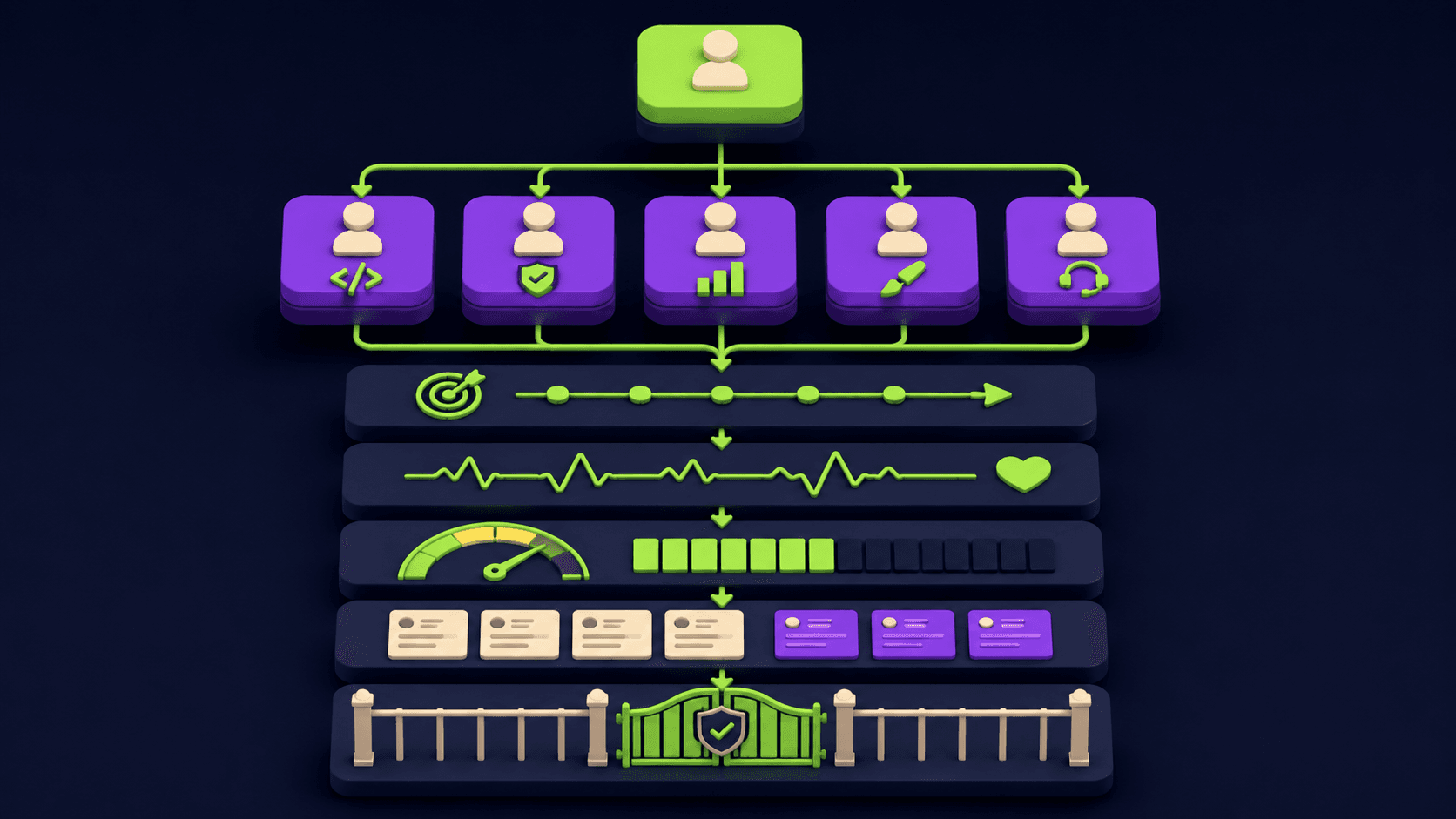
Run a Company With AI Agents: The Open-Source Orchestration Setup (2026)
Google vs OpenAI vs Anthropic Agents: The May 2026 Platform Showdown
How AI Agents Work: Architecture & Implementation Guide (2025)
OpenAI GPT-Realtime-2 (May 2026): Pricing, Latency & 30-Min Voice Agent