
Agno is an open-source Python framework for building multi-agent AI systems, rebranded from Phidata in January 2025. Model-agnostic, Apache 2.0, with built-in memory, knowledge bases, and a production-ready AgentOS runtime for deploying agents as services.
Agno is an open-source Python framework for building, running, and managing multi-agent AI systems. It was created by Ashpreet Bedi under the name Phidata before being rebranded as Agno on January 29, 2025. The rebranding shifted the project's identity from a general data tooling library to a dedicated agentic runtime, with a new name drawn from the Greek word for "pure," reflecting the framework's design principle: no graphs, no chains, no convoluted abstractions, just plain Python. As of April 2026, the project sits at nearly 40,000 GitHub stars and releases multiple version updates per week. It is licensed under Apache 2.0.
The framework ships two major layers. The open-source Python library lets developers define agents with memory, knowledge bases, tool calling, guardrails, and multi-modal inputs using a minimal API: a basic agent requires roughly five lines of Python. The AgentOS layer is a stateless FastAPI backend with 50-plus endpoints, SSE and WebSocket streaming, JWT-based role access control, multi-tenant session isolation, and OpenTelemetry tracing. AgentOS deploys on Docker, Railway, AWS, or GCP and exposes interfaces for Slack, Telegram, Discord, and WhatsApp. Supported models include every major provider: OpenAI, Anthropic, Gemini, Mistral, Groq, local models via Ollama, and any OpenAI-compatible endpoint.
What Agno actually does in April 2026
At its core, Agno runs a reasoning loop: the agent receives a task, decides what action to take (calling a tool, querying a knowledge base, delegating to a sub-agent), executes the action, observes the result, and repeats until the task is complete or a step limit is reached. Developers define agents using plain Python classes with typed tool functions. Agno handles the prompt engineering, streaming, tool dispatch, and session persistence automatically. Unlike LangGraph, there is no requirement to pre-define a state schema or draw a directed graph before running your first agent.
Agent teams are a first-class feature. A lead agent can delegate tasks to specialist sub-agents, each with their own model, tools, and knowledge sources. The team coordination uses async streaming, so sub-agents run concurrently and stream results back to the team leader. The January 2025 rebrand announcement and subsequent roadmap introduced human-in-the-loop (HITL) approval workflows, which became a production feature in the 2.5.x release series, responding directly to community requests. The HITL system lets human reviewers approve agent actions before execution, which matters for any agent with write access to external systems like Jira, Salesforce, or email.
The knowledge base system is one of Agno's clearest strengths. The framework includes first-class integrations for PDF documents, databases, APIs, and vector stores (PgVector, Qdrant, Weaviate, Milvus, Pinecone), with built-in chunking, embedding, and retrieval. This makes Agno a natural fit for agentic RAG systems: legal document search, financial report analysis, medical knowledge retrieval, or academic research aggregation. Unlike frameworks where retrieval is bolted on as a tool, Agno treats the knowledge base as a native part of the agent's architecture. Developers often pair Agno with LlamaIndex for more advanced document processing pipelines, or with LangChain tools, which Agno accepts natively.
Version 2.6.0 (April 23, 2025) introduced multi-framework support, allowing developers to wrap existing agents built in LangGraph or DSPy inside Agno's AgentOS runtime. The same version added a Workspace toolkit giving agents local machine read/write and shell access with human-in-the-loop confirmation gates, and a "Factories" API for dynamic agent creation at scale. By v2.6.4 (April 28, 2026), the platform had integrated WikiContextProvider, Salesforce CRM tools, Docling document processing, and fallback model support, where an agent automatically switches to a backup model if the primary provider returns errors.
"I love Agno. It's so simple to use even I with my low dev knowledge can build powerful agents. Successfully built an RSA generator and a Google Ads agent." - Alfred Simon, Product Hunt, April 2025
Where Agno sits versus CrewAI and LangGraph
The three frameworks most commonly compared to Agno are CrewAI, LangGraph, and to a lesser extent smolagents and Mastra. Each represents a different architectural philosophy for multi-agent systems.
CrewAI uses a role-based abstraction. Agents are assigned a role, goal, and backstory, and they operate within a "crew" that executes tasks sequentially or hierarchically. This metaphor gets a prototype running fast; CrewAI is consistently cited as the lowest-friction path to a working business workflow. Its memory model is tri-layered: short-term memory shared across all agents in a single run, long-term memory stored in a local SQLite database, and entity memory that tracks specific subjects across sessions. The tradeoff is that CrewAI's opinionated design becomes constraining as requirements grow; teams routinely report hitting this ceiling 6-12 months into production, requiring rewrites to a more flexible framework. Agno avoids this ceiling by keeping its primitives lower-level, but that means more manual wiring for simple use cases. By star count, CrewAI leads with roughly 44,300 versus Agno's 40,000, but the 5.2 million monthly PyPI downloads for CrewAI vs. Agno's significantly smaller download base suggests CrewAI still has more active production deployments.
LangGraph is the production usage leader by raw download volume, at approximately 34.5 million monthly PyPI downloads. Its directed graph architecture forces developers to define every state transition as a named edge, with explicit state schemas and typed persistence. This ceremony pays off for complex workflows: branching logic, retry handling, checkpointing mid-run, and human-in-the-loop approval gates are all first-class features. LangGraph's disadvantage is its steeper ramp, with critics noting fragmented documentation and the legacy complexity inherited from the LangChain ecosystem. A basic LangGraph workflow requires 60-plus lines of code compared to Agno's five. On instantiation speed, Agno benchmarks show it is 529x faster than LangGraph, which matters when spawning hundreds of short-lived agents per second. LangGraph is also significantly heavier in memory per agent instance. For teams needing precise graph-level control over long-running stateful workflows, LangGraph remains the safer production choice. For teams building knowledge-heavy agents that need fast prototyping and don't require explicit state machines, Agno is more ergonomic.
Relative to smolagents (Hugging Face's minimal code-first framework), Agno is more opinionated about the production runtime layer but less opinionated about the agent action model. smolagents generates Python code as actions; Agno uses standard tool-calling with JSON dispatching. smolagents keeps its entire core to roughly 1,000 lines and is deliberately un-opinionated about deployment, whereas Agno ships a full production stack. Relative to AutoGen (Microsoft's conversation-based multi-agent framework), Agno's session memory model is more structured but AutoGen has a larger research community and longer track record in academic benchmarks. AutoGen's message-passing model, where agents take turns contributing to conversation threads, is fundamentally different from Agno's tool-dispatch model; the two solve overlapping but distinct problems.
"Agno is lightweight and fast. It does not force you into a heavy graph architecture when you just need a smart agent." - Developer overview cited in framework comparison research, 2025
What the agent loop reality looks like
In practice, building with Agno starts by installing the package and defining tools as typed Python functions. The framework infers the tool schema from type annotations. Adding memory means passing a memory store (SQLite, PostgreSQL, or MongoDB) to the Agent constructor. Adding a knowledge base means pointing the agent at a vector store and calling agent.knowledge.load(). The monitoring dashboard at app.agno.com shows every run, every tool call, every token count, and every model response in real time. For local development, the built-in playground runs a Next.js interface at localhost that lets you chat with any agent and inspect its reasoning steps.
The monitoring angle matters more than the marketing copy suggests. Every agent run is logged with full tool call traces, latency per step, token counts per model call, and the exact inputs and outputs passed between agents in a team. When something goes wrong in a multi-agent pipeline (and it will go wrong during development), the control plane shows you exactly which agent made the wrong decision and what context it was working with. This is qualitatively different from debugging by reading print statements in a LangChain workflow. Teams building internal agents for finance, legal, or operations report that this observability layer alone justifies adopting Agno over rolling their own orchestration.
The HITL workflow deserves specific mention because it is the feature most commonly requested before it shipped. When an agent is about to call a destructive tool (sending an email, creating a Jira ticket, modifying a database record), the run pauses and surfaces an approval request through the AgentOS API. A human approves or rejects. The agent resumes or terminates cleanly. This pattern is now built into both individual agents and agent teams, though community discussions show that simultaneous paused approvals across multiple team members can cause deadlock if not architected carefully.
The fallback model support added in v2.5.14 (April 2025) addresses a real production pain point: if your primary model provider (say, OpenAI) goes down mid-run, the agent automatically switches to a designated fallback. This is the kind of operational feature that separates frameworks designed for production from those designed for demos.
Who Agno is built for
Agno fits Python developers building knowledge-heavy agents where the primary job is reasoning over large, structured document sets: legal research, financial analysis, medical document retrieval, enterprise knowledge management, and customer support with deep CRM integration. The model-agnostic architecture makes it sensible for teams that cannot afford OpenAI vendor lock-in, or that want to run inference on local models for privacy or cost reasons.
It is well-suited for engineering teams who want to prototype fast and then deploy on their own infrastructure with real observability. The 20-lines-of-code AgentOS deployment story is genuine: you get a FastAPI backend with 50-plus endpoints, session management, authentication, and a control plane without writing that infrastructure yourself.
Agno is not the right tool for teams that need graph-level control over complex state machines with branching logic, retry semantics, and explicit checkpointing. LangGraph handles those requirements better. It is also not designed for non-technical users building agents through a visual interface; despite the "Agent Studio" mentioned in the January 2025 announcement, the framework remains code-first. Teams sensitive to dependency churn should note that the release cadence is aggressive, with multiple releases per week, and breaking changes have appeared in reranker imports, a2a-sdk compatibility, and memory API upgrades.
For developers exploring this space alongside Agno, LangChain remains the ecosystem with the largest tooling breadth, while LlamaIndex offers deeper document ingestion options that pair well with Agno's knowledge base layer.
User Reviews
No reviews yet. Be the first to share your experience!
Sign in to write a review.
Featured in collections
Curated lists that include Agno.
Related articles
Guides and articles related to Agno.
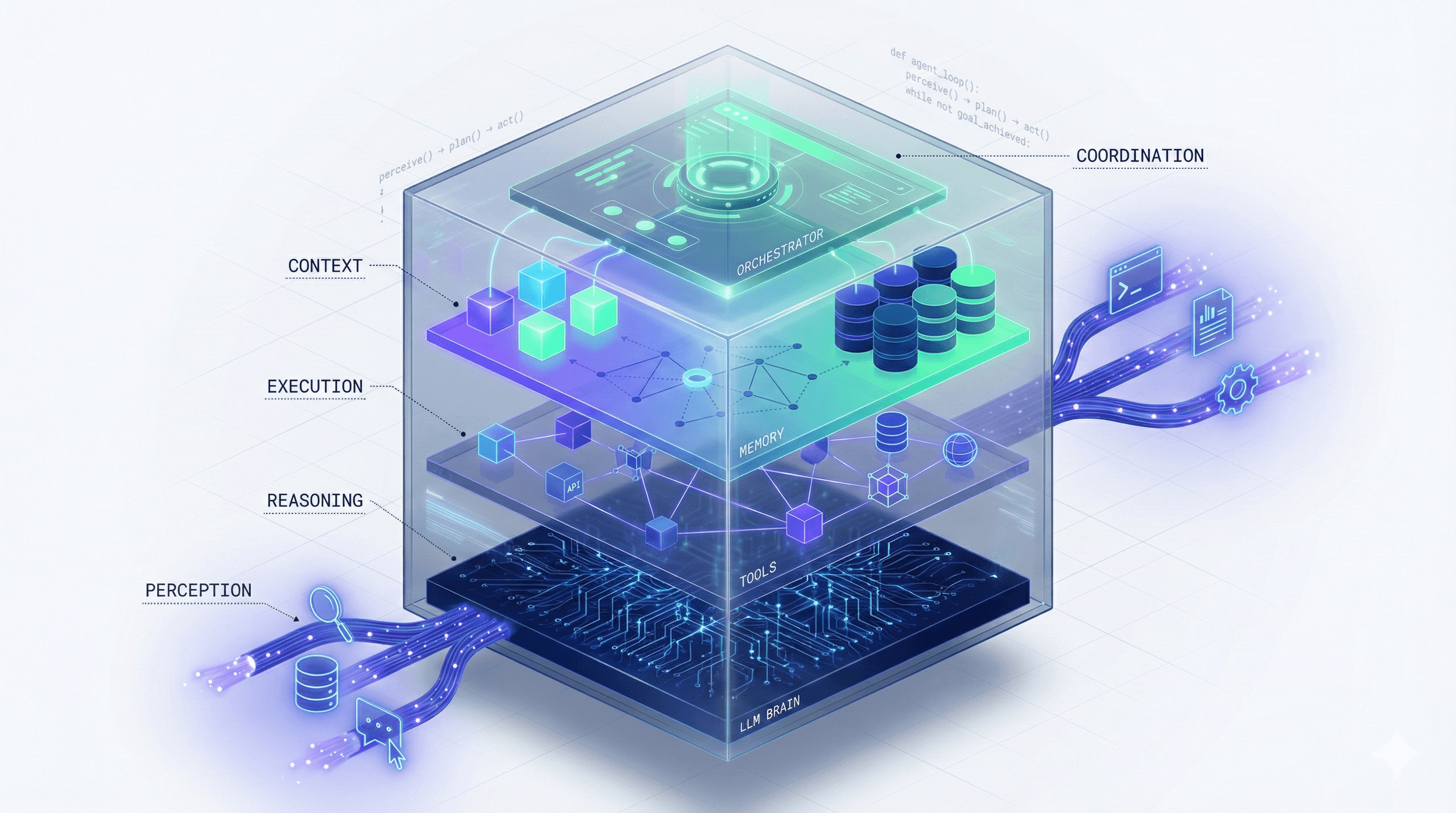
How AI Agents Work: Architecture & Implementation Guide (2025)
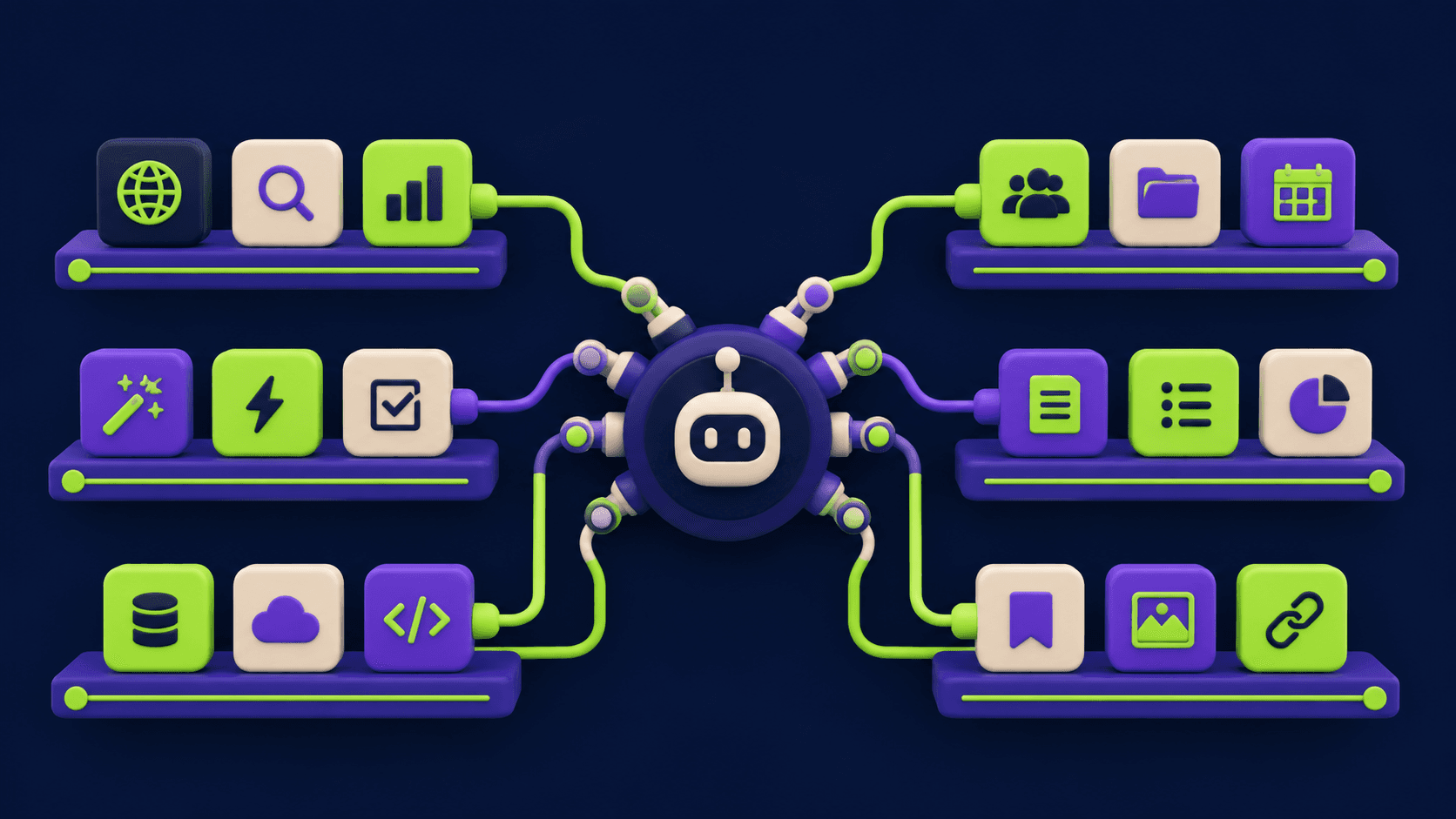
Turn Any AI Agent Into a Superagent: The 12-Integration Stack (2026)
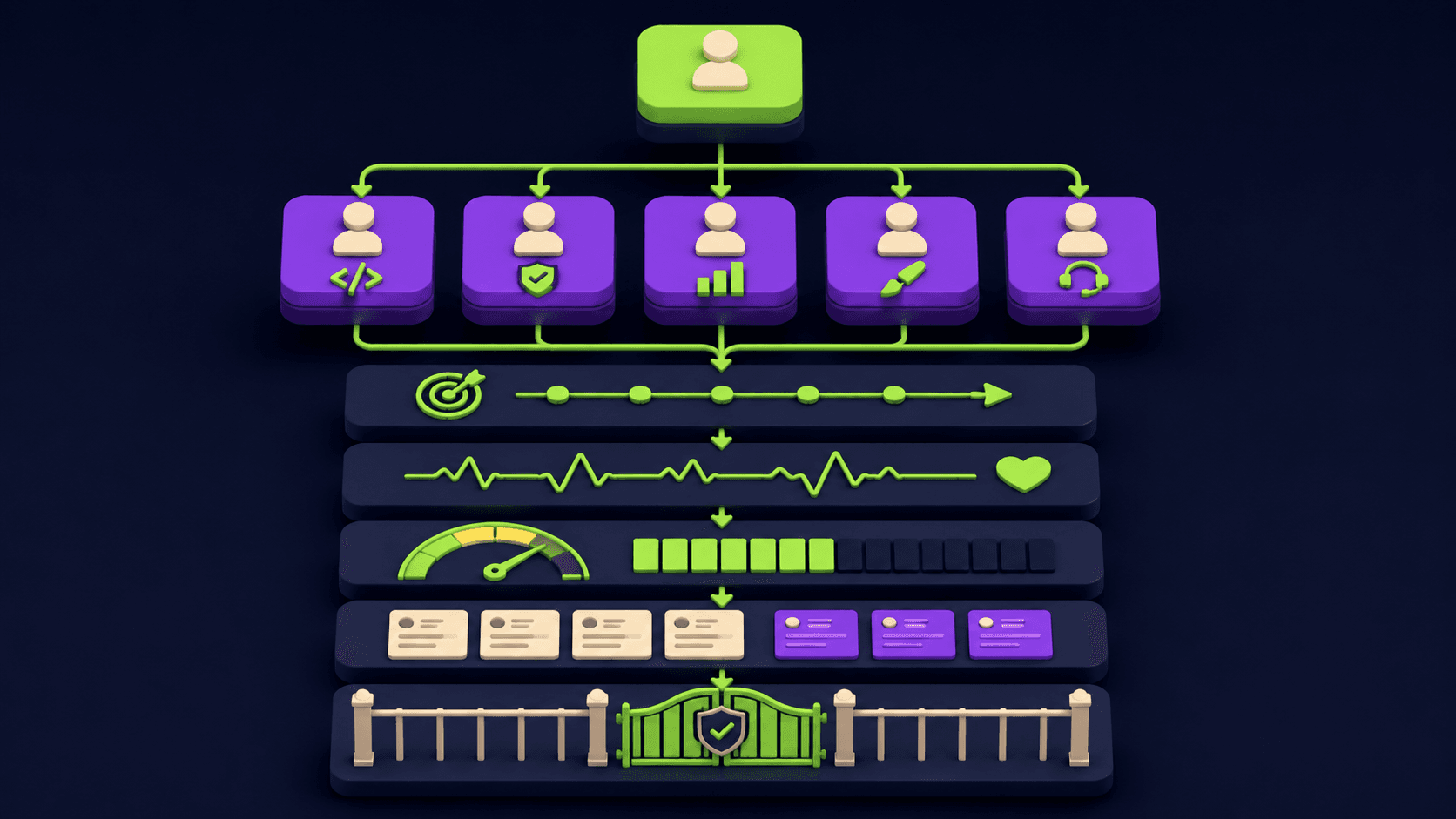
Run a Company With AI Agents: The Open-Source Orchestration Setup (2026)
Grok 4.3 API for Agents (May 2026): Pricing, Benchmarks, Migration
Orchestrator-Workers: The Multi-Agent Pattern That Actually Scales (2026)