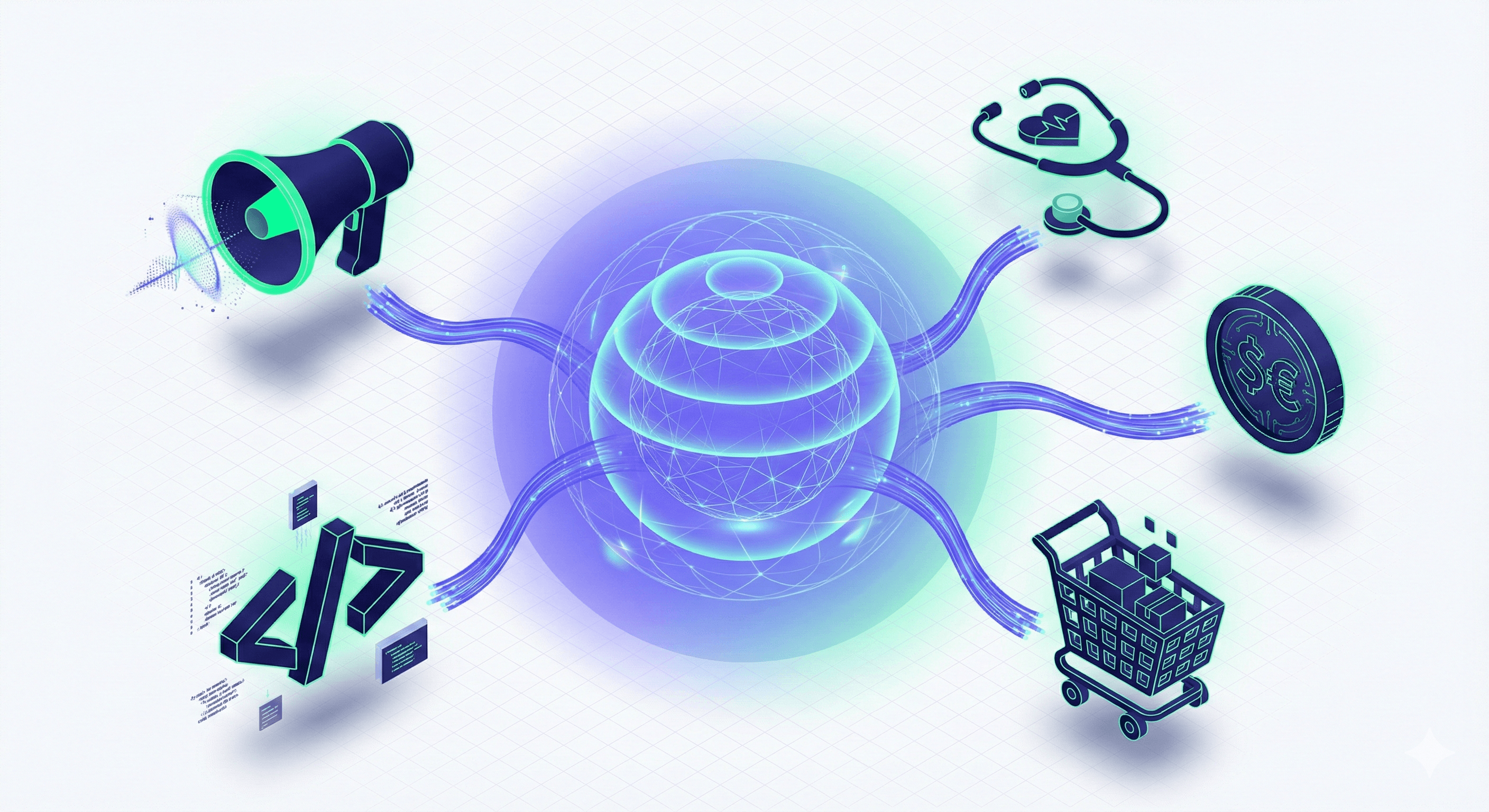
AgentQL is a natural-language query layer for the web, built by TinyFish. Developers write plain-English data queries instead of brittle CSS selectors, and AgentQL's AI engine resolves them against any live web page, returning typed structured data.
AgentQL is a query language and API platform for extracting structured data from web pages without writing CSS selectors, XPath, or regex. Built by TinyFish, a Palo Alto startup founded in 2024, AgentQL lets developers describe the data they want in plain English (for example: { product_name, price, in_stock }) and its AI engine matches that description to the actual elements on any live page. The result comes back as typed, structured JSON, ready to use in an AI agent or data pipeline. TinyFish raised $47 million in Series A funding in August 2025, led by ICONIQ Capital, to scale the platform toward enterprise web automation at scale.
AgentQL ships as a Python SDK, a JavaScript SDK, and a REST API. The SDKs integrate with Playwright for full browser control, supporting authenticated pages, JavaScript-rendered SPAs, and paginated content including infinite scroll. A Chrome extension called the AgentQL Debugger lets developers write and test queries against live pages in real time. The platform also supports PDF parsing, self-healing queries that adapt when page layouts change incrementally, and integrations with LangChain, LlamaIndex, LangFlow, Dify, AgentStack, MCP (Model Context Protocol), and Zapier. The free Starter tier gives teams 50 API calls per month to evaluate the tool; the Professional plan at $99/month includes 10,000 calls and 500 hours of remote browser time.
What AgentQL actually does in May 2026
The core problem AgentQL solves is selector fragility. Traditional web scrapers depend on CSS classes and HTML IDs that site owners change without warning. When a site redesigns, every hand-written selector breaks. AgentQL's approach is to skip selectors entirely. Instead of targeting .product-price__value, you write { price } and the AI resolves that query against the page's semantic content. Because the query targets meaning rather than markup, it survives incremental layout changes automatically.
The AgentQL query syntax is inspired by GraphQL: you define the shape of the data you want, and the result matches that shape. Nested objects, arrays, and optional fields all work as expected. For web automation beyond extraction, the Playwright SDK supports clicking elements by description (no selector needed), filling forms, and navigating multi-step flows. This is what makes AgentQL useful for AI agents that need to interact with the web, not just read it.
The REST API option handles the common case of extracting data from public pages without spinning up a browser. It takes a URL and a query, and returns structured JSON. For authenticated pages or sites that require JavaScript rendering, the Playwright SDK takes over. PDF extraction is handled via the same query language, including tables inside PDFs. The Chrome debugger extension lets developers iterate on queries against a live browser tab, which shortens the feedback loop considerably compared to writing selectors in a dev console.
AgentQL launched publicly on Product Hunt on August 20, 2024, winning both #1 Product of the Day and #1 Product of the Week with 723 upvotes. On launch day, a developer pointed out that only Google SSO was available for account creation. The team shipped GitHub SSO the same day, a response time that set the tone for how TinyFish handles developer feedback. One year later to the day, on August 20, 2025, TinyFish announced the $47 million Series A to expand the platform into enterprise deployments.
"AgentQL is probably the easiest web data extraction tool that I have ever used." - Shawn Pang, Product Hunt, August 20, 2024
"The more specific your queries are, the more accurate and consistent your responses will be." - Andrew Chen (TinyFish team), Product Hunt, August 20, 2024
Where AgentQL sits versus Firecrawl and Stagehand
Firecrawl and AgentQL look similar on the surface but solve different problems. Firecrawl is a crawl-first, LLM-output tool: you give it a URL and it returns the full page content as clean Markdown or JSON, ready to feed into an LLM context window. It excels at ingesting entire sites for RAG pipelines or document search. AgentQL is a query-first, structure-now tool: you define exactly what typed fields you need, and it extracts only those from any page, including authenticated and dynamically rendered ones. Firecrawl is faster for full-page ingestion; AgentQL is more precise for structured data extraction where you care about schema.
Firecrawl's open-source core (MIT license) is also a meaningful difference. Developers who want to self-host or inspect the extraction pipeline can do so with Firecrawl. AgentQL is a closed API, and the extraction model is not available for self-hosting. Firecrawl's paid plans start at $16/month. AgentQL's Professional plan is $99/month. For teams on budget who need LLM-ready content, Firecrawl often wins. For teams building agents that need precise typed output from web pages with changing layouts, AgentQL has an advantage.
Stagehand, developed by Browserbase, is a browser automation framework built for AI agents that need to act on the web, not just read it. Stagehand uses an act/extract/observe loop, giving agents a reasoning layer on top of Playwright. AgentQL also enables web interaction via its Playwright SDK, but its query language is more tightly scoped for extraction. Stagehand is broader and more flexible for complex multi-step agent workflows; AgentQL is more structured and predictable for repeatable data extraction tasks. Stagehand is open-source (MIT); Stagehand production deployments require Browserbase, which adds cost. AgentQL's self-contained API is simpler to integrate for pure extraction use cases.
Apify takes a third approach: a marketplace of thousands of pre-built "Actors" for specific sites (LinkedIn, Amazon, specific data sources), plus a cloud execution environment with proxy management, scheduling, and anti-bot handling built in. AgentQL is a primitives layer, not a marketplace. You build your own extraction logic with AgentQL's query language; there are no pre-built site-specific scrapers. Apify scales better for known targets with existing Actors. AgentQL generalizes better across arbitrary pages where no pre-built scraper exists.
What the agent loop reality looks like
The most common pattern developers land on: install the Python SDK, authenticate with an API key, launch a Playwright browser session, navigate to a page, and call page.query_data() with a query string. The call returns a Python dict matching the query shape. The whole extraction is 10-15 lines of code for a single page; scaling to multi-page crawls requires adding navigation logic, but the extraction call stays the same across every page.
For LangChain users, AgentQL ships a first-class tool integration. The agent calls the AgentQL tool with a URL and a query, and the tool returns structured data directly into the agent's response chain. LlamaIndex integration works similarly. For teams already running LangChain agents, adding AgentQL to a pipeline is an afternoon of work.
The REST API path is even simpler for public pages: a single HTTP POST with the URL and query, no browser setup required. This works well for serverless functions or lightweight data jobs that don't need a full browser environment. The tradeoff is that JavaScript-heavy SPAs may not render fully, and authenticated pages are out of scope for the REST API.
The Chrome debugger extension changes the iteration workflow significantly. Instead of writing a query, running a script, checking output, and adjusting, developers write queries directly in the browser against the live page and see results in real time. This cuts iteration time from minutes per cycle to seconds. It is the most underrated part of the AgentQL toolset.
Where the workflow gets bumpy: stealth mode, needed for sites with aggressive anti-bot detection, is flagged as experimental in AgentQL's own documentation. It may not work for all websites and slows down extraction when active. Teams targeting Cloudflare-protected or Akamai-protected sites will encounter failures that require manual proxy configuration outside the AgentQL stack, or a switch to Apify or Bright Data for anti-bot infrastructure.
Who AgentQL is built for
AgentQL fits best for developers building AI agents or data pipelines that need to pull typed structured data from web pages on a recurring basis. The no-selector approach saves weeks of maintenance work when target sites update their HTML. The LangChain and LlamaIndex integrations make it a natural fit for teams already in the LLM agent ecosystem. For e-commerce teams running competitor price monitoring, the self-healing query behavior means a site redesign does not immediately break the entire extraction pipeline.
Enterprise teams in hospitality, travel, and retail are the use cases TinyFish specifically targets. The Series A funding materials described hospitality agents aggregating inventory from thousands of small hotel sites that lack APIs, and travel companies running real-time pricing surveillance across competitor sites. These are high-volume, high-value extraction jobs where the cost of maintaining per-site scrapers is significant, and AgentQL's generalization advantage compounds at scale.
Developers with existing experience in Playwright will find the learning curve minimal. The query language is simple enough to start in under an hour, and the playground environment lets beginners explore without writing code first.
What AgentQL is not
AgentQL is not a full-page LLM ingestion tool. If you need to scrape an entire article, documentation site, or blog for RAG or LLM training, Firecrawl's Markdown output is a better fit. AgentQL extracts specific structured fields; it does not return raw page content for LLM consumption.
It is not a cheap option for high-volume extraction. The Starter tier's 50 calls/month is evaluation-only. At Professional pricing ($99/month for 10,000 calls), heavy workloads that exceed the quota hit $0.015/call overage. 100,000 calls/month costs over $1,500 in overages alone. Teams running at that scale should evaluate Enterprise pricing or consider self-hosted alternatives like Crawl4AI or Playwright with a locally-running LLM for extraction.
It is not a solution for sites with aggressive anti-bot protection. The experimental stealth mode is explicitly unreliable. Teams targeting such sites without proxy infrastructure will be blocked. AgentQL does not include proxy rotation, residential proxies, or the CAPTCHA-solving infrastructure that Apify bundles into its platform.
And it is not open-source. Developers who need to inspect the extraction model, self-host for data privacy, or avoid vendor lock-in will need to look at Firecrawl, Stagehand, or Crawl4AI instead.
User Reviews
No reviews yet. Be the first to share your experience!
Sign in to write a review.
Related articles
Guides and articles related to AgentQL.
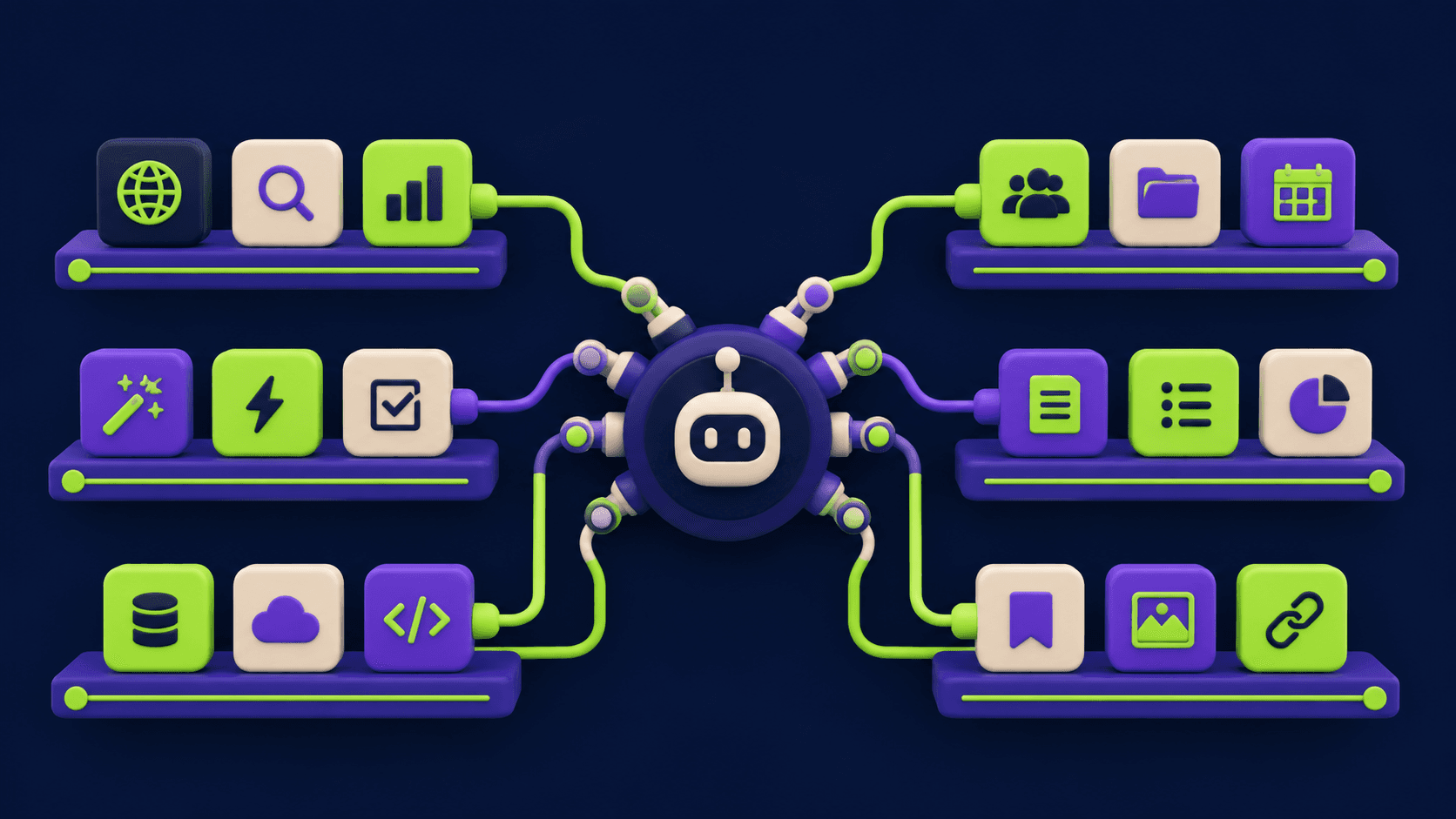
Turn Any AI Agent Into a Superagent: The 12-Integration Stack (2026)
AI User Testing in 2026: The Tools That Test Your Product While You Sleep
How AI Agents Work: Architecture & Implementation Guide (2025)
AI Agents for Business: What They Actually Are and 12 Things You Can Automate Today
Grok 4.3 API for Agents (May 2026): Pricing, Benchmarks, Migration