
AlphaSense is an enterprise AI platform that searches 500 million-plus premium financial documents, including earnings calls, broker research, and SEC filings, to help investment analysts and corporate strategy teams cut research time from days to hours.
AlphaSense is a market intelligence platform built specifically for financial and corporate professionals who need to synthesize large volumes of premium information quickly and reliably. Founded in 2008 by Jack Kokko and Raj Neervannan, the company started as a smarter way to search SEC filings and earnings transcripts, and has since grown into one of the most comprehensive enterprise research platforms in finance, serving over 7,000 customers including 88% of the S&P 100. It is not a general-purpose AI tool; everything on the platform, from the content library to the AI models, is designed around the specific workflows of investment analysts, portfolio managers, corporate strategists, and investment bankers.
The platform aggregates over 500 million premium business documents, including SEC filings, earnings call transcripts, broker research reports, expert call transcripts (expanded significantly through the Tegus acquisition), trade publications, patent filings, and business news. On top of that content layer, AlphaSense runs a suite of AI tools: Smart Summaries for instant earnings call digests, Generative Search for end-to-end research automation, Generative Grid for structured cross-document analysis, Workflow Agents for repeatable research tasks, and the Financial Data suite launched in October 2025 that unifies structured quantitative data with qualitative research for the first time. The platform also supports iOS and Android mobile access, an API, and enterprise content ingestion so teams can search internal proprietary documents alongside the public library.
What AlphaSense actually is in May 2026
As of May 2026, AlphaSense has crossed $500 million in annual recurring revenue and holds a Gartner Magic Quadrant Leader position (positioned highest on both Ability to Execute and Completeness of Vision axes in the inaugural Competitive and Market Intelligence category report). The platform has roughly 2,900 employees and has been named to both the 2025 Forbes Cloud 100 and the 2025 CNBC Disruptor 50.
The product as it stands today is meaningfully different from where it was two years ago. The June 2024 acquisition of Tegus for $930 million brought in 100,000-plus expert call transcripts that were previously Tegus-exclusive, adding deep primary research content to what had been a primarily secondary research platform. The October 2025 launch of Financial Data finally merged quantitative structured data (4,500-plus financial models, 115-plus sector comparables, 950,000-plus M&A transactions, 685,000 private funding rounds) with AlphaSense's qualitative content universe. And on January 27, 2026, AlphaSense released the next generation of Generative Search, which moved the product from a conversational search engine to a full research agent capable of finding documents, answering multi-part questions, automating recurring workflows, and generating deliverables including slide decks, company profiles, and competitive analyses.
Smart Summaries, the platform's first major generative AI feature, launched on June 15, 2023, and remains one of the most-used tools in the suite. Every earnings call published to the platform receives an AI-generated summary covering highlights, lowlights, key analyst questions, and management tone, with citations linked to the exact line in the source transcript. Early access customers reported saving 2-14 hours per month from Smart Summaries alone.
Where AlphaSense sits versus Hebbia and Bloomberg Terminal
The two most commonly compared alternatives are Hebbia (for AI-driven document analysis) and Bloomberg Terminal (for the financial data incumbent). The differences are architectural and meaningful, not cosmetic.
AlphaSense versus Hebbia: Hebbia's flagship product, Matrix, uses an agentic architecture that processes entire document sets in parallel with sentence-level proof citation. It is designed for due diligence workflows where an analyst needs to reason across a full virtual data room, thousands of documents at once, without missing anything. It excels at that specific use case. The fundamental limitation: Hebbia has no proprietary content library. Users must import every document they want to analyze via integrations with Slack, SharePoint, Google Drive, Dropbox, or Databricks. On day one, Hebbia is an empty container. AlphaSense, by contrast, is usable on day one with 500 million-plus documents already in it. The tradeoff is that AlphaSense's search-retrieval architecture is optimized for broad discovery across a vast indexed library, whereas Hebbia's is optimized for exhaustive synthesis across a defined, user-supplied corpus. Teams doing standard equity research and competitive monitoring tend to favor AlphaSense. Teams doing M&A diligence with uploaded data rooms tend to find Hebbia more suitable. Many large institutions use both. You can also compare AnythingLLM if your primary need is querying your own internal documents without a vendor-managed library.
AlphaSense versus Bloomberg Terminal: Bloomberg costs approximately $2,000 per user per month ($24,000/year), which puts it at roughly double or more the per-seat cost of AlphaSense for most enterprise arrangements. Bloomberg's differentiation is real-time market data, live trading analytics, fixed income coverage, and financial modeling tools that AlphaSense does not attempt to replicate. If a portfolio manager needs live bond prices, order flow data, or Bloomberg's proprietary indices, there is no substitute. Where AlphaSense wins is on qualitative document intelligence: it returns more comprehensive results from broker research and earnings transcripts, produces narrative summaries, and automates the research-to-deliverable pipeline more cohesively than Bloomberg's AI additions (Bloomberg GPT, launched April 2023, is generally considered less mature for research synthesis tasks). Most institutional teams that use AlphaSense also maintain Bloomberg subscriptions; they are not direct substitutes. For teams that need broader data aggregation without Bloomberg's price tag, Snowflake Cortex offers an alternative approach to querying structured financial datasets with AI.
"With AlphaSense, we can quickly get to the projects that will drive success at Dow. Front-end innovation is a numbers game. The more ideas you're able to look at, the more successes you're going to get on the back end." - Matt Quale, Business Development Director, Dow, case study 2024
"AlphaSense Financial Data allows me to evaluate companies and sectors holistically, through financials, KPIs, and context, which are all right there in one place." - Saduni Gunasekara, Senior Associate Consultant, Solici, case study 2025
How the AI actually works inside AlphaSense
AlphaSense does not use a single off-the-shelf language model. The platform uses domain-specific AI trained on financial content, combined with proprietary natural language processing and semantic search technology that the company has been refining for over a decade. The CEO has described a multi-agent approach where "one model checks on the work of other models, sort of like how a manager checks the work of an analyst," with guardrails to reduce hallucination on high-stakes financial queries.
The key architectural choice is that every AI output on the platform is citation-linked to source material. When Smart Summaries produces a bullet about what a CFO said on an earnings call, it links directly to the exact line in the transcript. When Generative Search synthesizes a competitive landscape, it shows which documents it drew from. This citation architecture is not just a nice feature; it is a compliance and accountability requirement for the institutional users AlphaSense serves, who cannot present AI-generated analysis without being able to defend every claim.
Generative Grid extends this to large-scale cross-document queries. A user can ask ten different natural-language questions across a set of 50 earnings call transcripts from competitor companies and receive the results in a structured table, each cell with citations. This kind of structured extraction at scale is what makes AlphaSense genuinely different from simply feeding documents into a general-purpose model like ChatGPT or Claude. The platform's domain-trained models understand the difference between management guidance, analyst questions, and risk factors in a 10-K in ways that general models require careful prompting to replicate.
For enterprise users, the platform also ingests internal proprietary content, letting teams run AlphaSense's search and summarization over their own deal memos, internal research, and client notes alongside the public library. This positions AlphaSense in similar territory to enterprise knowledge management tools like Glean, though with far deeper financial content coverage and purpose-built financial AI rather than general document retrieval.
The friction and cost concerns users keep raising
AlphaSense's recurring frustrations fall into four consistent buckets across G2, TrustRadius, and Gartner reviews.
Search noise on niche queries: The most cited complaint, with 19 mentions on G2, is that semantic search returns too many loosely related documents. Finding the exact report or filing you need on an obscure topic often requires manual boolean logic tuning, which cuts against the platform's promise of natural-language discoverability. One reviewer on r/FinancialCareers was blunt: "their search quality still sucks."
Learning curve and interface complexity: The platform has accumulated a lot of features over 15-plus years, and the interface reflects that. New users consistently report feeling overwhelmed. The enterprise onboarding process (customer success team, training sessions) is generally praised, but the platform is not self-service intuitive in the way that a consumer tool is. Teams with limited training time will hit friction.
Pricing opacity: AlphaSense does not publish pricing. Per-seat enterprise contracts start around $10,650/year per public references, but institutional teams report paying significantly more depending on content modules and seat count. The absence of a transparent pricing page, trial period, or freemium tier means a buying process that involves sales calls before you can evaluate the product hands-on. This is standard in enterprise software but still a practical barrier for procurement teams and smaller organizations testing the market.
Financial data completeness (historically): Prior to the October 2025 Financial Data suite launch, Gartner reviewers flagged that the platform's financial figures were "frequently incomplete, stale, or has errors." This was a known limitation inherited from the Sentieo acquisition. The October 2025 launch addressed this with 4,500-plus financial models and structured data integration, but the platform's financial modeling depth still does not match dedicated tools like S&P Capital IQ or Visible Alpha. Teams doing heavy quantitative work often use AlphaSense alongside a dedicated financial modeling platform rather than replacing it.
Who AlphaSense is for, and when to use something else
Best fit: Investment analysts and portfolio managers at hedge funds, asset managers, and private equity firms who research public companies and need rapid synthesis of broker research, filings, and expert calls. Corporate strategy and competitive intelligence teams at large enterprises (think S&P 500-scale organizations) who need to monitor markets, track competitors, and produce research briefs at volume. Investment bankers preparing pitch books and industry analyses under time pressure. Life sciences strategy teams tracking clinical, regulatory, and competitive developments across rapidly evolving therapeutic areas. Consulting firms doing rapid market analysis for client engagements.
Skip AlphaSense when: Your team is small (under 5-10 people) or early-stage; the pricing structure is not designed for you, and the complexity-to-value ratio will be unfavorable. You primarily need real-time market data, live pricing, or trading analytics; Bloomberg Terminal or a dedicated market data terminal is the right tool. Your research workflow centers on analyzing documents you supply rather than discovering content from a managed library; in that case, Hebbia or Rogo AI may fit better. You need to cover private companies in non-Western markets extensively; AlphaSense coverage thins out significantly for CIS and some Asian markets. Your team needs a tool with zero ramp-up time and transparent self-serve pricing; AlphaSense requires onboarding investment and a sales relationship to purchase.
For research teams evaluating the full spectrum of AI-assisted market intelligence, it is also worth reviewing Glean for enterprise knowledge search across internal systems, and Hebbia for deep document analysis workloads. The strongest use case for AlphaSense is when a team needs both broad content discovery (the 500M-document library) and AI-powered synthesis without building the content infrastructure themselves.
User Reviews
No reviews yet. Be the first to share your experience!
Sign in to write a review.
Related articles
Guides and articles related to AlphaSense.
TAM SAM SOM Market Sizing With Perplexity: The Sourcing Pattern That Survives Pushback (2026)
NotebookLM Sales Call Prep: 5 Sources, 6 Questions, 60 Seconds (2026)
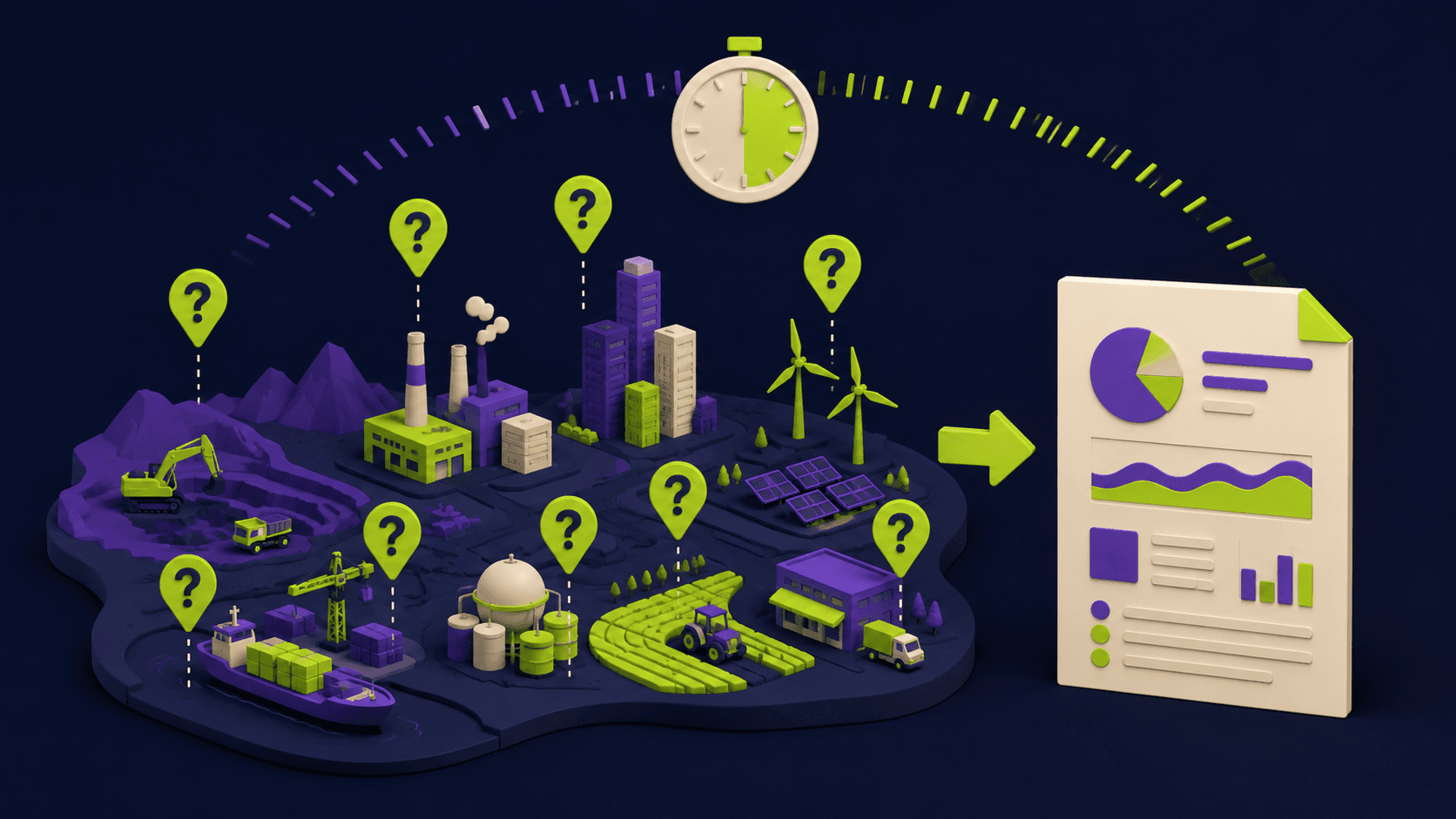
How to Research a New Industry Fast: The 30-Minute Perplexity Template (2026)
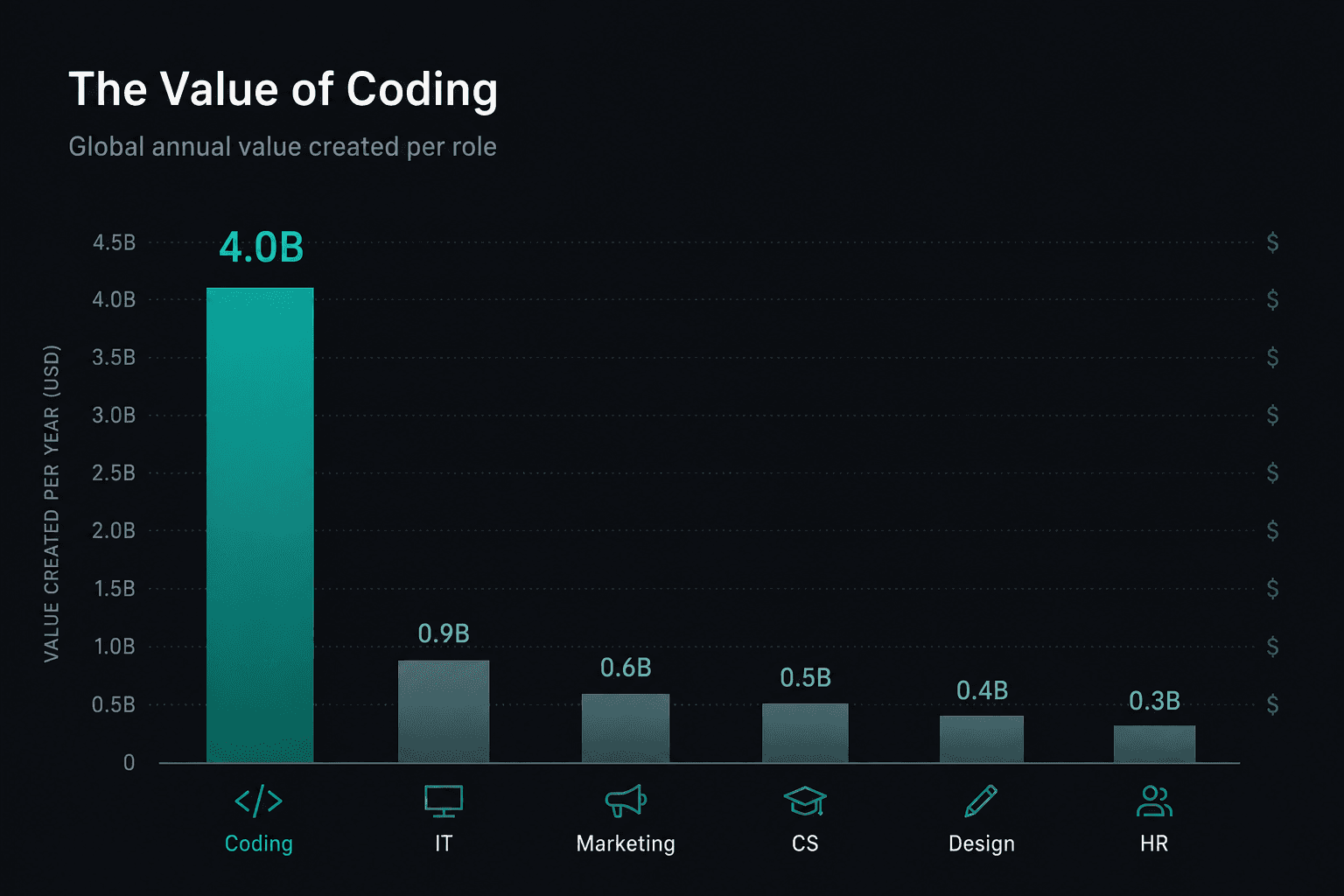
Coding Ate Enterprise AI (2026): The $4B Use Case, Anthropic’s Share, and Seat vs API Math
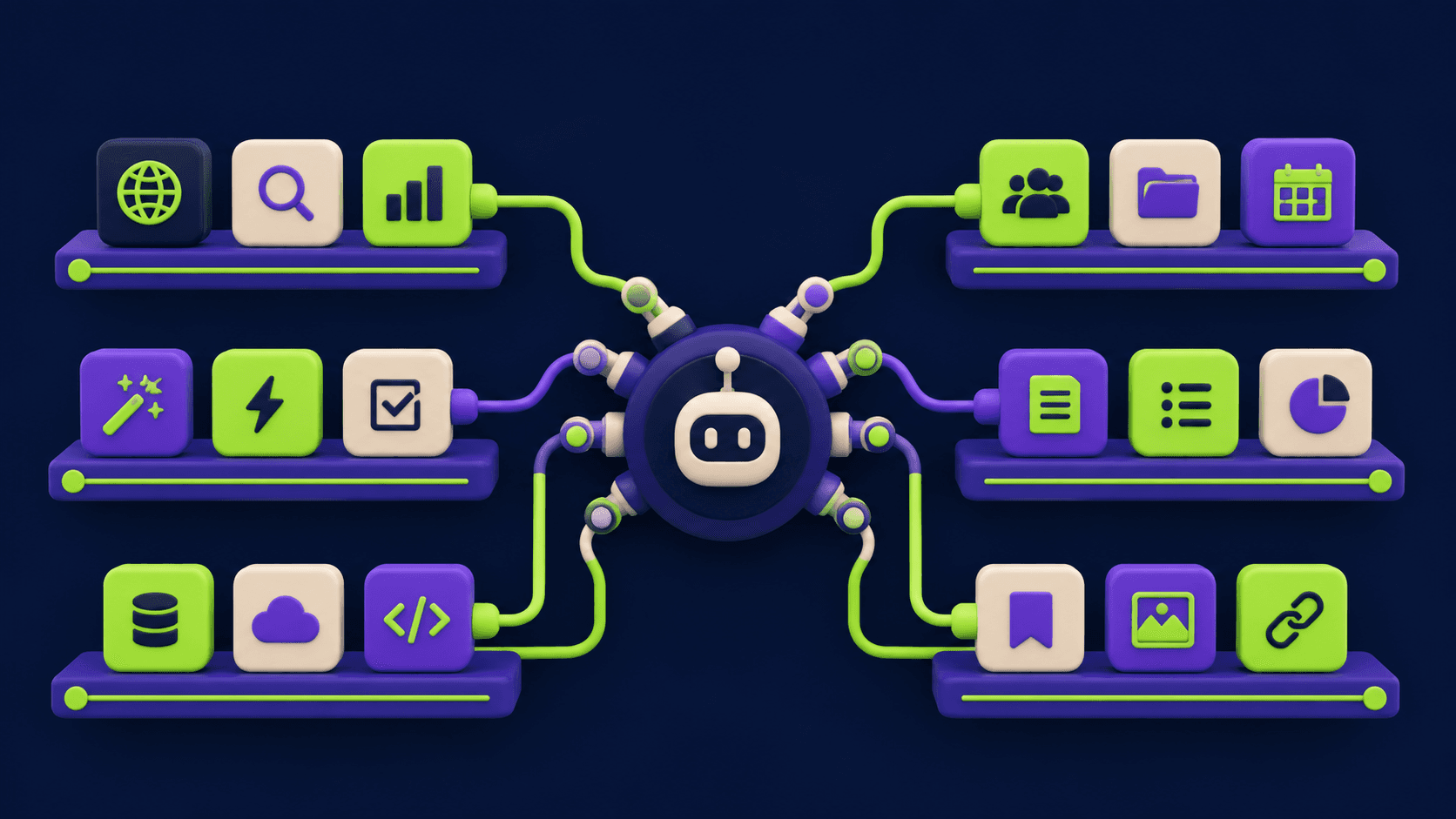
Turn Any AI Agent Into a Superagent: The 12-Integration Stack (2026)