WellSaid Labs is an enterprise AI voice generation platform built on consent-based voice avatars recorded from real voice actors. Trusted by Fortune 500 L&D and training teams for consistent, compliant voiceovers at scale. English-only, starting at $44/mo.
WellSaid Labs is an enterprise AI text-to-speech platform founded in Seattle in 2018 by Matt Hocking and Michael Petrochuk, both researchers from the Allen Institute for Artificial Intelligence (AI2). The company launched publicly in 2019, raised a $10M Series A in July 2021, and has since become one of the most frequently cited voice generation tools among corporate learning and development teams. The product runs entirely in the browser at wellsaid.io and requires a work email address to sign up, signaling its intentional focus on business rather than individual creators.
The platform centers on 120+ pre-built voice avatars, each modeled on recordings from real voice actors who gave informed consent and receive ongoing revenue sharing. Users choose a voice, paste a script, and generate professional-grade audio with controls for tone, pacing, and custom pronunciation. Key capabilities include a team collaboration workspace, Adobe Premiere Pro and Adobe Express integrations, a REST API for LMS and IVR embedding, SOC2 Type II, HIPAA, GDPR, and ADA compliance, and audio export at up to 96 kHz on Enterprise plans. The platform does not offer user-driven voice cloning and is English-only as of April 2026.
What WellSaid produces in April 2026
WellSaid Studio generates narration-quality English voiceovers from typed scripts. The output is single-take audio in MP3, WAV, OGG, or TXT formats (WAV and OGG require Business or higher). Each voice avatar carries a consistent vocal identity across unlimited generations, which matters for organizations maintaining a library of hundreds of training modules: the same voice that read your 2022 onboarding script can read the 2026 update without any perceptible drift.
The voice library spans US, UK, Australian, South African, and several regional North American accents, plus some non-native English speakers (a Mexican ESL voice, for example). The September 2022 release introduced the platform's first non-binary voice avatar (Cameron S) and its first ESL voice (Paula R, designed for public health content). The June 2023 expansion added 10 avatars covering Texas, Southeast US, and Mountain West accents, alongside UK and South African varieties. As of April 2026, all voices remain English-only.
The AI Director feature lets you mark individual words or phrases for tone adjustments: add emphasis, slow a phrase down, or flag a technical term for a custom pronunciation rule stored in the team pronunciation library. This word-level control goes beyond what most bulk TTS tools offer and is particularly useful for healthcare and legal content where mispronouncing a term can create compliance problems.
On October 15, 2024, WellSaid announced the WellSaid Voiceover Extension for Adobe Premiere Pro at Adobe's MAX Creativity Conference. The extension makes Studio-generated files appear automatically in Premiere Pro, eliminating the download-re-upload cycle that had been a friction point for video production teams. CEO Brian Cook stated at launch: "In today's competitive landscape, efficiency is key for organizations who need to stick to strict schedules without sacrificing quality." The earlier Adobe Express add-on, launched October 10, 2023, brought the same voice library into Adobe's design tool for marketing teams building visual assets with embedded narration.
Where WellSaid sits versus ElevenLabs and Murf AI
ElevenLabs and WellSaid represent opposite architectural bets on what enterprise voice generation should look like. ElevenLabs is built around neural synthesis trained on a massive multilingual corpus, with Instant Voice Cloning (replicate a voice from roughly one minute of audio) and Professional Voice Cloning (extended training from longer samples). It supports 29+ languages, runs a conversational AI agent layer, and starts at $0 for 10,000 characters per month, with a $5/month Starter plan. WellSaid, by contrast, has no cloning, no multilingual support, and starts at $50/month (annual Creative plan). What WellSaid offers in exchange is a closed-model architecture that keeps client scripts off training pipelines, voices sourced only from consenting and compensated actors, and a security stack (HIPAA, SOC2 Type II, GDPR, ADA) that many enterprise procurement processes require before a vendor can touch internal content. For a company running sensitive employee training with legal review cycles, those properties are not cosmetic. For a creator building a fiction podcast or a startup experimenting with voice UI, ElevenLabs is objectively faster, cheaper, and more flexible.
"Output sounds like real talent, not a creepy computer." - Martin C., Creative Director, Capterra, December 2021
Murf AI is the more direct competitor, targeting the same L&D and corporate training market. Murf offers 120+ voices across 20+ languages (vs WellSaid's English-only library), includes voice cloning on paid plans, has an integrated video editor and stock media browser, and starts with a free tier. Its Business plan at $99/month undercuts WellSaid's Business tier at $160/month. The mechanical difference is in compliance depth and team architecture: WellSaid's enterprise workspace includes tighter role-based access controls, a shared pronunciation library maintained across the organization, and a compliance reporting layer that Murf has not matched. WellSaid also requires a work email, enforcing the business context. For teams in regulated industries where a vendor's SOC2 Type II audit report is part of IT procurement review, WellSaid has stronger documentation. For most creative teams that don't face that gauntlet, Murf's language breadth and lower pricing are decisive.
Users considering PlayHT should note it supports real-time streaming API output suited for conversational and IVR use cases, something WellSaid's API does not currently offer in the same form. Synthesia is often evaluated alongside WellSaid for L&D content, but operates in video rather than pure audio, generating AI avatar presenters rather than voice-only narration.
The licensing and copyright reality
WellSaid's ethical sourcing model is the clearest differentiation from tools trained on scraped internet audio. Every voice avatar in the library comes from a real voice actor who signed an informed consent agreement and receives an ongoing revenue share when their voice is used commercially. The company does not create deepfakes, does not clone voices without consent, and does not mine public audio without permission. This is not simply a marketing position: it is enforced through WellSaid's content moderation stack (dual-layer review) and its closed-model architecture, which means scripts uploaded by clients are not fed into future training runs.
Commercial usage rights are included in Business and Enterprise plans. The Creative plan at $50/month notably excludes commercial rights, which creates a real limitation for agencies or contractors producing client-facing content on that tier. Enterprise clients receive a content credential layer and full indemnification terms, which matters for media and publishing organizations concerned about AI-generated content disclosure requirements.
There have been no copyright lawsuits or training data controversies involving WellSaid as of April 2026, which contrasts with the litigation environment around other AI voice tools that used public audio without explicit consent. That clean record is meaningful for enterprise legal review.
Where WellSaid reliably falls short
The English-only limitation is the most frequently cited problem across review platforms in 2025-2026. Multiple reviewers describe discovering it only after signing up or mid-project. One independent reviewer testing the platform over 60 days noted: "Not gonna lie, the English-only limitation was a pain. One client needed Spanish voiceovers." That discovery required pivoting to a different tool mid-engagement. For global enterprises serving non-English markets, WellSaid simply cannot be the primary voice solution in 2026, when Murf AI supports 20+ languages and ElevenLabs supports 29+ with real-time dubbing.
"Cancelled subscription 2 months before renewal, but somehow it 'didn't go through.' Got charged $550 renewal. Customer support won't help." - verified Trustpilot reviewer (via qcall.ai aggregation)
Customer service is a documented weak point. Review aggregators note 24-48 hour response times on standard plans, a strict no-refund policy that has generated repeated negative reviews, and billing dispute experiences where cancellation confirmation was not honored. One 1-star Capterra reviewer (Nick M., November 2022) reported being "stuck with 4 voices without selection ability" despite the trial showing a broader library, and described the post-purchase customer service response as unhelpful when he sought a refund.
Voice cloning is absent. WellSaid does not let users create a branded voice from their own audio. Enterprise clients can commission a custom voice avatar through the company's voice actor program, but this is a manual, expensive process with a multi-week timeline, not a self-serve feature. This is a fundamental product gap relative to ElevenLabs and Murf in 2026.
Emotional range within voices is narrower than users often expect. The style options (narration, conversational) cover professional use well but fall short for dramatic or character-heavy content. Martin C.'s Capterra review from December 2021 flagged wanting "dramatic voice options," and as of April 2026, that request remains largely unaddressed for most avatars.
The pricing structure creates a confusing value proposition at the lower tiers. The Creative plan at $50/month (annual) excludes commercial rights, which means many legitimate business uses require the $160/month Business plan. A content agency with three producers would pay $480/month for three Business seats before reaching team collaboration features.
Who WellSaid is for
WellSaid is built for mid-to-large enterprise teams in regulated industries who need a defensible procurement story alongside voice quality. If your IT or legal team requires SOC2 Type II audit documentation, HIPAA compliance, GDPR data processing agreements, and ADA-conformant audio output before approving a vendor, WellSaid arrives with all of that packaged and ready for review. It also suits teams running large content libraries where voice consistency over years matters more than the flexibility to swap or clone voices: an L&D department maintaining 300 compliance modules on a three-year update cycle gets real value from knowing the same voice avatar sounds identical in 2026 as it did in 2023.
Teams already deep in the Adobe Creative Cloud ecosystem benefit specifically from the Premiere Pro and Express integrations, which cut audio handoff friction in post-production workflows.
Skip WellSaid when: your use case requires any language other than English; your budget is under $50/month; you need voice cloning from your own recordings; you're building a real-time or conversational voice application; or you're an individual creator or small agency where the compliance overhead is irrelevant. In those cases, ElevenLabs or Murf AI will cover more ground for less money. For a broader look at AI voice generation options, DubPro AI covers multilingual dubbing workflows that WellSaid cannot address.
User Reviews
No reviews yet. Be the first to share your experience!
Sign in to write a review.
Featured in collections
Curated lists that include WellSaid Labs.
Related articles
Guides and articles related to WellSaid Labs.
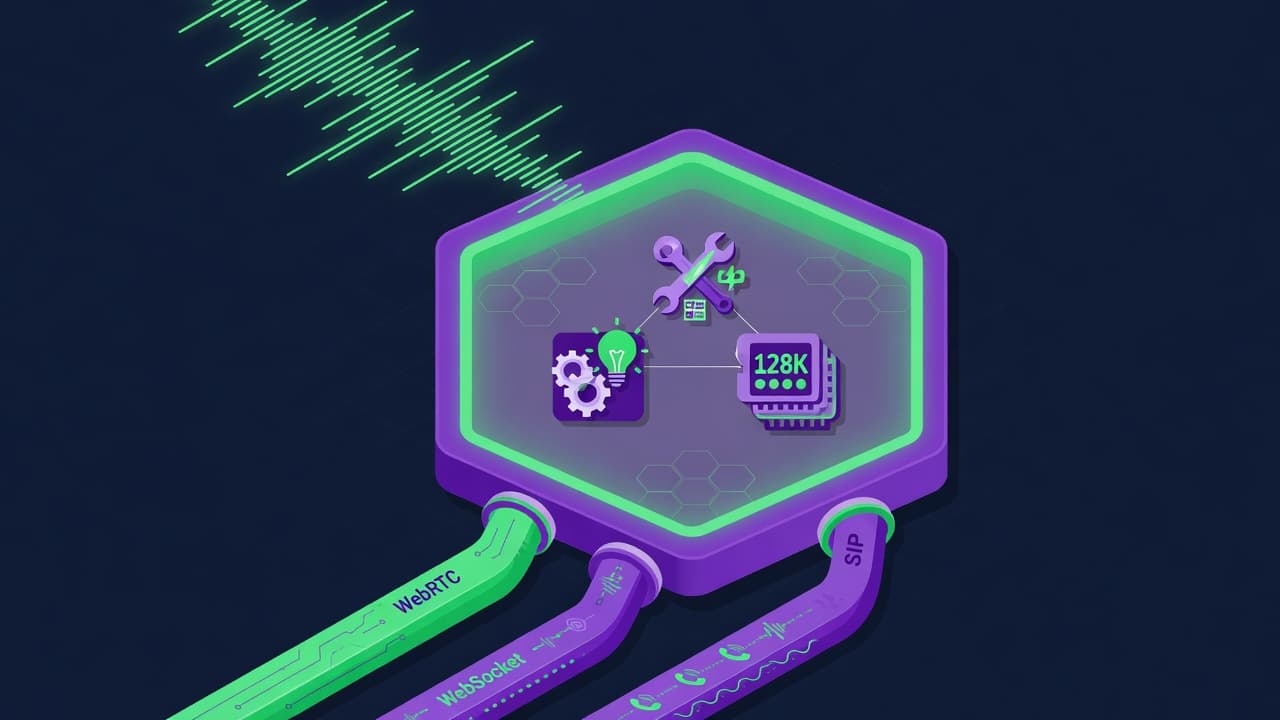
OpenAI GPT-Realtime-2 (May 2026): Pricing, Latency & 30-Min Voice Agent
Build a 70-Language Live Voice Agent With GPT-Realtime-Translate (2026)

How to Train AI to Write in Your Brand Voice (Complete Setup Guide)
Grok 4.3 API for Agents (May 2026): Pricing, Benchmarks, Migration
AI User Testing in 2026: The Tools That Test Your Product While You Sleep