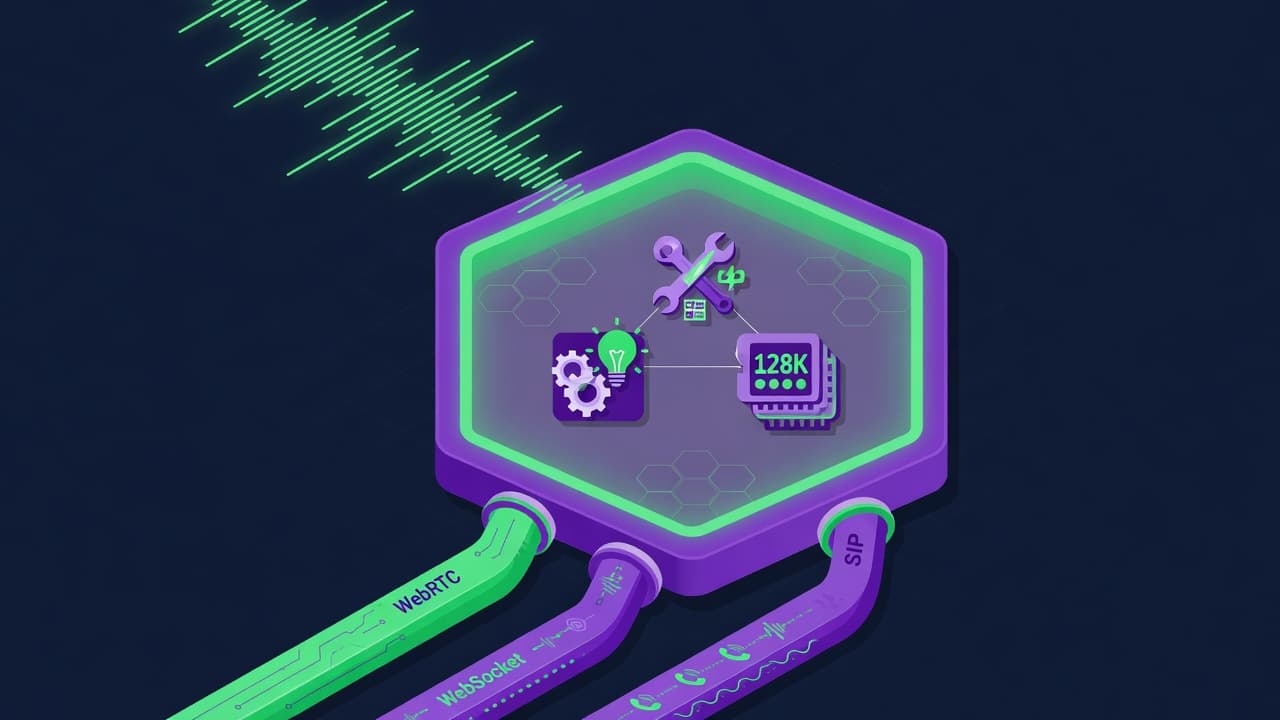

Plaud Note is a dedicated AI voice recording device that captures in-person meetings, lectures, and phone calls, then generates transcripts, summaries, and action items using GPT-4o or Claude 3.5 Sonnet. 1.5 million devices sold worldwide as of 2025.
Plaud Note is a physical AI voice recorder made by Plaud, Inc., a Shenzhen-based hardware company that has sold more than 1.5 million devices worldwide as of June 2025. The original Plaud Note is a credit-card-sized device that attaches to the back of a smartphone via a magnetic case and can record both ambient conversations and phone calls by pressing flat against the phone speaker. Unlike app-based transcription tools, Plaud captures audio to 64GB of local storage without requiring an internet connection, then syncs to the Plaud app for AI processing when connected. Euromonitor named Plaud the world's number one AI note-taking device brand by 2025 sales volume.
The Plaud app (iOS, Android, and web) handles all transcription and summarization, supporting 112 languages and offering more than 10,000 summary templates. Users choose between GPT-4o and Claude 3.5 Sonnet for content generation. Output formats include meeting summaries, action item lists, mind maps, SOAP medical notes, interview transcripts, and lecture notes. The "Ask Plaud" feature lets users query any recording by natural language, effectively turning a 90-minute meeting audio into a searchable document. The current product lineup spans four hardware models: the Plaud Note ($159), Plaud NotePin ($159), Plaud NotePin S ($179, announced at CES 2026), and Plaud Note Pro ($189, launched August 2025).
What Plaud Note actually is in May 2026
By May 2026, Plaud has expanded from a single device into a four-product hardware ecosystem. The original Plaud Note clips to your phone and doubles as a phone-call recorder. The NotePin is a 16-gram wearable capsule worn as a pin, necklace, wristband, or clip, designed for hands-free ambient capture of in-person conversations. The NotePin S, unveiled at CES 2026 in January, added a physical button for start/stop control after widespread user complaints that the touch-based activation on the original NotePin was unreliable. The Note Pro introduced a four-microphone array (including a voice pickup unit), an AMOLED display, and an extended audio range of up to 16.4 feet for use in larger conference rooms.
All devices record offline-first to 64GB internal storage, then sync to the cloud when the Plaud app is open and within Bluetooth range. AI transcription and summarization happen server-side using GPT-4o (default) or Claude 3.5 Sonnet (Pro subscribers, available since June 27, 2024, when Plaud became one of the first consumer recording devices to integrate Anthropic's model). The platform reached a key milestone on June 11, 2025, when Plaud announced it had crossed $10 million in total sales and 1.5 million users, roughly two years after the original Kickstarter launch in June 2023. The NotePin won the Red Dot Design Award for Product Design in 2025 and Tom's Guide's "Best Wearable" AI award the same year.
Where Plaud sits versus Limitless Pendant and Otter.ai
The clearest comparison is against Limitless Pendant, which was the other high-profile wearable AI recorder on the market before Meta acquired Limitless in December 2025. The Limitless Pendant was an always-on device designed for passive, continuous capture throughout the day without any button presses. Plaud is press-to-record, capturing intentional sessions rather than a continuous lifelog. The Limitless Pendant ran 6-7 hours on a charge compared to Plaud NotePin's 20 hours. Limitless offered a free tier (no hardware cost beyond the $199 pendant); Plaud requires hardware plus a subscription. With Limitless no longer available as a standalone product following the Meta acquisition, Plaud has effectively won the wearable AI recorder category by default, though competitors like Bee AI are entering the same space.
Against Otter.ai, the comparison is hardware versus software. Otter.ai is a pure software platform: no device purchase, real-time transcription during Zoom and Google Meet sessions, live captions appearing on screen as speakers talk, and native integrations with Google Workspace, Slack, and Microsoft 365. Plaud has none of those live-meeting integrations but wins on in-person recording: the device works without internet connectivity during capture, records phone calls (on the Note model), and produces longer-form structured summaries with more template variety. The pricing is structurally different too. Otter.ai Pro is $8.33/month with no hardware cost; Plaud Pro is $8.33/month equivalent but requires the $159+ device upfront, making Year 1 cost roughly $258 versus Otter.ai's $100. For professionals who split time between virtual and in-person meetings, many run both tools in parallel. For entirely virtual work, Otter.ai is the more economical starting point. For fieldwork, client visits, or any meeting where you can't open a laptop, Plaud is the cleaner solution.
A further contrast worth noting: Granola operates as a desktop background listener for Mac, capturing audio from computer speakers without a physical device. It's purpose-built for the MacBook-in-front-of-you meeting context. Plaud is purpose-built for leaving your laptop behind. Krisp, by contrast, focuses on noise cancellation and live meeting enhancement rather than post-meeting summarization, sitting earlier in the recording pipeline rather than replacing it.
"LIFE CHANGING!!!!" - Amazon reviewer, Amazon, December 2025
How AI actually works inside Plaud
Recording happens on the device with no AI involvement. The hardware captures raw audio to local storage at up to 64GB capacity. When you open the Plaud app and bring the device into Bluetooth range, recordings sync over to the app (transfer speed is a known friction point for files over three hours). Once uploaded to Plaud's cloud servers, the audio is transcribed using a combination of Whisper-style speech recognition and then processed through GPT-4o or Claude 3.5 Sonnet depending on user preference and subscription tier.
The output is not a raw transcript dump. Plaud routes the transcribed text through whichever summary template you select before returning a result. If you chose "Sales Call," you get a structured CRM-style output with prospect concerns, objections, and agreed next steps. If you chose "Doctor's Visit," you get SOAP note format. If you chose "Lecture," you get a structured outline with key concepts. Users on the Pro plan can create custom templates or access the community template library (3,000+ templates). The "Ask Plaud" chat feature, also Pro-only, lets users ask natural language questions against any stored recording ("What action items did Sarah agree to?" or "Summarize what was said about Q3 budget").
Speaker identification is available but imperfect, particularly when audio quality degrades in noisy environments or when multiple people speak quickly. The Note Pro's four-microphone array improves separation in larger rooms, but the processing itself is the same cloud-side pipeline across all models.
The friction users keep raising
The most consistent complaint is reliability. The original NotePin's touch-based activation led to a vocal pattern of missed recordings: users would think they started recording only to find nothing saved in the app. A firmware update in late 2024 made the problem significantly worse for some users.
"PLAUD absolutely RUINED the NotePin with the most recent firmware update. I was getting less than one third of my recordings after the update." - Reddit user, Reddit, late 2024
Plaud's response was gradual; multiple firmware iterations were pushed over the following months, and the NotePin S (CES 2026) replaced the touch sensor with a physical button, which effectively acknowledged the original design was problematic. But users who bought NotePin in 2024 and did not upgrade to NotePin S continued to deal with the issue.
The second friction cluster is sync and connectivity. Recordings sometimes fail to upload even with the app open and the device paired. Users report needing to manually force-sync or close and reopen the app. For a device whose whole value proposition is frictionless capture-and-process, a failed upload that the app doesn't clearly flag is a serious frustration.
Charging is another sticking point. The Plaud Note uses a proprietary charging dock rather than USB-C. Lose the dock while traveling and the device is unusable until you obtain a replacement. The NotePin models use a magnetic charging case, which is slightly more portable but still proprietary.
Subscription costs have become a point of friction since the May 2025 price increase. The Pro plan went from $79/year to $99.99/year, and the monthly rate from $12.99 to $17.99. For users who purchased their device when the $79 plan was the current pricing, the renewal increase was unexpected. Combined with the hardware cost, total Year 1 investment for a NotePin with Pro plan is now $258.99, and Year 2 onwards is $99.99/year for the software.
Who Plaud Note is for
Plaud is well-suited for professionals whose work involves regular in-person meetings with high informational density: consultants, lawyers, physicians, journalists, researchers, sales professionals, and executives who run back-to-back meetings without time for manual note-taking. The device removes the cognitive overhead of note-taking entirely and replaces it with a review-and-action workflow: record the meeting, let AI structure it, check the output, and move on.
Students who attend lectures and seminars benefit similarly. The NotePin's wearable format is unobtrusive in a classroom setting, and the lecture note output format produces structured study material without additional effort.
Skip Plaud if your meetings are primarily virtual. Otter.ai integrates directly with Zoom, Google Meet, and Teams and provides live captions during the call. Plaud has no real-time meeting integration and requires a separate device. Skip it too if you're not prepared to manage a hardware ecosystem: firmware updates, a proprietary charger, Bluetooth connectivity, and app sync are all variables that software-only tools eliminate. Users who want always-on passive capture throughout their day should look at newer entrants in the wearable AI space, since Limitless, the original lifelog recorder, is no longer available as a standalone product following the Meta acquisition. And users on tight budgets who primarily need transcription should note that the total cost of ownership over two years ($159 hardware + $99.99/year subscription x 2) is $358, which buys a lot of Otter.ai subscription time.
User Reviews
No reviews yet. Be the first to share your experience!
Sign in to write a review.
Related articles
Guides and articles related to Plaud Note.

The Personal AI Productivity Stack (2026): One Tool Per Job, Nothing Extra

Claude Plus Notion: Turn Meeting Transcripts Into Tasks Automatically (2026)

AI Receptionist for Solo Professionals: Replace the Answering Service (2026)
NotebookLM Sales Call Prep: 5 Sources, 6 Questions, 60 Seconds (2026)