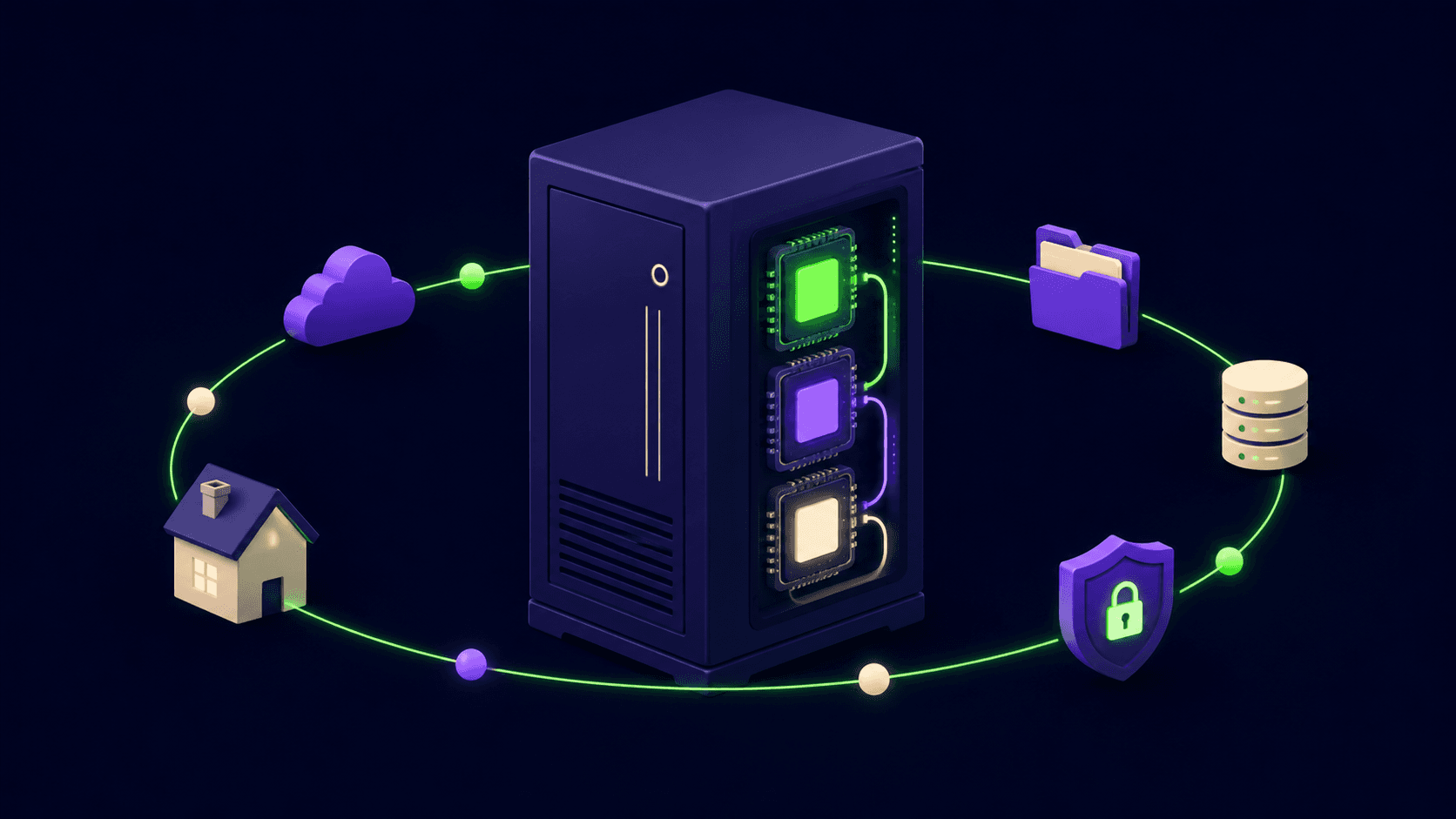
CoreWeave is a specialized GPU cloud built for enterprise AI training and inference. With 250,000+ GPUs across 32 data centers, InfiniBand-backed clusters, and NVIDIA's latest Blackwell hardware, it powers some of the largest AI labs in the world, including OpenAI, Meta, IBM, and Microsoft.
CoreWeave is a Nasdaq-listed GPU cloud provider (ticker: CRWV) that operates purpose-built infrastructure for large-scale AI training and inference. Founded in 2017 as a cryptocurrency mining operation and pivoted to cloud compute in 2019, CoreWeave has grown to 32+ data centers and roughly 250,000 GPUs, including the newest NVIDIA Blackwell hardware. The company went public on March 28, 2025, raising $1.5 billion at a ~$23 billion valuation, and has since secured major contracts with OpenAI ($12B, 5 years), Meta ($14.2B, signed October 2025, later expanded to $21B by April 2026), IBM, Microsoft, and Anthropic. In May 2025, CoreWeave completed the acquisition of Weights and Biases for approximately $1.7 billion, adding experiment tracking and model monitoring to its infrastructure platform.
CoreWeave's platform is built around Kubernetes-native bare-metal GPU clusters connected via InfiniBand networking, which is designed to minimize communication overhead during distributed multi-node training. GPU offerings span NVIDIA A100, L40, L40S, H100, H200, GH200, and the Blackwell generation (GB200 NVL72, HGX B200, HGX B300, GB300 NVL72). Pricing runs from $10/hr for L40 8-GPU nodes up to $68.80/hr for HGX B200 on-demand, with reserved committed contracts offering up to 60% discounts at multi-year terms. The platform is not self-serve for enterprise-scale workloads: onboarding involves account managers, and reserved capacity requires contract negotiation. Integrated Weights and Biases tooling, managed object storage, and managed Kubernetes round out the offering.
What CoreWeave actually does in 2026
CoreWeave's core product is large GPU cluster rental, but calling it a rental service understates the architecture. The platform provisions bare-metal GPU nodes, skipping the hypervisor layer that adds latency in standard cloud VMs. Nodes communicate over InfiniBand at up to 400Gb/s, which matters for collective operations like all-reduce in distributed training, where inter-GPU bandwidth is often the actual bottleneck in multi-node runs. Kubernetes-native orchestration handles scheduling, auto-scaling, and workload management without the overhead of building that layer yourself.
The GPU catalog runs from workhorses (A100 8x at $21.60/hr) to the leading edge: HGX B200 nodes (8 GPUs, 180GB VRAM) at $68.80/hr on-demand, and GB200 NVL72 configurations (4 superchips, 186GB per) at $42.00/hr. The GB300 NVL72 and HGX B300 are contact-sales only, meaning CoreWeave is one of the very few providers with access to NVIDIA's newest generation hardware at production scale. Single-GPU H100 inference instances are available at $6.16/hr for teams not needing the full cluster.
Post-acquisition, Weights and Biases (W&B) integrates directly into the platform for experiment tracking, hyperparameter sweeps, model versioning, and evaluation. Over 1,400 organizations previously used W&B as a standalone tool; it now ships natively inside CoreWeave's managed environment. CoreWeave also offers AI Object Storage (announced in the same period), managed networking, and dedicated persistent volumes, making it possible to run the full training pipeline without external cloud storage.
"CoreWeave has helped us build really large-scale computing clusters that led to the creation of some of the models that we're best known for." -- Sam Altman, CEO, OpenAI (coreweave.com case studies)
Where CoreWeave sits versus Lambda Labs and Crusoe
These three providers occupy different niches in the GPU cloud market. The mechanical differences go well beyond "price" or "scale."
CoreWeave vs. Lambda Labs: On the same H100 SXM hardware, CoreWeave charges roughly $6.16/hr per GPU vs. Lambda's $3.29/hr -- an 87% premium. On GH200, the gap reaches 184% ($6.50 vs $2.29). Lambda charges less because it trades InfiniBand for standard NVLink/Ethernet inter-node fabric. For jobs running on a single 8-GPU node, that gap rarely matters. For jobs spanning dozens or hundreds of nodes (training a 70B+ parameter model from scratch, running large-batch distributed fine-tuning), CoreWeave's InfiniBand fabric measurably reduces all-reduce communication time. Lambda's strength is accessible pricing, one-click Jupyter notebooks, pre-installed frameworks, and a transparent self-serve interface that doesn't require a sales conversation. Lambda is the right pick for research teams and startups; CoreWeave is the right pick when you've graduated past single-node constraints.
CoreWeave vs. Crusoe: Crusoe's defining characteristic is its energy model: the company uses stranded and wasted energy sources, including flare gas and excess renewables, to power its data centers through a vertically integrated energy-to-cloud architecture. CoreWeave uses standard grid-connected facilities with no specific clean-energy positioning. For organizations with hard ESG or sustainability mandates, Crusoe has a structural advantage CoreWeave can't easily replicate. On cost, Crusoe's H100 starts at approximately $1.71/hr, roughly half CoreWeave's comparable rate. On scale and networking, CoreWeave wins clearly: 250,000+ GPUs across 32+ global data centers vs. Crusoe's smaller US-primary footprint. Crusoe doesn't offer InfiniBand; its networking is standard Ethernet, limiting it to workloads where tight inter-GPU coupling isn't required. If you need to train a foundation model on 1,000 GPUs with low-latency collective communication, Crusoe can't match CoreWeave's architecture. If you need steady-state, mid-scale inference or fine-tuning with ESG reporting, Crusoe makes more sense. Both are preferable to hyperscalers on cost, but they serve different design centers.
For teams doing inference rather than training, RunPod and Modal offer serverless and on-demand GPU access without the cluster commitment overhead. For managed inference APIs rather than raw compute, AWS Bedrock, Azure OpenAI, and Groq handle provisioning and scaling internally.
What the cluster reality looks like day-to-day
Enterprise customers sign reserved contracts typically running two to four years, with pricing locked as dollars-per-GPU-per-hour for the duration. The 60% committed discount is real but requires committing to that burn rate monthly regardless of actual utilization. Weighted-average contract duration as of December 2024 was approximately four years. For an organization that knows it will train continuously, this is rational. For a team with variable demand, it is a significant financial risk.
On-demand access exists without commitment, but at full list price. A full 8x H100 HGX node runs $49.24/hr on-demand. Running that continuously for a month costs roughly $35,000. Most enterprise customers reserve capacity and treat on-demand as burst overflow. Spot instances exist on a limited set of hardware (RTX PRO 6000 Blackwell at $9.24/hr spot vs $20.00/hr on-demand), but the newest Blackwell flagship hardware has no spot tier.
The Kubernetes-native architecture delivers real advantages for teams that can use it. Bare-metal GPU nodes mean no hypervisor overhead, which shows up in benchmarks as measurably higher throughput for compute-intensive workloads. The InfiniBand fabric enables collective operations that are genuinely faster than Ethernet alternatives at multi-node scale. IBM's documented 80% performance increase on model training corroborates this. The catch is the operational complexity: managing Kubernetes at this scale requires engineers who know what they're doing. CoreWeave is not a platform you drop a Jupyter notebook onto; it's a platform you build a production ML pipeline on.
"CoreWeave has given us the freedom to think bigger and move faster. They understand the challenges of scaling breakthrough technologies and have backed us with the kind of support that lets us focus on innovation." -- Naeem Talukdar, Co-Founder and CEO, Moonvalley (coreweave.com case studies)
Who CoreWeave is built for
CoreWeave's design center is the enterprise AI lab. That means OpenAI-scale organizations training frontier models, hyperscaler-tier AI research divisions, AI startups that have Series B+ funding and need 500+ GPU capacity on predictable timelines, and production inference operators running at millions of requests per day who need SLAs with teeth. IBM used CoreWeave for model training and reported an 80% performance improvement. Mistral used it to cut training time in half on its reasoning models. These are organizations with dedicated infrastructure teams who treat Kubernetes as a baseline skill.
The platform also suits well-resourced research teams that have been burned by availability constraints on hyperscalers (AWS, GCP, Azure GPU queues are notoriously difficult to navigate at scale) and want dedicated reserved capacity under an SLA. CoreWeave's advantage over hyperscalers is 50-80% lower cost at equivalent GPU generations, faster access to new NVIDIA hardware, and infrastructure that's purpose-built for ML rather than adapted from general-purpose cloud.
What CoreWeave is not
CoreWeave is not a platform for independent developers, academics, or small teams. There is no free tier, no credit-card self-serve for exploratory workloads, and no managed inference API where you call an endpoint and pay per token. If you're looking for something in that direction, Replicate or RunPod serve those use cases. If you want a full serverless inference layer without managing clusters, Modal or Groq are more appropriate.
CoreWeave is also not the right choice if your organization has ESG or sustainability requirements tied to energy sourcing. Its data centers run on standard grid power; Crusoe's stranded-energy model is a genuine structural differentiator for that segment.
Teams without strong Kubernetes and DevOps capabilities should approach with caution. The platform's power comes from its bare-metal Kubernetes orchestration, but that same architecture creates a steep setup and operational burden. CoreWeave's support is enterprise-grade, but it's not a managed ML service that abstracts away infrastructure decisions.
Skip CoreWeave if you're doing single-node fine-tuning, building a prototype, operating on a startup budget without a multi-year compute commitment, or primarily need inference rather than training infrastructure. Lambda Labs, RunPod, and Modal will serve those cases at a fraction of the cost and operational overhead.
Recurring frustrations users keep hitting
The most consistent complaint across community discussions and reviews is the absence of a self-serve path. Getting started with CoreWeave at any meaningful scale requires engaging an account manager and, for reserved capacity, negotiating a contract. This is appropriate for the enterprise segment but is a hard blocker for teams that want to evaluate the platform quickly.
Pricing at scale is predictable only if you're on a committed contract. On-demand rates are publicly listed, but enterprise-scale workloads are custom-quoted. Teams report difficulty forecasting actual per-month costs without going through the sales process, which creates friction for budget approval workflows that need a number before a meeting.
GPU availability during demand spikes is a recurring concern, particularly for the newest Blackwell hardware. The B300 and GB300 NVL72 require contacting sales with no posted availability timeline, meaning teams building capacity plans for bleeding-edge hardware face uncertainty even after signing contracts.
The Kubernetes complexity barrier trips up teams that underestimate the DevOps overhead. CoreWeave provides Kubernetes-native infrastructure, not a managed notebook environment or serverless inference layer. Organizations that haven't operated Kubernetes clusters at GPU scale find themselves spending significant engineering time on infrastructure rather than model work.
The securities litigation overhang from late 2025 (class action over Denton, TX data center construction delays, with a $14 billion market cap hit) introduces uncertainty for procurement teams that factor vendor stability into infrastructure decisions. The allegations that CoreWeave concealed known delays from investors are unresolved as of April 2026.
User Reviews
No reviews yet. Be the first to share your experience!
Sign in to write a review.
Related articles
Guides and articles related to CoreWeave.
OpenAI GPT-Realtime-2 (May 2026): Pricing, Latency & 30-Min Voice Agent
Grok 4.3 API for Agents (May 2026): Pricing, Benchmarks, Migration
Mistral Medium 3.5 Self Host: 77.6% SWE-Bench on 4 GPUs (2026)
Does API Cost More Than a Subscription for Claude Opus 4.8, GPT-5.5, and Grok?
Coding Ate Enterprise AI (2026): The $4B Use Case, Anthropic’s Share, and Seat vs API Math