AI UGC Ads for Fashion Brands: The 2026 Playbook
UGC-style creative, the deliberately imperfect, phone-shot look, keeps beating polished brand ads on Meta and TikTok because it reads as a recommendation instead of a commercial. The old way to get it: brief human creators at $60 to $200 per video and wait a week. The 2026 way: generate it. You provide the product photo, AI generates the person, the setting, the handheld feel, and increasingly the video itself. This playbook covers the four UGC shot types that convert for apparel, the prompt patterns that produce them, which tools to use at each budget, and where AI-generated UGC still loses to the real thing.
Transparency note: some tools linked below pay Vantaige a commission; see our affiliate disclosure. If you are a creator selling UGC rather than a brand making it, that business model has its own guide: making money selling AI UGC content.
The four UGC shot types that convert for fashion
| Shot type | What it looks like | Where it runs | AI difficulty |
|---|---|---|---|
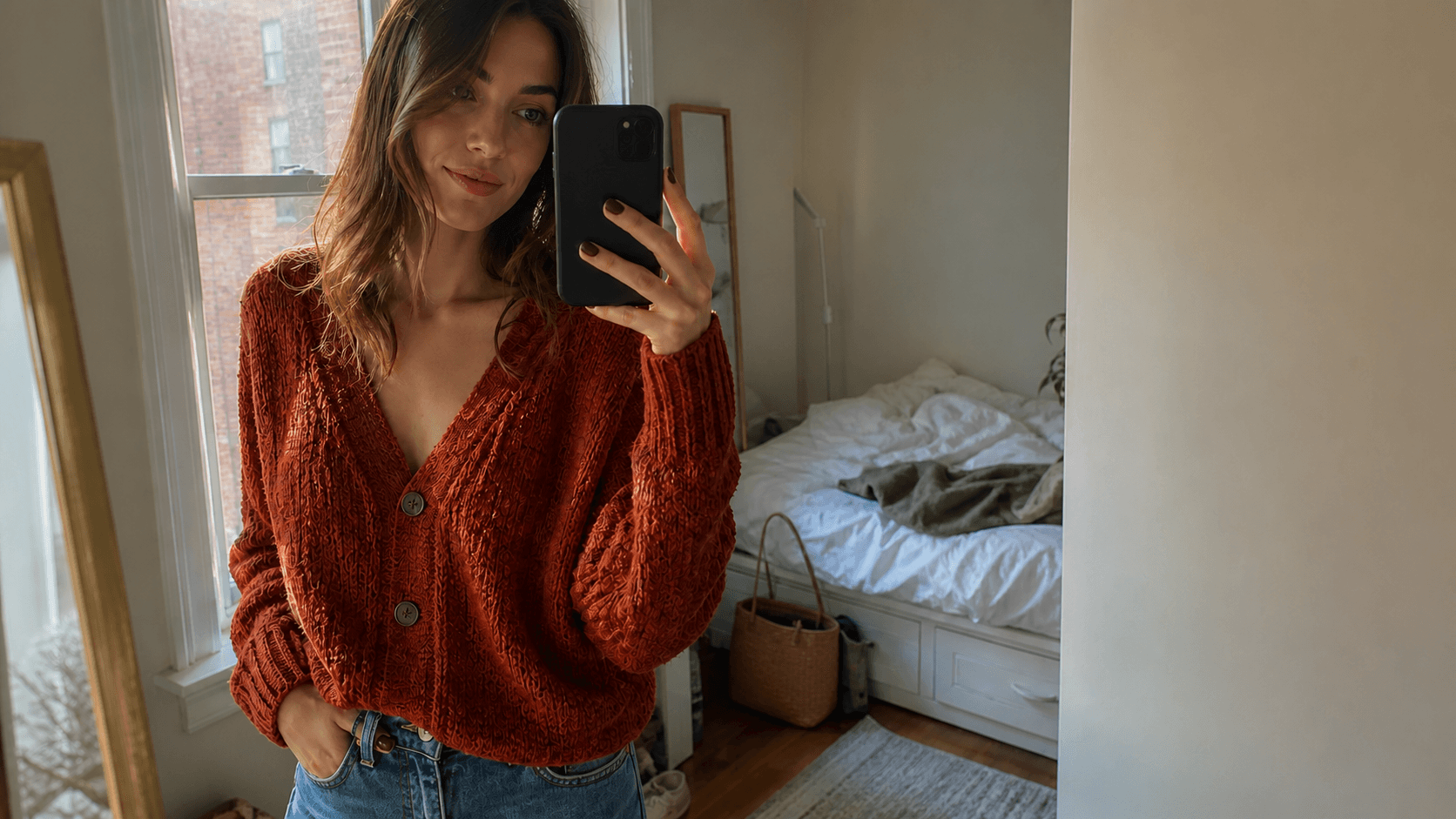
| Mirror selfie / try-on | Model in your garment, phone visible, bathroom or bedroom light | TikTok, Reels, Stories | Easy: single image, casual imperfection helps you |
| Unboxing hands | Close-up hands opening your mailer, garment reveal | TikTok hooks, first 2 seconds | Medium: hands and packaging text |
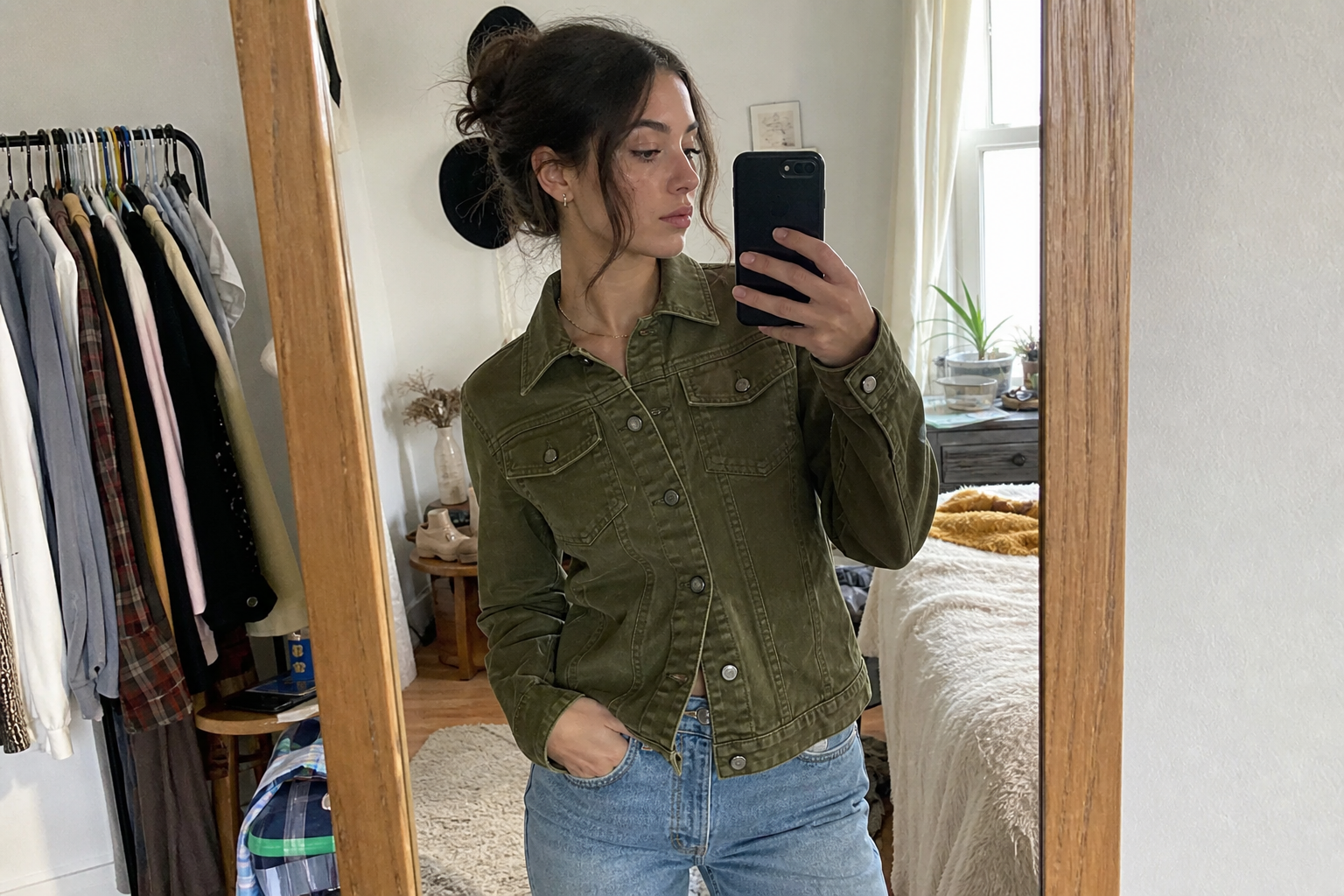
| Get-ready-with-me frame | Model mid-routine wearing the piece, cluttered real-life set | Reels, TikTok | Medium: scene believability |
| Street candid | Walking shot, golden hour, slight motion blur | Feed ads, carousels | Easy: models handle this natively |
The common thread: every shot must look like a customer took it. That means prompting FOR flaws: phone-camera texture, imperfect framing, mixed lighting. Polished output is a bug here, not a feature.
The prompt pattern that makes AI output read as UGC
UGC prompting inverts normal quality instructions. The working skeleton, adapted from the tested prompts in our UGC ads prompt collection:
- Subject and garment: who is wearing your piece, described for consistency if you plan a series.
- Camera honesty: "shot on a phone front camera", "slightly overexposed window light", "casual framing, subject off-center".
- Set dressing: real-life clutter beats studio. "bedroom mirror with sticky notes", "car passenger seat", "fitting room".
- Anti-polish: explicitly suppress the AI look: "no studio lighting, no bokeh, natural skin texture".
The UGC pack ($29 one-time) ships the full library: hooks, demos, testimonials, and before-after formats, each tested on the image models people actually run in 2026, with the finished image shown next to the exact prompt. For garment-on-model accuracy in those shots, pair it with the techniques in the fashion prompt collection.
Tools by budget (August 2026)
- Prompts + a model you already pay for: cheapest route. Any current image model plus the prompt library above produces mirror-selfie and street-candid stills today. Cost: pennies per image after the pack.
- On-model generation tools: when the garment must be YOUR garment, not an approximation. Uwear (pay-as-you-go, $0.10 per credit) and WearView (subscriptions from $24 a month, includes UGC-adjacent video on Pro) both render your actual product photo onto a generated person. That accuracy matters for ads: showing a garment that differs from what arrives is a returns machine.
- Video generation: for moving UGC, InVideo generates ad-format video from a brief, WearView Pro adds 720p fashion video, and clip-level generators like Seedance handle short motion shots priced per clip. Full workflow in our one-photo-to-campaign guide.
The cost math versus hiring creators
Typical human UGC pricing in 2026 runs $60 to $200 per finished video and $25 to $75 per photo set, plus usage rights and a briefing cycle measured in days. The AI route: a $29 prompt pack amortized over unlimited images, generation costs of roughly $0.10 to $1 per still and $0.60 to $20 per video clip depending on engine and length, and iteration measured in minutes. Derived estimate, labeled as such: a 20-creative test matrix (16 stills, 4 short videos) costs roughly $15 to $90 in generation versus $700 to $2,000 from creators. The catch is below.
Where AI UGC still loses
- Authenticity disclosure. Meta and TikTok both require disclosure of AI-generated content in ads in most placements as of 2026, and audiences punish creative that feels deceptive once flagged. Treat AI UGC as "UGC-style", not fake testimonials: never generate fake reviews or attribute words to people who do not exist.
- Faces holding products in video. Hand-garment interaction in motion is still the giveaway frame. Stills are safer than video for close product handling.
- Real customer proof. Nothing generated replaces actual customer content for retargeting audiences who already know you. The winning 2026 stack is AI volume for cold-traffic testing, real UGC for proof.
A one-week starting plan
- Pick your 3 best-selling garments and generate 4 shot types each from the prompt library: 12 stills, day one.
- Run them as static ads against your current creative with identical audiences and budget.
- Whatever wins, remake as short video (WearView Pro or per-clip generation) and scale spend.
- Feed learnings back: the pack's hook formats are variables to test, not one-offs.
FAQ
Is AI-generated UGC allowed in Meta and TikTok ads?
Yes, with disclosure requirements for AI-generated or synthetic content that both platforms tightened through 2025-2026. Check the current ad policy for your placement and region before scaling, and avoid anything presented as a real customer testimonial.
What is the best AI tool for UGC fashion ads?
For stills of your actual garment, an on-model tool (Uwear or WearView). For generic UGC-style scenes, any current image model plus tested prompts. For video, WearView Pro or a per-clip engine like Seedance. Most brands end up with a prompts-plus-one-tool stack.
How much do AI UGC ads cost to make?
Generation itself runs about $0.10 to $1 per still and $0.60 to $20 per video clip as of August 2026. The real budget item is testing spend, not creative production, which is exactly the inversion that makes the approach attractive.
Can AI put my exact product in a UGC-style photo?
Yes, that is what on-model generation tools do: they render your uploaded product photo onto a generated person in a chosen scene. Prompt-only generation approximates your product; on-model tools reproduce it.
Does UGC-style creative actually outperform polished ads?
Directionally yes on cold social traffic, which is why the format dominates TikTok ads, but it is audience-dependent. That is why the playbook starts with a 12-still split test instead of a full pivot.
References
Get the best new AI tools and guides, weekly
One short email a week. The tools worth trying, the guides worth reading, nothing else.
No spam. Unsubscribe anytime.
Aymen B
Contributing writer at Vantaige, covering the AI tools ecosystem.
Similar articles
Buy, Don’t Build - Until Receipts Are Mandatory (2026): Menlo’s 76% Purchased Flip and EU AI Act Article 50
GEO After the Rankings Divorce (2026): Why Only 37.9% of AI Overview Cites Are Top-10 Pages