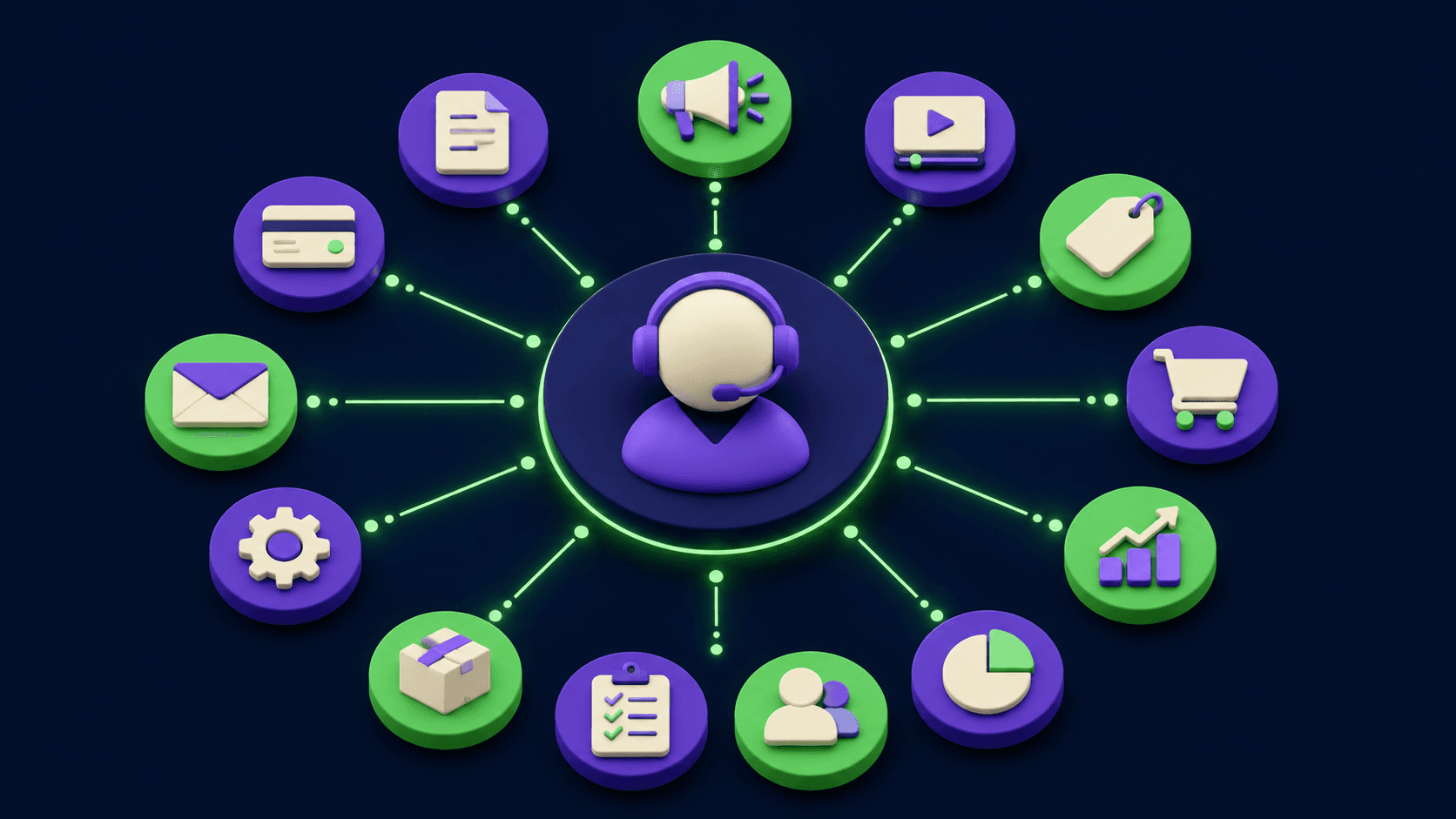

Predis.ai is an AI content factory for social media. Give it a text prompt or product link, and it generates branded posts, carousels, and video ads ready to schedule across Instagram, TikTok, Facebook, and LinkedIn.
Predis.ai is an AI-powered social media content creation platform built by EZML Technologies Pvt Ltd, a Pune, India-based company founded in 2020 by Tanmay Ratnaparkhe, Aakash Kerawat, and Akshay Karangale. The tool solves a specific problem that affects millions of small teams and solo operators: producing a consistent stream of visually polished social media content without a dedicated designer or a large agency budget. You feed it a text prompt, a product link, or an image, and it returns ready-to-publish posts, carousels, video reels, and ad creatives sized for every major platform.
The platform covers the full production loop. AI generation handles captions, hashtags, visuals, and video with voiceovers. A built-in drag-and-drop editor lets you adjust layouts, swap assets, and apply brand colors. The scheduler pushes approved content directly to Instagram, TikTok, Facebook, LinkedIn, YouTube, and Pinterest, among 60+ supported channels. An "Agent Mode" generates four distinct creative concepts from a single prompt, each with different hooks and sales angles, which teams use for A/B testing without running multiple separate briefs. Shopify, Wix, and WooCommerce integrations let e-commerce stores pull their product catalog and generate product-specific ad creatives at scale. The platform also includes a competitor analysis module that benchmarks your posting frequency and engagement against rivals. As of May 2026, Predis.ai reports 6.4 million users and over 200 million ads generated.
What Predis.ai actually is in May 2026
In May 2026, Predis.ai is best described as a generative content factory with a scheduling layer bolted on. The core product is a text-to-social-asset pipeline: input a prompt or product URL, set a platform target (Instagram carousel, TikTok reel, Facebook ad), and the AI handles layout, copy, and visuals in one pass. This is different from tools that help you write captions for assets you already have. Predis starts from a blank slate and builds the full deliverable.
The platform has accelerated its release cadence significantly in early 2026. Notable updates include UGC 2.0 (March 24, 2026), a major overhaul of its user-generated-content-style video generation with improved lip-sync accuracy, real-time preview, and stronger product focus for e-commerce. Agent Mode for static ads launched in January 2026, followed by Agent Mode for video ads in February 2026. The Inspiration Library, launched in March 2026, lets users browse high-performing creative styles from live ads and convert them into original posts within minutes. In April 2026, Predis launched its "Growth Fund" promotion, adding 40% extra credits monthly to Rise and Enterprise plan subscribers at no additional cost.
The product is available on Web, iOS, and Android, and offers API access for developers who want to integrate content generation into their own tools. The company was selected for both Google for Startups Accelerator: AI First and AWS ML Elevate in 2023, and launched its integration in the Semrush App Center in July 2023, giving it visibility to Semrush's 10 million-plus user base.
"this is the complete package where i am just giving the text and getting the best social poster with different variations." - Komal P., Business Analyst, Capterra, January 2025
Where Predis.ai sits versus Buffer and Canva
Buffer is a scheduling-first platform. Its core architecture is a content queue: you bring pre-made assets, Buffer routes them to platforms, and analytics surface what performed. Buffer does not generate images, carousels, or videos from prompts. Its AI features are limited to caption assist, which is auxiliary to its main queuing model. Where Buffer meaningfully outperforms Predis is in team collaboration: approval workflows, multi-seat permissions, and analytics depth are all more developed. For a marketing team that already has a designer or an established creative process, Buffer is the better publishing engine. For a team that needs to produce assets from scratch, Predis covers the full chain.
Canva competes on design quality. With 20,000-plus templates and its Magic Studio features (Magic Media, Magic Write, Magic Edit), Canva gives designers layer-by-layer control over every visual element. An experienced Canva user can produce social assets that are noticeably more polished than what Predis generates by default. Digital by Default's 2026 test found that Predis's carousel output "outperformed manually designed ones" in click-through rates, which suggests speed-to-output compensates for some quality gap, but Canva's overall design engine is deeper. The key difference is workflow axis: Canva is a design tool with AI assist built in; Predis is an AI generation tool with a design editor available. Canva does not include competitor analysis, scheduling for 60+ platforms natively, or e-commerce catalog integrations at Predis's level.
A third relevant comparison is Hootsuite and Later, both of which handle multi-platform scheduling with more sophisticated team features than Predis. For agencies with larger teams, the approval workflows in Hootsuite or Metricool are substantially more production-ready. Predis serves a different segment: small teams or solopreneurs who prioritize generation speed over publishing discipline.
How AI actually works inside Predis.ai
Predis uses a combination of large language model generation for captions and a proprietary image generation pipeline for visuals. The generative flow starts at the brand level: users configure brand kits (colors, fonts, logo, tone) and the system applies these consistently across generated assets. When you prompt "promote our summer sale, 20% off all products," the system generates: a caption with the brand's voice, hashtag recommendations, a visual layout with the sale message, and a correctly sized output for each target platform. Agent Mode runs four variations of this flow simultaneously, each with a different headline angle or visual style, intended for split testing.
Video generation uses a different pipeline. The platform's UGC video mode generates spokesperson-style product videos with AI-synthesized presenters and voiceovers. The March 2026 UGC 2.0 update improved lip-sync accuracy meaningfully, though independent reviewers still characterize the video output as the platform's weakest area. The Originality.ai team's test found that the standard video output is "animated slideshows with text overlays rather than genuine video content." The UGC spokesperson mode is more ambitious but requires careful review before publishing, as output quality is inconsistent across different product categories.
The competitor analysis module pulls public data from connected Facebook and Instagram profiles, benchmarks posting frequency and engagement rates, and surfaces content ideas based on what is performing well in the user's niche. In practice, multiple user reports flag this as buggy: the feature sometimes returns no data even when a valid page URL is pasted, and scans can take a long time to complete.
"The platform's AI-based content generation feature has been a game-changer for me, significantly easing my social media management tasks." - Leigh E., Founder, Capterra, July 2023
The friction users keep raising
Predis.ai has a real and documented set of reliability problems that appear consistently across review platforms as of 2025-2026. The most serious is publishing failure: multiple users report posts failing to publish with token errors and no alerts, meaning content disappears silently and teams miss scheduled windows. Anisley L., who left a review on Capterra in April 2025, described losing "time, credibility, and money" as posts failed to publish and support was slow to respond.
URL import, which should be a core workflow for content repurposing, does not work reliably. Emanuel R., a CEO who reviewed the platform in March 2026, noted: "It cannot reliably pull content from a website URL, which should be a core feature, it has never worked for me." Browser compatibility is another persistent issue: Vitaliy V., a project manager reviewing in March 2026, found that the platform does not function in roughly 15% of browsers, leaving users who do not use Chrome or Safari effectively locked out.
The competitor analysis feature is flagged as buggy by multiple reviewers: it sometimes returns no results even for valid Facebook or Instagram page URLs, and scans run slowly. Billing clarity has also generated complaints: at least one user reported signing up for what appeared to be a monthly plan and being charged an annual total exceeding $900, suggesting the checkout flow has caused confusion around billing cycle commitments.
On content quality, independent tests find the AI output adequate for high-volume, lower-fidelity publishing workflows but insufficient for brands where tone consistency and creative precision matter. Undetectable AI's review scored individual content types between 5/10 and 8/10, with recurring criticism of weak calls-to-action and generic phrasing. Platforms like Simplified offer comparable generation with a more polished editor experience for teams where design quality is the priority.
Who Predis.ai is for
The clearest use case for Predis.ai is an e-commerce brand managing its own social channels without a dedicated designer. Connect a Shopify or WooCommerce catalog, configure a brand kit, and generate product-focused ad creatives for the week in under an hour. The Shopify integration and e-commerce-specific generation modes are among the platform's strongest features, and the Agent Mode's four-concept output works well for teams that want to test multiple creative directions without briefing a freelancer for each variant.
Small social media agencies managing two to four client accounts are a second strong fit. The Rise plan supports four brands at $40/month, which is cost-effective for a small agency. The brand kit separation keeps client assets from bleeding into each other, and the competitor analysis feature adds a strategic layer that is useful in client reporting.
Skip Predis.ai if your team needs reliable scheduling with approval workflows. The publishing infrastructure has documented failure modes, and the team collaboration features are basic compared to Buffer, Later, or Hootsuite. Skip it if you are Twitter/X-heavy: the platform's output is visual-first, and the text-only post formats it generates for that platform are its weakest area by independent test scores. Skip it if your brand requires design precision: Canva's template depth and editing control produce more polished output when visual quality is non-negotiable. And skip it if your primary need is deep analytics: Predis's reporting features are limited compared to dedicated analytics tools.
For solopreneurs, small e-commerce teams, and agencies at the lower end of the account count range, Predis.ai offers a genuinely useful generation-to-scheduling pipeline at a price that is difficult to replicate by stitching together separate tools.
User Reviews
No reviews yet. Be the first to share your experience!
Sign in to write a review.
Related articles
Guides and articles related to Predis.ai.

How to Make Money Selling AI UGC Content for Brands (2026)
AI Instagram Reels Factory: 30 Reels/Day on Autopilot (2026)
Sell AI-Generated Short Films on TikTok Shop, Instagram & YouTube (2026)

One Product Photo, Full Fashion Campaign: AI Images and Video That Sell (2026)

Best AI Fashion Model Generators for Clothing Brands (2026)