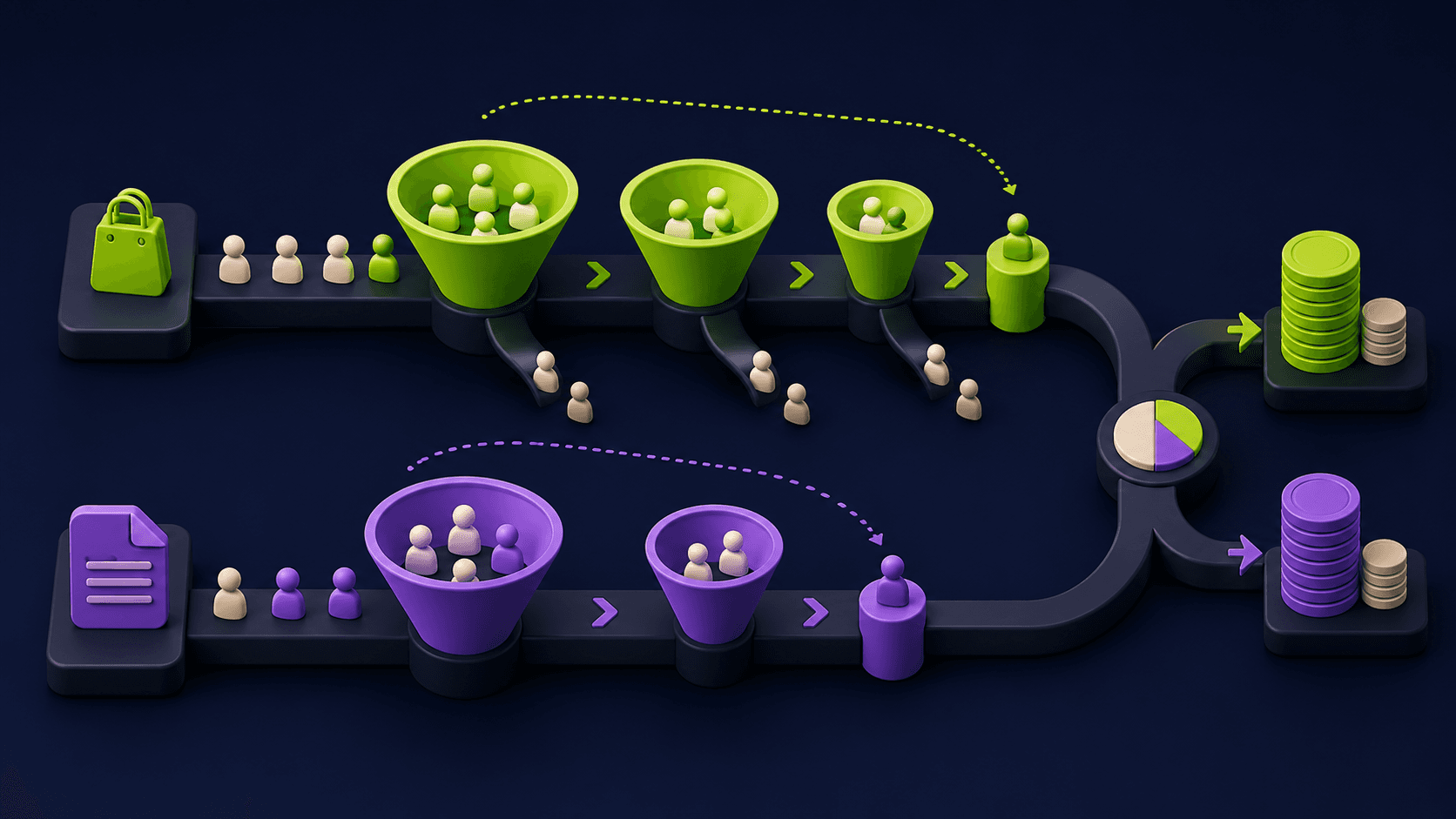
How to Make Money Selling AI UGC Content for Brands (2026)
How to Make Money Selling AI UGC Content for Brands: The 2026 Tutorial
AI UGC is the fastest-moving arbitrage in performance marketing right now. Brands need 50 to 200 ad creatives per month to feed Meta and TikTok algorithms, traditional UGC creators charge $150 to $500 per video, and a single operator with the right stack can deliver the same output at under $1 of generation cost. Arcads, the leading AI UGC platform, hit $5M ARR in 12 months on this exact gap (per the Admiral Media interview with co-founder Romain Torres). This tutorial is the operator-level playbook for capturing the same gap at the agency layer.
TL;DR
AI UGC = AI-generated talking-head ads brands buy to test on paid social
Realistic agency retainer: $2,000 to $3,000 per client per month
Production cost per video: under $1, sale price: $50 to $300
4 retainer clients = roughly $10K MRR in 90 days if you ship
EU AI Act deepfake disclosure becomes binding August 2, 2026
What is AI UGC and why are brands paying for it in 2026?
AI UGC is short-form, talking-head video advertising generated by AI avatars and voice models, designed to look and feel like an authentic human creator filming a phone selfie. Brands buy it because Meta and TikTok ad algorithms reward creative variation, and AI is the only way to produce 50 to 200 fresh ad variants per month at performance-marketing budgets.
The core unit of AI UGC is a 15 to 45 second clip of an AI persona holding a product, speaking a script, on a casual indoor background. Brands rotate dozens of these into ad accounts to find the one hook, voice, and angle that converts. The traditional version of this workflow involves hiring a human UGC creator on a marketplace like Upwork or Influee, paying $150 to $500 per video, and waiting two to three weeks. The AI version delivers the same deliverable in 30 minutes for under $1 of model spend.
Two structural numbers matter:
Average UGC creator cost dropped 44% year over year to $198 per deliverable in 2026, per the Superscale UGC pricing report. The price floor is collapsing because supply (AI-generated assets) exploded.
The user-generated content platform market is projected to grow from $8.48B in 2026 to $64.31B by 2034 at a 28.8% CAGR, per the UGC Statistics 2026 report. The pie is still expanding faster than supply can fill.
That gap is your business: brands still want hundreds of creative variants per month, the unit economics of human UGC don't allow it at scale, and AI does. You sell the operations, the strategy, and the deliverable, not the model spend.
How much can you actually charge for AI UGC?
Per-video pricing for AI UGC sits at $50 to $300 retail; per-batch pricing (10 to 30 videos delivered as a creative testing pack) runs $500 to $2,500; monthly retainers for performance-marketing clients run $2,000 to $5,000 for the indie operator and $5,000 to $50,000+ for established agencies. The numbers below are sourced inline.
Deliverable | Indie operator price | Agency price | Source |
|---|---|---|---|
Single AI UGC video (15-45s) | $50-$150 | $200-$500 | |
Creative testing pack (10 videos) | $500-$1,200 | $1,500-$3,000 | |
Batch of 30 videos | $1,500-$3,000 | $4,000-$8,000 | |
Monthly retainer (15-30 videos/mo) | $2,000-$3,000 | $5,000-$15,000 | |
Full-service performance retainer | $3,000-$5,000 | $10,000-$50,000+ | |
Whitelisting / Spark Ads add-on | +$100-$500/mo per platform | +30-50% on retainer | |
Usage rights extension | +30-50% of base | +30-50% of base |
A few honest notes on this table:
Indie operator price assumes you have no agency brand, no past client roster, and you sell on outcome, not seat-time. You will start at the low end of every range.
The "agency price" column is what an established marketing agency with a deck and case studies charges for the same deliverable. Your job is to climb the ladder by accumulating proof.
Whitelisting (running ads from the brand's account using your AI persona) and usage rights extensions are where margin lives. Quote them as line items, not bundled.
About 80% of brands still prefer human UGC for authenticity per Videotok's 2026 rate report; pitch AI UGC as "creative volume for paid testing," not a human replacement, and conversion rates climb.
What's the realistic monthly income you can build in 90 days?
A solo operator who closes 4 retainer clients at $2,500 per month hits $10,000 MRR. The MitaBoost playbook explicitly targets this number with 4 clients at $2-3K each, and the unit economics support it: production cost is under $1 per video, so even a 30-video monthly retainer leaves over 95% gross margin before tools and labor.
Here's the conservative break-even math, using verified tool prices:
Line item | Monthly cost | Source |
|---|---|---|
Arcads (Creator plan, ~20 videos/mo base) | $220 | |
HeyGen (Creator plan, custom avatars) | $29 | |
ElevenLabs (Creator, voice cloning + commercial) | $22 | |
Higgsfield (Plus, 1,000 credits/mo) | $39 | |
Submagic (Pro, 100 captioned videos) | $40 | |
n8n self-hosted on Hostinger KVM 4 | ~$8 | |
Total stack cost / month | ~$358 | (see line items) |
At $2,500 per client per month with 4 clients, you gross $10,000 MRR against a $358 stack cost. That's a 96.4% gross margin before your labor. The realistic 90-day curve looks like this: month 1 = 1 client at $1,500 (founder discount, case-study trade), month 2 = 2 clients at $2,000 each = $4,000, month 3 = 4 clients at $2,500 each = $10,000. The bottleneck is not technology, it's outbound: how many qualified DMs you send and how many discovery calls you book.
Which AI tools do you actually need? (Full stack)
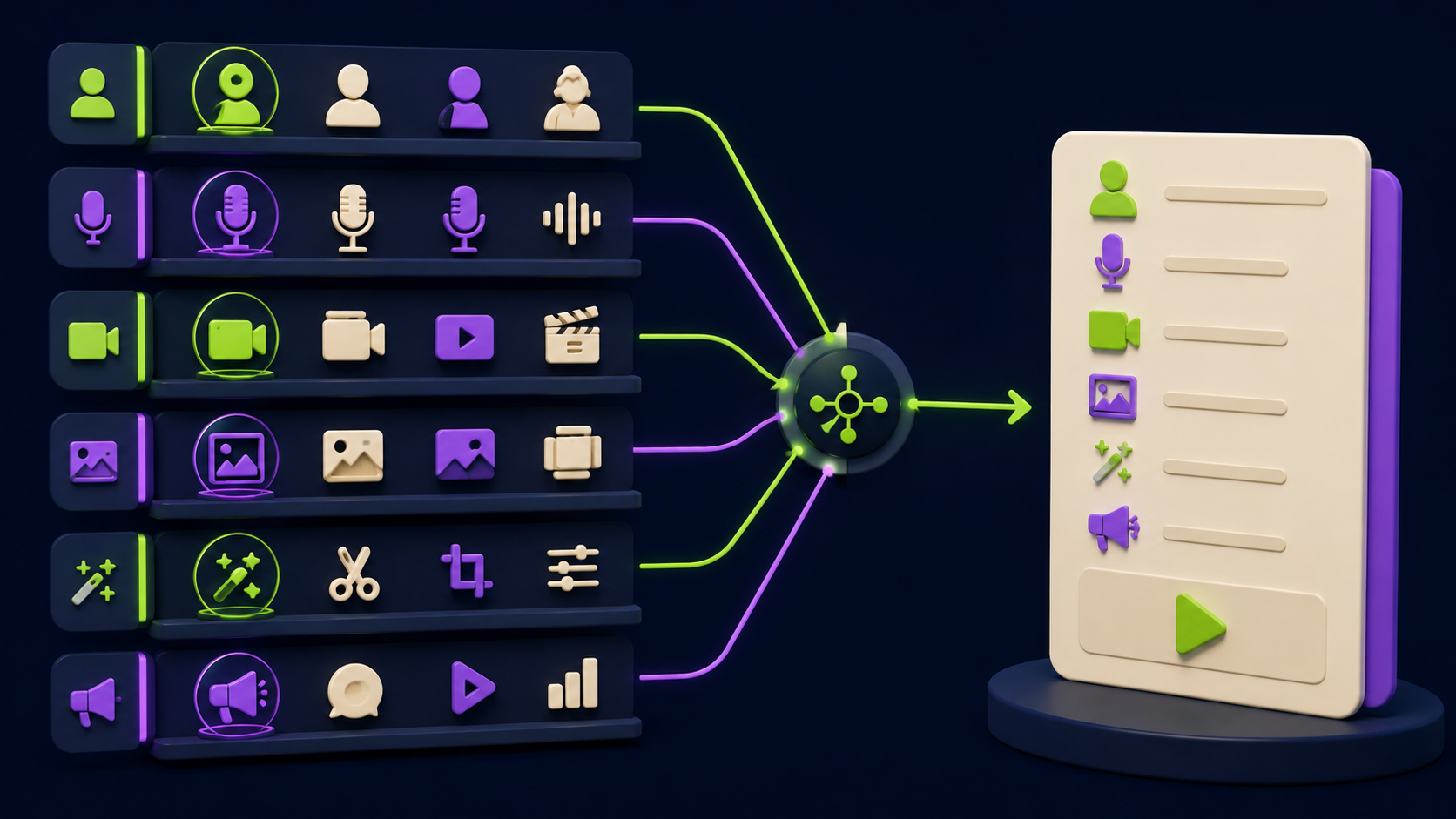
The minimum viable AI UGC stack has six categories: avatar/spokesperson, voice, video generation, image generation, auto-edit, and ads-platform-specific UGC generators. You do not need every tool in every category. Pick one per row to start, then expand based on which client deliverables demand it.
Category | Tools | 2026 entry price | What it does |
|---|---|---|---|
AI avatar / spokesperson | $29/mo | Talking-head AI persona reads a script in your custom voice | |
AI UGC ad platforms | Arcads, Creatify, Topview, ICON Me, MakeUGC, Invideo Agent | $19-$220/mo | Purpose-built AI UGC ads with 100+ avatars and ad-script generators |
Voice cloning / TTS | $5-$22/mo (commercial) | Voice clones for AI personas; commercial use requires paid tier | |
Cinematic / B-roll video | $0.50-$5 per clip | B-roll, product shots, "scroll-stopping" cinematic openers | |
Image generation (thumbnails, hooks) | $10/mo or $0.014-$0.06/img | Hook overlays, product comp shots, thumbnail variants | |
Auto-edit / captions | $15-$40/mo | Burn-in captions, B-roll insertion, virality scoring, multi-aspect export | |
Workflow / automation | $0-$29/mo | Trigger script-to-video, Slack approvals, client portal updates | |
Hosting (client portal / dashboard) | $8-$25/mo | Self-hosted n8n, client deliverable portal, Notion alternative |
Two honest framing notes. First, AI UGC ad platforms (Arcads, Creatify, Topview) bundle avatar, voice, and editor into one product designed for paid-social ads. They are the fastest path to a deliverable but the lowest-margin one because the platform owns the model layer. Second, the "build it yourself" stack (HeyGen + ElevenLabs + Submagic + Higgsfield) gives you more creative control and lower per-video cost at the price of more glue work. Most agencies start on a UGC ad platform and graduate to the build-it-yourself stack around month three.
Step-by-step: how to make your first AI UGC video in 30 minutes
This walkthrough produces one 30-second AI UGC video using HeyGen for the avatar, ElevenLabs for the voice, Higgsfield for the cinematic B-roll opener, and Submagic for captions. Cost: under $2 in tool credits. Time: 25-35 minutes.
Write the script (5 minutes). Use this template: 3-second hook, 15-second product mechanism, 5-second proof point, 5-second CTA. Hook example: "I tried [product] for 30 days and one thing surprised me." Mechanism: explain WHAT the product actually does, not how it makes you feel. Proof: one specific number ("dropped my coffee spend $87 in November"). CTA: "Link is in the bio" or platform-native equivalent.
Generate the voice (3 minutes). In ElevenLabs, paste the script into Speech Synthesis. Pick a voice from the library or use Instant Voice Clone (Starter plan, $5/mo, includes commercial rights per the ElevenLabs pricing page). Set Stability to 40, Similarity to 75, Style Exaggeration to 0. Render. Download the WAV.
Drive the avatar (10 minutes). In HeyGen, create a new video, pick an Instant Avatar that matches the product's target demo, upload your ElevenLabs WAV as the audio source (HeyGen lip-syncs to the audio file rather than re-generating speech). Pick "vertical 9:16" output. Render. Download.
Generate a cinematic opener (5 minutes). In Higgsfield, use a "WAN Camera Controls" preset to generate a 3-second cinematic shot of the product on a kitchen counter or held in hand. Higgsfield Plus at $39/mo gives you 1,000 credits per the Higgsfield pricing page; this generation costs roughly 30 credits.
Edit and caption (5 minutes). In Submagic, drop in: (1) the Higgsfield opener as the first 3 seconds, (2) the HeyGen avatar clip as the body, (3) any product B-roll. Submagic auto-captions in 99% accuracy per the Submagic site; pick a "Beast" or "Tracy" caption style. Add brand colors to the caption template.
Export and QA (2 minutes). Export 9:16 at 1080p. Watch on a phone, not a desktop. Success looks like: hook clear in first 1.5 seconds, mechanism understandable without sound, captions readable on a moving treadmill, total length under 30 seconds. If it fails any of these, redo the offending step.
The first video takes 30 minutes. By video 20 you'll be doing this in 12 minutes. By video 100 you'll have an n8n workflow that runs steps 2-5 automatically when you paste a script into a Google Sheet.
How do you find brands that pay for AI UGC?
The four channels that work in 2026 are LinkedIn outbound, X (Twitter) cold DMs, Upwork inbound bids, and personal-brand inbound on the platform you actually post on. Cold email still works but has the lowest conversion. The right mix is 60% outbound, 40% inbound built over time.
LinkedIn outbound. Build a list of e-commerce founders, performance marketers, and DTC brand managers in niches that buy heavy paid social (skincare, supplements, kitchen gadgets, pet, productivity SaaS). Send 30 personalized connection requests per day with a one-line note that names their product and a specific creative gap you noticed. The Popfly outreach guide recommends following the brand's recent launch and using their product first; conversion is 3x higher than cold-only outreach.
X (Twitter) DMs. Search for founders who tweet about ad fatigue, creative testing, or "we need more UGC." Quote-reply with one specific observation, then DM. Performance marketers like the founder of Arcads built their credibility this way (per the Admiral Media interview): post results publicly, then offer to apply them to a stranger's account.
Upwork inbound. Build a profile narrowly positioned as "AI UGC for paid social." Bid on the 5-10 best-fit UGC postings per day with a custom Loom video showing one of their competitors' ads remixed in your AI UGC style. Conversion is slow but the leads close at retainer scale.
Personal brand inbound. Post 5 AI UGC examples per week on the platform your target buys from (probably TikTok or Instagram Reels). Each post should show before-after, A/B test results, or a "we tested 30 hooks, here's the winner" breakdown. After 60 days of consistent posting, inbound DMs start arriving.
The follow-up cadence that actually works: initial DM, 5-7 day wait, follow-up referencing something they posted in the meantime, 10-day wait, breakup message ("Closing the loop, happy to revisit when you're testing more creative"). The breakup message gets the best response rate of any single line in the sequence.
What does a winning client deliverable actually look like?
A winning AI UGC deliverable is a structured creative package, not a folder of MP4s. The minimum unit is: 5 hooks x 3 personas x 3 aspect ratios = 45 assets per testing batch, organized in a Notion or Airtable hub the client can grade in 10 minutes. Anything less makes you look like a freelancer. Anything more and you're underpriced.
The standard deliverable bundle that performance marketers expect:
5 distinct hooks per concept, each tested as its own ad variant. Hooks are the highest-impact variable in paid social per nearly every account audit.
3 AI personas per hook (different age, gender, vibe) so the buyer can target multiple lookalike audiences.
3 aspect ratios: 9:16 (Reels, TikTok, Shorts), 1:1 (Feed), 4:5 (Feed alt). Submagic and most editors export all three from one master.
Hook library document listing every hook tested, the metric it scored on (hook rate, thumb-stop rate), and a recommendation for the next batch.
A/B test sheet in Google Sheets the client can sort by which variant won and why.
Raw assets folder in case the client wants to remix in their own editor.
Deliver everything in a shared Notion page with embed-and-comment so the client can mark up exact frames they want changed. Inbeat Agency reportedly produces 300+ UGC assets per month per client at the high end (per inBeat's published case studies); your indie operator scope should be 30-60 assets per month per client at the $2-3K retainer tier.
How do you price retainer deals vs project deals?
Project deals get priced on deliverable count plus usage rights; retainers get priced on creative volume per month plus an outcome bonus tied to the client's ad-account ROAS. Project pricing is a teaser; retainer pricing is the business. The transition happens around month 2-3 of a project relationship.
Model | Structure | When to use it | Margin profile |
|---|---|---|---|
Per-project flat fee | $500-$3,000 for a defined batch (10-30 videos), single use | First engagement; client testing you | High gross %, low time-to-cash, capped revenue |
Per-video unit price | $50-$300/video, billed monthly on usage | Client wants pay-as-you-go elasticity | Predictable margin, hard to scale labor |
Fixed monthly retainer | $2,000-$5,000/mo for X videos and X revisions | Established trust, recurring volume need | Best margin, predictable cash, scope creep risk |
Performance retainer | $3,000-$10,000/mo base + bonus tied to ROAS lift or top-performing creative | Sophisticated client, your case studies prove ROI | Highest upside, highest variance |
Hybrid base + usage | $1,500/mo base + $50/extra video over 20 | Mid-trust client with bursty volume | Capped downside, bursty upside |
The Digital Agency Network's 2026 AI agency pricing guide recommends fixed retainers for "agencies offering recurring deliverables or operational support" and hybrid models for service lines built on API/token delivery, which describes AI UGC almost exactly. The mistake most operators make is staying on per-project pricing past month 2; the second a client books a third project, propose a retainer at 80% of their three-month spend and you've locked in cash flow.
What are the legal and disclosure rules brands actually care about?
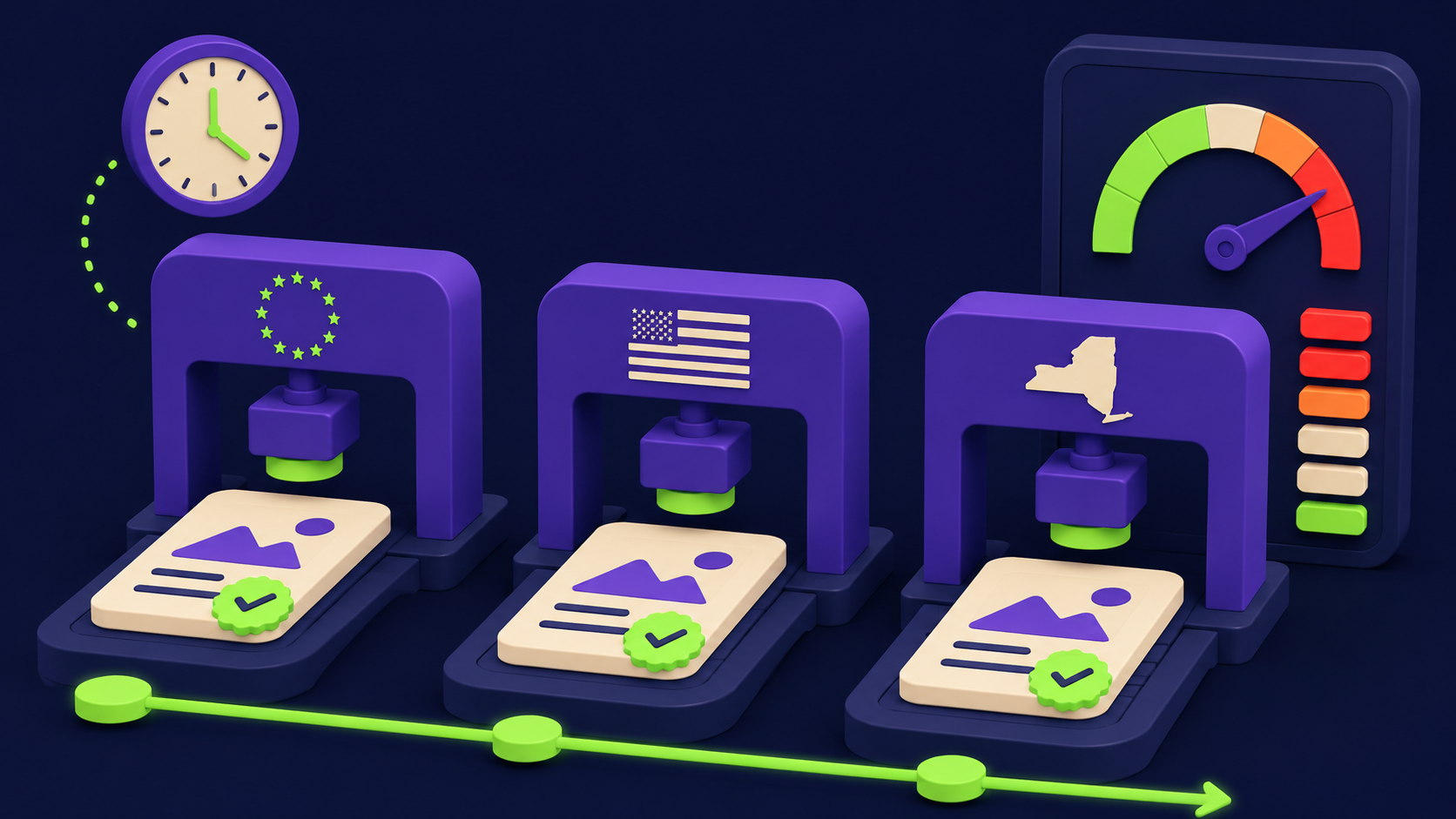
The two binding regimes for AI UGC in May 2026 are the EU AI Act (Article 50 transparency obligations, enforced from August 2, 2026) and the US FTC ban on AI-generated fake reviews. New York's Senate Bill S8420A also requires "synthetic performer" disclosure with $1,000 first-offense penalties. If your client sells in the EU or US (which is almost everyone), you bake disclosure into every deliverable.
The specifics that matter:
EU AI Act Article 50. Per the official EU AI Act text, deployers of AI systems generating deepfake image, audio, or video content must disclose the content is artificially generated. Exceptions exist for evidently artistic, satirical, or fictional work, but a UGC ad pretending to be a real customer testimonial does not qualify. The transparency rules become binding August 2, 2026, per the EU Commission's 2026 timeline.
"Human-reviewed" carve-out. Per the AIIP compliance brief, AI-generated content reviewed and approved by a human before publication, with a named human or entity taking responsibility, may not require a label. The legal interpretation is still tightening; do not bet a client account on the exception.
US FTC. The FTC's 2024 final rule bans AI-generated fake reviews and prohibits "consumer review hijacking." AI UGC presented as authentic customer experience without disclosure falls under this rule.
New York S8420A. Requires "conspicuous disclosure" when an ad uses synthetic performers; $1,000 civil penalty for first offense, $5,000 for subsequent, per Drata's 2026 state AI law tracker.
Practical disclosure pattern. Add a small "AI-generated" caption in the lower third of every video, plus a line in the ad copy ("This ad uses AI-generated personas"). It costs you 2 seconds of caption real estate and moves you from "potentially liable" to "demonstrably compliant."
Put this in your client contract: a clause that disclosure is included by default and the client must affirmatively opt out in writing if they want to remove it (which puts the legal liability on them). Most performance marketers will sign without complaint because their legal team is already worried.
Common pitfalls and how to avoid them
The five mistakes that kill AI UGC operators in their first 90 days, observed across the AI side hustle reports on r/sidehustle, the MitaBoost agency post-mortems, and recurring threads in r/SocialMediaMarketing and r/Entrepreneur:
Selling videos instead of selling outcomes. Brands don't buy "30 AI UGC videos." They buy "lower CPA on cold traffic." Reframe every pitch around the metric the client's ad manager is judged on. The pitch becomes "I'll get you 5 winning hooks this month or we don't bill the next."
Picking too-real avatars too early. Photorealistic AI personas often hit the uncanny valley harder than obviously stylized ones. Start with the slightly cartoony Arcads or HeyGen avatars; they convert better in cold-traffic A/B tests because the audience reads them as "creator who edits in After Effects" rather than "fake person."
No script discipline. Generic "this product changed my life" scripts lose to specific "I bought this for my mom and she texted me at 11pm three weeks later" scripts. Hooks need a concrete number, a specific context, or a contrarian claim. Generic = no clicks = no retainer renewal.
Skipping the captions step. 85%+ of paid social is watched muted. Submagic, Captions.ai, or Opus Clip auto-captions are not optional. Per the Submagic vs Opus Clip comparison, both ship at 99% caption accuracy in 2026; pick one.
No usage-rights clause. If you don't specify usage rights in writing, the client assumes they own the asset forever, on every platform, with no extra fee. Add a clause: 90-day organic + paid usage on the platforms named in the brief, +30% to extend, +50% to whitelist.
One client = no business. The single-client trap. The day client #1 churns, your MRR drops 100%. Never let one client exceed 40% of revenue past month 4. The MitaBoost playbook's "$10K = 4 clients" target is correct precisely because it builds in churn resilience.
How do you scale from 1 client to 10 with AI ops?
The scaling lever is automation, not labor. n8n (or Make, or Zapier) lets you turn the 30-minute manual workflow into a 3-minute supervised one. Once you wire the pipeline, marginal cost of a new client drops from "another 8 hours per week" to "another shared Notion page and a Slack channel." This is the same thesis behind the n8n MCP + Claude Code setup guide.
The reference automation stack that scales:
Intake. Client fills a Tally form with product link, target demo, hook angle, brand voice notes. Form submission triggers an n8n workflow.
Script generation. n8n calls Claude or GPT with the brief + a script template, generates 5 hooks and 5 full scripts. Output drops into a Notion page for human approval.
Voice + avatar render. Approved scripts trigger ElevenLabs API call (voice render), then HeyGen API call (avatar render), then Submagic API (caption + multi-aspect export).
QA + delivery. Final MP4s upload to a client-specific Notion page with previews. Slack notification to client. Status updated in Airtable.
Reporting. Once the client runs the ads, a weekly n8n cron pulls Meta Ads API metrics (CPA, CTR, hook rate per asset) and writes a Loom-ready summary into the same Notion page.
Run n8n self-hosted on a $8/mo Hostinger KVM 4 or a $6/mo Vultr instance. Both Stripe payments and Calendly bookings hook into the same n8n graph. By client #5, you've stopped doing manual exports and your bottleneck is sales, not delivery. By client #10, you hire a part-time editor at $15/hr to do the human QA layer (the editor's job is "approve or reject the AI output," not "edit from scratch").
For the brain layer (deciding which hook to test next, A/B testing scripts, summarizing weekly ad performance into client emails), pair n8n with a Claude or GPT-5 voice agent like the one in the OpenAI GPT-Realtime 2 voice agent setup.
Realistic 30/60/90-day roadmap for starting an AI UGC agency
The 90-day plan that gets you to the $10K MRR target. Each phase has one outcome metric. Skip the metric and the next phase fails.
Phase | Goal | Daily activities | Outcome metric |
|---|---|---|---|
Days 1-30 | Build the stack + 5 portfolio videos | Set up Arcads + HeyGen + ElevenLabs + Submagic; produce 5 spec ads for 5 different niches; post each on LinkedIn + X with breakdown | 5 spec ads live, 50 LinkedIn connections in target niche |
Days 31-60 | Land first 1-2 paid clients | Send 30 personalized DMs/day across LinkedIn + X; bid on 5 Upwork posts/day; book 5 discovery calls/week | 1 client at $1,500-$2,000 (founder discount ok) |
Days 61-90 | Hit $10K MRR with 4 clients | Build n8n workflow; case study #1 client; raise prices to $2,500; close 3 more clients off the case study + warm referrals | $10,000 MRR, 4 retainer clients, 1 published case study |
Days 91-120 (stretch) | Hire and systematize | Hire $15/hr part-time editor; document SOPs; raise new-client price to $3,500; pitch performance retainer upsell to existing clients | $15K MRR, 5-6 clients, 10 hrs/week of founder time freed |
One realistic caveat: "case study" in month 60-90 doesn't mean a polished PDF. It means screenshots of the client's Meta Ads Manager showing a CPA drop or a winning creative, plus a 1-paragraph quote from the client. That's enough to close client 2 and 3.
FAQ
Is AI UGC actually replacing human UGC creators?
Not yet, and not entirely. About 80% of brands still prefer human-created UGC for authenticity per Videotok's 2026 rate report. But brands are using AI UGC for the volume layer (creative testing, A/B variants, low-budget niches) and humans for the hero asset. Position your AI UGC service as "creative volume for paid testing" rather than "human replacement," and the conversion math works out. Many agencies offer both: AI for testing, human for the winning hook scaled.
How much money do I need to start an AI UGC agency?
Under $400 in monthly software plus your time. The minimum stack is Arcads at $19-$220/mo, ElevenLabs Starter at $5/mo, Submagic Starter at $20/mo, and a $8/mo VPS to run n8n. The MitaBoost playbook explicitly targets $10K MRR with 4 clients at $2-3K each from "just a laptop." Your real cost is 60-90 days of unpaid outbound work. If you can't survive that without revenue, do this on the side of a day job.
Which AI UGC platform is best in 2026: Arcads, Creatify, or HeyGen?
Arcads wins on avatar realism for premium DTC brands, Creatify wins on automation and analytics for high-volume testing, and HeyGen wins on flexibility because it gives you the avatar engine without bundling the ad-template UI. Per the EzUGC Arcads vs Creatify comparison, the right answer is portfolio: use Arcads for the photorealistic premium client, Creatify for the high-velocity testing client, and HeyGen for the client who wants a custom avatar of their actual founder.
Do I need to disclose AI in UGC ads?
Yes if you advertise in the EU after August 2, 2026, or if you sell in the US under the FTC's fake-review rules and New York's S8420A. The EU AI Act Article 50 requires deepfake disclosure for AI-generated content presented as real, per the official Article 50 text. Add an "AI-generated" caption in the lower third and a line in the ad copy. Build it into your contract default with an opt-out clause that puts liability on the client if they remove it.
Can I clone my own voice for AI UGC commercially?
Yes, but not on free plans. ElevenLabs requires the Starter plan ($5/mo) or above to enable commercial usage rights and Instant Voice Cloning, per the ElevenLabs pricing page. The Creator plan ($22/mo) enables Professional Voice Cloning for higher fidelity. Always check the platform's commercial rights clause before billing a client; some tools restrict commercial use even on paid tiers, and some require attribution.
How long does it take to make an AI UGC video end-to-end?
Your first video takes 30-45 minutes (script, voice, avatar, B-roll, captions, export). After 20 videos and a sharpened workflow, expect 10-15 minutes per video. With n8n automation wiring ElevenLabs, HeyGen, and Submagic APIs into one chain, the human-time-per-video drops to 3-5 minutes (mostly QA). Per the aitooldiscovery.com side hustle guide, AI UGC drops turnaround from 3-4 hours per video (traditional) to about 30 minutes manually.
What niches pay the most for AI UGC?
DTC e-commerce (skincare, supplements, kitchen, pet), SaaS founders running performance campaigns, and mobile apps that need creative volume to feed Meta and TikTok algorithms. The pattern: any business that buys paid social ads at $5K+/month and needs to test more creative than humans can produce. Local services and agencies typically pay less because they don't run paid social at performance volume. The MitaBoost playbook flags e-commerce, SaaS, and apps as the highest-density buyer pool.
Can a complete beginner with no video editing skills do this?
Yes, because the AI UGC ad platforms (Arcads, Creatify, Topview) are designed for non-editors. The skill you actually need is performance-marketing intuition: which hooks convert, which personas match which audiences, why a video stopped a thumb. That comes from watching 100 winning ads in your niche and reverse-engineering them. Spend the first week on Meta Ads Library studying winners, not on tool tutorials.
How do I get my first client without a portfolio?
Build 3-5 spec ads for real brands you don't work with yet. Pick one of their products, write a hook angle their actual ads don't use, produce the AI UGC version, post it on LinkedIn or X tagging the brand, and DM the founder a Loom walkthrough of why it would beat their current creative. Conversion on this approach is 5-10% per outreach, vastly higher than cold pitches with no portfolio. Half your spec-ad targets will at least book a discovery call.
References
Admiral Media interview with Romain Torres, Arcads co-founder. admiral.media/arcads-leading-generation-ai-letstalkads
Superscale UGC pricing report 2025-2026. superscale.ai/learn/how-much-does-ugc-cost-real-pricing-breakdown-for-2025
UGC Statistics 2026. autofaceless.ai/blog/ugc-statistics-2026
ppc.io UGC Creator Pricing 2026. ppc.io/blog/ugc-pricing
Videotok AI UGC vs traditional UGC rates 2026. videotok.app/blog/avatar-and-ugc-ads/ugc-ads-rates-traditional-ugc-vs-ai-ugc
DesignRevision UGC Creator Pricing 2026. designrevision.com/blog/ugc-creator-pricing
MitaBoost, "How to Build a $10K/Month AI UGC Ads Agency." mitaboost.medium.com
Digital Agency Network AI Agency Pricing Guide 2026. digitalagencynetwork.com/ai-agency-pricing
Arcads AI pricing 2026. eesel.ai/blog/arcads-ai-pricing
HeyGen pricing 2026. heygen.com/pricing
ElevenLabs pricing 2026. elevenlabs.io/pricing/api
Higgsfield AI pricing 2026. higgsfield.ai/pricing
Submagic pricing. submagic.co/pricing
EU AI Act Article 50 (transparency obligations). artificialintelligenceact.eu/article/50
EU AI Act 2026 labeling timeline (August 2, 2026). weventure.de/en/blog/ai-labeling
AIIP EU AI Act deepfake compliance brief. aiipprotection.org/news/eu-ai-act-deepfake-disclosure-compliance
Drata 2026 state and federal AI regulations tracker. drata.com/learn/ai/state-federal-regulations-laws
EzUGC Arcads vs Creatify 2026. ezugc.ai/blog/arcads-vs-creatify
aitooldiscovery.com AI side hustle guide. aitooldiscovery.com/guides/ai-side-hustle
Popfly brand outreach guide. popfly.com/post/how-to-reach-out-to-brands-as-influencer
inBeat Agency AI UGC ads. inbeat.agency/blog/ai-ugc-ads
Submagic vs Opus Clip comparison. submagic.co/blog/opus-clip-vs-submagic
Meta Ads Library. facebook.com/ads/library
Related from Vantaige
Get the best new AI tools and guides, weekly
One short email a week. The tools worth trying, the guides worth reading, nothing else.
No spam. Unsubscribe anytime.
Aymen B
Contributing writer at Vantaige, covering the AI tools ecosystem.