FASHN AI is a fashion-specialist AI model generator and virtual try-on engine: its maskless diffusion model drapes garments onto AI models with category-leading fabric and print fidelity, plus a cheap developer API. Best for brands and developers who need accuracy, though it skips ghost mannequin and Shopify integration.
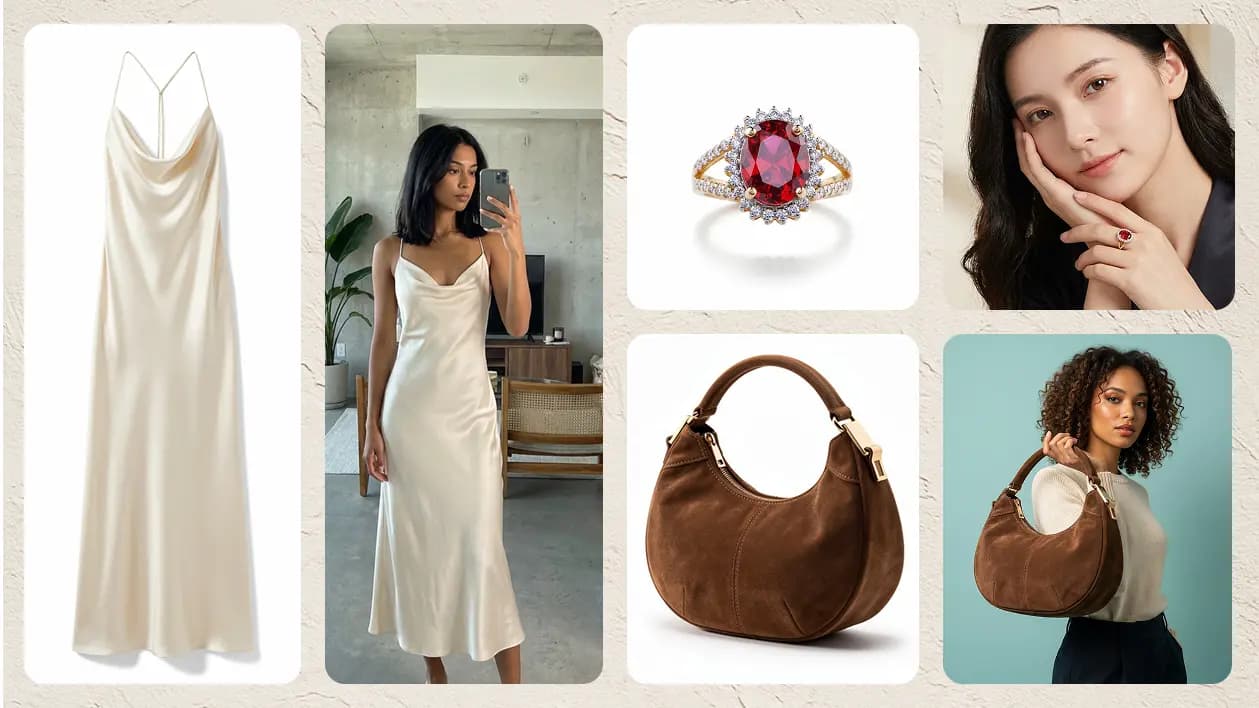
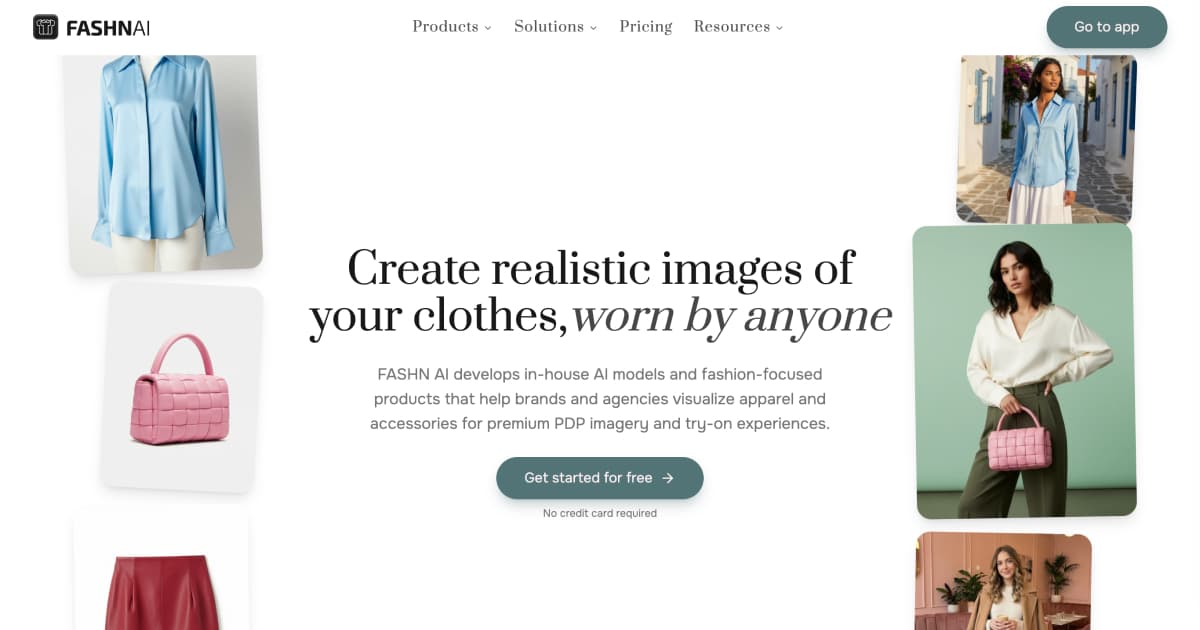
FASHN AI is a fashion-specialist image tool that does one hard thing extremely well: it puts a garment on a model so the result looks photographed, not pasted. Upload a flat-lay or product shot and FASHN either dresses an existing model photo with it, a true virtual try-on, or generates a brand-new AI model wearing it. It was built in 2023 by Dan and Aya Bochman, a husband-and-wife team in Tel Aviv, and unlike most tools in this space it trains its own models rather than wrapping a general image generator. The team even placed in the top six at OpenAI's GPT-5 startup hackathon in August 2025.
That focus shows up in the output. FASHN's current try-on model, v1.6, renders fabric drape and preserves prints, logos, and text more faithfully than almost anything else in the category, which is why print-on-demand sellers and developers gravitate to it. The platform spans virtual try-on, product-to-model generation, model swap, consistent AI models across a campaign, short video, plus a background remover and 4K upscaler. It ships as a web app, an iOS app, and, crucially, a well-documented developer API. This review is for clothing brands, fashion agencies, and the developers building try-on into their own stores.
What FASHN AI makes in June 2026
The flagship is Virtual Try-On (v1.6), which takes a garment image and a person photo and renders the person wearing the item. It covers tops, bottoms, dresses, outerwear, shoes, hats, and scarves, can layer up to three products at once, and explicitly excludes swimwear and lingerie. Output is native 864x1296 pixels with three speed modes: Performance at around 7 seconds, Balanced around 10, and Quality around 19. A Try-On Max mode spends more credits for sharper fabric and logo detail.
Around that core sit the tools a catalog actually needs. Product to Model converts a flat-lay into a fully on-model photo with a generated AI model. Model Swap replaces the model in an existing shot while keeping the garment, pose, and lighting. Consistent Models, released May 2025, locks the same AI model across an entire campaign so your product pages match. Image to Video adds subtle motion for 5 to 10 second clips at up to 1080p, and a second reference frame can rotate a model to show the back of a garment. Background Remover, 4K upscaling, Reframe, and a clean Packshot mode round it out, and the iOS app from August 2025 exposes all of it through a chat interface.
How the AI model generator and try-on actually work
Most try-on tools warp a cutout of your garment onto a fixed body, which is why they often look painted on. FASHN takes a different route. Its v1.6 model is an MMDiT, a multimodal diffusion transformer, with 972 million parameters, trained in two phases on 18 million masked try-on pairs plus 4 million synthetic triplets. The important word is maskless: FASHN generates the result without a segmentation mask, which removes the artificial boundaries that plague older models, preserves identity markers like hair, skin tone, and tattoos, and lets voluminous garments drape naturally.
In practice this is why FASHN was ranked best in category for garment drape accuracy by Nightjar in 2026, and why print-on-demand sellers pick it over open-source options:
"After evaluating multiple virtual try-on models including IDM-VTON, CatVTON, TryOn Diffusion, and Outfit Anyone, I selected FASHN as my preferred solution. It was the best at preserving the design details for print-on-demand creations." (Product Hunt reviewer, 2025)
The trade-off is that the model works on the garment region, so it can occasionally alter body proportions or drop a detail, and it has no ghost mannequin or pose-by-reference workflow. For graphic tees, patterned dresses, and logo-heavy apparel, though, the fidelity is the best reason to choose it.
Where FASHN beats and trails Uwear, Botika, and Claid
FASHN's niche is garment fidelity and developer access, and the comparison falls out from there. Against Uwear, FASHN is cheaper at API volume, down to about $0.049 per image, and arguably sharper on a specific garment-body pair, but Uwear wins for non-developers who need to push 10,000 products through a CSV batch without writing code. Against Botika, FASHN is API-first with no native Shopify app, while Botika trades raw flexibility for a Shopify plugin and a human review layer on its top tier. Against Claid.ai, FASHN is the fashion specialist where Claid is the broad pipeline: Claid bundles background removal, enhancement, and upscaling across many product types, while FASHN goes deep on drape and print accuracy for clothing alone.
If you also want a shopper-facing try-on or in-app ghost mannequin and video in one place, WearView covers more of that ground, though without FASHN's API or its drape ranking. The honest summary: pick FASHN when garment accuracy or a developer API is the priority, and pick a broader tool when convenience or pipeline breadth matters more.
App pricing for fashion brands and agencies
FASHN sells two ways. The app plans suit brands and agencies that want a UI: Basic at $19 per month (200 credits), Pro at $49 (750 credits plus 50 a day), Agency at $99 (1,500 plus 100 a day), and Agency 2x at $199 (3,000 plus 200 a day). Annual billing is charged as ten months. A standard v1.6 try-on costs one credit, Try-On Max costs four, product-to-model and model creation run one to five depending on resolution and mode, and video ranges from one credit (5s at 480p) up to twelve (10s at 1080p). Every new account gets ten free credits, which is a taste rather than a real trial.
Fashion AI for developers: the API
The reason FASHN punches above its weight is the API. On demand it is $0.075 per credit with no subscription, and committed tiers drop the rate: Tier I at $19 a month, Tier II at $249, and Tier III at $1,249, where the effective rate falls to about $0.049 per generation. It ships Python and TypeScript SDKs, is also available through fal.ai at $0.075 per generation, licenses all output for commercial use by default, and auto-deletes inputs after 72 hours, which matters for customer-photo privacy. For a developer or agency building try-on into a storefront or marketplace, that combination is hard to beat, and it is the clearest line between FASHN and the no-code tools it competes with.
Where FASHN breaks
FASHN's problems are real but bounded. The loudest complaint, by a wide margin, is the subscription cancellation experience:
"Fashion AI looks polished on the surface, but once you actually use it, you immediately see the truth. You cannot cancel your subscription: there is no button, no instructions, no support provided." (Trustpilot reviewer, 2025)
Beyond billing, FASHN itself documents a starting-garment bias: trying a t-shirt onto a model wearing a bulky coat skews the result, because the original clothing creates a volume bias. Identity preservation is not perfect, the model lacks the ghost mannequin and pose-by-reference workflows some catalog teams need, and the native 864x1296 output still wants an upscale pass for Amazon-grade listings. Test your hardest garments, and your cancellation path, before you commit a card.
A real workflow: on-model catalog and try-on at scale
A 50-SKU DTC brand with no photography budget uploads flat-lays, runs Product to Model with a Consistent Model so every page matches, and exports at 4K, roughly 100 to 200 credits, about five to ten dollars on the Basic plan. A developer building a marketplace feature wires the v1.6 endpoint with the TypeScript SDK, serving try-ons in about ten seconds at $0.075 each, using Try-On Max for hero shots and the standard endpoint for thumbnails. An agency on the Agency tier turns one campaign photo into four or five social assets per garment with Model Swap and short video.
All three lean on the same buyer intent: an AI model wearing your clothes, generated instead of shot. For the prompt and reference patterns that make those generations look art-directed rather than generic, Vantaige's Prompt Vault is a useful starting point, especially for print-on-demand sellers whose graphics need to survive the generation intact.
Who FASHN AI is for, and who should skip it
FASHN is the right call for developers and agencies building virtual try-on into custom storefronts, for print-on-demand and pattern-heavy brands that need logos and graphics to survive generation, and for small DTC labels that want photoshoot-quality on-model images without a studio. The API pricing and garment fidelity are its strongest cards, and few rivals match either.
Skip it if you want a one-click Shopify plugin, where Botika or Modelia fit better, if you need ghost mannequin or pose-by-reference shots, where WearView is stronger, if you must batch thousands of items a day without code, where Uwear wins, or if you want a single tool for your whole photography pipeline including non-fashion products, where Claid is broader. FASHN is a specialist, and for the brands and builders who value that specialty, it is the best in its lane.
User Reviews
No reviews yet. Be the first to share your experience!
Sign in to write a review.
Related articles
Guides and articles related to FASHN AI.
Best AI Fashion Model Generators for Clothing Brands (2026)
AI Fashion Prompts That Stay Consistent: The Working Formula (2026)
How to Get an AI Model Wearing Your Clothes (Step by Step)
AI Clothing Photoshoot: What It Really Costs vs a Studio Shoot (2026)
One Product Photo, Full Fashion Campaign: AI Images and Video That Sell (2026)