

Claid.ai is an all-in-one AI product photography platform: background removal, on-model AI fashion models, 4K upscaling, and a batch API in one workflow. Built for e-commerce teams scaling catalogs, with strong logo and print preservation, though its refund policy and per-credit pricing frustrate small sellers.
Claid.ai is the AI tool you reach for when you already have product photos and need them to look like a brand shot them. It is an all-in-one product photography platform that removes and generates backgrounds, enhances and upscales images to 4K, and increasingly puts garments on AI fashion models, all inside one workflow. It grew out of Let's Enhance, the neural upscaler that earned early coverage from TechCrunch and PetaPixel, and was founded in 2017 by Sofiia Shvets and Vlad Pranskevicius before expanding into the full Claid suite.
Where most tools in this category do one job, Claid's pitch is breadth: a single pipeline that takes a raw product or flat-lay photo and returns a marketplace-ready image, on-model if you want it. The core pieces are AI Fashion Models (100-plus models, flat-lay or ghost-mannequin input, 4K output), AI photoshoot backgrounds, production-grade background removal, enhancement and upscaling with prompt-level skin-texture control, image-to-video, and a deep API with batch processing and workflow chaining. More than 10,000 businesses use it, and it is aimed squarely at e-commerce teams, marketplaces, and agencies rather than casual users.
AI product photography in one pipeline: what Claid does
Claid's strength is that the whole chain lives in one place. Background Removal handles complex edges, transparent objects, and reflective surfaces at production grade. AI Photoshoot drops your product into AI-generated studio or lifestyle scenes from a text prompt or a template. Image Upscaling and Enhancement pushes resolution to 4K while correcting lighting and color and adding natural shadows, with a skin-texture tool that takes prompts like "visible pores" or "subtle redness." Image-to-Video turns a still into a short clip. Object Eraser and Generative Resize clean up and reframe. For a catalog team, the appeal is finishing a product image without bouncing between four apps.
From flat-lay to on-model: the AI fashion workflow
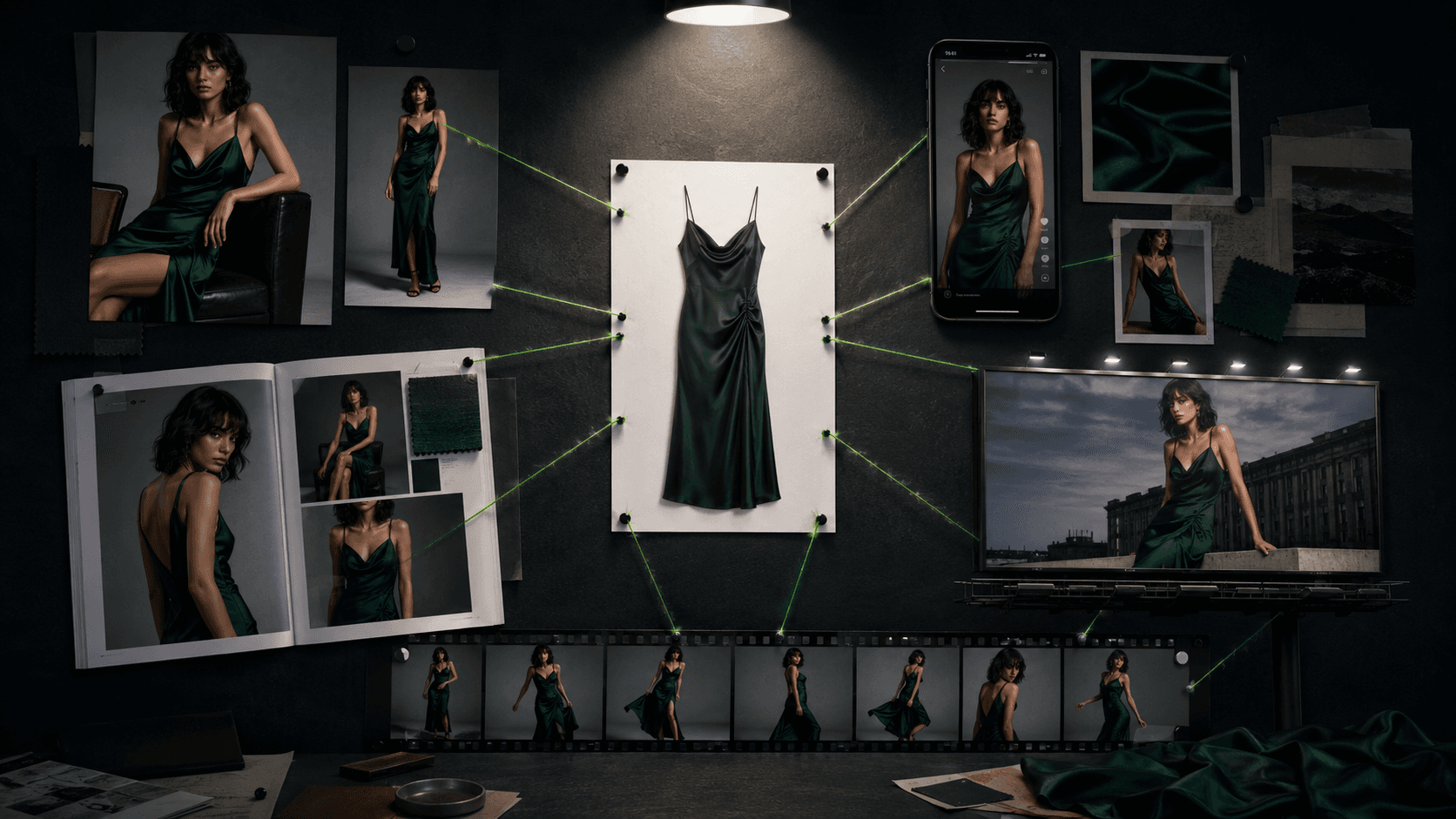
The newest pillar is AI Fashion Models. Upload a flat-lay, a ghost-mannequin shot, or an existing on-model image, pick from over 100 models across ages, ethnicities, and body types (or upload a custom model for brand consistency), set a pose and background, and export on-model shots at up to 4K. Claid says the models are tuned for product fidelity, keeping fabrics, prints, and logos accurate while changing the model, pose, and scene, which is a real advantage over general-purpose image generators that tend to reinvent your garment. Reviewers back the enhancement quality:
"The quality of the upscaled images is fantastic," and bulk enhancement noticeably lifted conversion and sales. (Isabella Silva, aitools.xyz review, December 2024)
The honest caveats are the ones common to every on-model tool. Hands still need a manual QA pass before publishing, faces in lifestyle (not just catalog) contexts deserve a look, and very complex patterns warrant a spot-check. For straightforward apparel and accessories, the output is solidly catalog-grade.
The API and batch automation
Claid is API-first at heart, and that is where it separates from click-by-click editors. The API exposes more than 20 operations, supports batch jobs and workflow chaining (several operations in sequence), and connects to S3 and Google Cloud storage, plus Shopify and other tools via Zapier. A Shopify merchant can auto-process every new product image: remove the background, standardize it, upscale, and export, without manual steps. Claid cites Rappi as a customer reporting "3x higher purchase probability" with better imagery, a company case study worth treating as directional rather than independently proven. The Pro plan adds batch processing and a priority queue, which is what makes large-catalog automation practical.
Claid vs FASHN.ai vs Uwear
The three solve overlapping problems with different shapes. FASHN.ai is the garment-fidelity specialist: it drapes a garment onto a specific reference body with the best fabric accuracy in the category, but it is narrow and developer-facing. Uwear is the volume tool: a proprietary Drape engine and a 10,000-item CSV batch at simple $0.10 pay-as-you-go pricing, but with fewer finishing tools. Claid sits between them as the vertical pipeline: it generates an AI model from your flat-lay and then cleans, enhances, and upscales in the same workflow across many product types, not just clothing.
The mechanical difference to weigh: FASHN re-dresses a real body for the most realistic fit, Uwear maximizes throughput, and Claid maximizes how much of the pipeline lives in one tool. If you want a Shopify-native plugin with a human QA backstop instead, Botika is the better match, and if you want shopper-facing virtual try-on plus video, WearView covers that. Claid wins when "one tool for the whole product-image pipeline" is the priority.
Claid pricing: credits, plans, and the refund catch
Claid runs on credits across three tiers plus a custom plan. The free trial gives 5 image uploads and 50 credits, no card required, with access to Pro-level features for evaluation. Essentials is roughly $19 per month, or about $9 per month billed annually, with allotments like 250 upscales, 500 background removals, and 125 AI fashion generations. Pro is about $49 per month, or roughly $35 annually, and adds batch processing, a priority queue, brand kits, and an API starter pack. Business is custom. Credit costs are published per operation: AI Fashion is 2 credits, AI Backgrounds 3, background removal 2, and video 35 credits for 5 seconds or 70 for 10. The catch worth flagging is the refund policy: refunds are limited to the current billing period or 24 hours after purchase, which is one of the tighter windows in the category, so plan to test inside the free trial first.
Where Claid frustrates users
Three frictions recur in reviews. The first is speed under load:
"Pricing model could be better" for smaller businesses, though bulk image enhancement "saves time." (Carlos Gonzalez, aitools.xyz review, December 2024)
Several users report slow response times and occasional downtime during peak hours, which stings on time-sensitive catalog drops. The second is cost for small or variable volume: the credit system means low-volume sellers can pay for a plan whose allotment they do not use. The third is workflow ergonomics, an interface that iterates by button-press rather than live preview, plus a learning curve on the API for non-technical users. None are dealbreakers for a team running real volume, but they shape who should and should not buy.
Who Claid is for, and who should skip it
Claid is the strongest fit for e-commerce brands and marketplaces processing 200 or more SKUs that want one platform for background removal, on-model generation, enhancement, and upscaling. It suits developer teams building automated image pipelines into Shopify, WooCommerce, or a marketplace, fashion brands that need diverse model representation and hard logo preservation, and agencies juggling multiple clients' catalogs. Saree and dress sellers moving from mannequin to on-model imagery can run the whole job, generation through color-corrected export, without leaving the tool.
Skip it if you are a solo or very low-volume seller, where Uwear's no-expiry pay-as-you-go credits cost less. Skip it if you need true virtual try-on draped on a specific person's body, where FASHN.ai is more realistic. Skip it if you want a no-code Shopify-first experience with human QC, where Botika fits better, or if a permissive refund policy matters to you, given Claid's 24-hour window. For the e-commerce team that wants its entire product-image pipeline in one place, though, Claid is hard to beat.
A real workflow: a marketplace catalog on autopilot
Picture a marketplace seller with hundreds of new SKUs a month. They connect Claid through the API or Zapier so every uploaded product photo is automatically background-removed, placed on a standardized background, upscaled, and exported to storage, no human in the loop for the routine cases. For apparel, the AI Fashion step turns flat-lays into on-model shots with a consistent model and a lifestyle background, then the same pipeline standardizes lighting across the set. What used to be a photographer, a retoucher, and a coordinator becomes a workflow that runs while the team sleeps.
The buyer intent underneath is the same one driving this whole category: sellers with real products and real photoshoot bills who want catalog-grade imagery for a fraction of the cost. For the prompt and background recipes that make AI product photography look intentional, Vantaige's Prompt Vault is a practical starting point for scenes, lighting cues, and on-model direction.
User Reviews
No reviews yet. Be the first to share your experience!
Sign in to write a review.
Related articles
Guides and articles related to Claid.ai.
Best AI Fashion Model Generators for Clothing Brands (2026)
How to Get an AI Model Wearing Your Clothes (Step by Step)
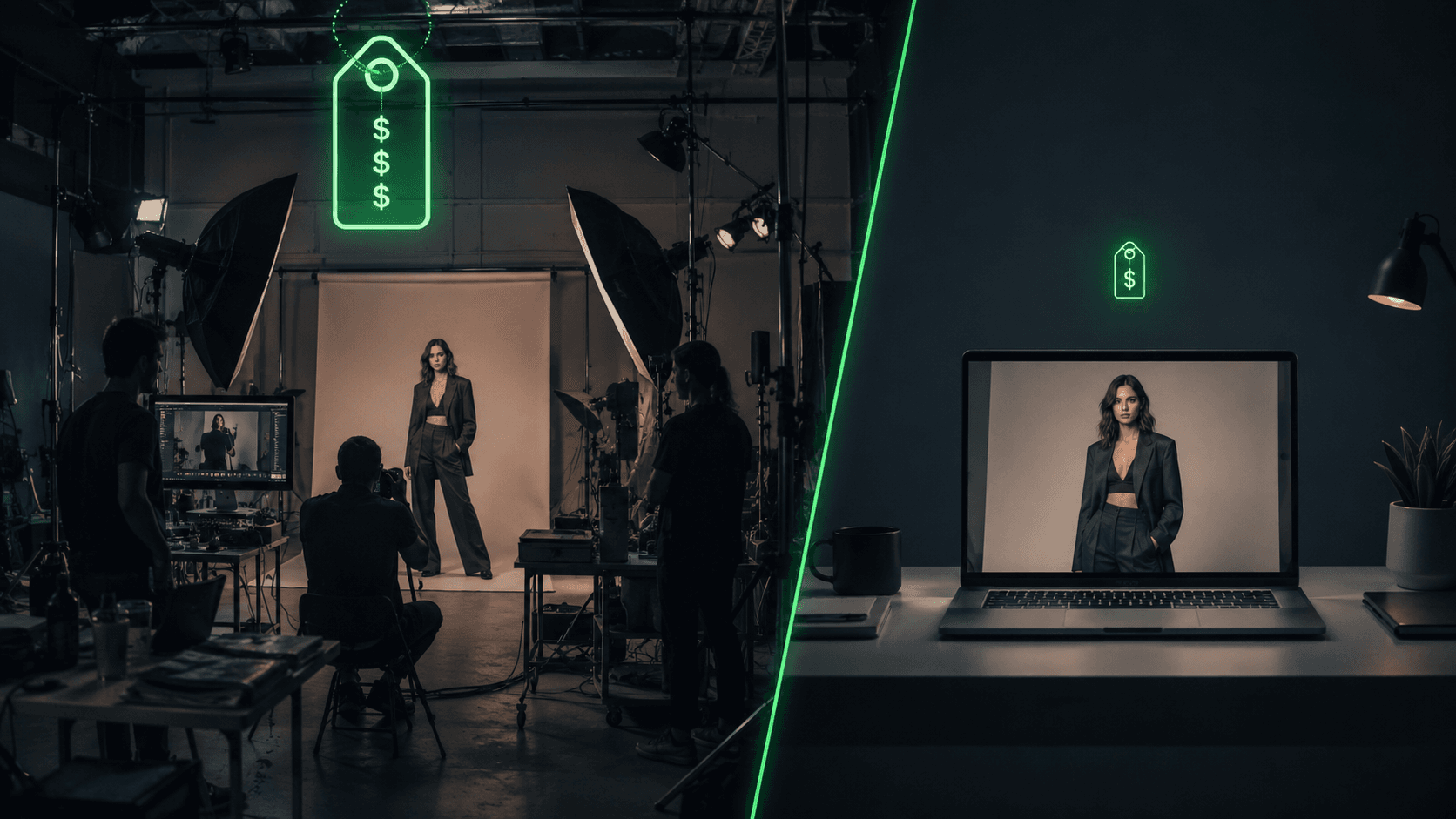
AI Clothing Photoshoot: What It Really Costs vs a Studio Shoot (2026)
AI Fashion Prompts That Stay Consistent: The Working Formula (2026)
One Product Photo, Full Fashion Campaign: AI Images and Video That Sell (2026)