Predibase is a managed fine-tuning and inference platform for open-source LLMs, built on LoRAX multi-adapter serving. It lets teams run hundreds of fine-tuned model variants on a single GPU, with VPC deployment for enterprises that can't move training data to shared infrastructure.
Predibase is a platform for fine-tuning and serving open-source large language models, built by the team that created Horovod and Ludwig at Uber's AI infrastructure group. Founded in 2021 by Travis Addair (CTO), Devvret Rishi (CEO), and Piero Molino (Chief Science Officer), the company spent three years building infrastructure that solves a specific production problem: how do you deploy many fine-tuned model variants without paying for a dedicated GPU per model? In June 2025, Rubrik acquired Predibase for a reported $100 million to $500 million, positioning it inside a data cybersecurity platform aimed at enterprise agentic AI adoption.
The platform's technical center is LoRAX (LoRA eXchange), an open-source multi-adapter serving framework that runs hundreds of LoRA fine-tuned adapters simultaneously against a shared base model on a single GPU. On top of that sits Turbo LoRA, a technique combining LoRA with speculative decoding to achieve 2-3x throughput improvements at inference time. Fine-tuning is handled via the Ludwig-backed training pipeline with support for standard supervised fine-tuning and, from early 2025, Reinforcement Fine-Tuning (RFT) using GRPO reward optimization. The platform integrates with AWS, Azure, and GCP for VPC deployment, and a serverless free tier covers up to 10M tokens per month for experimentation.
What Predibase actually does in May 2026
Predibase operates as a managed control plane over two technical building blocks: LoRAX for serving and Ludwig for training. The training workflow is straightforward. You connect a dataset, select a base model (Llama 3, Mistral, and their derivatives are officially supported), configure LoRA hyperparameters, and submit a job. Jobs run on Predibase-managed or VPC-hosted GPUs. After training, you create a deployment endpoint that loads your adapter(s) against the shared base model via LoRAX.
That last step matters more than it sounds. Unlike some competitors that auto-deploy on training completion, Predibase requires an explicit deployment creation step. A single LoRAX deployment can host dozens of adapters simultaneously, each routing to a different fine-tuned variant. This is the architecture Checkr used when replacing GPT-4 across multiple background-check classification tasks: one Llama 3 8B base model, multiple fine-tuned adapters for different case types, all served from one GPU endpoint at 30x faster inference and 5x lower cost than the OpenAI API.
Reinforcement Fine-Tuning, launched in early 2025 and available on the Enterprise and VPC tiers, goes further. Instead of requiring thousands of labeled examples, RFT works from a reward function: you define what a correct output looks like (a valid JSON object, a passing test, a confidence score above a threshold), and the model iterates against that reward. Predibase's CTO Travis Addair described the practical limit in a February 2025 interview:
"The reward function is definitely the biggest bottleneck. You end up spending about 80 percent of your time when working with this." - Travis Addair, CTO of Predibase, NextWord Substack, February 2025
The serverless tier gives teams a zero-infrastructure path to experimentation: up to 1M tokens per day, 10M per month, against Predibase-hosted base models. Production workloads move to private deployments billed by the second, with GPU compute running approximately $2.14 to $4.80 per hour depending on hardware. Fine-tuning jobs are charged per million tokens processed, with rates varying from $0.50 to $20.00 per million depending on model size and fine-tuning method.
Where Predibase sits versus OpenPipe and Together AI
Fine-tuning platforms split on a fundamental axis: who supplies the training data, and how much ML engineering is expected of the user. Predibase, OpenPipe, and Together AI each answer that question differently.
OpenPipe (acquired by CoreWeave, September 2025) targets application developers who don't want to think about training data at all. Its SDK wraps your existing LLM API calls, captures request/response pairs from production traffic, and converts them into a fine-tuning dataset automatically. You're distilling from your live application usage rather than building a curated corpus. Base model selection is narrower (roughly 10 models at acquisition), and fine-tuning methods are limited to standard SFT. For teams already running a product on top of GPT-4 or another hosted LLM, OpenPipe is lower overhead. For teams building novel applications with no production traffic yet, it offers less. Predibase's LoRAX multi-adapter serving has no equivalent in OpenPipe's stack.
Together AI takes a breadth-first approach: 200+ open-source models accessible via an OpenAI-compatible API, with fine-tuning as a feature rather than the core product. Together supports DPO (Direct Preference Optimization) alongside supervised fine-tuning, which Predibase doesn't natively expose in its UI. Together's context window for Llama 3.1-8B fine-tuning extends to 131k tokens. Billing is per-token rather than per GPU uptime second, which makes costs more predictable for variable workloads. The tradeoff: Together runs one model per endpoint. There is no equivalent of LoRAX's multi-adapter batching, which means teams serving 20 fine-tuned variants pay for 20 separate deployments. For multi-model fleets, Predibase's economics can be substantially better. For teams needing one well-optimized model with broad base selection, Together AI is the cleaner path. You can explore Together AI at together.ai.
Other platforms in the infrastructure fine-tuning space worth knowing: Modal and RunPod offer raw GPU compute where you control the entire training stack, giving more flexibility at higher engineering cost. Anyscale takes a Ray-native approach to distributed fine-tuning at scale. Replicate and fal.ai serve inference at scale but offer lighter fine-tuning tooling than Predibase.
What the fine-tuning workflow actually looks like
Getting a fine-tuned model into production on Predibase involves three phases: data prep and upload, training job configuration, and deployment creation. The web UI handles basic workflows but exposes limited hyperparameter controls. Power users work through the Python SDK or REST API.
Training data requirements follow Ludwig's schema conventions: columns are named based on the task type (instruction tuning requires different column names than text completion). The platform provides a dataset preview pane during upload that validates format before jobs are submitted, which catches schema errors early. A Qwen2 fine-tuning run in a hands-on test by ML practitioner Alex Strick van Linschoten took approximately 53 minutes on an A100 GPU in June 2024. After training completed, Strick noted a friction point:
"I hadn't expected this extra step, and it takes a while to spin up." - Alex Strick van Linschoten, personal blog, June 2024, referring to the separate deployment creation step after training completes
In his test, a model deployment failed to initialize after several hours, preventing inference testing. This is a real failure mode, not an edge case. Production teams should validate deployment initialization as part of their CI/CD process before routing traffic. The LoRAX deployment architecture introduces latency at cold-start when adapters are loaded from storage to GPU memory; subsequent requests to the same adapter are fast once it's cached.
For RFT workflows, the additional complexity is the reward function design. You write a function that takes a model completion and returns a scalar reward. Well-defined tasks (JSON schema validation, code execution, regex matching) are natural fits. Fuzzy tasks (tone, helpfulness, summarization quality) require rubric design and often custom scoring logic. Travis Addair's observation that reward function design consumes 80% of RFT project time aligns with what teams report from comparable GRPO workflows. Predibase wraps the infrastructure so you're not managing distributed RL training infrastructure yourself, but the reward design work doesn't disappear.
Who Predibase is built for
The clearest fit is a machine learning engineering team at a company with proprietary data, multiple domain-specific model requirements, and the compute budget to justify dedicated GPU deployments. Checkr's case is representative: a production system handling millions of background checks, where GPT-4's accuracy on edge cases was insufficient and API costs at scale were prohibitive. Fine-tuning a Llama 3 8B model with task-specific adapters produced better accuracy at one-fifth the cost. Predibase's LoRAX served all task adapters from one deployment without paying per-variant GPU costs.
The platform is also a natural fit for regulated industries. Financial services companies like Nubank use VPC deployment to ensure training data never leaves their cloud perimeter. Healthcare teams fine-tuning on patient records, legal teams fine-tuning on case history, government contractors working with sensitive data: all of these benefit from the VPC tier's data residency guarantees. The Rubrik acquisition strengthens this positioning, adding enterprise data governance and security infrastructure to the fine-tuning workflow.
AI agent development teams building specialized agents on top of customized open-source LLMs are an emerging use case. RFT is particularly well-suited to agent reward shaping, where you can define whether an agent's tool calls achieved the target outcome as a direct reward signal. This is the direction Rubrik is pushing Predibase post-acquisition, rebranding from "fine-tuning platform" to "govern every agent" framing.
What Predibase is not
Predibase is not a no-code tool. The web UI is cleaner than building your own fine-tuning stack from scratch, but tasks like LoRA rank selection, learning rate scheduling, and adapter merging require ML knowledge to configure meaningfully. Teams without a dedicated ML engineer will find the onboarding steep.
It is not a per-token API with unlimited free inference. The serverless free tier covers experimentation, but production workloads require private deployments billed by the second. Teams with highly variable traffic (spikes separated by idle periods) will accumulate costs during idle time. The billing model favors stable, consistent workloads where GPU uptime costs are amortized over constant requests. Together AI's per-token billing is more favorable for spiky or seasonal usage patterns.
It is not a complete application platform. Predibase handles training and serving. You still need to build the API gateway, request routing, monitoring, and application logic on top. This is deliberate: it's infrastructure, not a solution.
Skip Predibase if your model needs fall outside the Llama and Mistral families natively. Teams requiring Qwen, Gemma, Phi-3.5, or DeepSeek fine-tuning at scale have limited official support. Skip it if your team is early-stage with no production LLM traffic yet and wants the quickest path to a fine-tuned model, OpenPipe's distillation approach will get you there faster. Skip it if acquisition uncertainty is a blocker: Rubrik's product roadmap for Predibase has not been publicly detailed as of April 2026, and developer community discussions reflect concern about whether the self-serve fine-tuning product remains a priority inside a cybersecurity company.
User Reviews
No reviews yet. Be the first to share your experience!
Sign in to write a review.
Related articles
Guides and articles related to Predibase.
Grok 4.3 API for Agents (May 2026): Pricing, Benchmarks, Migration
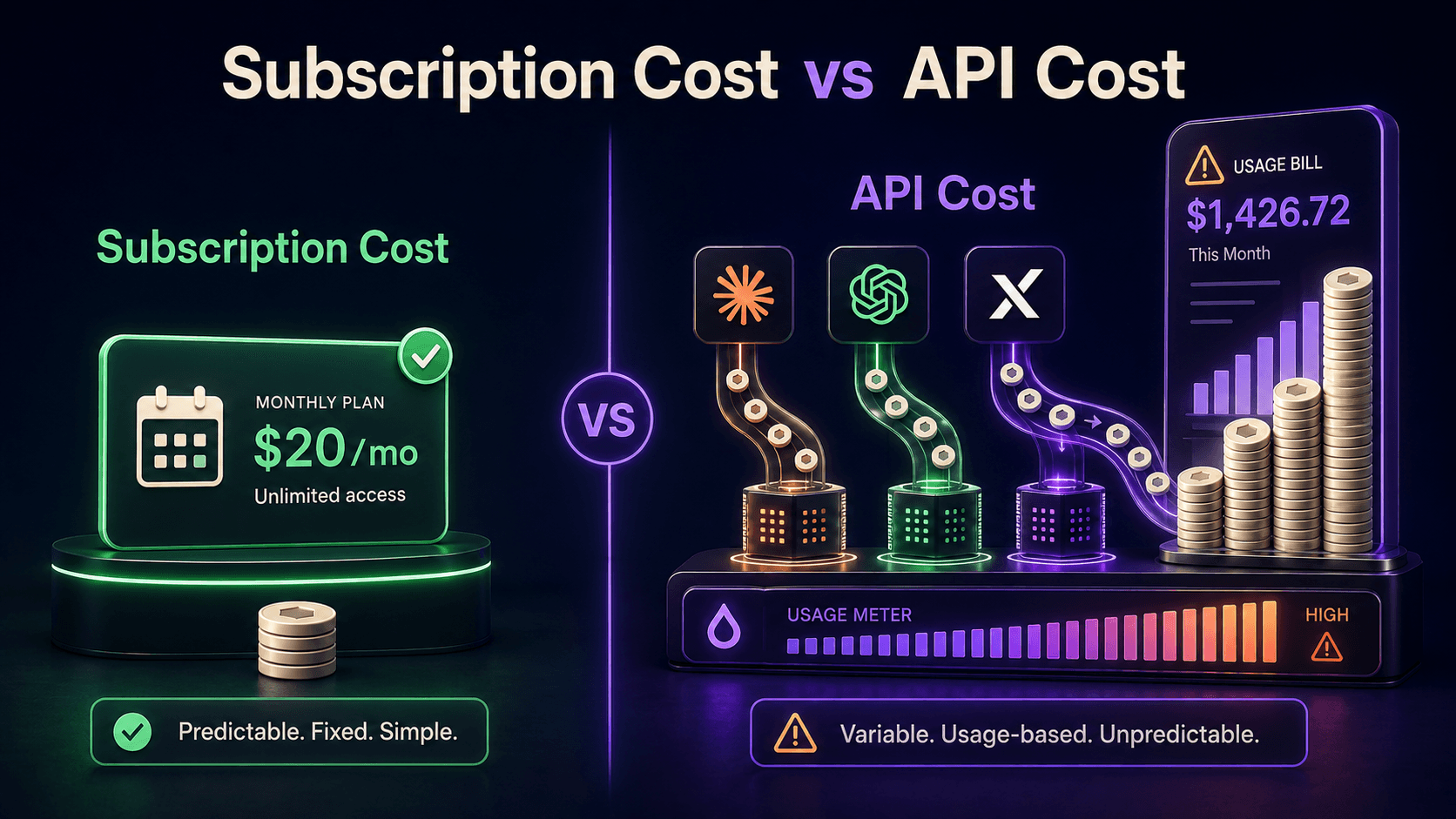
Does API Cost More Than a Subscription for Claude Opus 4.8, GPT-5.5, and Grok?
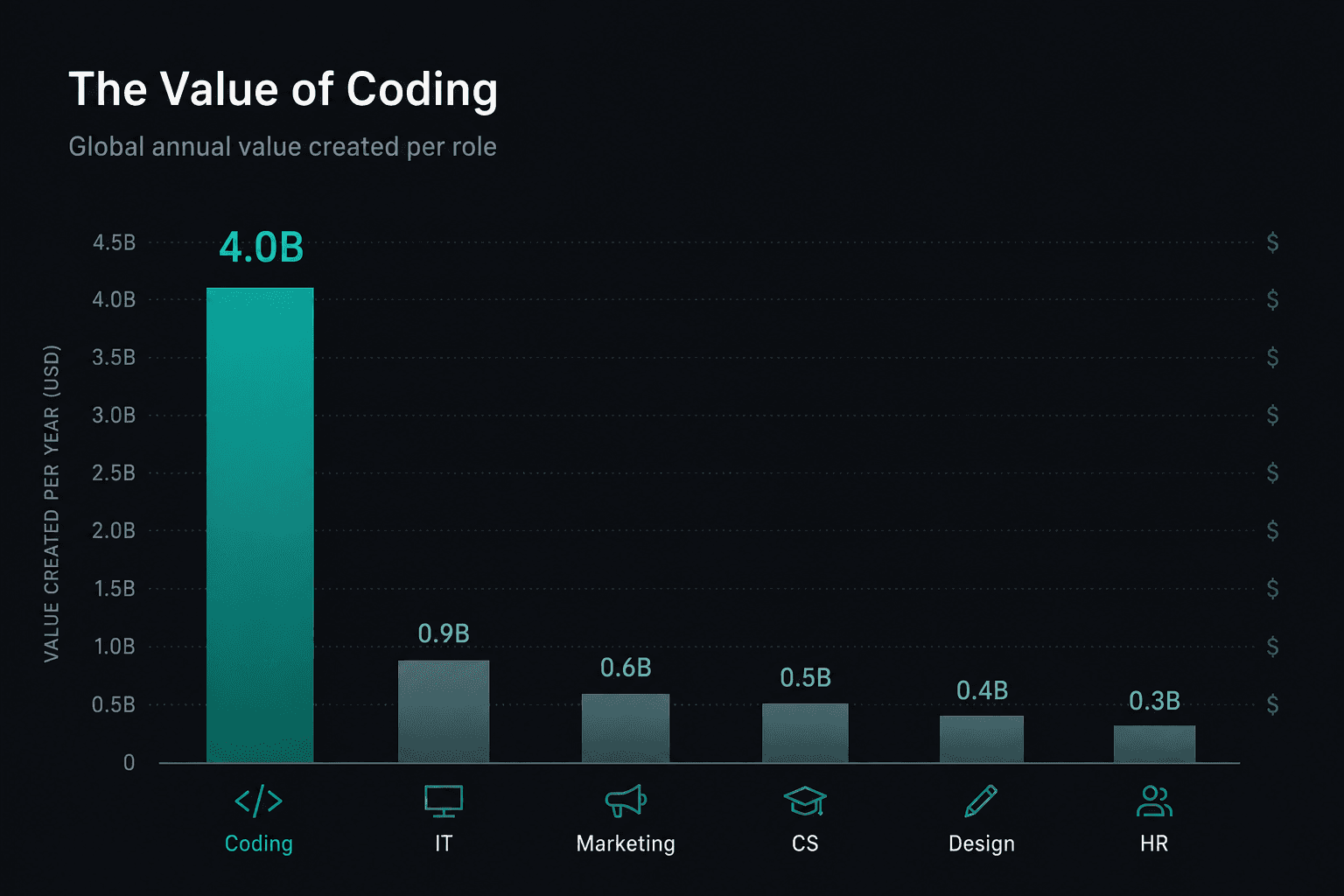
Coding Ate Enterprise AI (2026): The $4B Use Case, Anthropic’s Share, and Seat vs API Math
Run Open Source AI Models Locally: Battle-Tested Guide
Google Vision AI Explained (2026): Pricing Per 1,000 Units, Free Tier, and Alternatives