Anyscale is a managed Ray cluster platform built by the UC Berkeley team that created Ray. It handles distributed ML training, batch inference, fine-tuning, and model serving across multi-cloud GPU clusters, with no infrastructure management required.
Anyscale is a managed cloud platform built on Ray, the open-source distributed computing framework originally developed at UC Berkeley by Robert Nishihara, Ion Stoica, and Philipp Moritz. The company was founded in 2019 by the same researchers who wrote Ray, making it the authoritative commercial product for teams who need managed Ray infrastructure. The core problem it solves is operational: running distributed Python workloads across multi-node GPU clusters is hard to provision, monitor, and debug without a dedicated platform team. Anyscale handles that layer so ML engineers can focus on code.
The platform covers the full ML compute lifecycle: distributed training via Ray Train, large-scale data preprocessing via Ray Data, online and batch model serving via Ray Serve, reinforcement learning via Ray RLlib, and fine-tuning pipelines orchestrated across hundreds of GPUs. In 2025, Anyscale introduced the Anyscale Runtime: an API-compatible engine built on top of open-source Ray with proprietary optimizations that deliver up to 10x faster feature preprocessing, 6x cost reduction on image batch inference, and 7x higher request throughput for model serving compared to standard open-source Ray. Confirmed production customers include Coinbase, Runway, Character.ai, Physical Intelligence, and many others. OpenAI and Cohere have both publicly discussed using Ray for LLM training at scale.
What Anyscale actually does in 2026
Anyscale sits between raw cloud infrastructure (AWS, GCP, Azure, CoreWeave, Nebius) and your ML code. You write Python using the Ray APIs: decorate functions with @ray.remote, use Ray Data for distributed ETL, Ray Train for multi-GPU model training, Ray Serve for deploying inference endpoints. Anyscale provisions and manages the clusters, handles autoscaling, provides observability dashboards, and enforces security and governance policies across workspaces.
The compute model is pay-as-you-go with no monthly platform fee: $0.57/hour for an NVIDIA T4, $4.96/hour for an A100, $9.29/hour for an H100, and $10.68/hour for an H200. New accounts receive $100 in starter credits and access to a free development workspace (you pay for compute only when jobs run). Enterprise teams use committed contracts with volume discounts against existing cloud GPU reservations under the BYOC (Bring Your Own Cloud) deployment model.
The 2025 product additions are meaningful. Lineage Tracking (private beta as of Ray Summit 2025, October 2025) lets teams visualize their full data-to-model pipeline as an interactive graph, with integrations into MLflow, Weights and Biases, and Databricks Unity Catalog. The Global Resource Scheduler manages job priorities across reserved capacity, on-demand instances, and spot GPUs, useful for teams balancing cost and turnaround time across training runs. Anyscale on Azure launched in private preview as a first-party Azure Portal service with Azure Entra ID integration, expanding beyond its original AWS/GCP stronghold.
Where Anyscale sits versus Modal and Databricks
Anyscale vs. Modal: Modal is a serverless functions platform. You decorate Python functions with @app.function(), and Modal spins up containers per invocation with sub-second cold starts and second-by-second billing. There is no persistent cluster to configure or maintain. That model works well for bursty inference endpoints, short batch jobs, and developers who do not want to learn distributed computing primitives. Anyscale requires you to understand Ray's actor model, object store, placement groups, and task scheduling, because those concepts map directly to how your training jobs run. The payoff is that for multi-node training runs lasting hours or days on H100 clusters, Anyscale's cluster management and performance optimizations are substantially more capable than what Modal's serverless model supports. The teams are different: Modal attracts Python-first developers running inference APIs and data pipelines; Anyscale attracts ML platform engineers running large-scale training.
Anyscale vs. Databricks: vLLM and similar inference frameworks are often run on Databricks alongside Spark-based data pipelines. Databricks is an end-to-end data intelligence platform: it covers data ingestion (Delta Lake), SQL analytics (Photon engine), feature engineering (Spark), experiment tracking (MLflow), and model serving (Mosaic AI). For organizations that need data engineering and ML in a single governed platform, Databricks has depth that Anyscale does not match. Anyscale does not have a SQL layer, a data warehouse, or native Spark support. The advantage cuts the other way for ML-pure teams: Anyscale has a lighter operational footprint, faster cluster boot times, and a Ray-native programming model that outperforms Spark on Python-centric distributed workloads like LLM training and reinforcement learning. Teams that were already paying for Databricks sometimes run Anyscale in parallel for post-training pipelines where Spark is the wrong tool.
A third comparison worth making: self-hosted Ray via KubeRay (the open-source Kubernetes operator). KubeRay is free: you pay only cloud compute costs. Anyscale adds platform fees in exchange for eliminating the Kubernetes expertise requirement, providing Anyscale Runtime performance gains, and offering support SLAs. For teams with a strong infrastructure team, KubeRay is a real alternative. For teams without one, the operational savings from Anyscale tend to justify the premium.
"Ray and Anyscale aligned with our vision: to iterate faster, scale smarter, and operate more efficiently." - Coinbase Senior ML Platform Engineer, anyscale.com, 2025
What running clusters on Anyscale actually looks like
The development experience starts in an Anyscale Workspace, which is a persistent cloud development environment connected to a Ray cluster. You write code in a VS Code-style interface or connect from a local IDE, run jobs, and iterate without reprovisioning. When you submit a production job, Anyscale schedules it against your configured resource pools.
The sharp edge is Ray's programming model itself. Distributed computing concepts bleed through the abstraction. ObjectStoreFullError appears when working memory across your cluster fills with objects that have not yet been garbage collected. Serialization overhead is real: passing 5-10 MB Python dictionaries across remote tasks runs into performance bottlenecks documented in the Ray GitHub issue tracker. Debugging distributed failures before Anyscale's 2025 observability additions meant correlating logs across individual worker nodes with no unified trace. Anyscale now provides Ray Data, Ray Train, and Task Dashboards in general availability as of 2025, which consolidates much of that into a single view, but teams new to distributed computing still hit a steep learning curve in the first few weeks.
Anyscale's own documentation acknowledges this honestly: "New users to Ray often feel overwhelmed by the need to understand multiple complex concepts from day one." The new Agent Skills product (generally available in 2026) uses AI to help engineers diagnose cluster failures, plan GPU memory allocation, and navigate Ray API questions, which partially automates the most common friction points.
"Anyscale Endpoints gives us 5x-8x cost advantages over alternatives." - Siddartha Saxena, CTO of Merlin, Anyscale Endpoints launch, September 2023
Who Anyscale is built for
Anyscale targets ML platform engineers and ML infrastructure teams at companies that run distributed workloads regularly. The primary use cases are multi-node distributed training (LLM pre-training, post-training, fine-tuning), large-scale batch inference (processing millions of images or documents), real-time model serving with autoscaling, and reinforcement learning pipelines. Companies like RunPod or Lambda Labs serve individual researchers renting single GPUs by the hour; Anyscale is for teams that need cluster orchestration across dozens or hundreds of GPUs.
The enterprise packaging matters here. BYOC lets large organizations keep data in their own cloud accounts, which satisfies security and compliance teams. The 24x7 SLA support tier, unlimited support cases, and Unity Catalog governance integration are features that individual GPU rental platforms do not offer. Physical Intelligence, Runway, and Character.ai, all compute-intensive AI companies, use Anyscale in production.
Teams evaluating Anyscale alongside Replicate or Together AI for inference-only workloads should note that those platforms are simpler but less flexible: they work well for serving pre-trained models via API but do not support multi-node distributed training or custom Ray pipelines. Anyscale is overkill for inference-only use cases unless you are also training or fine-tuning at scale.
What Anyscale is not
Anyscale is not a serverless inference platform. If you need to deploy a single model endpoint and receive API requests, Modal is cheaper and simpler to start with. It is not a full data platform: there is no SQL engine, no Delta Lake, no unified data governance across structured and unstructured data. It is not a general-purpose cloud provider: you still need AWS, GCP, Azure, or a specialty GPU cloud underneath it.
Skip Anyscale when your team has no prior exposure to Ray and the workload is not inherently distributed. A single-GPU fine-tuning job on a rented A100 does not need cluster orchestration. A small team serving one model to a few hundred daily users does not need Ray Serve. The learning investment in Ray's programming model only pays off at the scale where distributed execution is necessary, not just convenient. For teams at that scale, Anyscale is likely the strongest managed option available in 2026.
User Reviews
No reviews yet. Be the first to share your experience!
Sign in to write a review.
Related articles
Guides and articles related to Anyscale.
Grok 4.3 API for Agents (May 2026): Pricing, Benchmarks, Migration
Does API Cost More Than a Subscription for Claude Opus 4.8, GPT-5.5, and Grok?
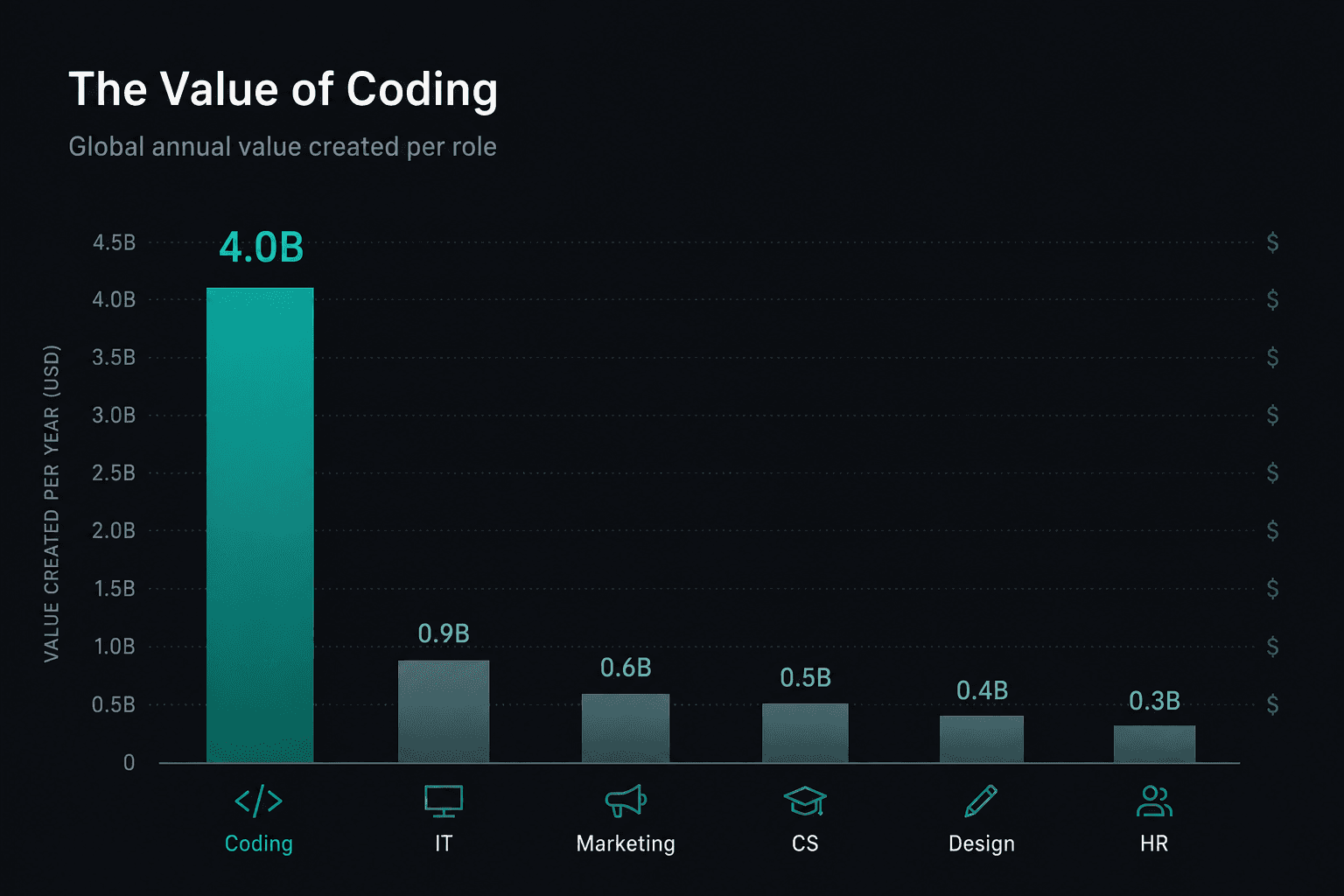
Coding Ate Enterprise AI (2026): The $4B Use Case, Anthropic’s Share, and Seat vs API Math
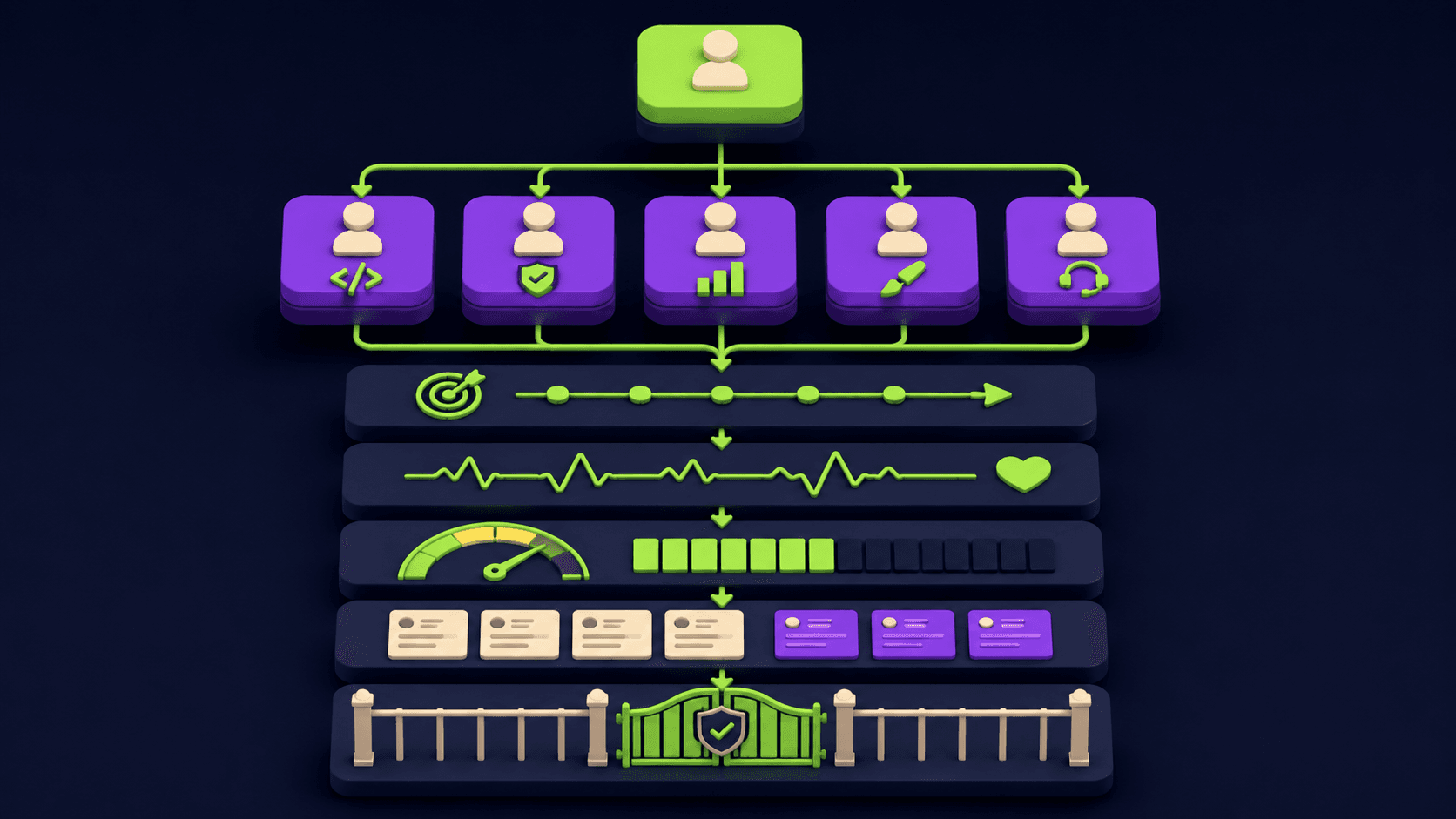
Run a Company With AI Agents: The Open-Source Orchestration Setup (2026)
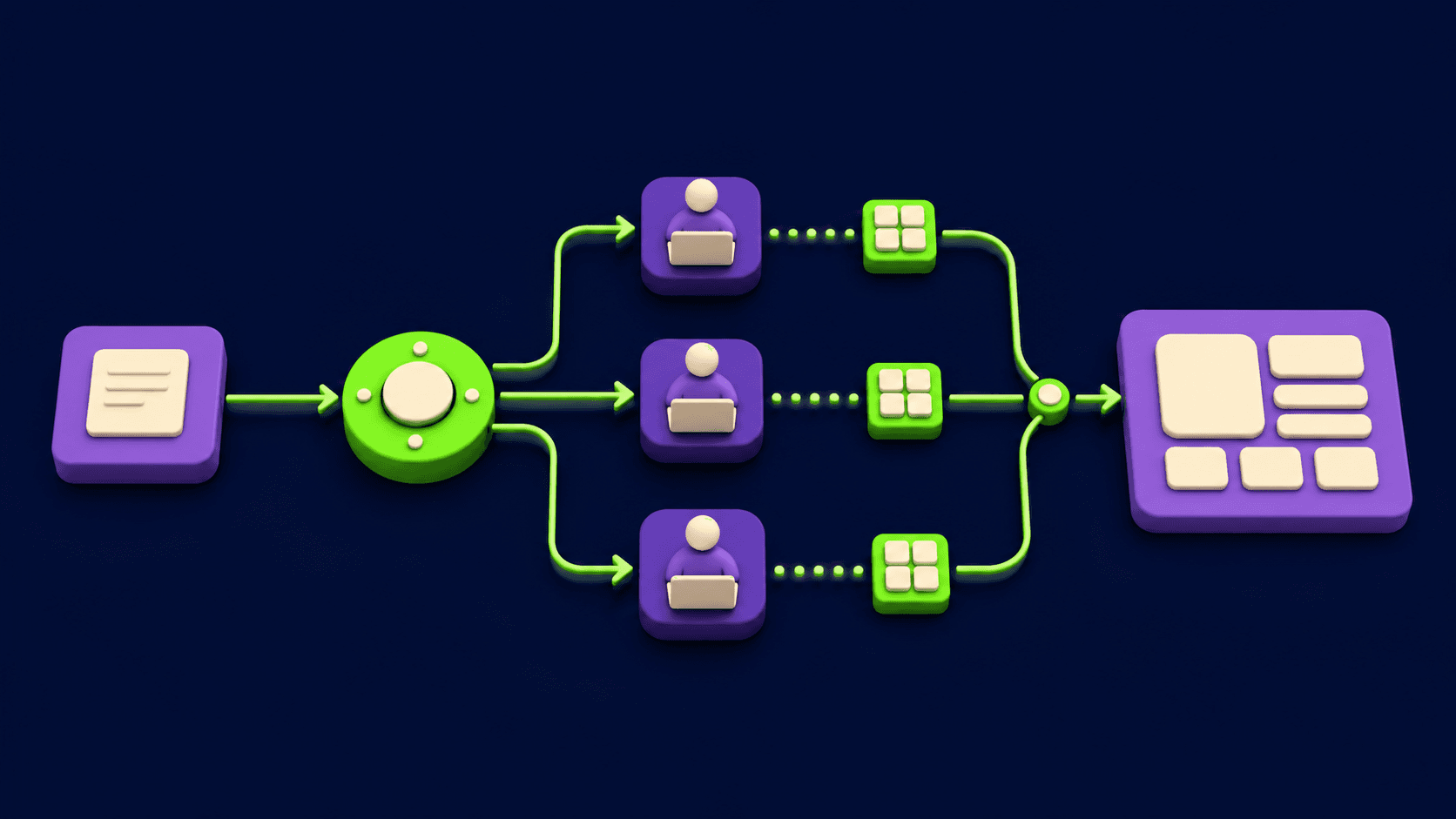
Orchestrator-Workers: The Multi-Agent Pattern That Actually Scales (2026)